





 County-level
Xiu Feng District
Solitary Beauty Peak crowns the Ming royal Jingjiang Princes Palace in Xiufeng, where Song scholar Wang Zhenggong engraved the famous verse on Guilin scenery.
 MUZIChinese Matrix
highland scenery and pastoral culture offers the clearest regional clue to Guilin.
The regional profile of Guilin begins with the concrete evidence “Highland scenery and pastoral culture offers the clearest regional clue to Guilin.” The clue links spatial form with everyday experience, giving the regional idea a concrete setting and human scale. Long-term change preserved, adjusted, and transmitted these relationships, showing how environmental influence and community action worked together. These interactions provide a factual basis for understanding the connections, distinctions, and continuities between Guilin and nearby places. Its significance lies in connecting regional geography, historical continuity, and cultural difference through checkable local evidence about Guilin.
County-level
Solitary Beauty Peak crowns the Ming royal Jingjiang Princes Palace in Xiufeng, where Song scholar Wang Zhenggong engraved the famous verse on Guilin scenery.
County-level
Folded Brocade Mountain preserves centuries of Tang and Song calligraphic rock carvings in Diecai, offering sweeping panoramas of the Li River.
County-level
Elephant Trunk Hill dips its stone trunk into the Li River in Xiangshan, alongside illuminated gold and silver Sun and Moon Pagodas on Banyan Lake.
County-level
Seven Star Park shelters vibrant stalactites in Qixia Cave in Qixing, home to historic Ming stone arches of Flower Bridge beside Camel Hill.
County-level
Centuries-old banyan trees and classical courtyards grace Yanshan Garden in Yanshan, balancing international open-air sculptures at Yuzi Paradise.
County-level
Limestone peak shadows reflect in reed canals at Huixian Karst Wetland in Lingui, ancestral home to imperial top scholars and Li Zongren Residence.
County-level
Limestone karst peaks along Li River at Xingping inspired the 20-yuan banknote scene in Yangshuo, world-famous for bamboo rafting on Yulong River.
County-level
Centuries-old flagstone riverfront lanes at Daxu Ancient Town line the Li River in Lingchuan, near tier-climbing waterfalls at Mount Gudong.
County-level
The Battle of Xiangjiang River Memorial honors fallen heroes in Quanzhou, home to wind turbines above alpine lakes at Tianhu Alpine Grassland.
County-level
The 2,200-year-old Lingqu Canal connects the Yangtze and Pearl river systems in Xing'an, beneath South Region highest peak Mount Mao'ershan.
County-level
Sweet monk fruit Luo Han Guo thrives as a medicinal harvest in Yongfu, home to ancient calligraphic Longevity Inscriptions on Mount Baishouyan.
County-level
Qianjiadong forest sanctum preserves ancestral origins of the Yao people in Guanyang, surrounded by karst cavern waterways at Heiyan Cave.
County-level
Six centuries of terraced agriculture curve across steep summits at Longji Rice Terraces in Longsheng, globally recognized agricultural heritage site.
County-level
Majestic crimson Danxia escarpments of Mount Bajiaozhai tower above mist oceans in Ziyuan, bordering rafting waters along the scenic Zijiang River.
County-level
Three rivers meet beneath banyan canopies where the Li, Li, and Cha merge in Pingle, acclaimed for savory stuffed specialties of Pingle 18 Feasts.
County-level
Ming and Qing Confucian and Martial Temple complexes stand side-by-side in Gongcheng, famous for aromatic pounded brews of Gongcheng Oil Tea.
County-level
Glistening calcite cascades inside Silver Cave Karst Cavern dazzle visitors in Lipu, acclaimed worldwide for tender sweet steamed Lipu Taro roots.
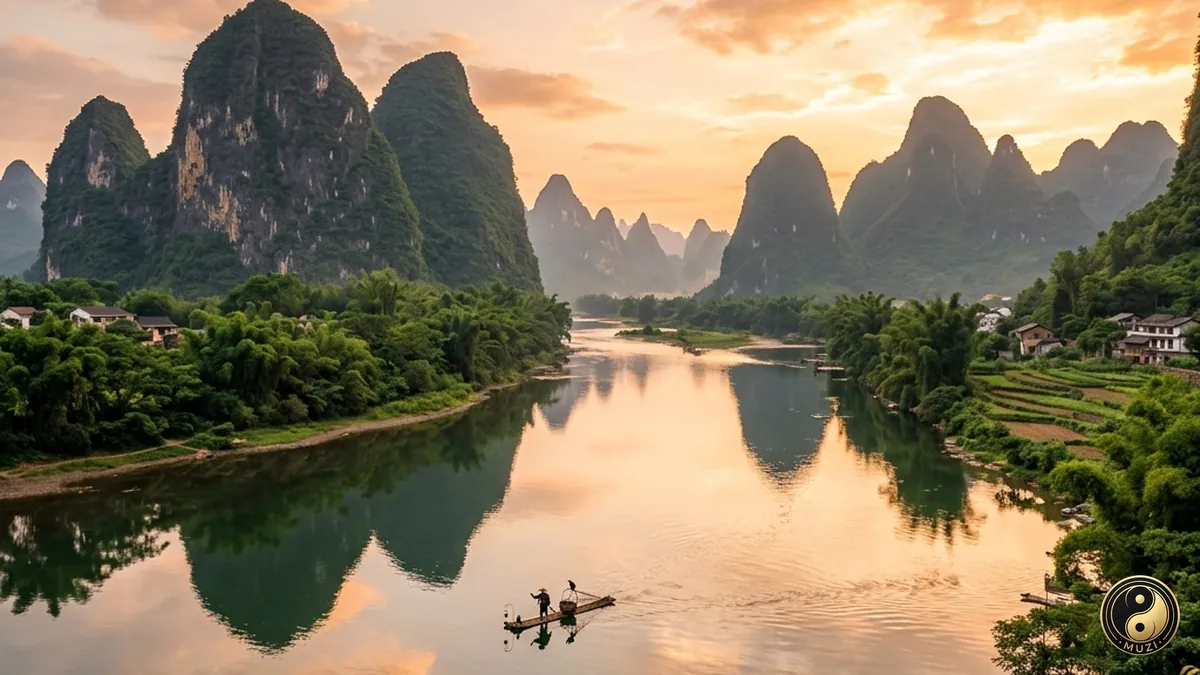
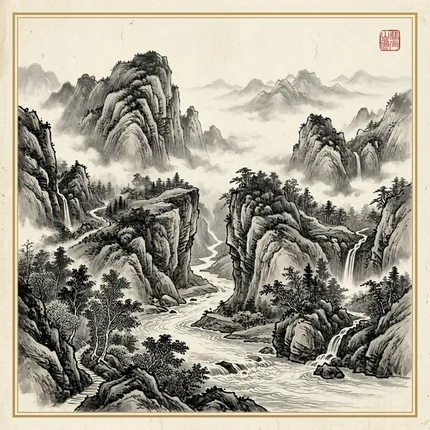
Karst peaks and the Li River make Guilin a classic Chinese ink-wash landscape.
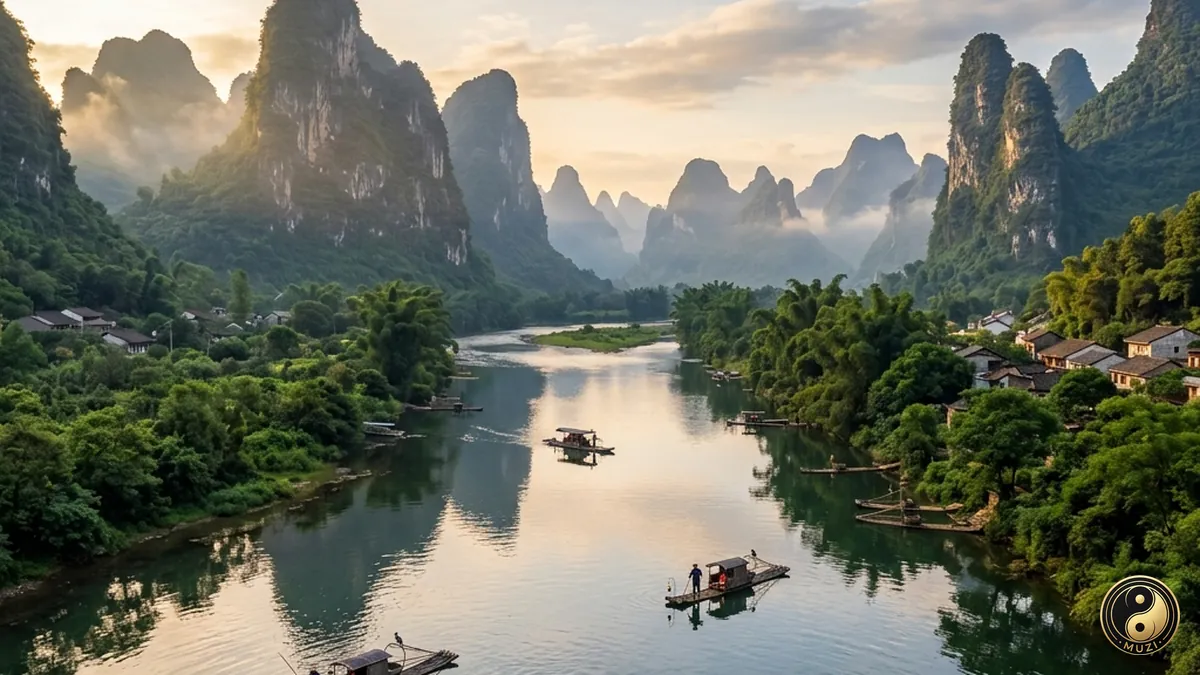
The Li River winds through karst peaks, its reflections sustaining a classic landscape-painting tradition.
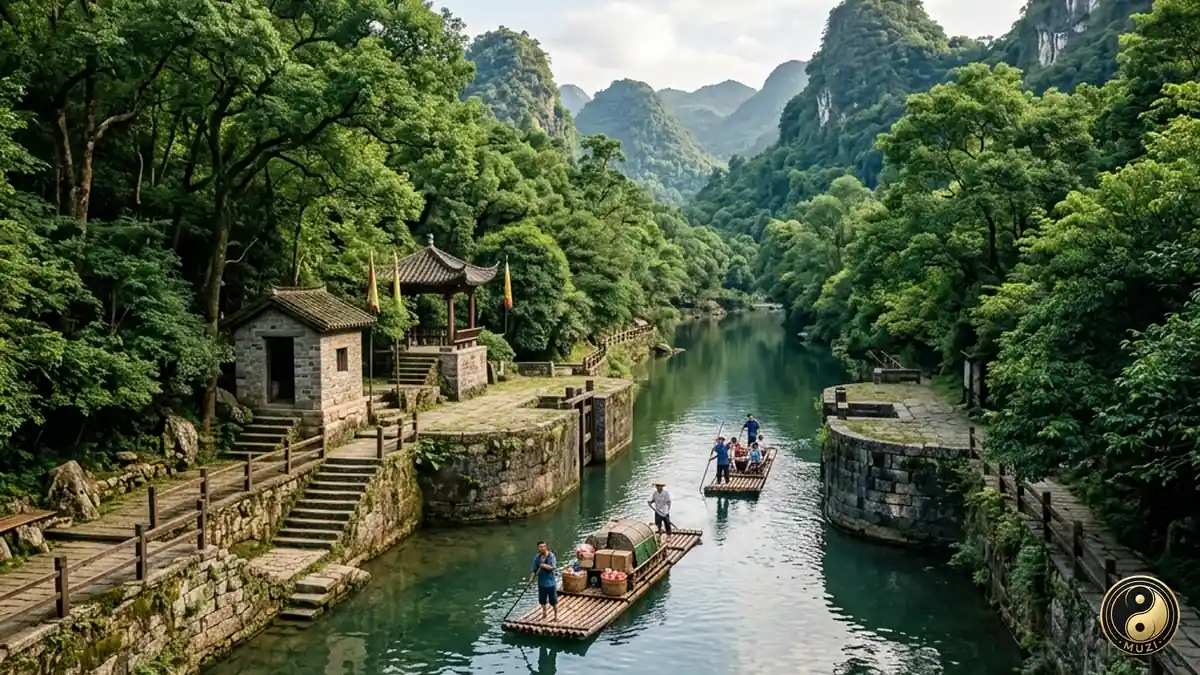
The Lingqu Canal crosses the Xiang-Li watershed to connect the Yangtze and Pearl River systems as an early cross-basin waterway.
The quintessential Karst river journey featuring Nine Horses Fresco Hill and Yellow Cloth Shoal.
View attraction
The iconic city emblem of Guilin resembling a giant elephant dipping its trunk into the Li River.
View attraction
A picturesque Karst valley where Moon Hill's natural arch shifts from crescent to full moon as you walk.
View attraction
Known as the Little Li River, celebrated for bamboo rafting and the 500-year-old Fuli stone arch bridge.
View attraction
A spectacular Karst limestone cave filled with stalactites and crystal columns, illuminated like an underground palace.
View attraction
The most intact Ming princely palace in China, harboring the carved stone with the famous line 'Guilin landscape tops the world'.
View attraction
The most breathtaking 20km stretch of Karst river scenery in China, winding between towering emerald peaks.
View attraction
A sheer 400-meter riverside cliff bearing multicolored rock patterns resembling galloping wild horses.
View attraction
A 1,700-year-old riverside trading town whose Karst landscape is depicted on the Chinese 20-yuan currency note.
View attraction
A 500-year-old stone arch bridge reflecting perfectly as a full moon in the crystal waters of the Yulong tributary.
View attraction
The natural archway cave carved between the trunk and legs of the iconic Elephant Trunk Hill on the Li River.
View attraction