





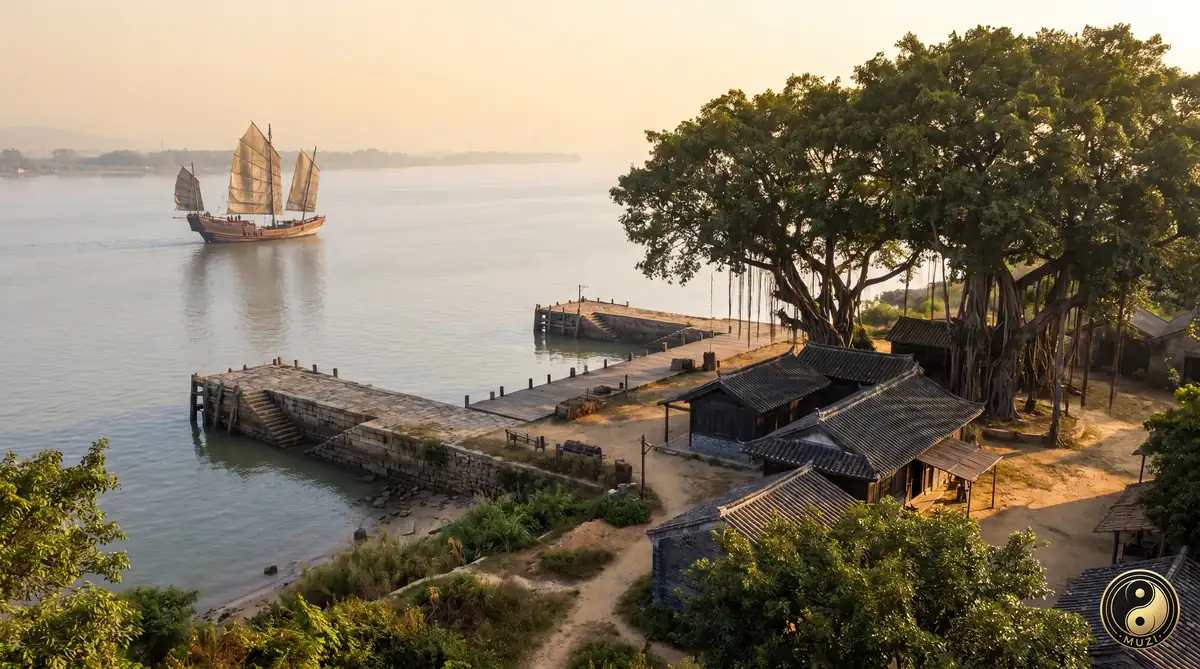
 Prefecture-level
Guangzhou
Guangzhou is readily recognized through river valleys and inherited local memory.
 MUZIChinese Matrix
The Pearl River Delta opens to the South China Sea, combining Lingnan culture, dense urban networks, and maritime trade.
A useful starting point for Guangdong is the documented fact “The Pearl River Delta opens to the South China Sea, combining Lingnan culture, dense urban networks, and maritime trade.” The natural conditions and social experience of Guangdong therefore belong to one connected geographic story. Communities responded to surrounding conditions through residence, exchange, and daily practice, giving the spatial pattern a traceable history. The chain from environmental conditions to social practice gives the regional change of Guangdong a clear real-world expression. Taken together, these clues clarify the position, change, and distinctive contribution of Guangdong within the larger region.
Prefecture-level
Guangzhou is readily recognized through river valleys and inherited local memory.
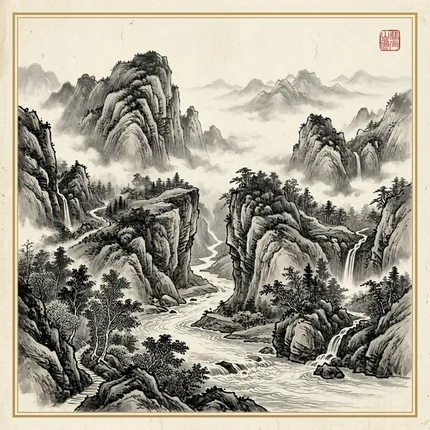 Prefecture-level
Think of Shaoguan, and estuarine routes and port traditions are among the first things that come to mind.
Prefecture-level
highland scenery and pastoral culture offers the clearest regional clue to Shenzhen.
Prefecture-level
For Zhuhai, plain-country farming and old town remains forms an essential setting.
Prefecture-level
mountain corridors and frontier life write a distinctive line into Shantou's urban profile.
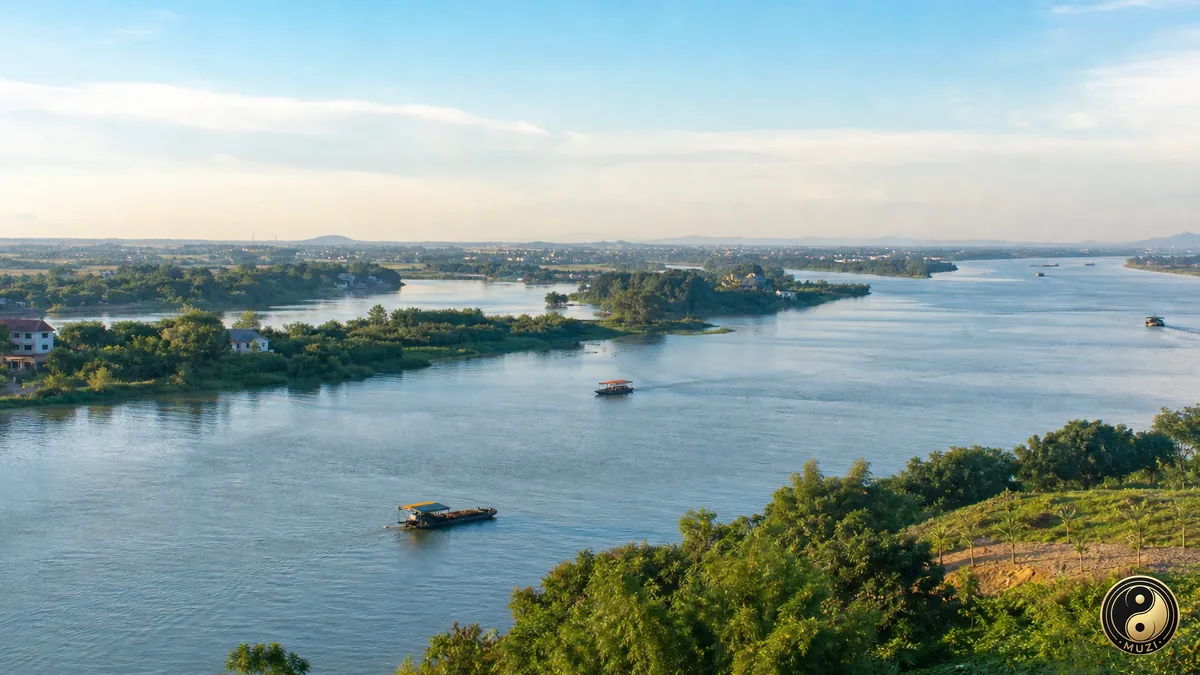 Prefecture-level
Through valley settlements and industrial memory, Foshan gains a geographical signature.
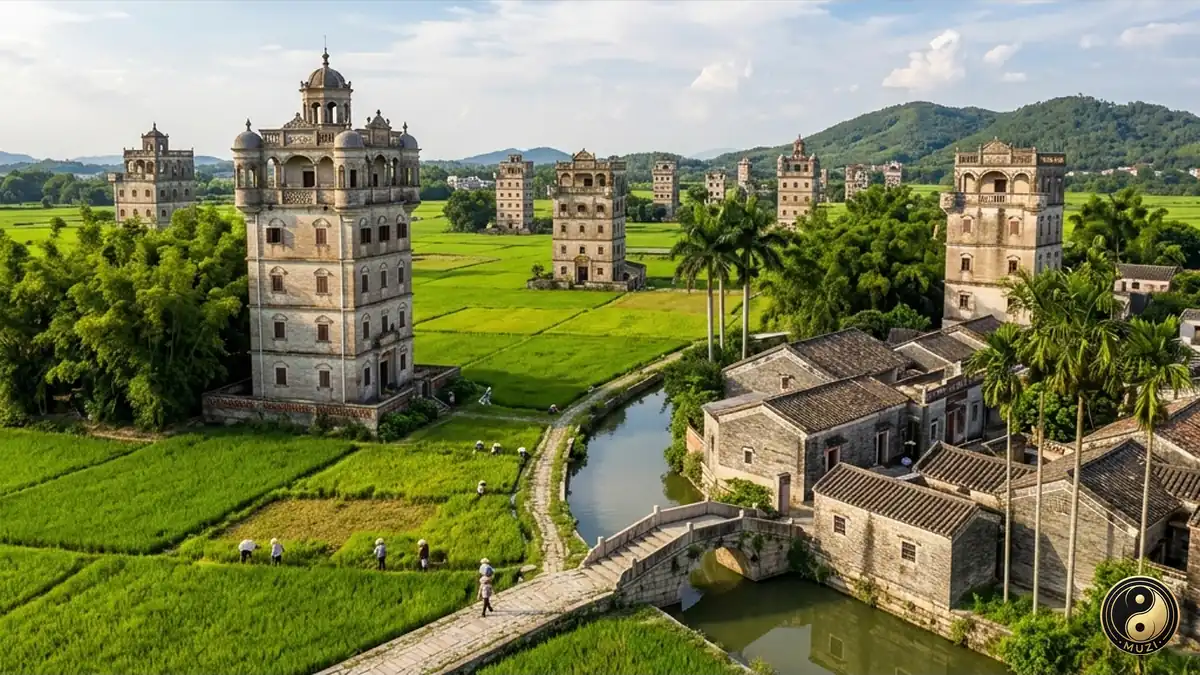 Prefecture-level
In Jiangmen, wetland habitats and waterside routines reveal a deeper local trajectory.
 Prefecture-level
Zhanjiang finds its regional character in garden landscapes and scholarly traditions.
Prefecture-level
A useful way into Maoming is through bay shores and fishing practice.
Prefecture-level
Zhaoqing's local story begins with canyon terrain and rural settlements.
Prefecture-level
forest resources and cold-climate life give Huizhou a recognizable regional character.
Prefecture-level
Meizhou retains the imprint of steppe pasture and seasonal movement.
Prefecture-level
Follow lakeside wetlands and water-town craft, and Shanwei's regional layers come into view.
Prefecture-level
Heyuan turns basin fields and historic post roads into everyday life and local memory.
Prefecture-level
From geography to culture, hill tea country and handcraft history help define Yangjiang.
Prefecture-level
island routes and maritime custom leave a double trace of nature and society in Qingyuan.
Prefecture-level
In any account of Dongguan, desert oases and irrigation knowledge is hard to overlook.
Prefecture-level
Zhongshan's identity rests on the setting opened by river-bend farmland and waterworks.
Prefecture-level
volcanic landforms and hot-spring scenery outline the local profile of Chaozhou.
Prefecture-level
Jieyang reads its landscapes and lived experience through karst peaks and mountain villages.
Prefecture-level
river ports and modern factory memory give Yunfu a distinct regional rhythm.
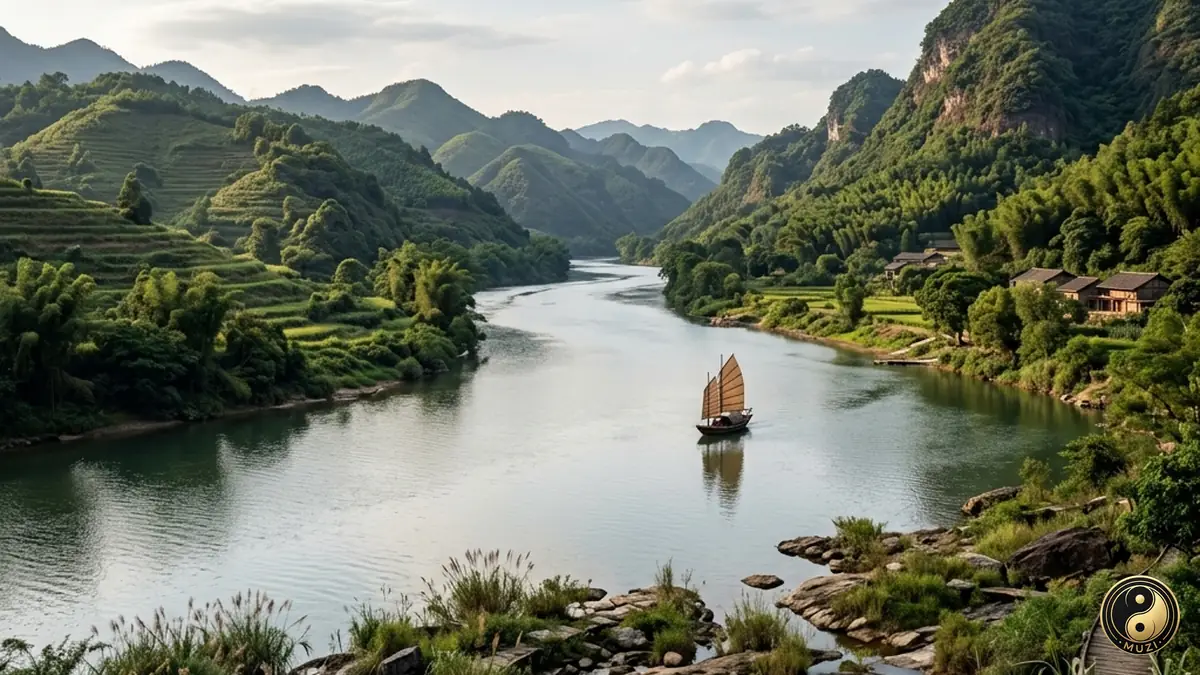
The Pearl River forms a major water network through the delta, linking South China Sea routes with regional trade.
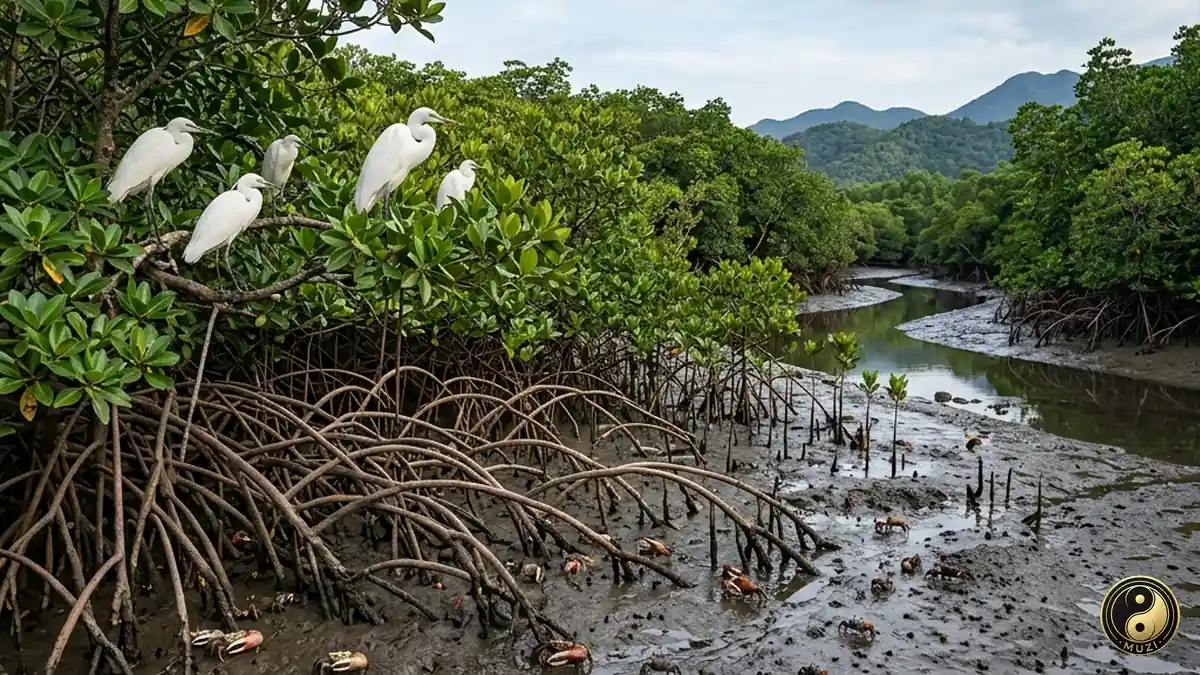
A green Great Wall in the intertidal zones of the southeast coast — viviparous plants rooting in salt water, a natural coastal buffer against typhoons and storm surges.
The ancient port and customs office of Guangzhou — China's first national-level maritime trade authority, witnessing the prosperity of the Age of Discovery on the South China Sea.
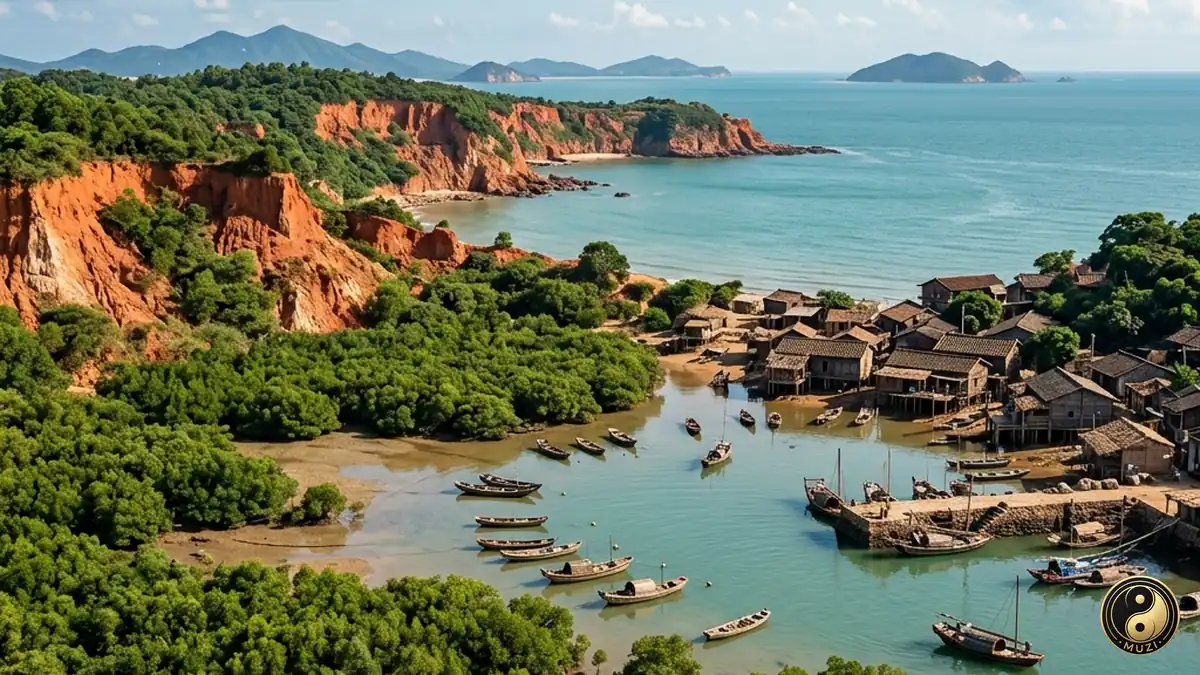
Leizhou Peninsula reaches into the Beibu Gulf; sea, wind, and lowland habitats define its coast.
Fortified tower clusters built by returned overseas Chinese in Guangdong's Siyi region — reinforced concrete castles blending Chinese and Western architecture, recording a century of diaspora and homecoming.
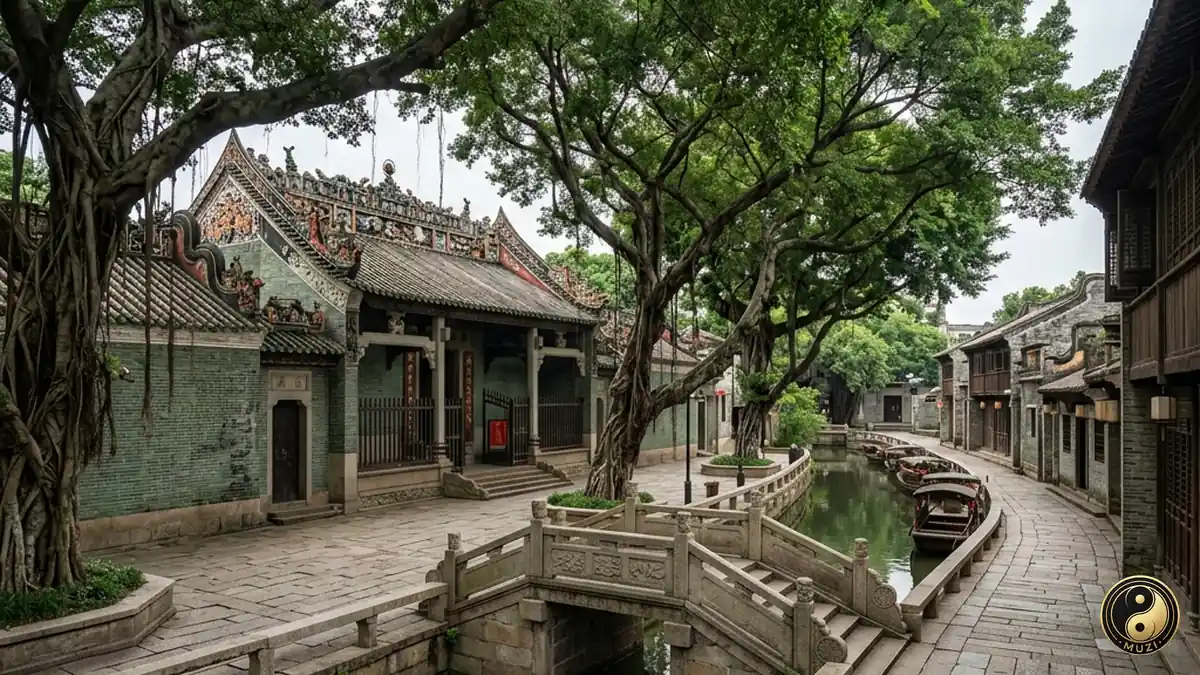
The heavy-industry town of the Ming-Qing era — a dense cluster of private iron-smelting, casting, and textile workshops, the most famous civilian industrial antenna of medieval China powering ironware exports to Southeast Asia.
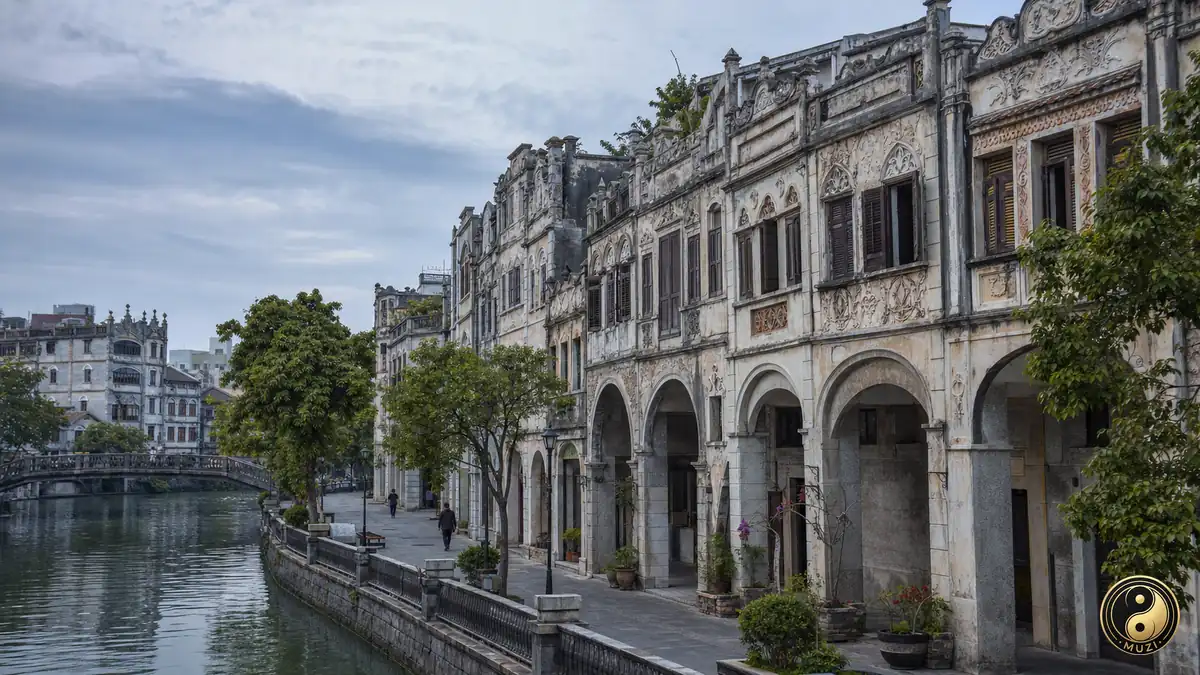
Lingnan arcade-building museum; overseas Chinese culture crystallized in Guan Library and European-style villas.