





 Prefecture-level
Chengdu
Chengdu is readily recognized through river valleys and inherited local memory.
 MUZIChinese Matrix
Westward from the Sichuan Basin, the land rises to plateau landscapes marked by Bashu history, upper-Yangtze ecology, and diverse communities.
For Sichuan, the relationship between place and life becomes visible in “Westward from the Sichuan Basin, the land rises to plateau landscapes marked by Bashu history, upper-Yangtze ecology, and diverse communities.” This evidence connects landform, movement, settlement, and cultural expression instead of treating them as isolated details. The present profile of Sichuan reflects environmental adaptation and local stewardship built up over an extended period rather than a short-lived change. This process explains how Sichuan remains connected to its surrounding region while retaining a recognizable local character. That is why Sichuan matters: local detail can illuminate environmental setting, social process, and cultural memory together.
Prefecture-level
Chengdu is readily recognized through river valleys and inherited local memory.
 Prefecture-level
Think of Zigong, and estuarine routes and port traditions are among the first things that come to mind.
Prefecture-level
highland scenery and pastoral culture offers the clearest regional clue to Panzhihua.
Prefecture-level
For Luzhou, plain-country farming and old town remains forms an essential setting.
 Prefecture-level
mountain corridors and frontier life write a distinctive line into Deyang's urban profile.
Prefecture-level
Through valley settlements and industrial memory, Mianyang gains a geographical signature.
 Prefecture-level
In Guangyuan, wetland habitats and waterside routines reveal a deeper local trajectory.
Prefecture-level
Suining finds its regional character in garden landscapes and scholarly traditions.
Prefecture-level
A useful way into Neijiang is through bay shores and fishing practice.
 Prefecture-level
Leshan's local story begins with canyon terrain and rural settlements.
 Prefecture-level
forest resources and cold-climate life give Nanchong a recognizable regional character.
Prefecture-level
Meishan retains the imprint of steppe pasture and seasonal movement.
Prefecture-level
Follow lakeside wetlands and water-town craft, and Yibin's regional layers come into view.
Prefecture-level
Guang'an turns basin fields and historic post roads into everyday life and local memory.
Prefecture-level
From geography to culture, hill tea country and handcraft history help define Dazhou.
Prefecture-level
island routes and maritime custom leave a double trace of nature and society in Ya'an.
Prefecture-level
In any account of Bazhong, desert oases and irrigation knowledge is hard to overlook.
Prefecture-level
Ziyang's identity rests on the setting opened by river-bend farmland and waterworks.
 Prefecture-level
volcanic landforms and hot-spring scenery outline the local profile of Ngawa Tibetan and Qiang Autonomous Prefecture.
Prefecture-level
Garzê Tibetan Autonomous Prefecture reads its landscapes and lived experience through karst peaks and mountain villages.
Prefecture-level
river ports and modern factory memory give Liangshan Yi Autonomous Prefecture a distinct regional rhythm.
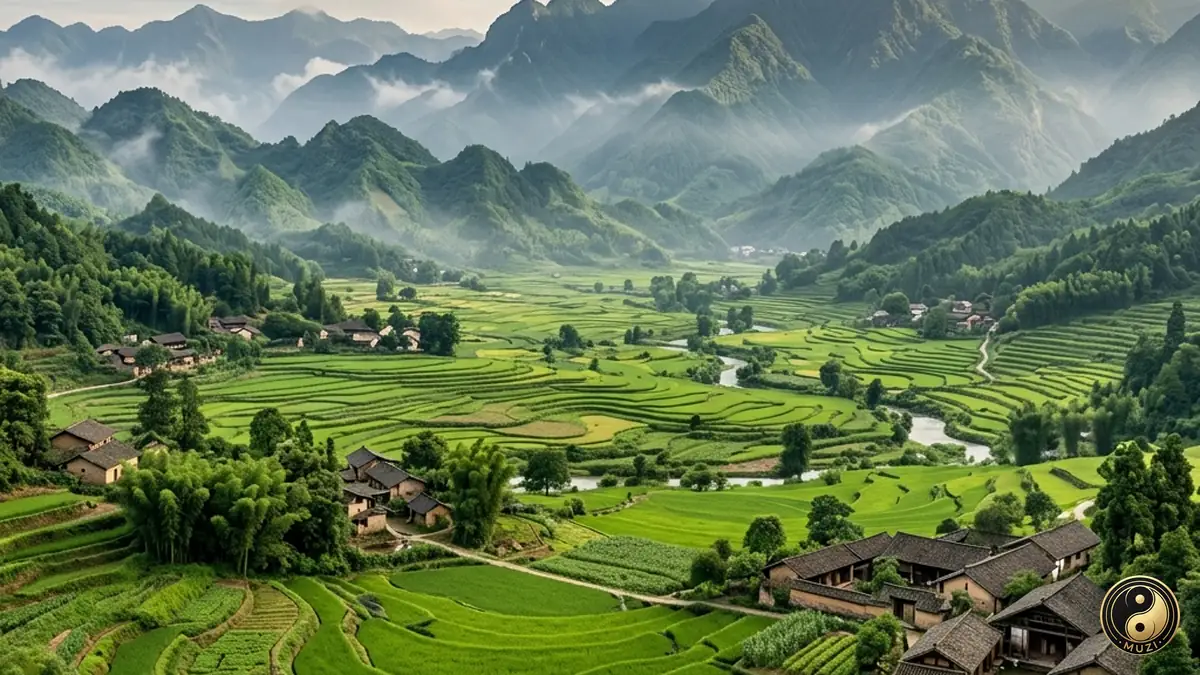
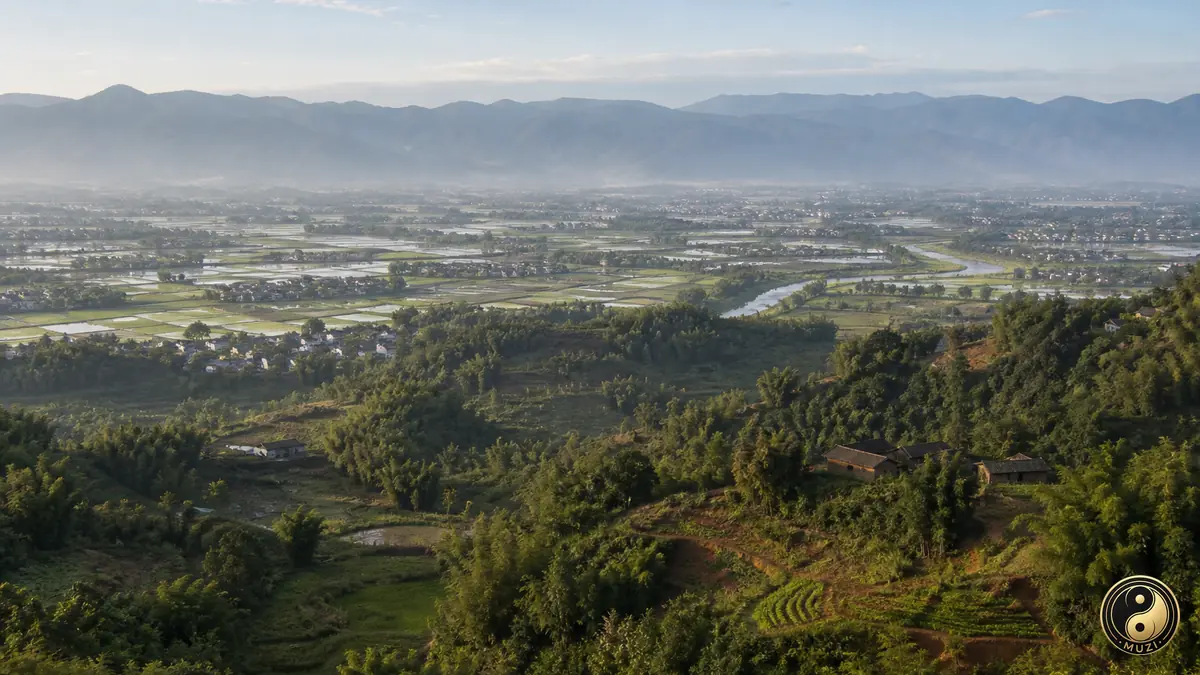
A purple-soil basin ringed by mountains on all sides — the cradle of the Land of Abundance, a natural sanctuary and rear granary for dynasties in chaos.
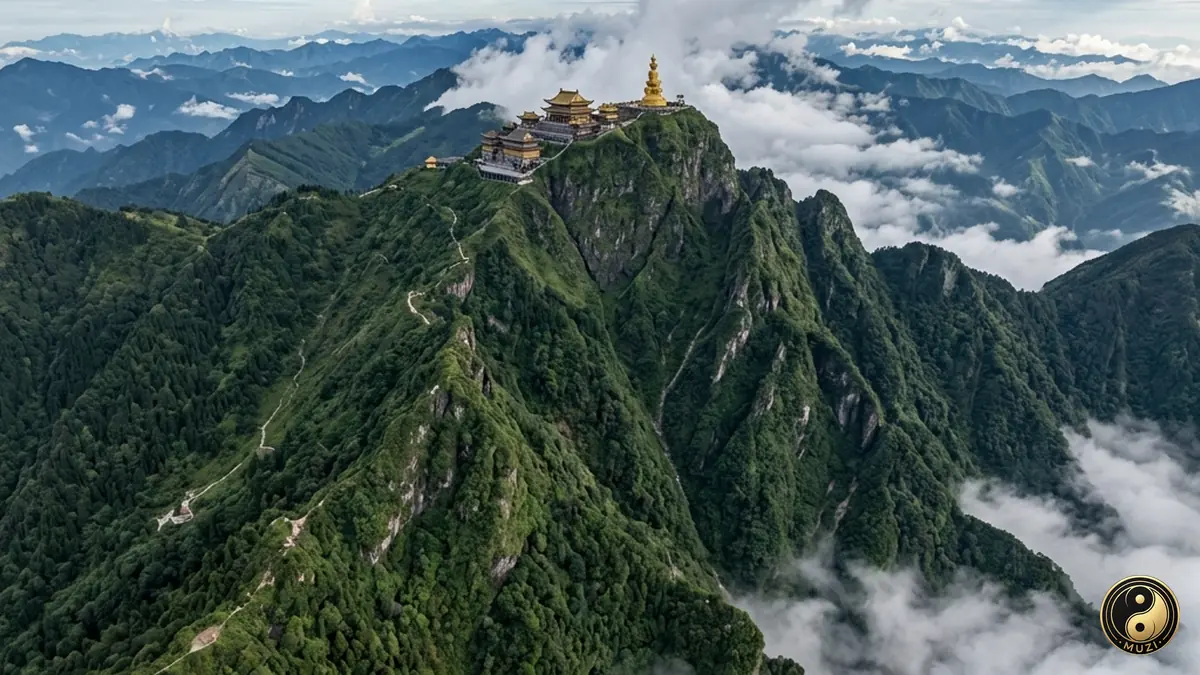
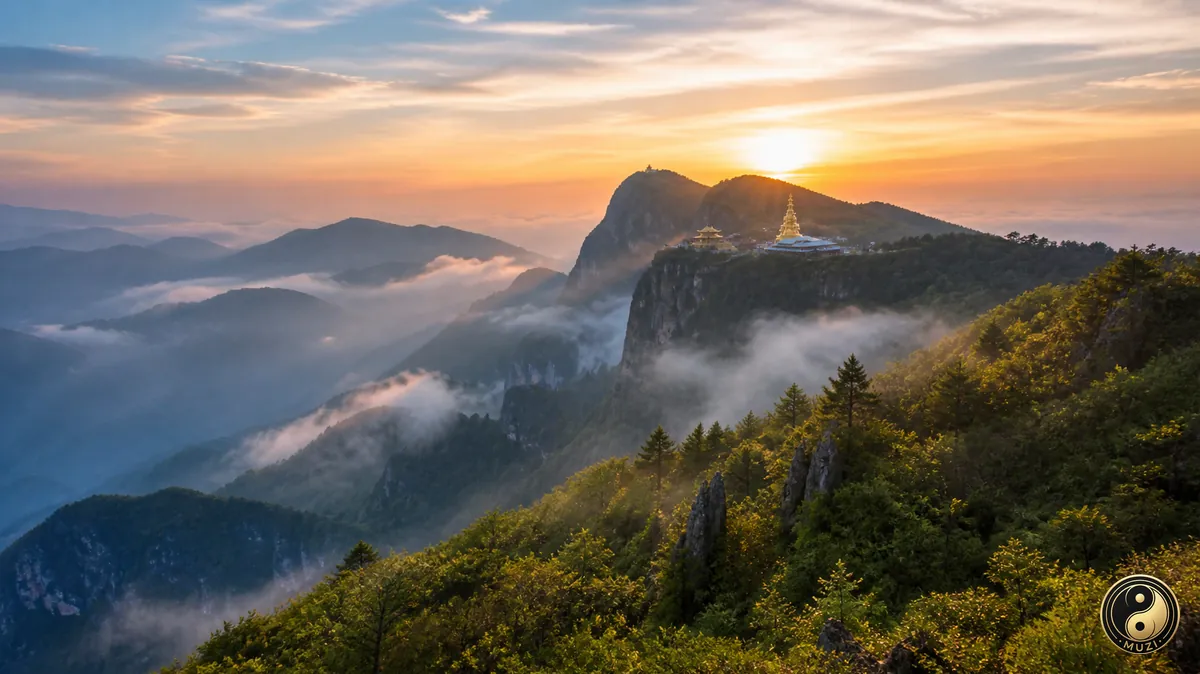
Golden summit Buddha's light reflected in a sea of clouds — a vertical cliff soaring three thousand meters, four seasons in one mountain, ten landscapes in ten miles.
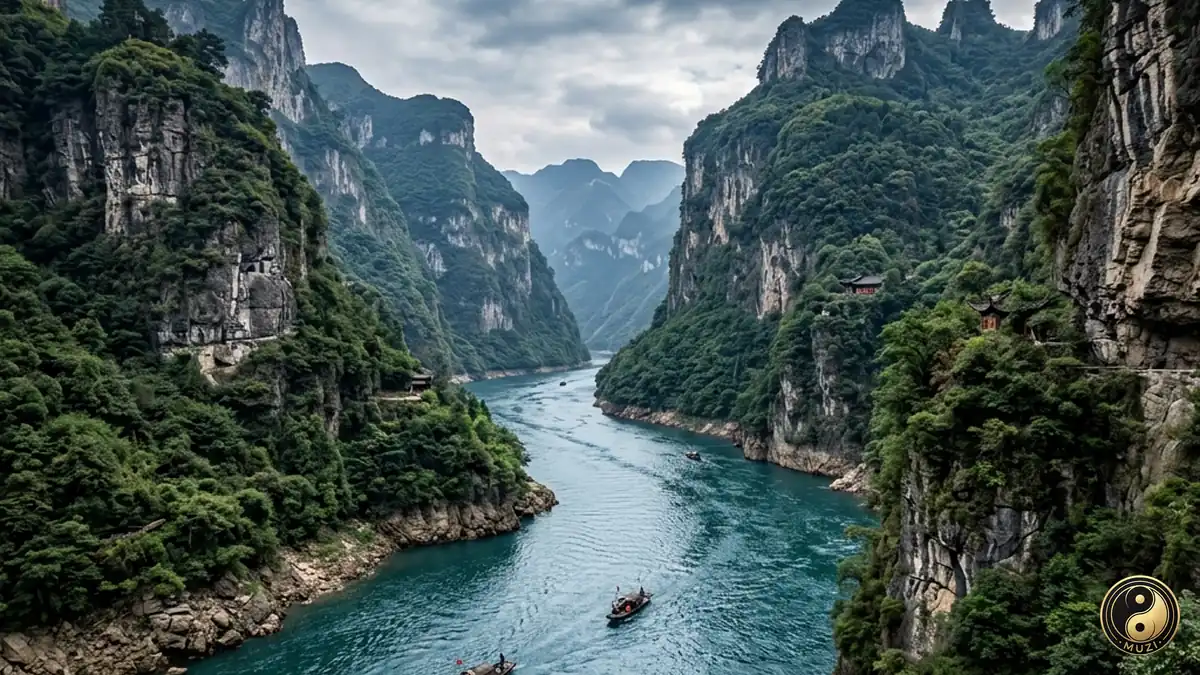
Asia's longest river, flowing six thousand kilometers from the Tibetan Plateau to the East China Sea — the aorta and golden waterway of Chinese civilization.
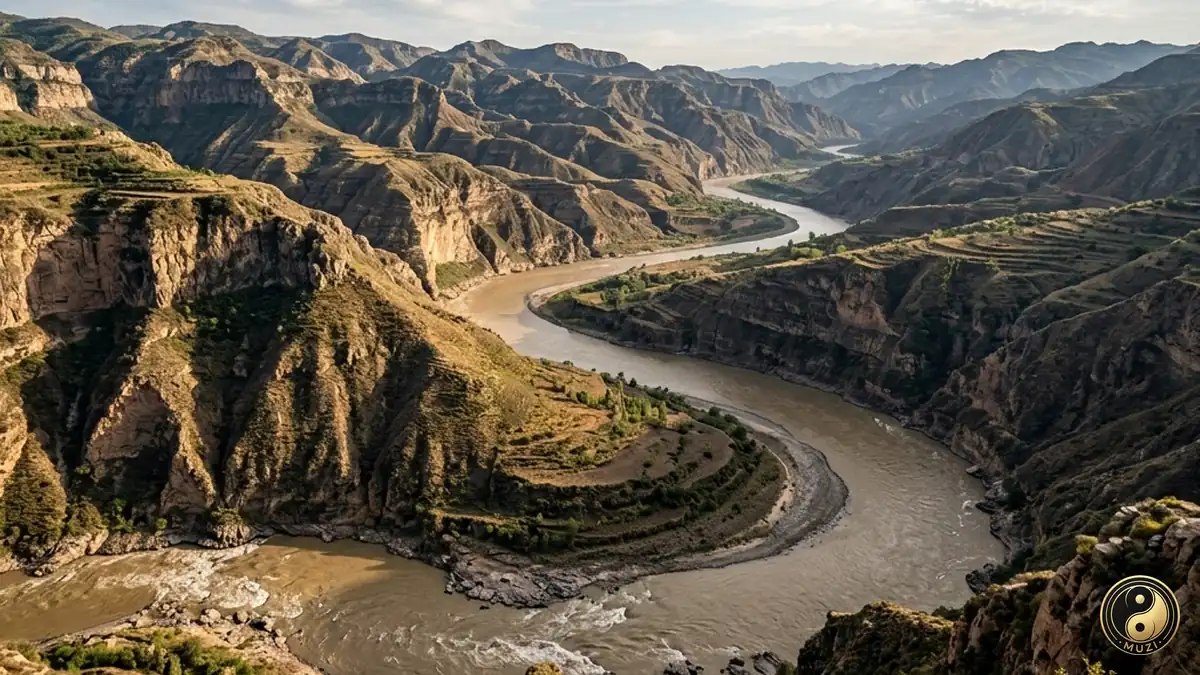
The Yellow River carries loess to the sea and remains a major river in the history of Chinese agrarian civilization.
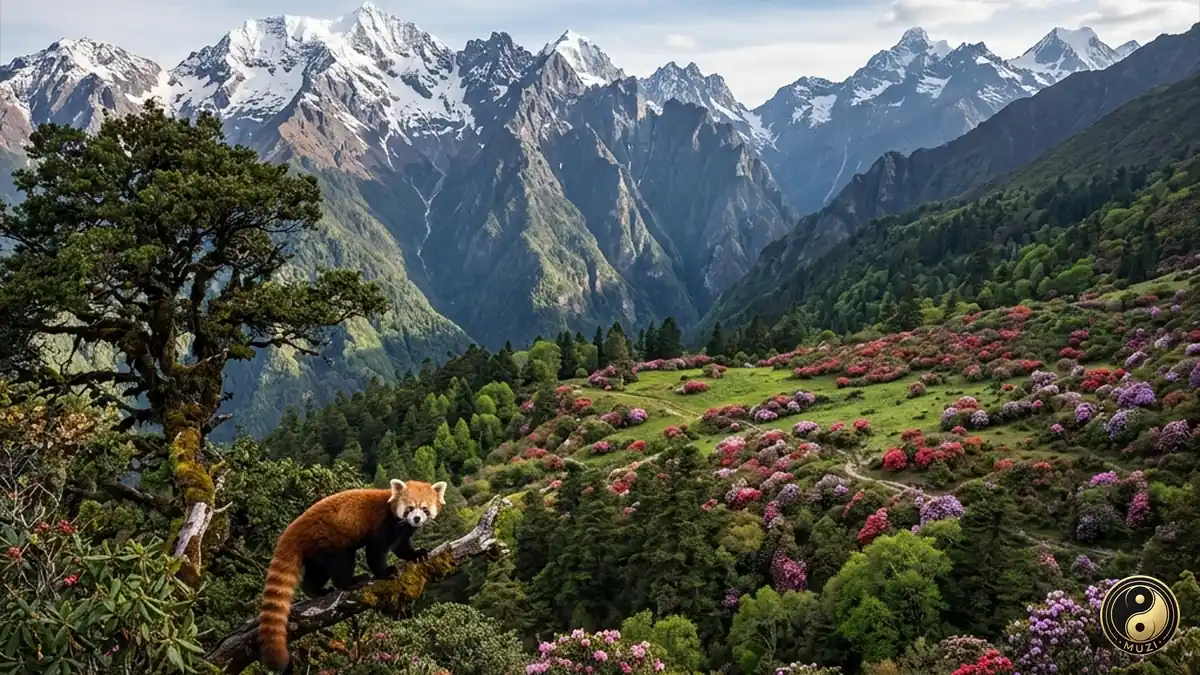
Several thousand meters of vertical drop compress tropical to frigid ecosystems onto a single mountain — an ultimate three-dimensional ecological corridor where one mountain holds all four seasons.
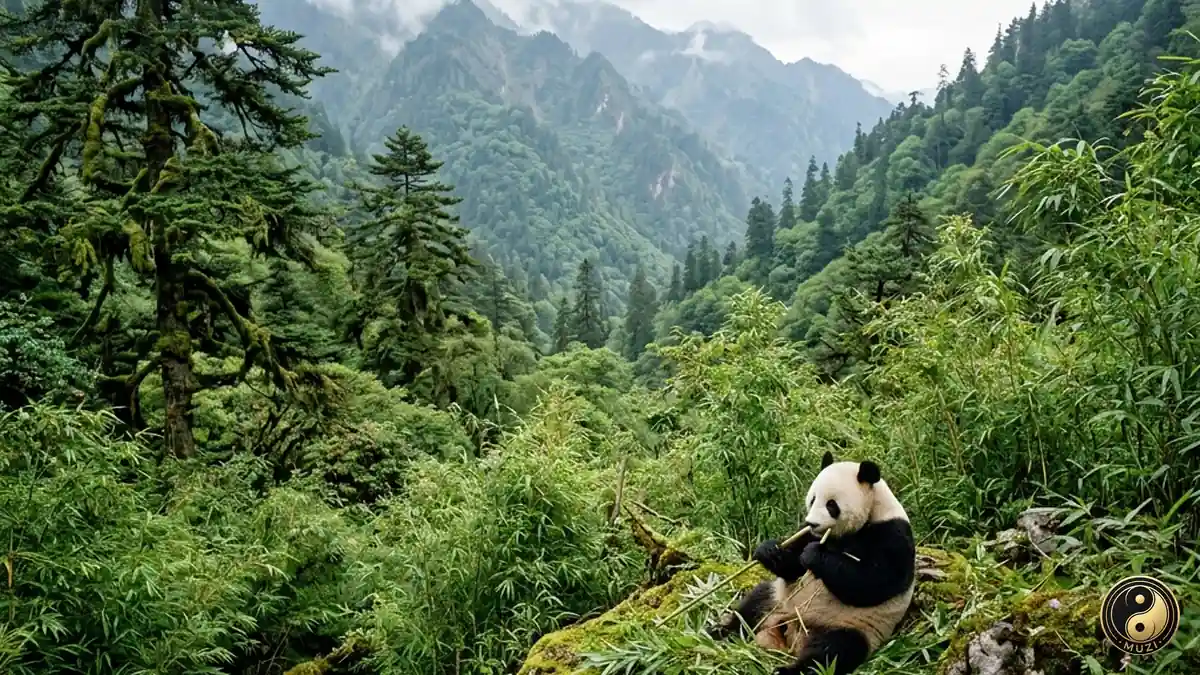
The last home of the giant panda — the bamboo forests of the Min and Qionglai ranges provide the ultimate refuge for this low-metabolic-rate marvel of evolution.
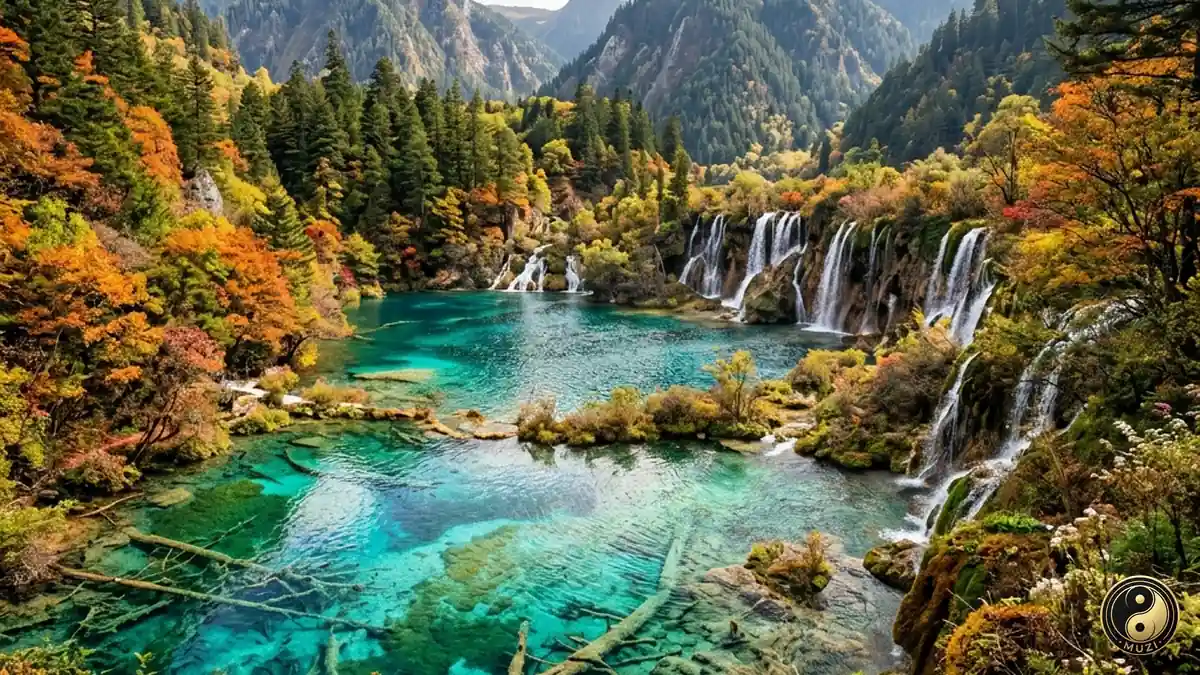
A fairyland of travertine pools and colorful forests — a pristine world deep in the highlands, a dazzling jewel of UNESCO World Natural Heritage.
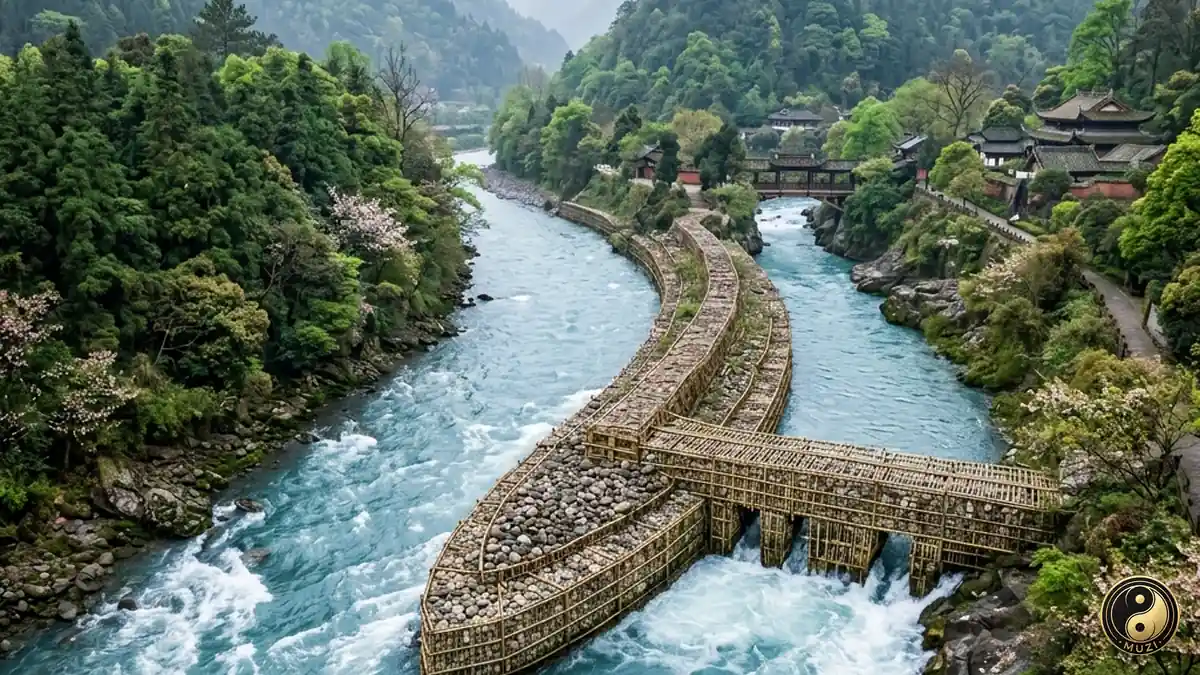
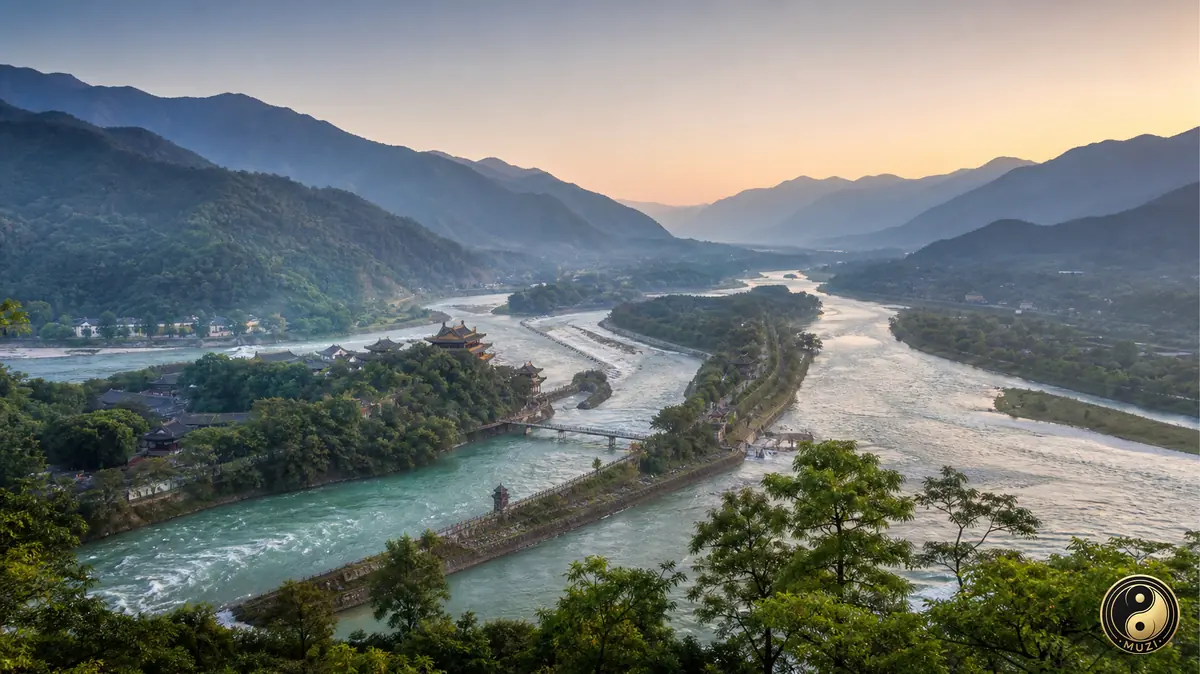
A two-thousand-year-old dam-free irrigation miracle — the fish-mouth divider, the flying-sand weir, and the bottle-neck channel still irrigating the Chengdu Plain's Land of Abundance today.
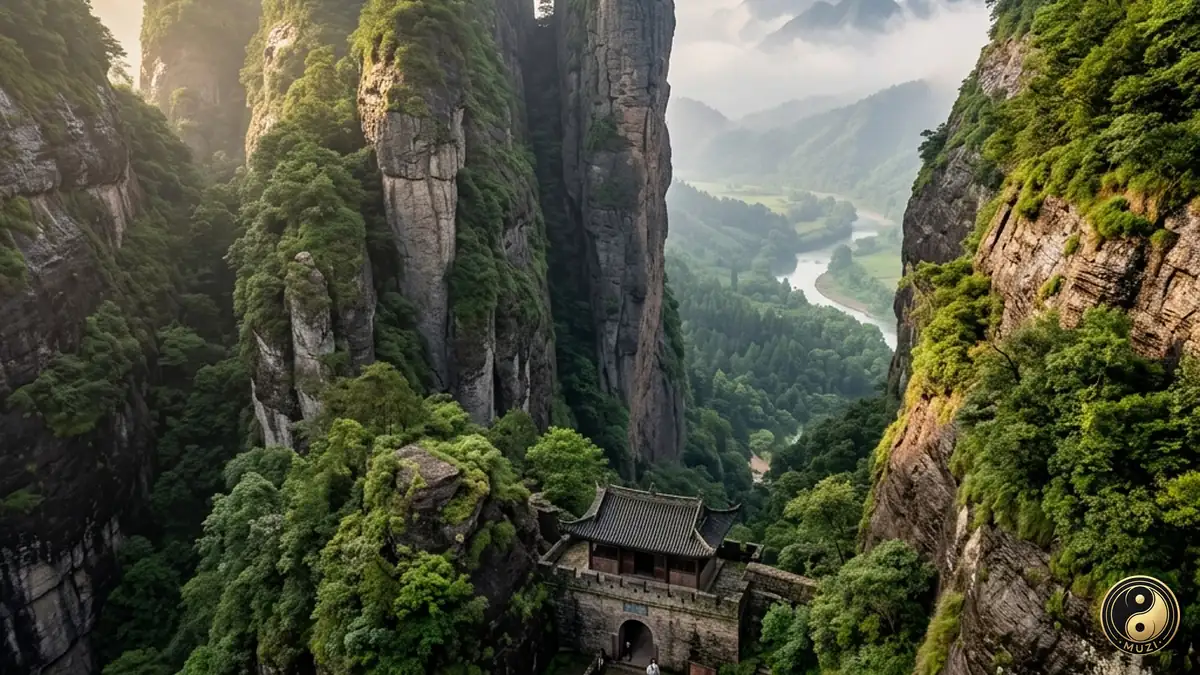
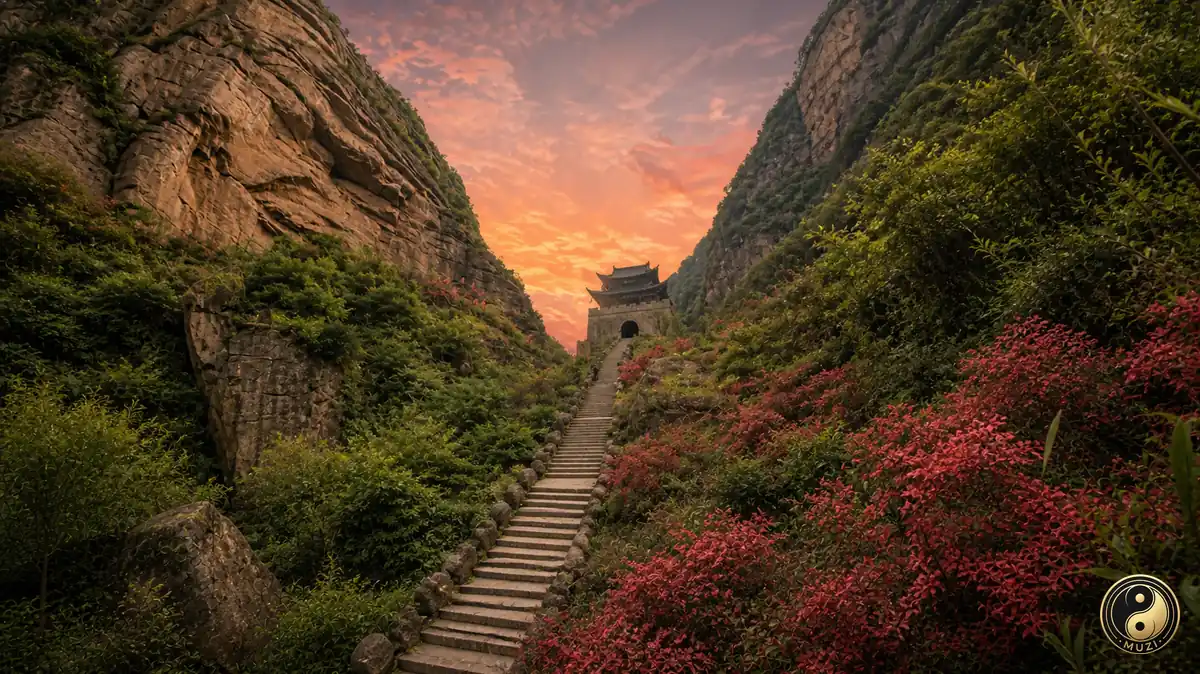
Seventy-two peaks standing like blades in confrontation where the Daba Mountains fractured — the only passage into Shu, nature's security black-box for separatist regimes.
Langzhong at the great omega bend of the Jialing River — ringed by mountains on four sides and water on three, the ultimate living specimen of classical Chinese fengshui site-selection algorithm.
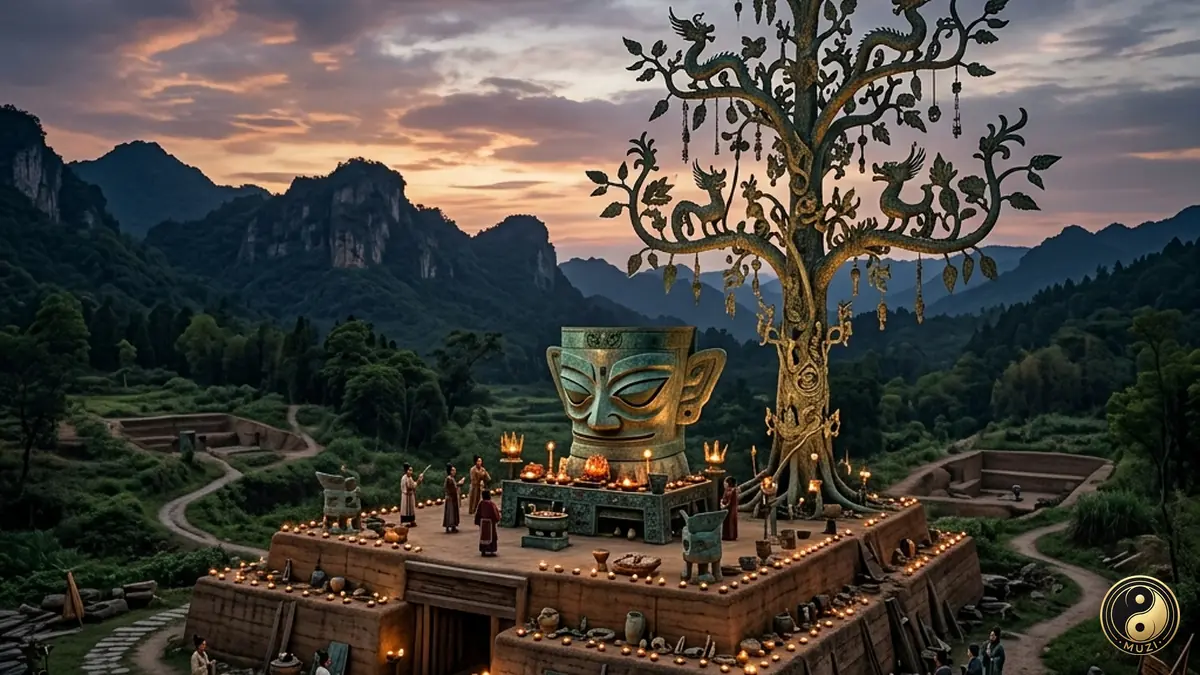
The Sanxingdui ruins — a bronze sacred tree and golden masks that stunned the world, a mysterious ancient Shu civilization center operating on a completely different ritual logic from the Yellow River basin.
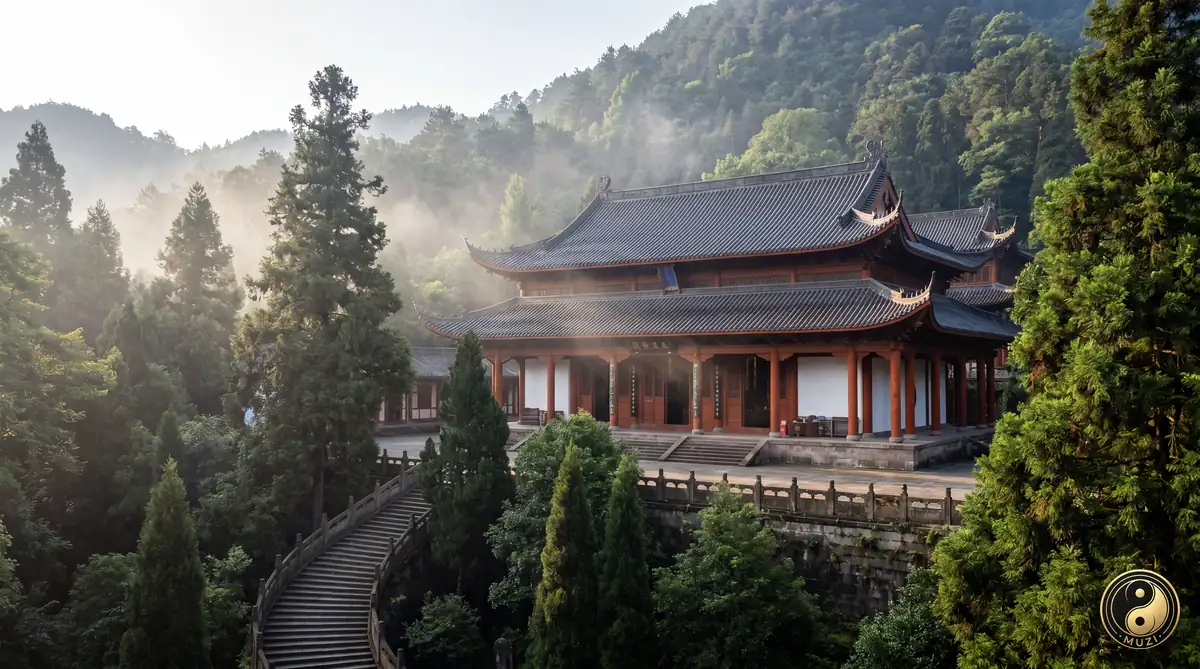
Qingcheng, the most tranquil place under heaven — one of Daoism's birthplaces, where temples dissolve seamlessly into primeval forest, pursuing zero-impedance harmony with the natural world.
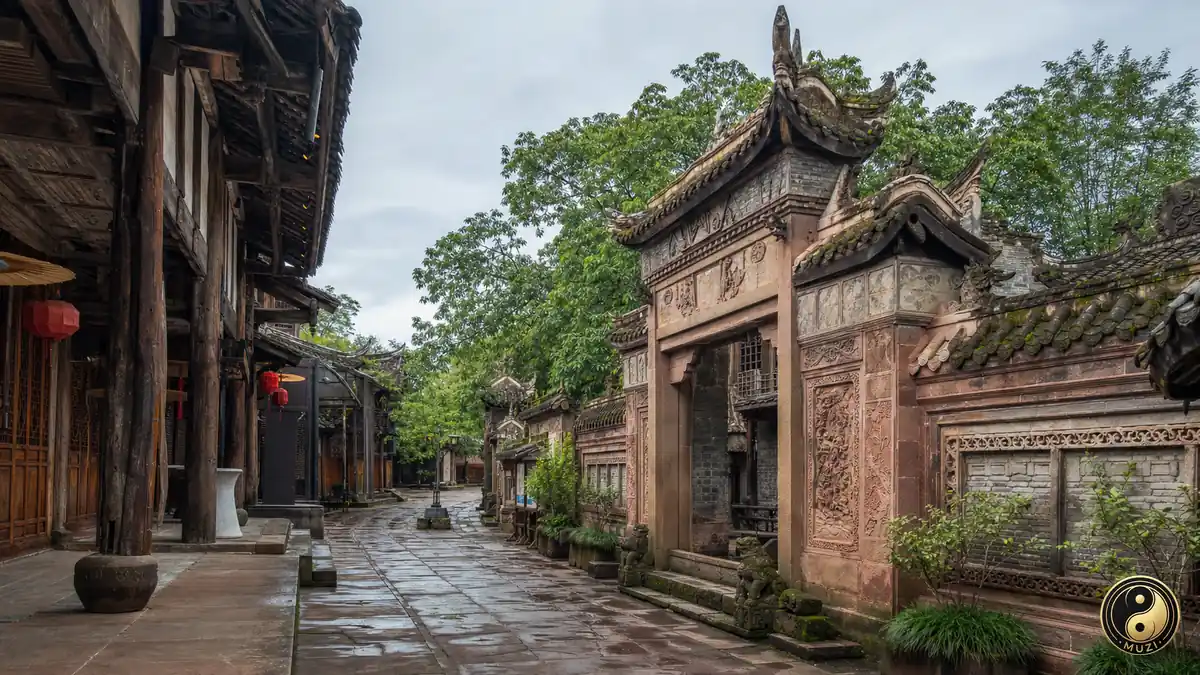
Luodai's Hakka guildhalls, foodways, and community traditions anchor a cultural town west of Chengdu.
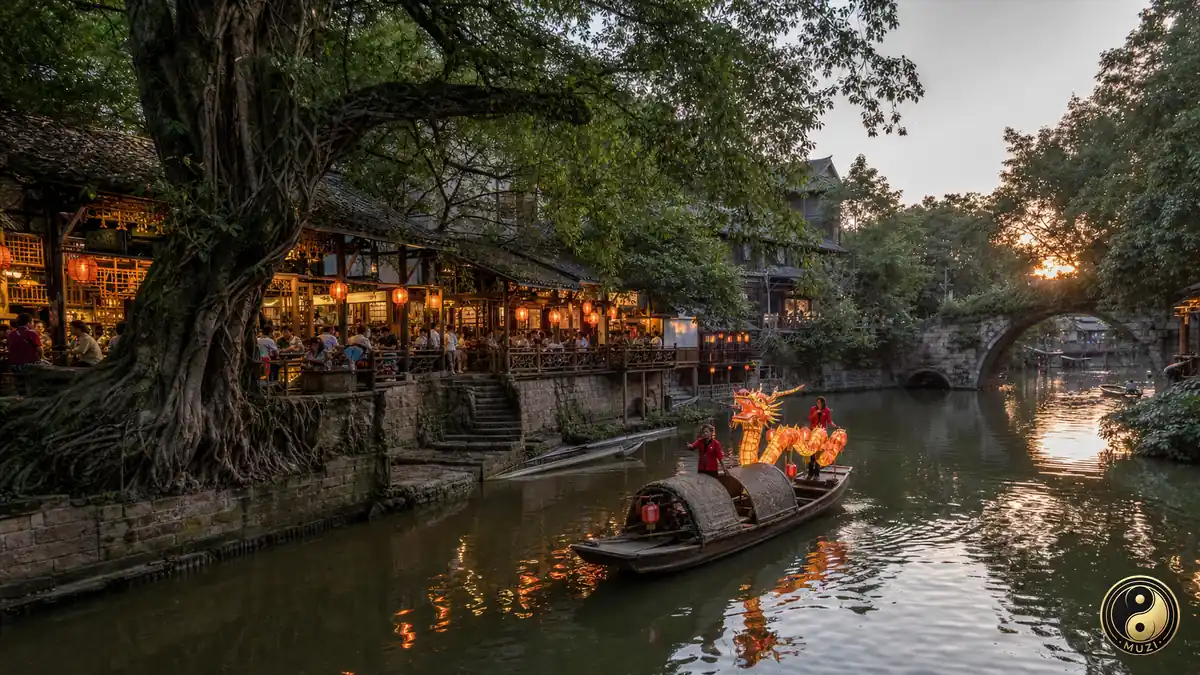
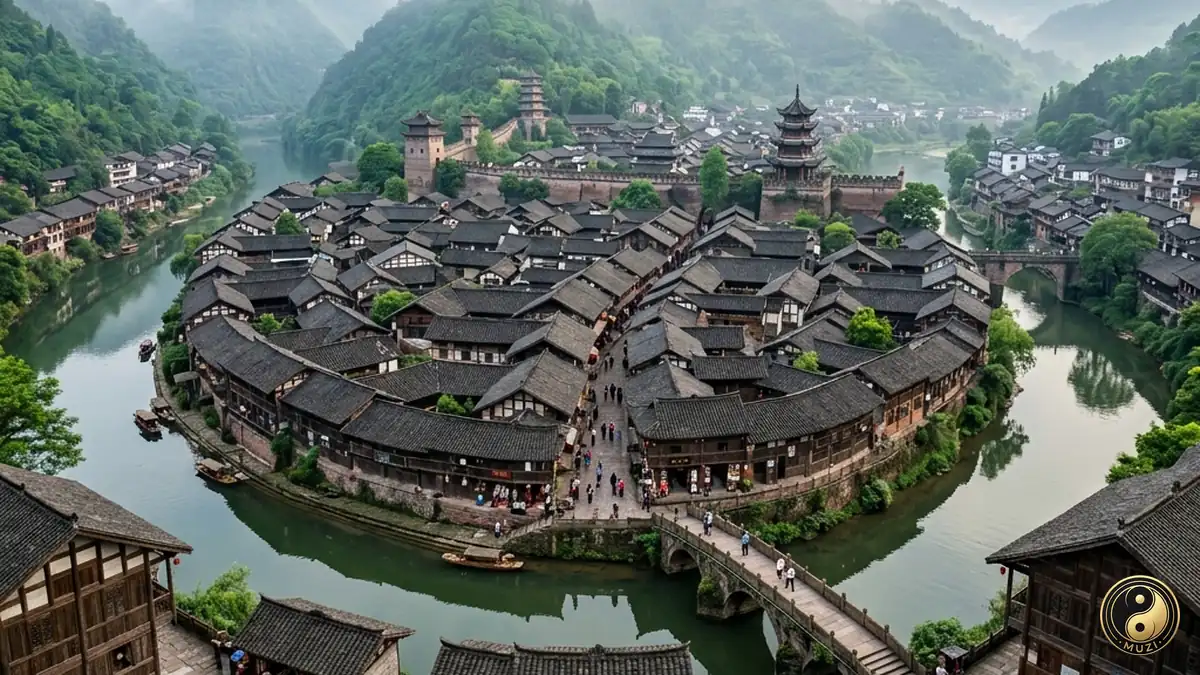
Best-preserved thousand-year-old river-wharf town in western Sichuan; ancient banyan trees and stilted houses line the Fu River; fire-dragon lantern dance and 'one-noodle' are the town's living cultural icons.
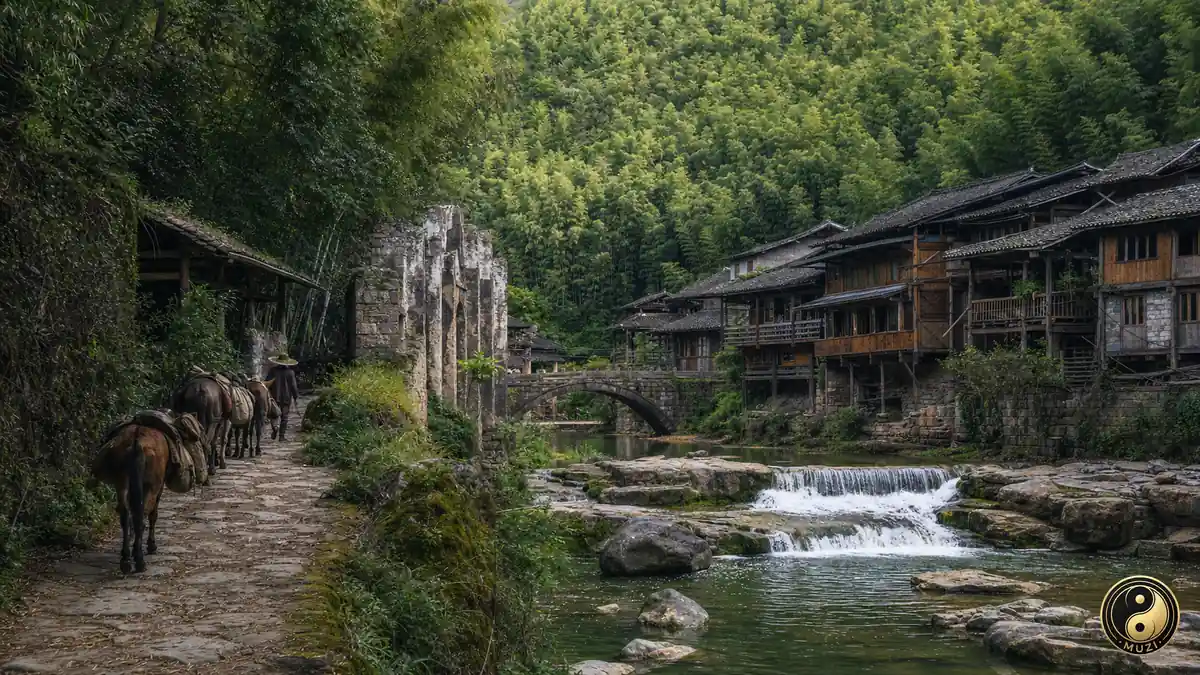
Top-ranked town in western Sichuan on the Ancient Tea Horse Road; Qin-Han post roads and ancient paper-making workshops survive; ten thousand mu of bamboo sea encircles the town like a green wall.