





 County-level
Xin Cheng District
Daming Palace southern esplanades overlook ancient pavilions in Xincheng, home to Tibetan Buddhist shrines at Guangren Temple near Xi'an Station.
 MUZIChinese Matrix
Xi'an is readily recognized through river valleys and inherited local memory.
For Xi'an, the relationship between place and life becomes visible in “Xi'an is readily recognized through river valleys and inherited local memory.” This evidence connects landform, movement, settlement, and cultural expression instead of treating them as isolated details. The present profile of Xi'an reflects environmental adaptation and local stewardship built up over an extended period rather than a short-lived change. This process explains how Xi'an remains connected to its surrounding region while retaining a recognizable local character. That is why Xi'an matters: local detail can illuminate environmental setting, social process, and cultural memory together.
County-level
Daming Palace southern esplanades overlook ancient pavilions in Xincheng, home to Tibetan Buddhist shrines at Guangren Temple near Xi'an Station.
County-level
Over four thousand calligraphic stone steles in Forest of Stone Steles Museum anchor Beilin, near World Heritage Small Wild Goose Pagoda.
County-level
Ancient Bell and Drum Towers command central vistas in Lianhu, where bustling culinary traditions thrive in Muslim Quarter around Great Mosque.
County-level
Historic willowed riverbanks at Baqiao Bridge recall ancient farewell verses in Baqiao, framed by modern lake wetlands and Chang'an Tower.
County-level
Weiyang Palace Ruins mark the eastern starting point of the Silk Road in Weiyang, alongside monumental halls of imperial Daming Palace.
County-level
World Heritage Giant Wild Goose Pagoda preserves Xuanzang Buddhist translation legacy in Yanta, adjacent to vibrant light shows of Grand Tang Mall.
County-level
Advanced aircraft flight-testing and aerospace engineering drive innovation in Yanliang, bordered by the lush banks of Shichuan River Park.
County-level
World Heritage Terracotta Army guards the Tomb of First Qin Emperor in Lintong, near hot springs and imperial pavilions of Huaqing Palace.
County-level
Sacred peaks of Mount Zhongnanshan cradle landslide tarns at Mount Cuihuashan in Chang'an, home to the millennial golden ginkgo of Guanyin Temple.
County-level
The clear and muddy confluence of Jing and Wei Rivers creates the famous natural phenomenon in Gailing, site of the Tang-dynasty Zhaohui Pagoda.
County-level
Vibrant rural folk peasant paintings of Huxian flourish in Huyi, home to Kumarajiva Sanlun Buddhist ancestral cradle at Caotang Temple.
County-level
Prized nephrite Lantian Jade has been carved since antiquity in Lantian, near Wang Wei tranquil Wangchuan Villa and Homo erectus fossil sites.
County-level
Louguantai Daoist Ancestral Platform marks where Laozi preached the Tao Te Ching in Zhouzhi, global capital of sweet kiwifruit orchards.
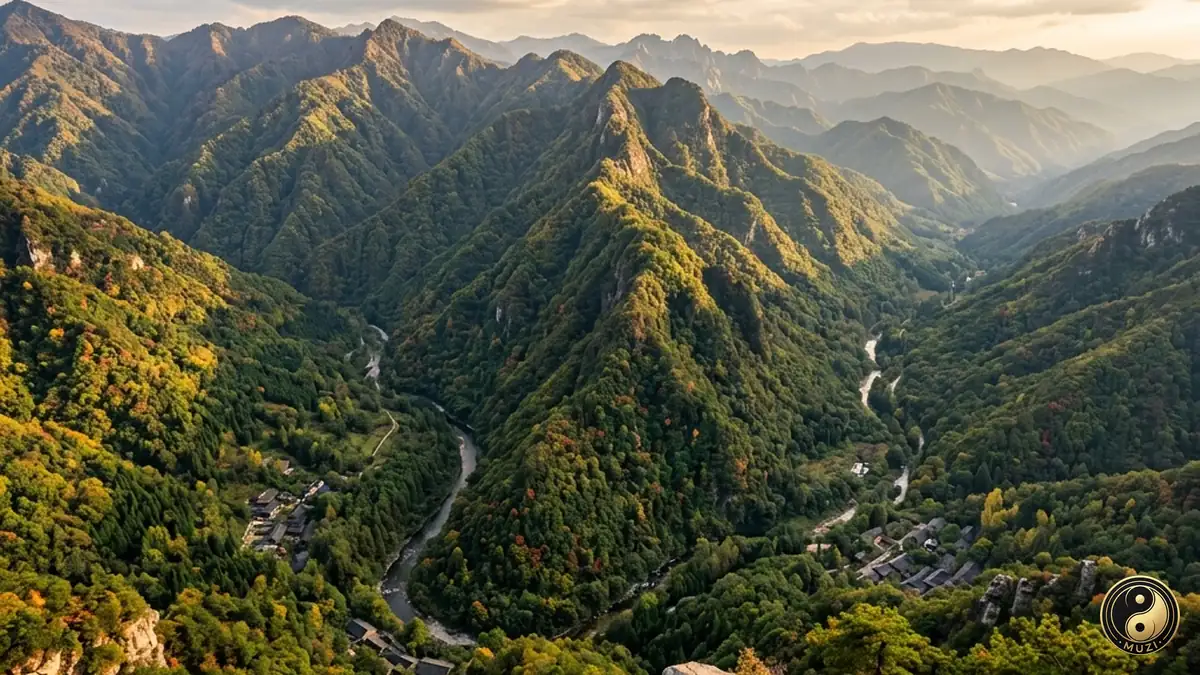
The Qinling runs east to west as a natural climate and species divide between northern and southern ecosystems, with a long role in Chinese civilization.
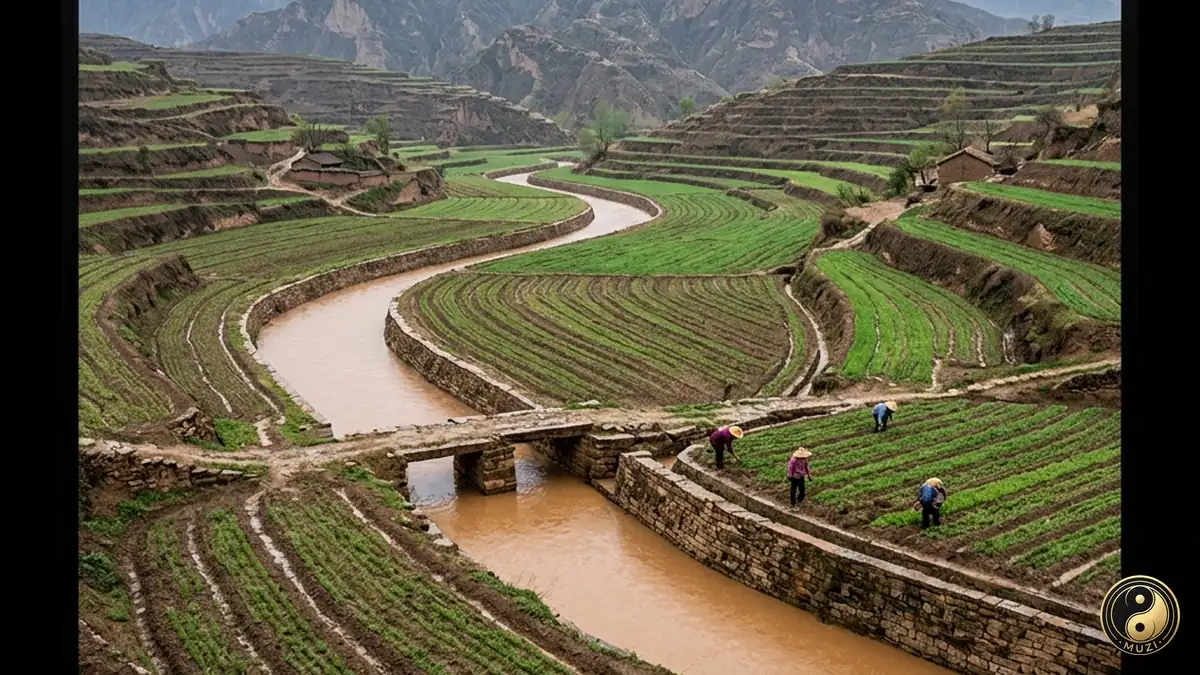
An irrigation canal that diverted silt-laden Jing River water to transform Guanzhong's saline-alkali land — a single engineering project that directly fueled Qin's war machine to conquer the six states.
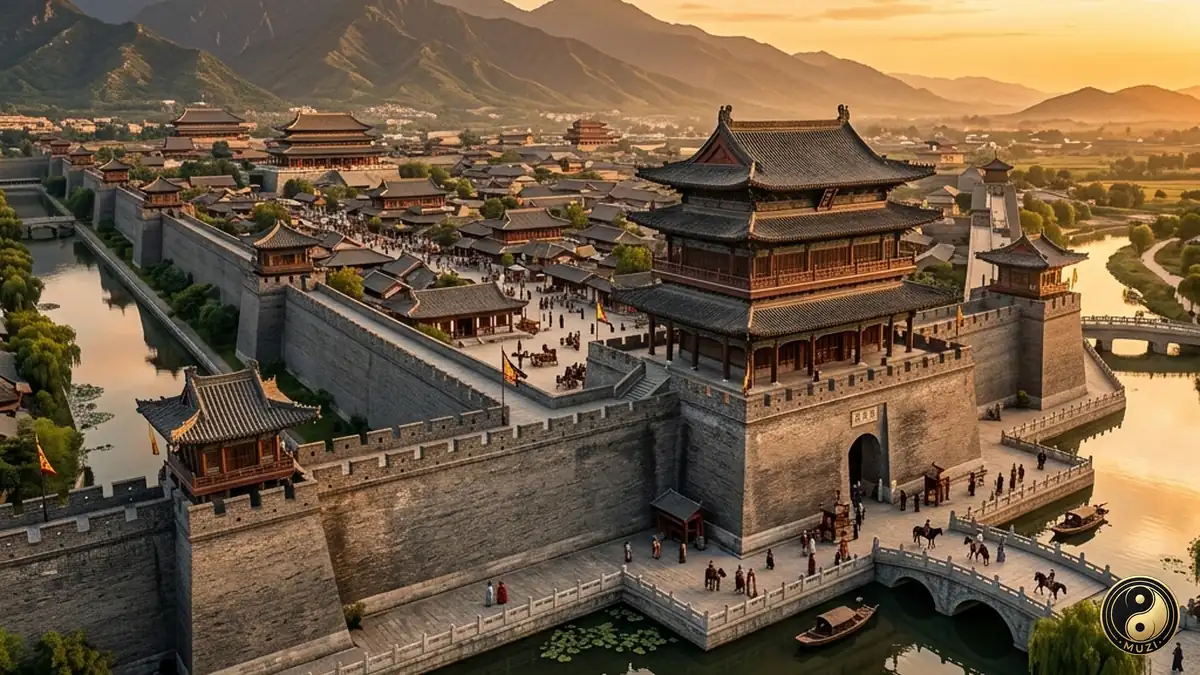
Sui-Tang Chang'an — one hundred and eight wards laid out like a chessboard grid, the largest and most orderly imperial capital planning masterpiece of the ancient world.
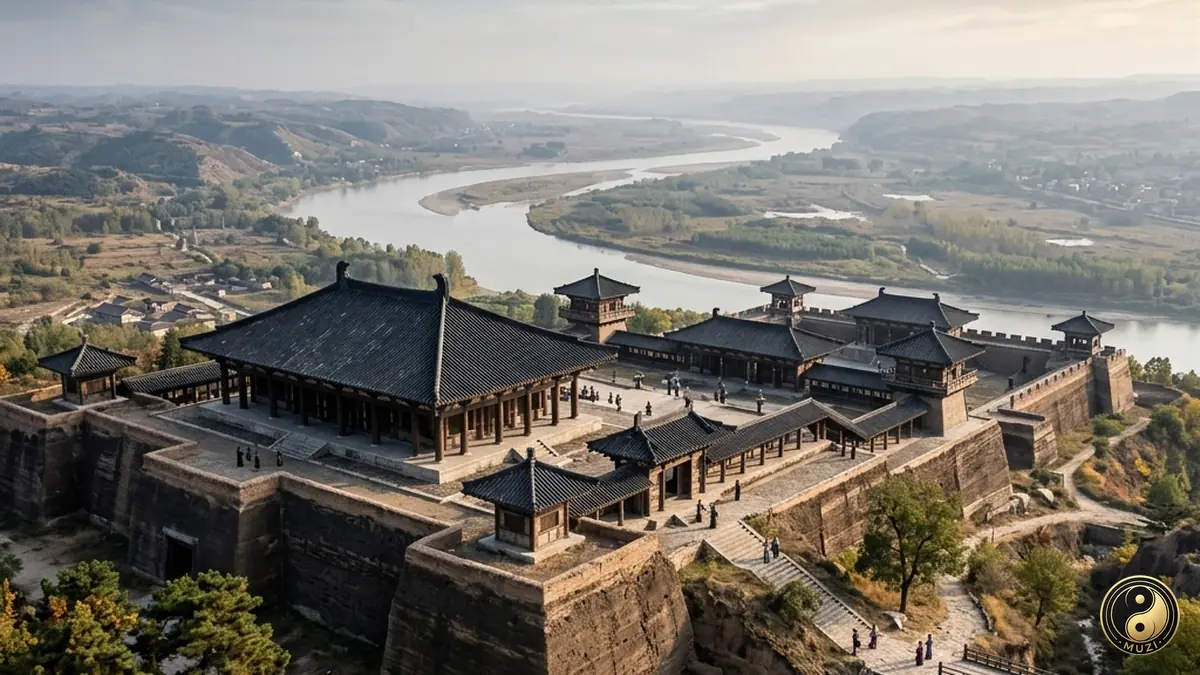
The Qin Xianyang Palace ruins — spanning the Wei River, mapping its separate halls onto the constellations, humanity's earliest super-stage for performing sovereignty through landscape geometry.
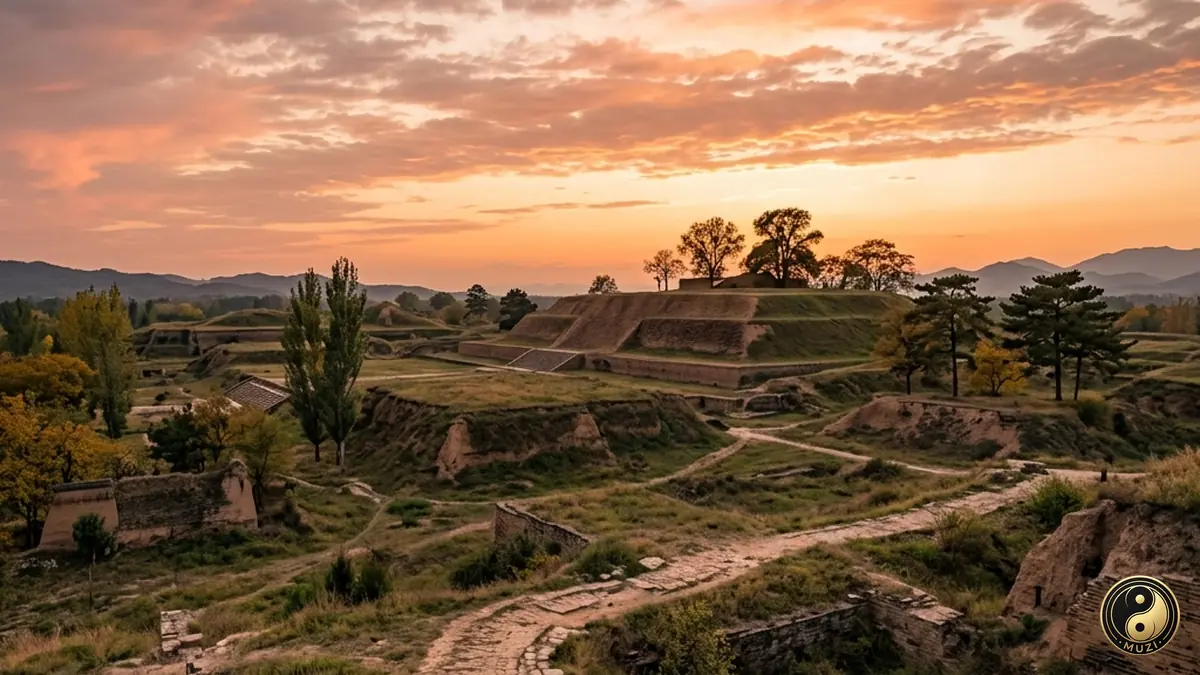
The Han Weiyang Palace ruins — a monumental palace built atop a colossal rammed-earth platform, using extreme vertical perspective to manufacture suffocating awe before imperial authority.
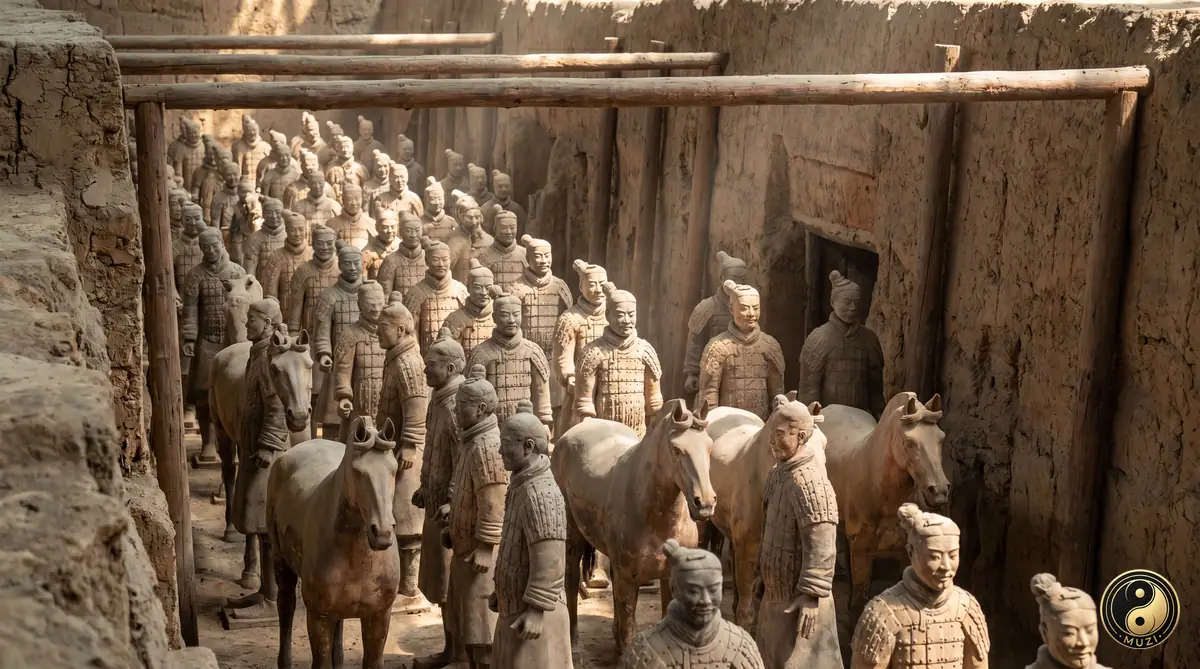
The Qin Shihuang Mausoleum — eight thousand terracotta warriors arrayed underground in full battle formation, the ultimate subterranean palace seeking to replicate supreme earthly sovereignty in the underworld.
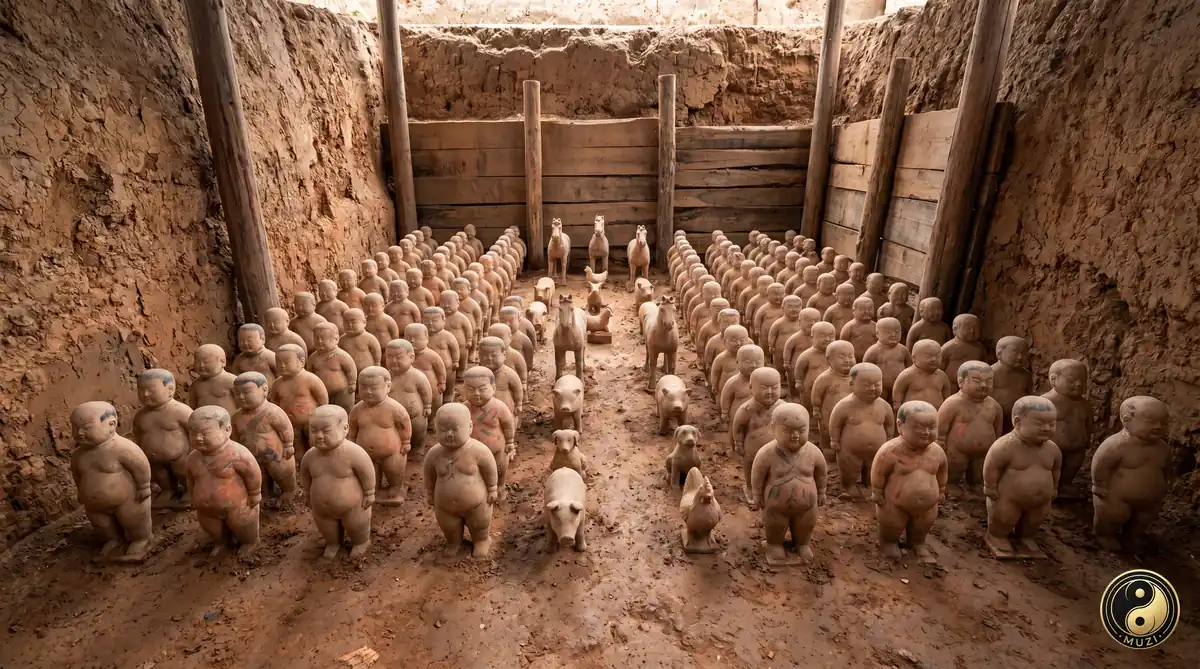
The Han Yangling Mausoleum — a vast collection of miniature pottery figurines and granary models entombed, locking state assets into an underground model, the foundational work of the Chinese imperial tomb system.
The 51-meter truncated pyramid earthen mound sealing the subterranean palace and mercury cosmos of China's first unifier.
View attraction
The largest excavation vault exhibiting the main vanguard battle array of over 6,000 life-sized warriors and chariots.
View attraction
The specialized combined-arms combat pit comprising cavalry squadrons, war chariots, and kneeling archers.
View attraction
The subterranean command headquarters pit coordinating the underground legions, featuring ceremonial guards and officers.
View attraction
Dedicated museum displaying the two magnificent 1980 imperial bronze chariots and teams of four horses, known as the Crown of Bronze.
View attraction
Excavation pits revealing hyper-realistic court entertainment acrobat figurines and thousands of meticulously crafted stone armor plates.
View attraction
The world-class national museum complex preserving and presenting the complete archaeological landscapes of the Qin imperial necropolis.
View attraction
The apex of the Qinling Range and the highest summit in Eastern mainland China (3771.2m).
View attraction
A scenic alpine landslide-dammed lake in Zhongnan Mountain, revered since antiquity as Taiyi peak.
View attraction
An ancient post town on the Tang-era Tangluo Road, sanctuary for the Four Treasures of Qinling.
View attraction
The primary ecological watershed dividing northern and southern China, rich in primeval fir forests.
View attraction
The sacred cradle of Daoism where Laozi penned the Tao Te Ching and delivered his teachings from the ancient platform.
View attraction