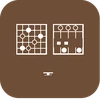
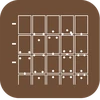
The ge-halberd and battle-formation system (*ge ji zhen fa*) was ancient China's organizational military engineering project, assembling tens of thousands of individual soldiers into cascading combat units through geometric arrays and signal-encoding norms. The ge originated in the Shang dynasty as a transverse-bladed hook-and-peck polearm, serving as the primary killing weapon in chariot warfare. The ji (halberd) fused the ge's lateral blade with the spear's straight point, combining hooking, pecking and thrusting in a single weapon; by the Han dynasty the ji had replaced the ge as standard equipment for both infantry and cavalry. The *Kao Gong Ji* (Records of Examination of Craftsmen), a Warring States official technical manual, meticulously documented the casting dimensions, weight and material standards for both weapons.
Formation theory reached a high level of sophistication during the Spring and Autumn and Warring States periods. Sun Bin, a descendant of Sun Wu, devoted dedicated sections of his Art of War to formation organization, transformation and communication command, elevating multi-arm coordination from clear practice to a systematic operational doctrine. During the Three Kingdoms era, Zhuge Liang developed the Eight-Formation Diagram, training troops with stone markers. The diagram's core lay in dynamic transformation: a square formation could reorganize into a circular formation to meet encirclement from all sides, granting the defender several times the effective defensive strength without any change in troop numbers.
The fundamental operational principle of formations was synergistic amplification. On the ancient battlefield, the combat power of a single soldier was extremely limited; the effective killing range of one ge or ji was no more than a few feet. But when thousands of soldiers equipped with long ge weapons arranged themselves in a dense phalanx, the front-rank weapons formed a continuous metallic barrier two zhang deep: enemy cavalry, before closing to attack distance, had to face dozens of simultaneously thrusting polearms. This is the meaning of formations derive strength from numbers: the principle of geometric arrangement enabled a well-drilled array to generate collective combat power far exceeding the sum of its individual parts.
The battlefield power of formations reached its zenith in the frontier defense of the Han empire. In the fourth year of the Yuanshou era (119 BCE), Wei Qing and Huo Qubing each led fifty thousand cavalry on a two-pronged offensive against the Xiongnu, marking the first time in Chinese history that large-scale cavalry formations, rather than traditional infantry phalanxes, were deployed for a thousand-li pursuit deep into the steppe. Huo Qubing adopted an extraordinarily bold formation strategy: abandoning heavy baggage, using light cavalry as the vanguard, and employing flanking encirclements as the primary tactic, he cut through and annihilated the Xiongnu main force across the northern steppe at severe speed and mobility, *feng Lang Ju Xu, shan yu Gu Yan, deng lin Han Hai* (performing the sacrifice at Wolf Crest Mountain, the shan rite at Guyan, and ascending to the Northern Sea). This campaign marked the revolutionary evolution of Chinese formation doctrine from Spring and Autumn chariot-infantry coordination toward a multi-arm combined cavalry-infantry synthesis.
The practical application of Qin and Han formations against Xiongnu cavalry was thoroughly tested in battle. The Qin army's long-halberd phalanx proved during Meng Tian's northern campaign against the Xiongnu (215 BCE) that infantry arrays could effectively check the shock of nomadic horsemen. In a later era, the story of Li Ling (99 BCE), who held out for eight days with five thousand infantrymen against eighty thousand Xiongnu cavalry using wagon-circle formations and dense crossbow fire before running out of ammunition and supplies, became the most severe case in Chinese military history of infantry formation warfare against cavalry encirclement.
The command signaling system of formations was equally a great achievement of ancient information engineering. On a battlefield without radio, the synchronized coordination of armies numbering in the hundreds of thousands relied on combinatorial encoding of drums and flags: drum beats signaled advance, gong strikes signaled withdrawal, a flag tilted left commanded a left turn, a flag tilted right a right turn. This dual system of visual and auditory signals enabled a commander to transmit complex tactical orders at near real-time speed to the entire army from a distance of several li. Sun Wu wrote in the Art of War: *yan bu xiang wen, gu wei jin gu; shi bu xiang jian, gu wei jing qi* (Because voices cannot be heard clearly, drums and gongs are used; because bodies cannot be seen clearly, banners and flags are used). The signaling system was the nervous system upon which the entire formation's coordinated operation depended.
The internal logic of ge-halberd formation warfare was to convert the individually feeble combat power of thousands of soldiers, through the synergistic amplification principle of spatial arrangement, into an indivisible, unified-force combat system. With drums and banners as its nervous system and with ge and halberd polearms as its metallic tentacles, the feudal armies of ancient China transformed a mass of disconnected individuals into a single thinking, unified-will colossus. This is precisely why ge-halberd formations became the most effective defensive instrument available to Central Plains dynasties against nomadic cavalry throughout the cold-weapon era, and why the basic principles of square and circular formations continued to be applied even into the age of gunpowder. Formation thinking influenced military science far beyond the cold-weapon period: Qi Jiguang's mandarin-duck formation (*yuan yang zhen*) in his New Treatise on Military Efficiency (1560), using an eleven-man minimal combat unit with alternating long and short weapons, was essentially a cold-weapon formation upgraded for the early firearms era. Even modern infantry squad tactics, the coordination of fire suppression and mobile flanking, rest on the same millennia-old wisdom of synergistic amplification.