














 Mountains
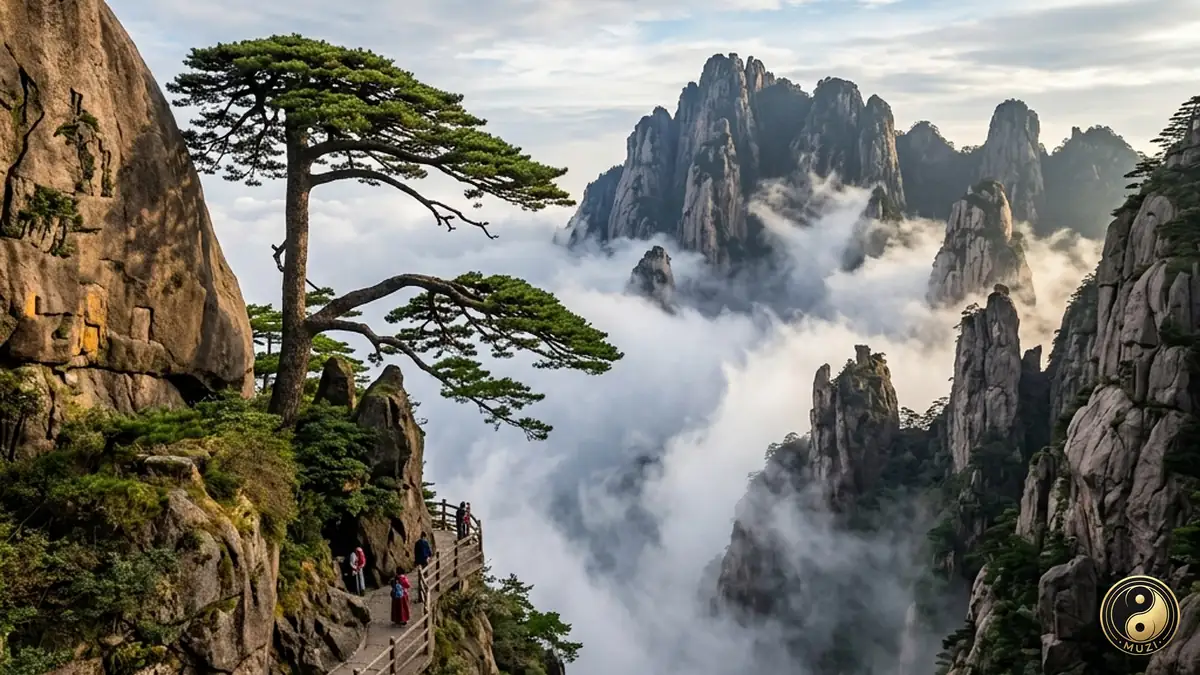
Yellow Mountain
Famed for its peculiar pines, grotesque rocks, sea of clouds, and hot springs — the aesthetic matrix and inspiration wellspring of Chinese landscape painting.
 MUZIChinese Matrix
Nine ways to read the living landscape of Chinese civilization.
Mountains
Famed for its peculiar pines, grotesque rocks, sea of clouds, and hot springs — the aesthetic matrix and inspiration wellspring of Chinese landscape painting.
 Mountains
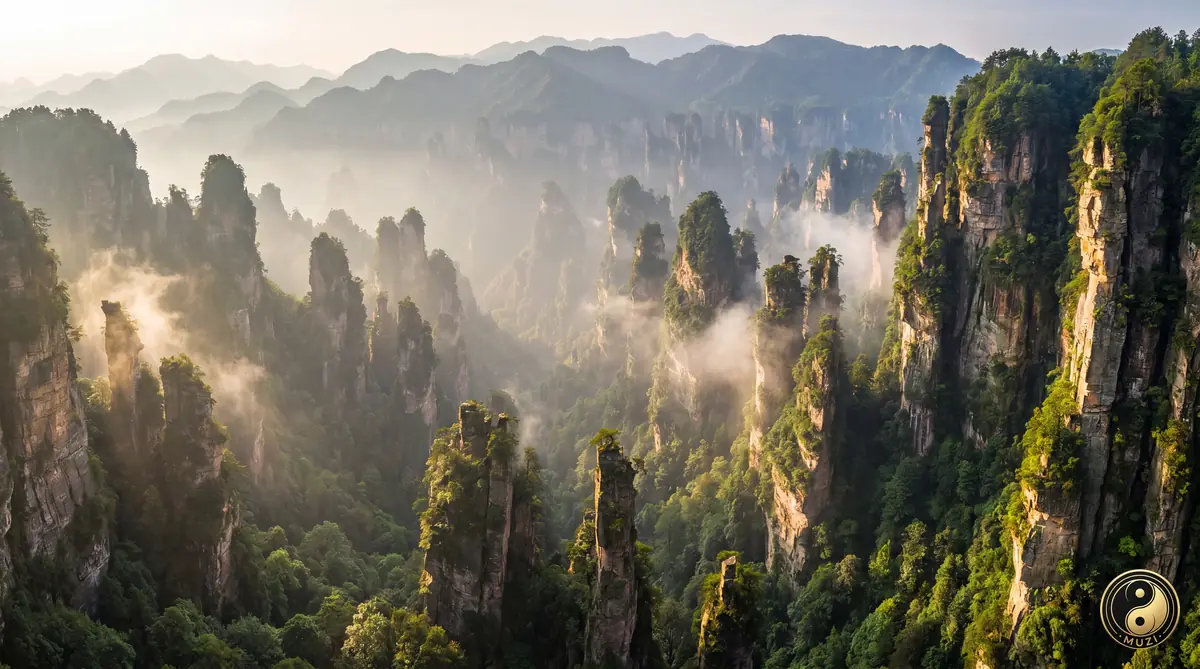
Three thousand sandstone pillars rising like celestial armies — the real-life prototype for the floating Hallelujah Mountains of Avatar.
 Mountains
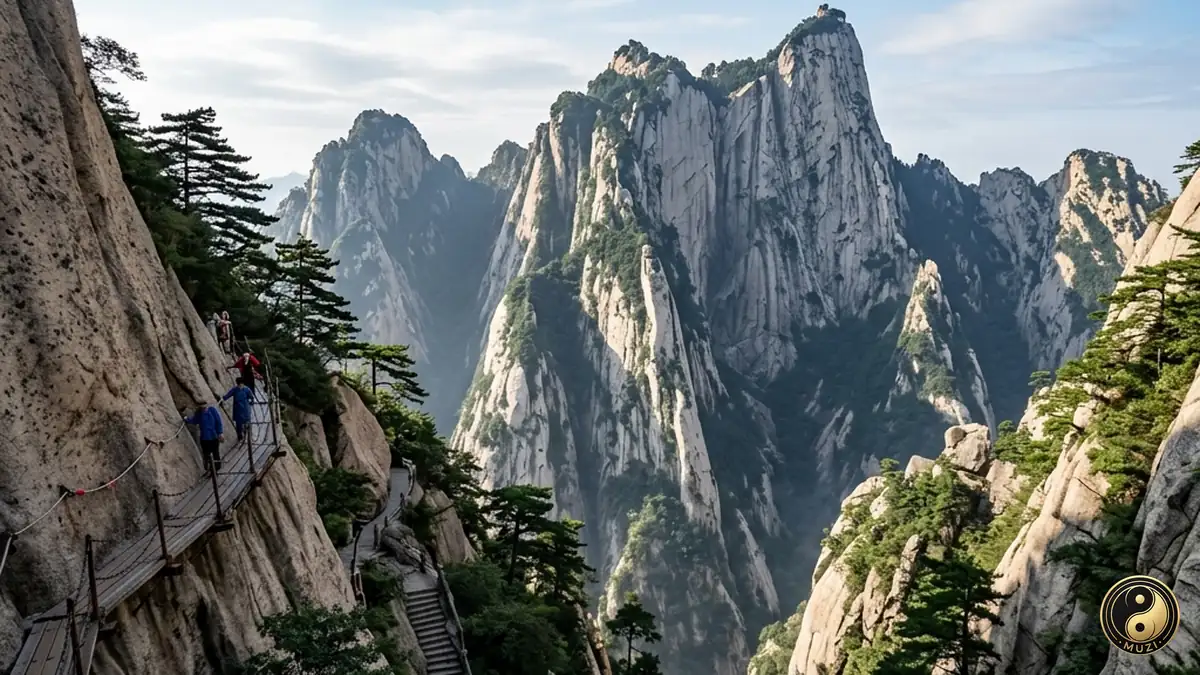
The most precipitous mountain under heaven — a single knife-edged ridge, one path up since antiquity, daring climbers to this day.
 Mountains
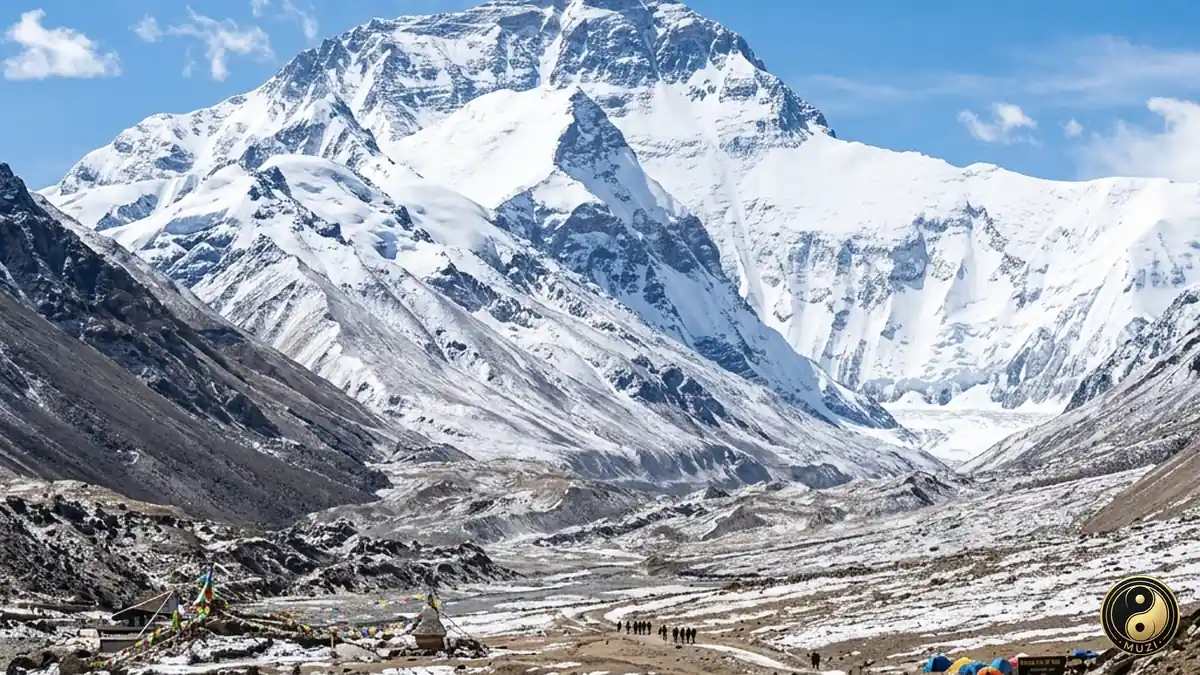
The Third Pole of Earth, the rooftop of the world — the ultimate product of plate collision, the backbone of Asia and a sky-high defensive line that never falls.
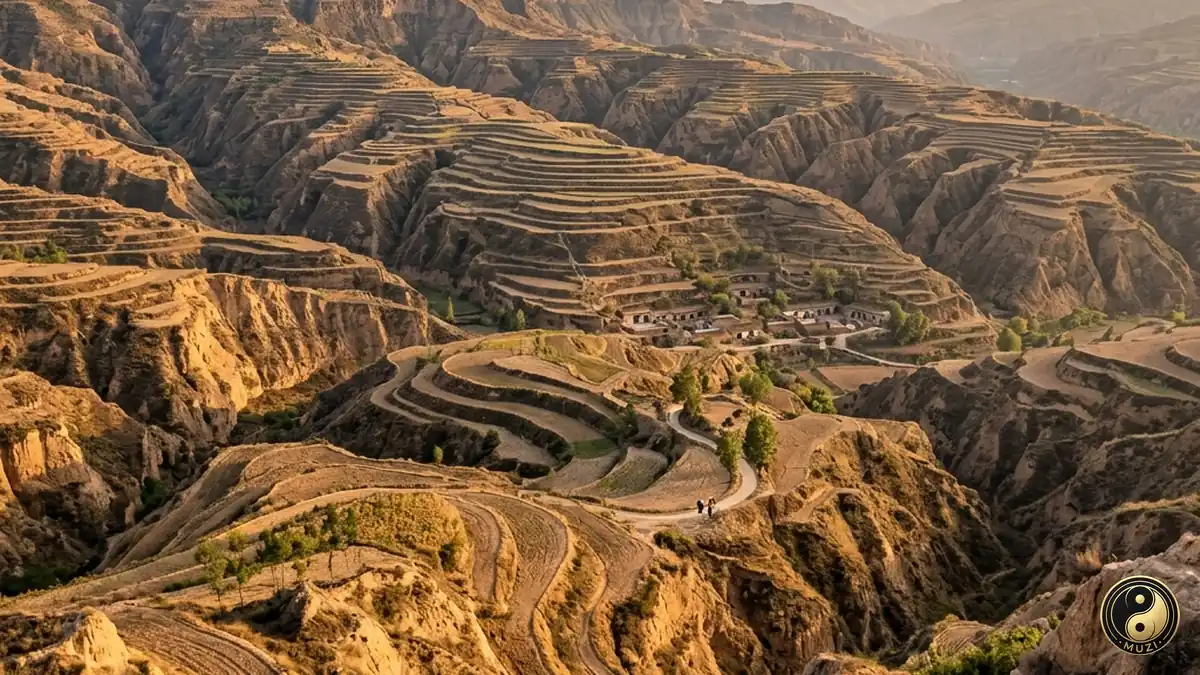 Plains
The Loess Plateau's windblown soils are fertile and workable, supporting early agrarian communities.
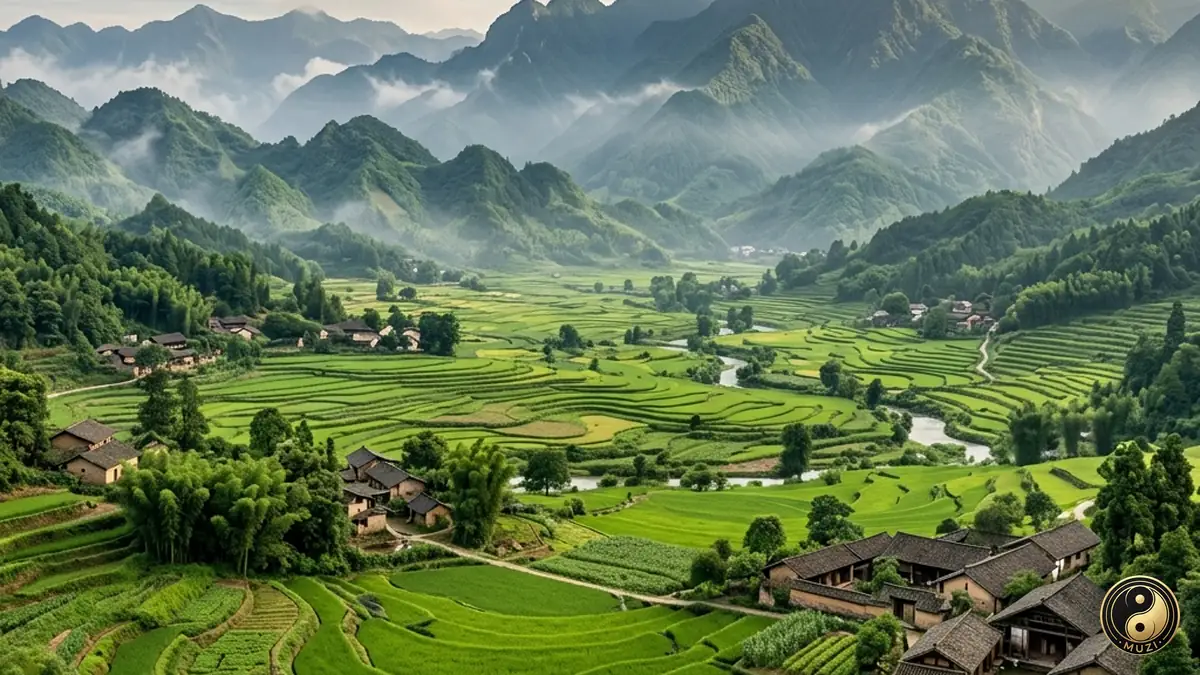 Basins
A purple-soil basin ringed by mountains on all sides — the cradle of the Land of Abundance, a natural sanctuary and rear granary for dynasties in chaos.
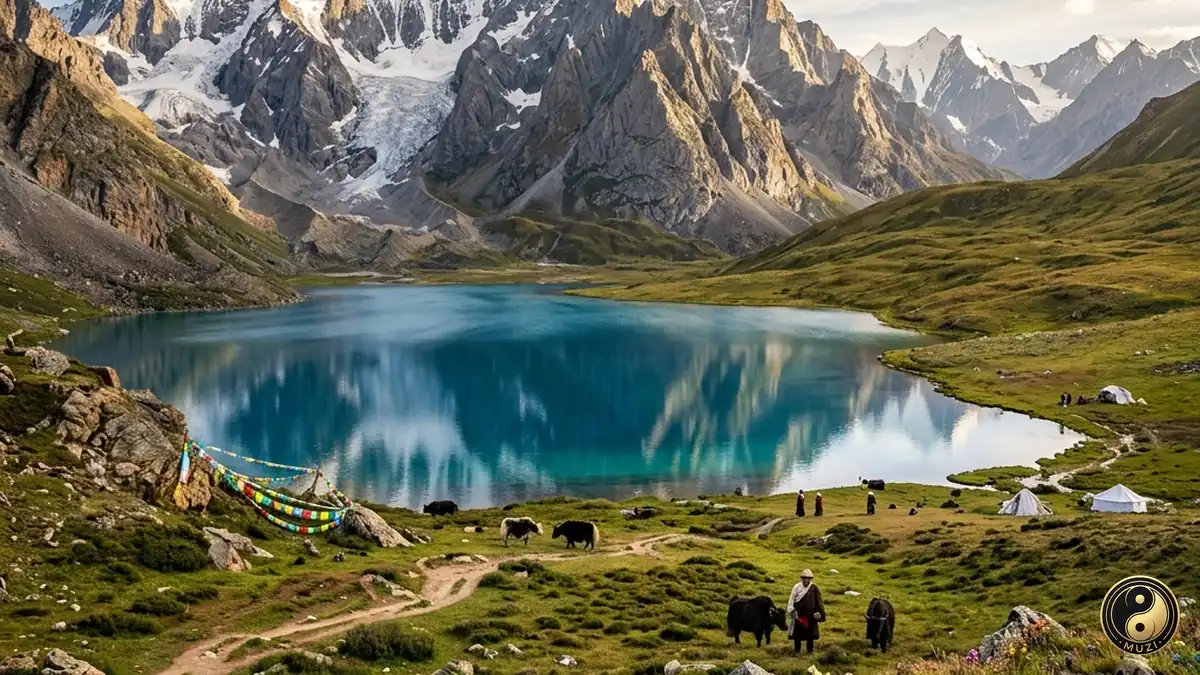 Plains
The world's highest plateau, the Asian Water Tower and source of the Yangtze and Yellow Rivers, whose headwaters shape East Asian water systems.
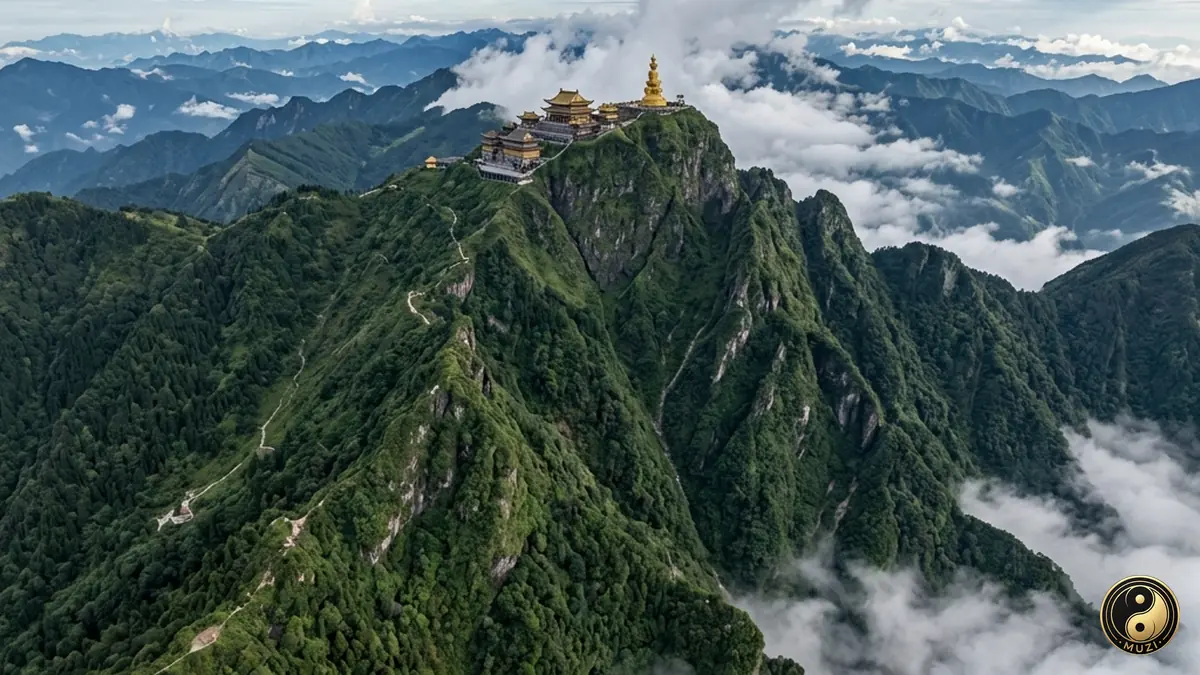 Mountains
Golden summit Buddha's light reflected in a sea of clouds — a vertical cliff soaring three thousand meters, four seasons in one mountain, ten landscapes in ten miles.
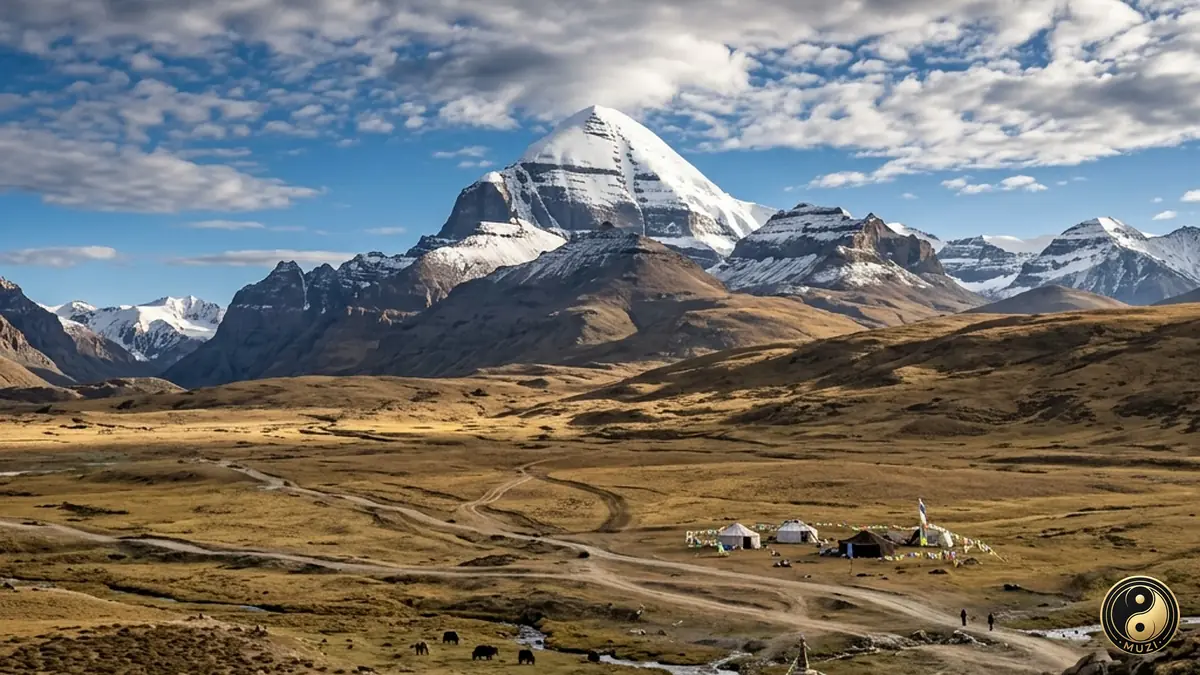 Plateaus
A high-altitude frozen desert of extreme aridity — its absolute physical isolation gave birth to the mysterious Guge Kingdom and Zhangzhung civilization.
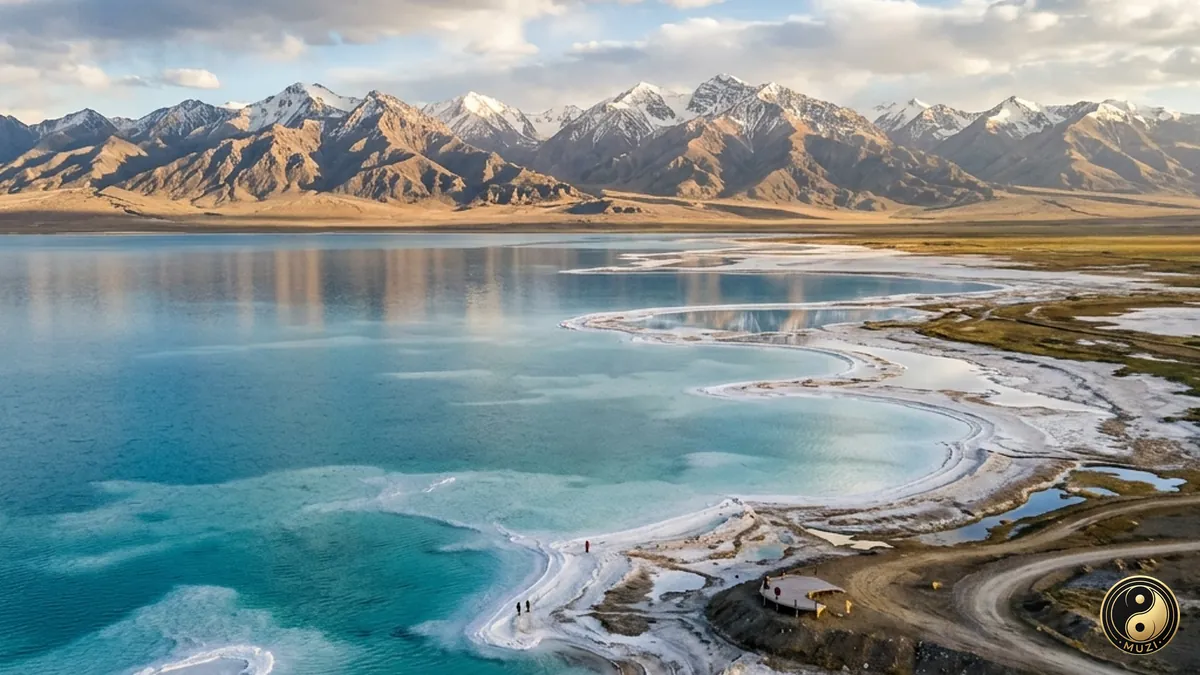 Basins
A high-altitude inland treasure basin — desolate on the surface, yet beneath lies an extraordinary wealth of salt lakes and mineral resources.
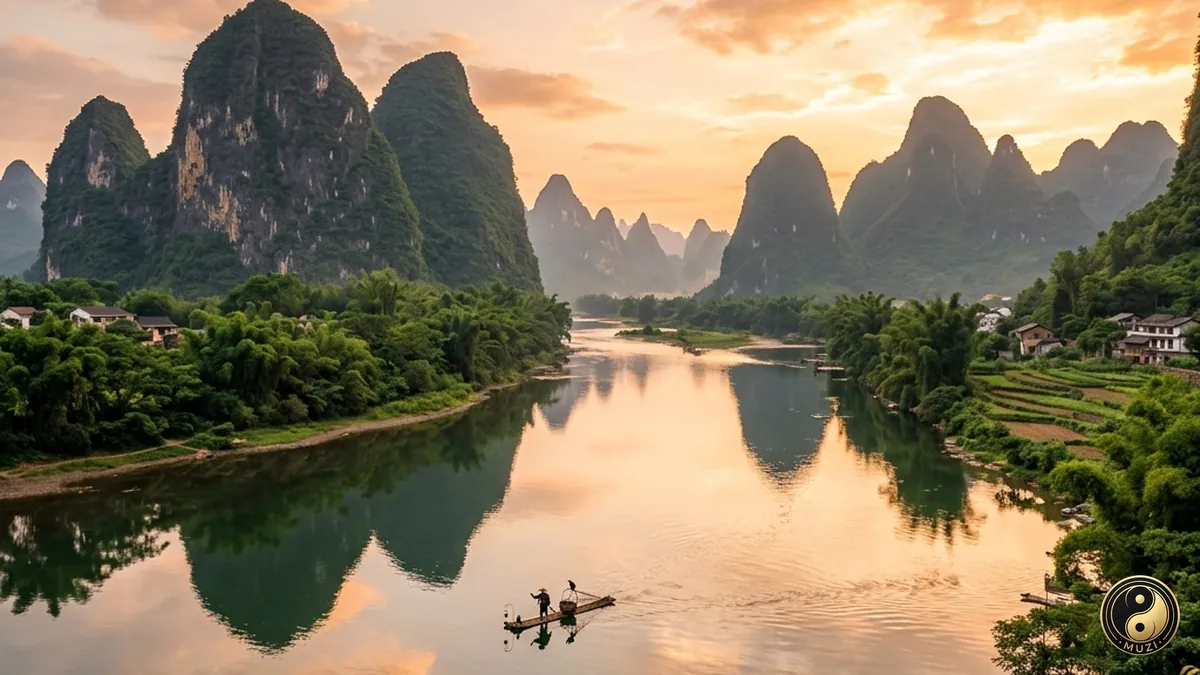 Mountains
Karst peaks and the Li River make Guilin a classic Chinese ink-wash landscape.
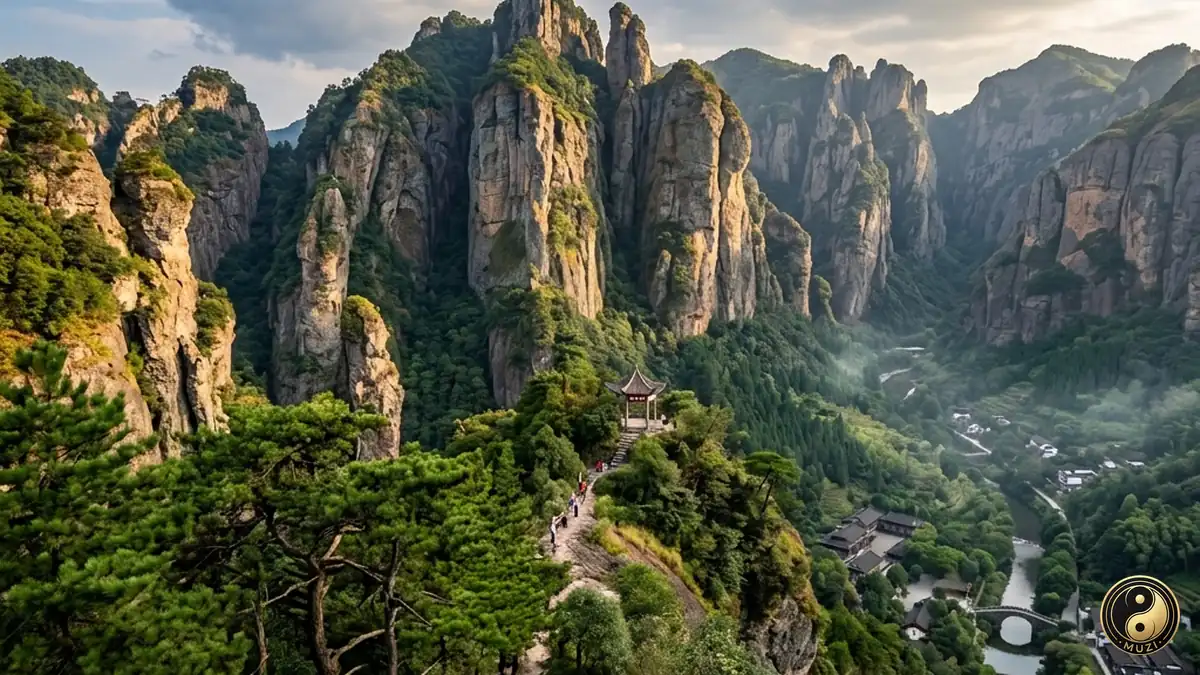 Mountains
The premier mountain of the southeast — its rhyolite cliffs cut like knife and axe, breaking Jiangnan's gentle aesthetics with hard geometric lines.
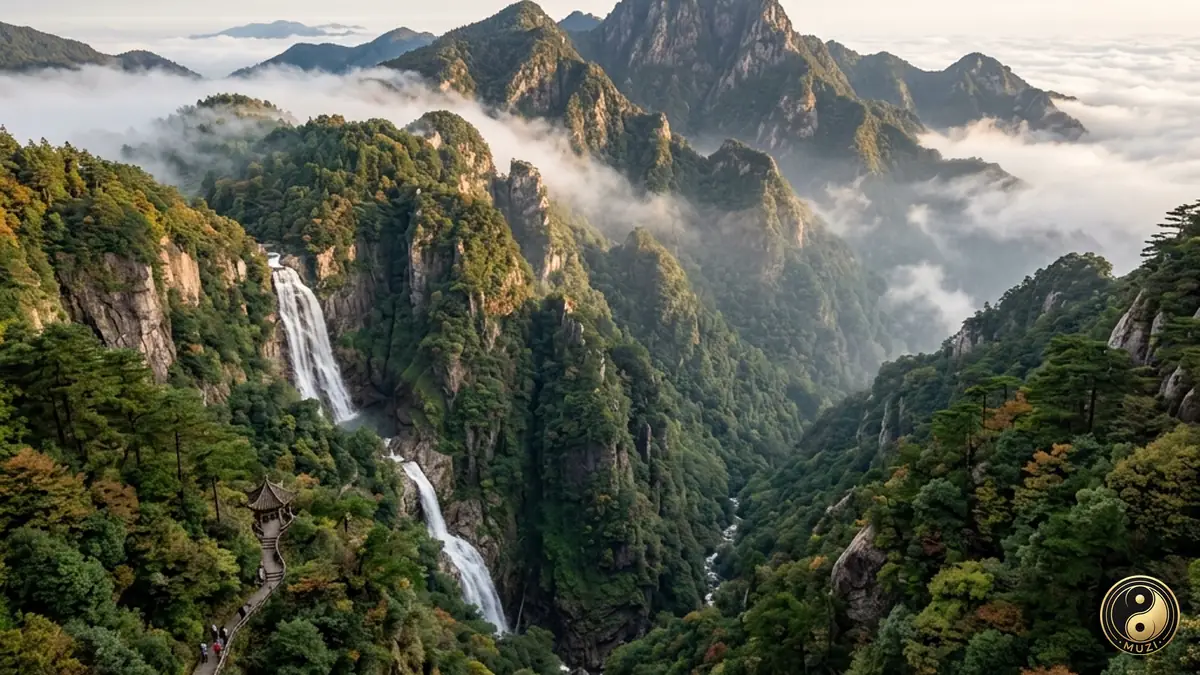 Mountains
A cultural mountain of matchless beauty — waterfalls, drifting clouds, swirling mist, where four thousand poems and essays were left by generations of literati.
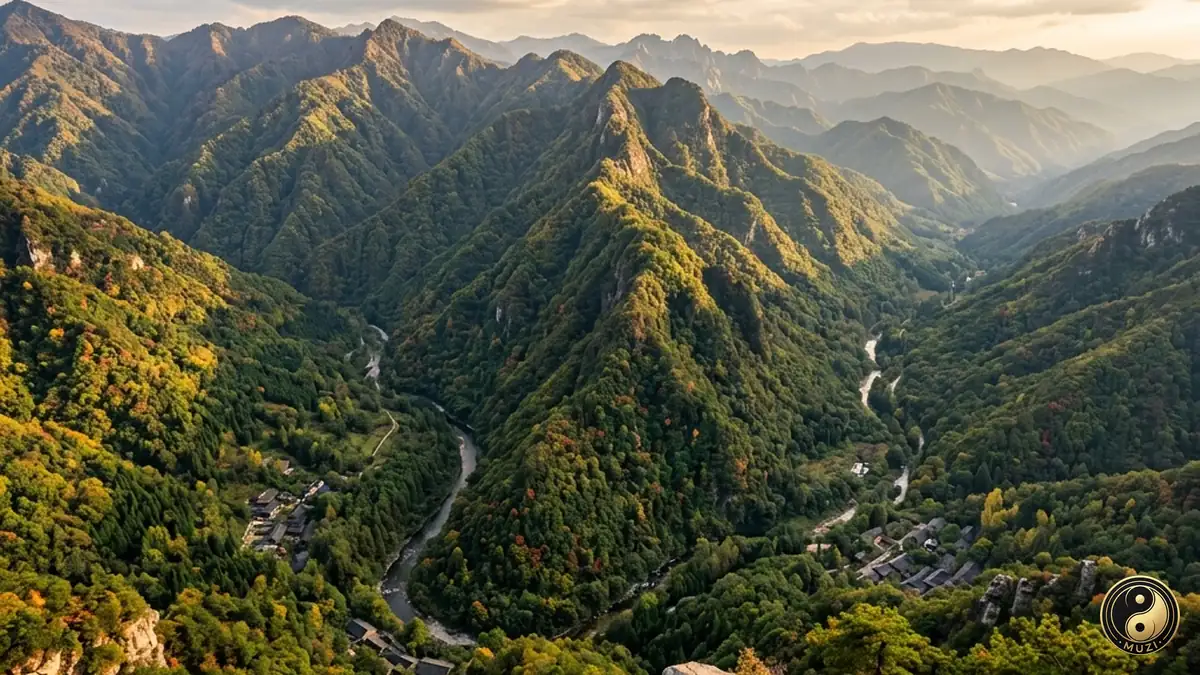 Mountains
The Qinling runs east to west as a natural climate and species divide between northern and southern ecosystems, with a long role in Chinese civilization.
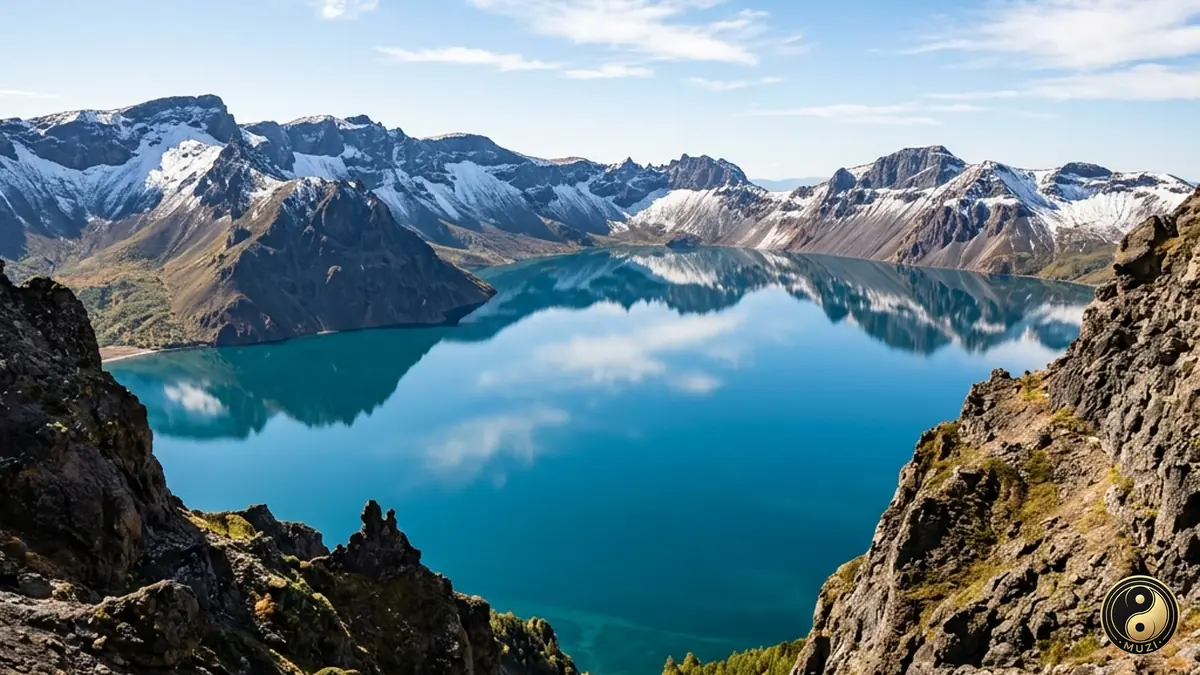 Mountains
The highest volcano in Northeast Asia — Heaven Lake resting quietly at the summit, one mountain straddling three nations, sacred to both Manchu and Korean peoples.
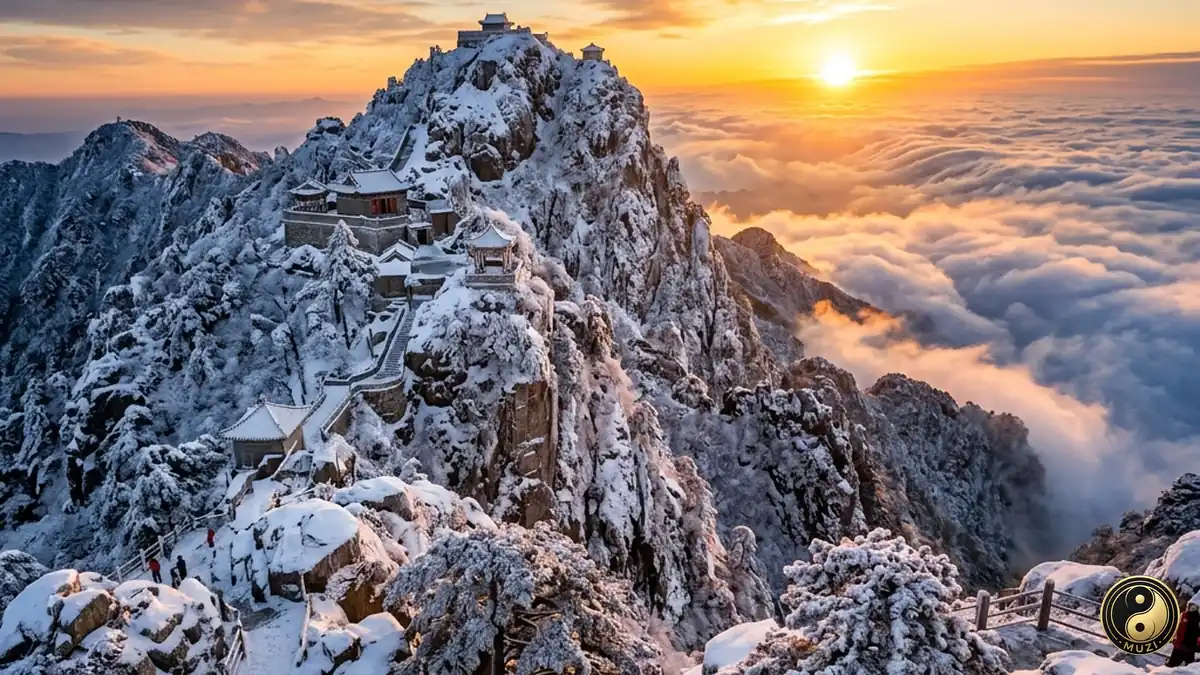 Mountains
Foremost of the Five Sacred Peaks, where emperors performed the Fengshan rites — rising abruptly from the North China Plain, symbolizing dynastic stability and legitimacy.
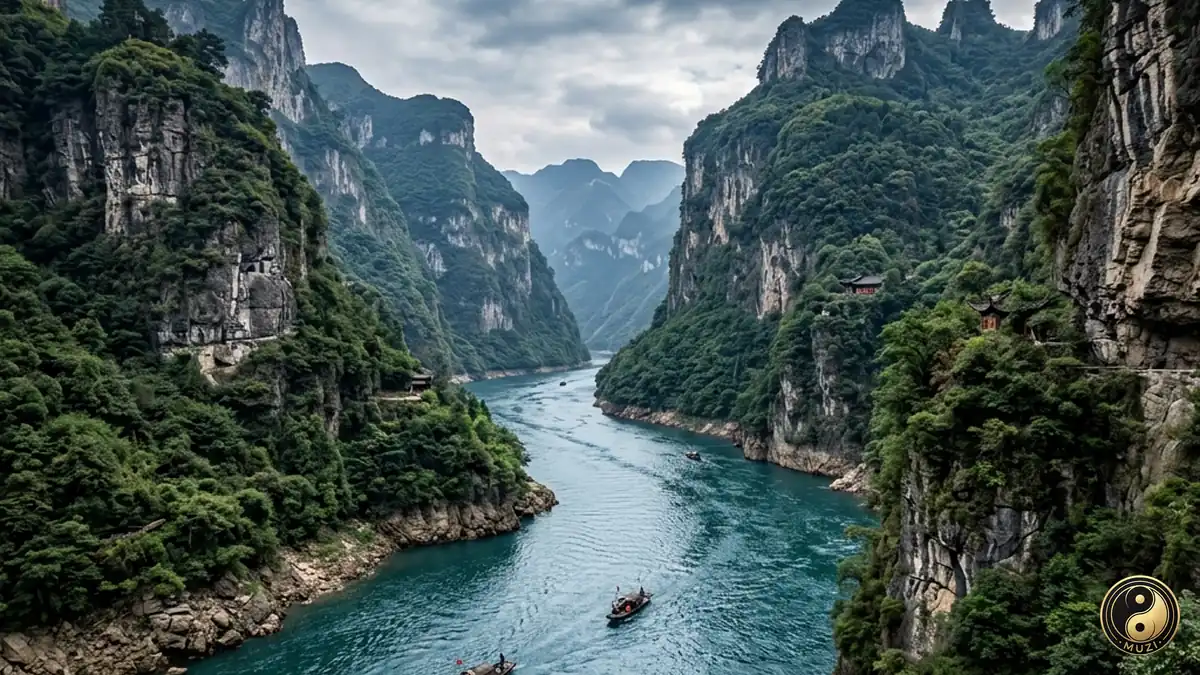 Rivers
Asia's longest river, flowing six thousand kilometers from the Tibetan Plateau to the East China Sea — the aorta and golden waterway of Chinese civilization.
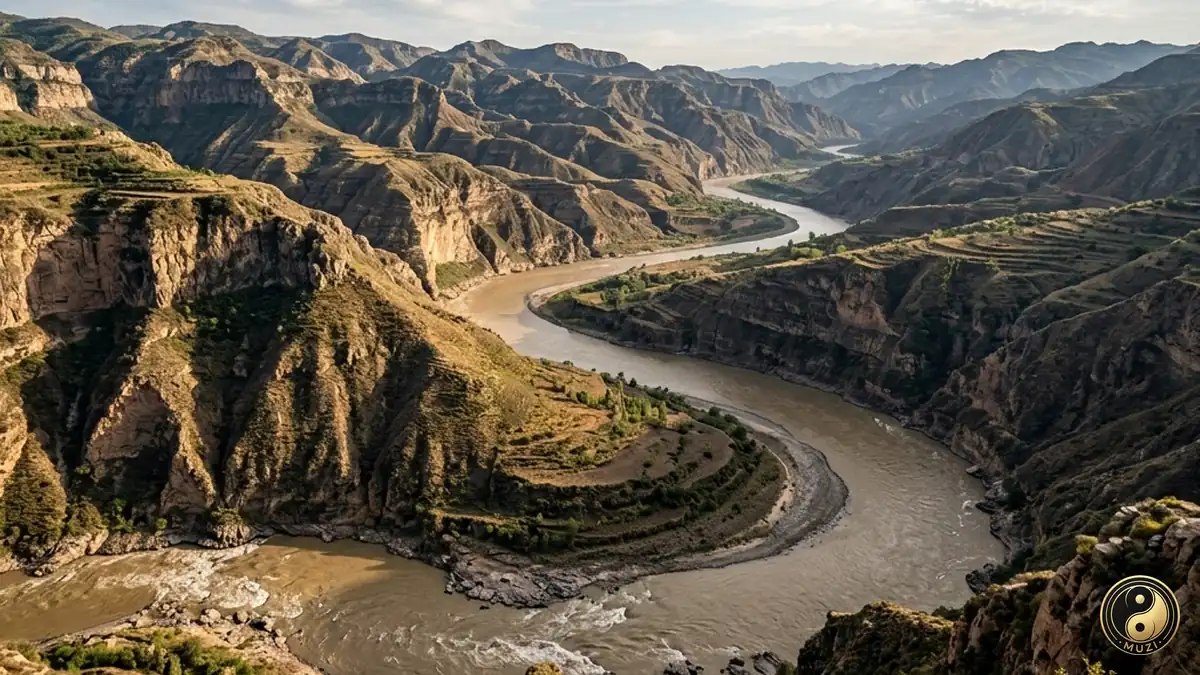 Rivers
The Yellow River carries loess to the sea and remains a major river in the history of Chinese agrarian civilization.
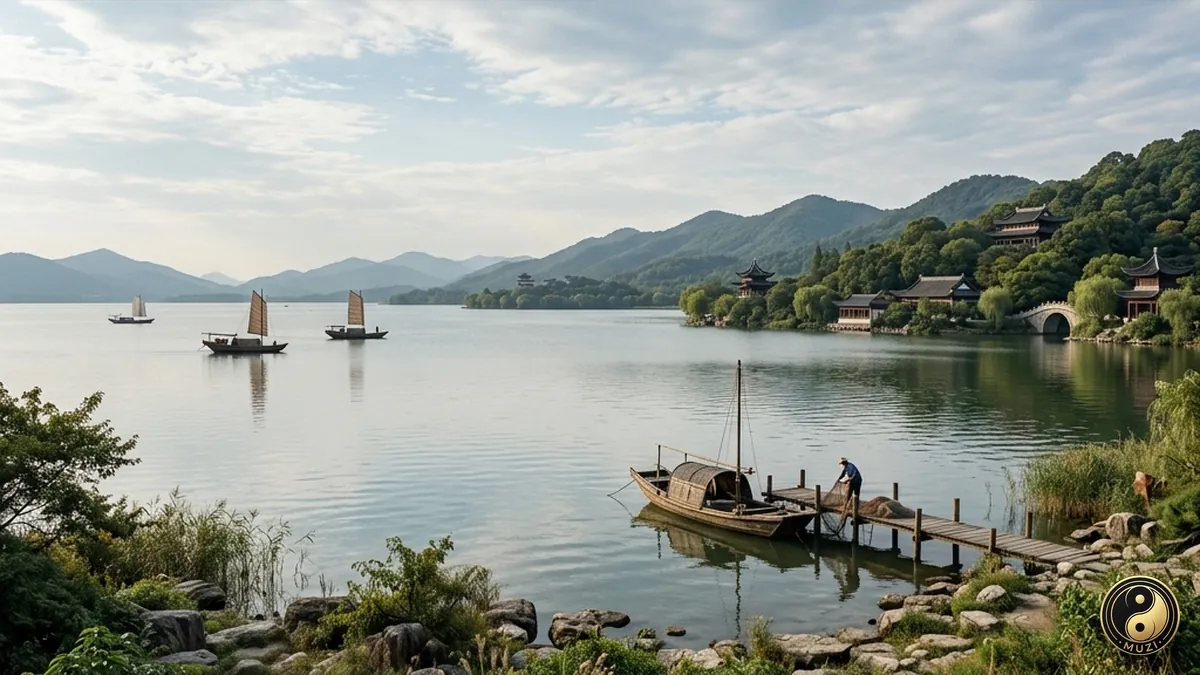 Lakes
Lakes
The heart of the Jiangnan water country — thirty-six thousand hectares of misty expanse, nourishing the richest land of fish and rice around Suzhou, Wuxi, Changzhou, Hangzhou, and Jiaxing.
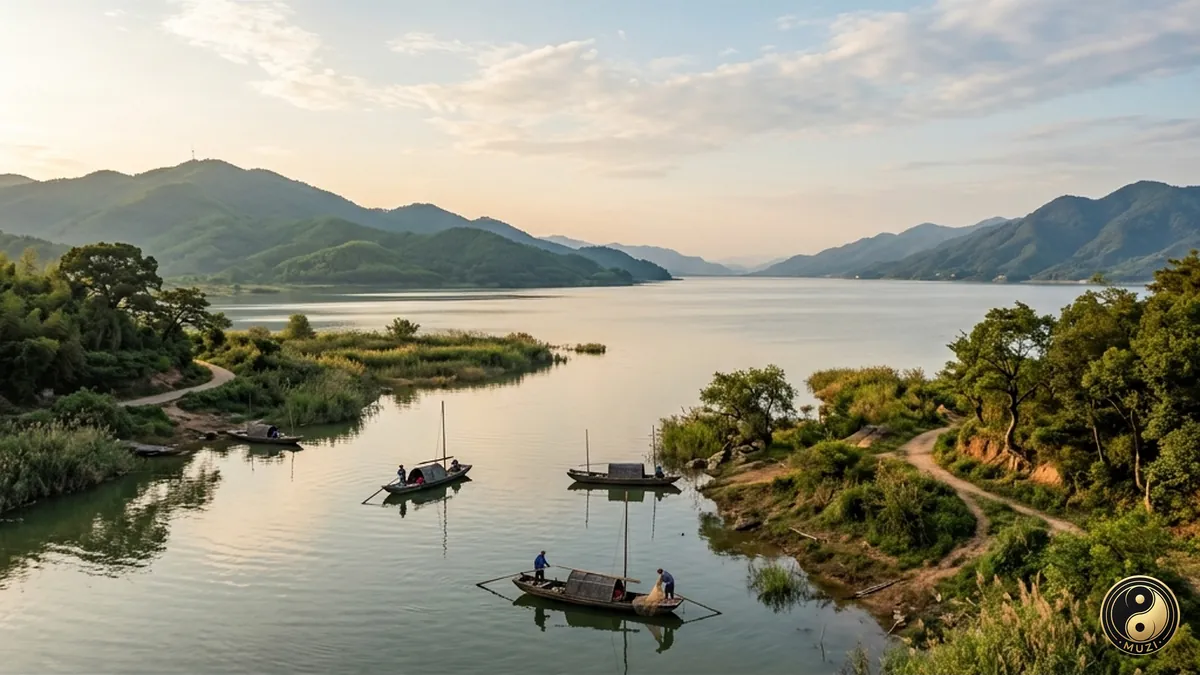 Lakes
Lakes
Poyang Lake is a major freshwater lake and natural regulator of the Yangtze, welcoming migratory birds each winter.
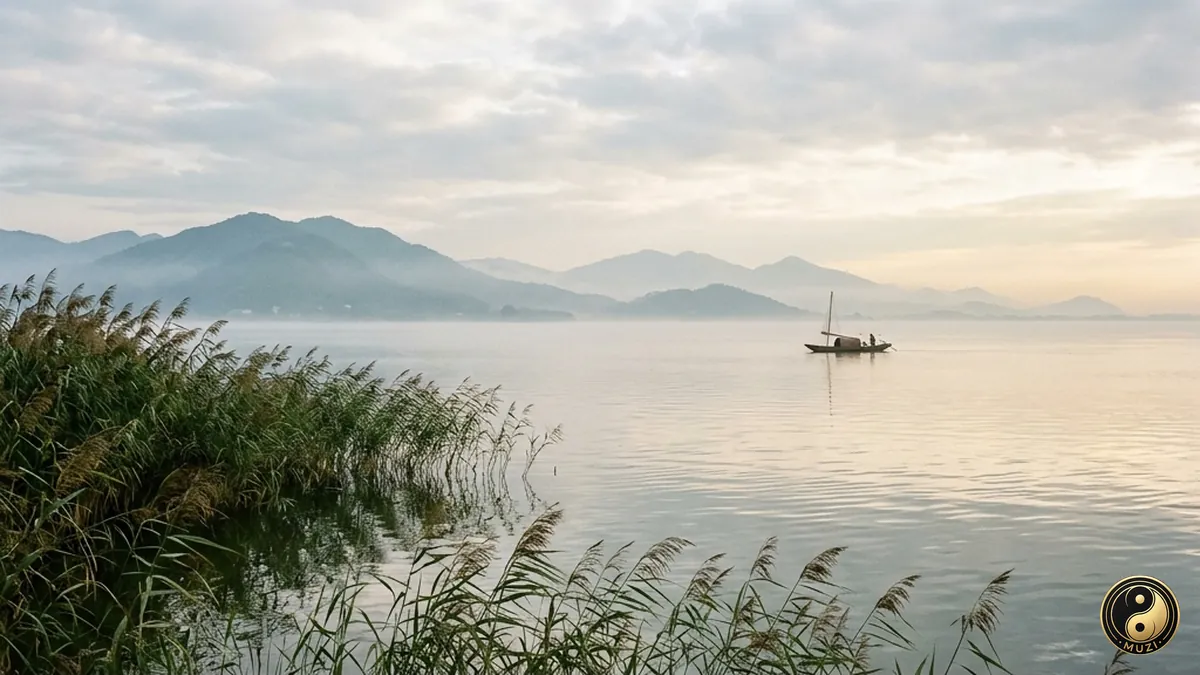 Lakes
Lakes
Eight hundred li of Dongting in misty vastness — the remnant of the ancient Yunmeng Marsh, powering the miracle 'when Huguang ripens, all under heaven is fed'.
 Lakes
Lakes
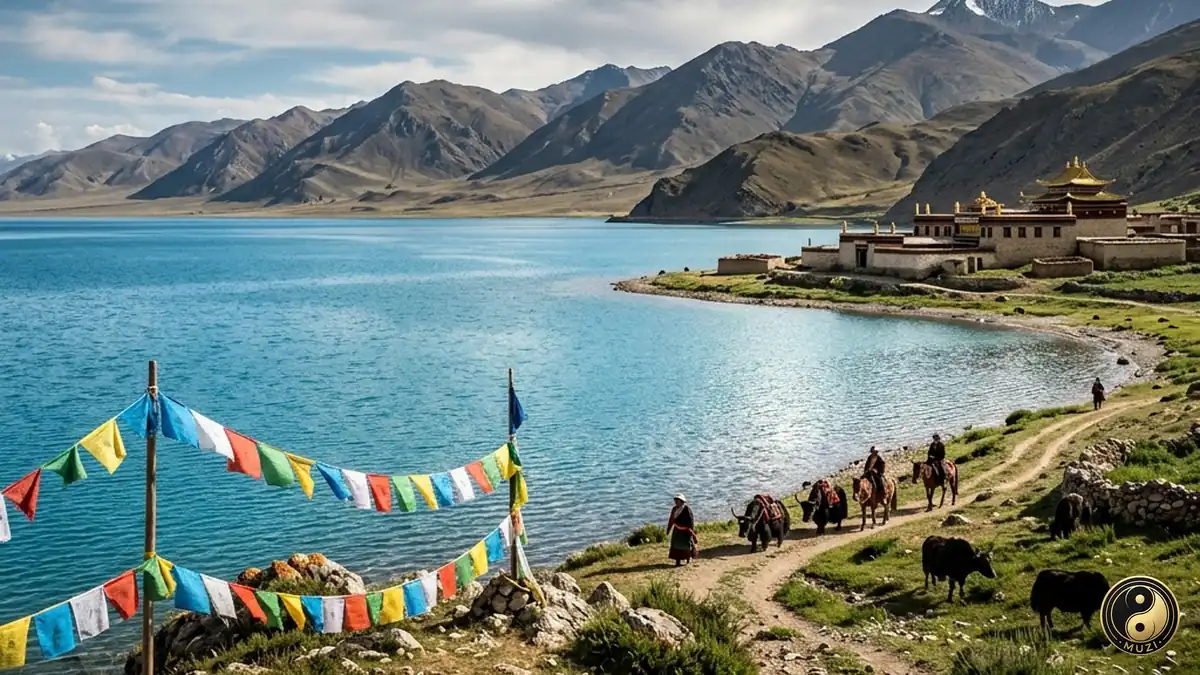
Qinghai Lake is a vast inland salt lake whose Tibetan name means 'turquoise sea,' a refuge for migratory birds on the Plateau.
 Rivers
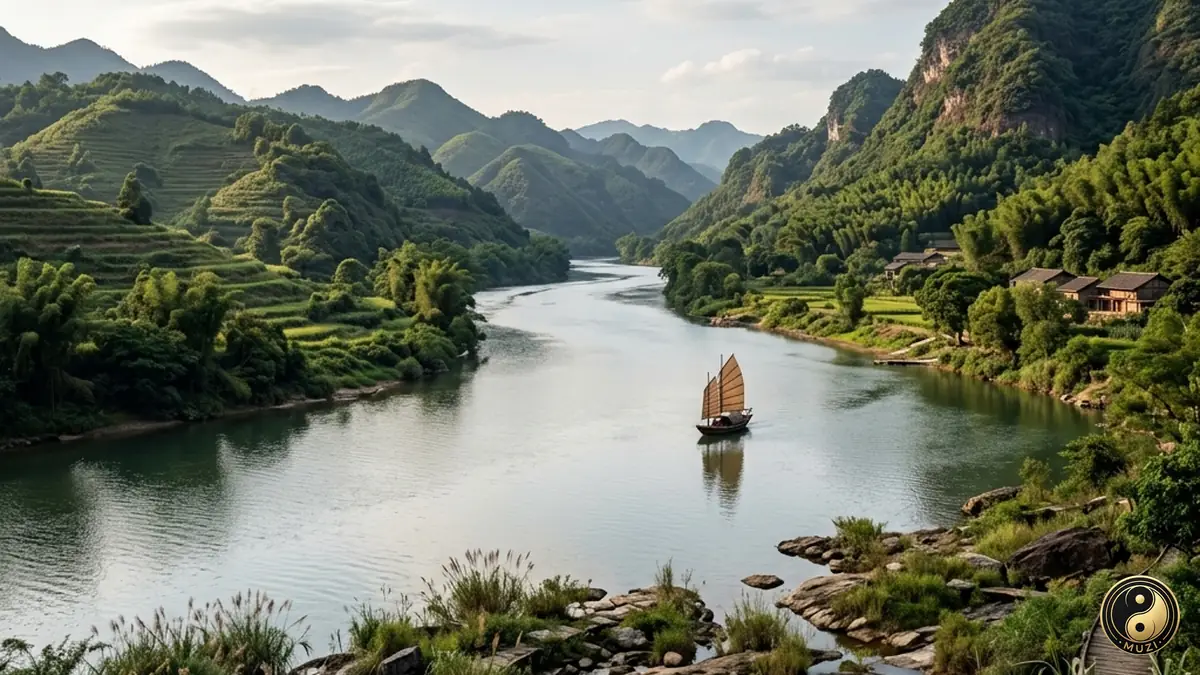
The Pearl River forms a major water network through the delta, linking South China Sea routes with regional trade.
 Rivers
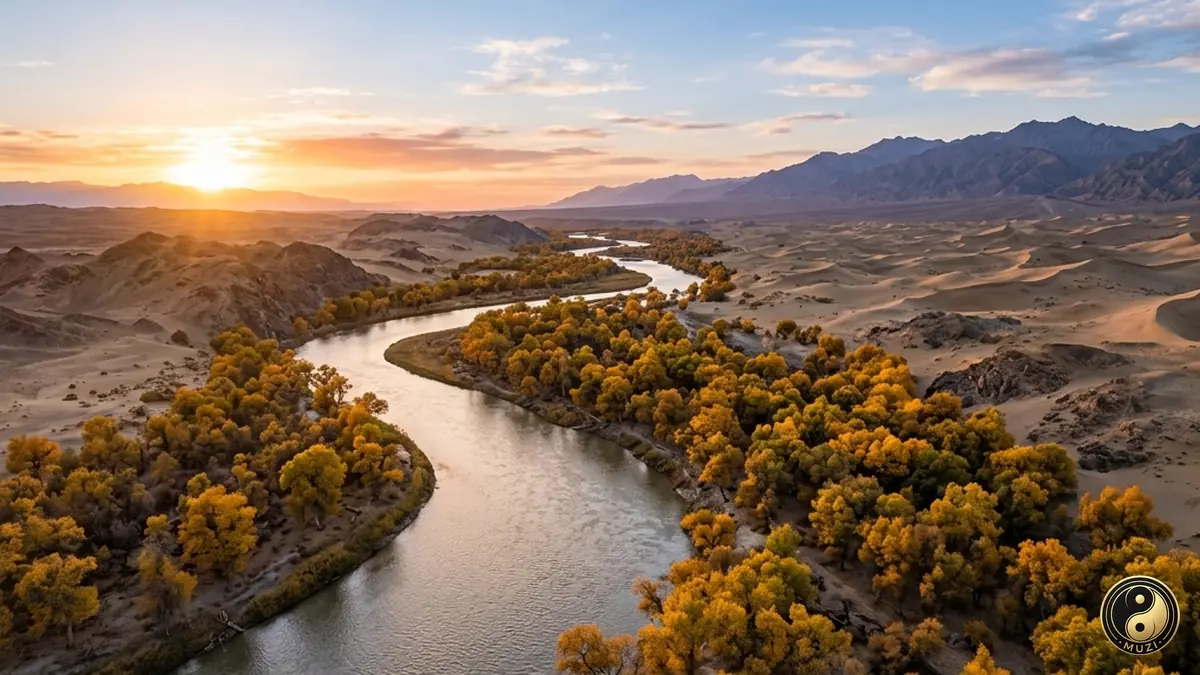
A hidden river flowing silently beneath the Taklamakan Desert — fed by Tianshan snowmelt, the underground lifeline sustaining desert oases.
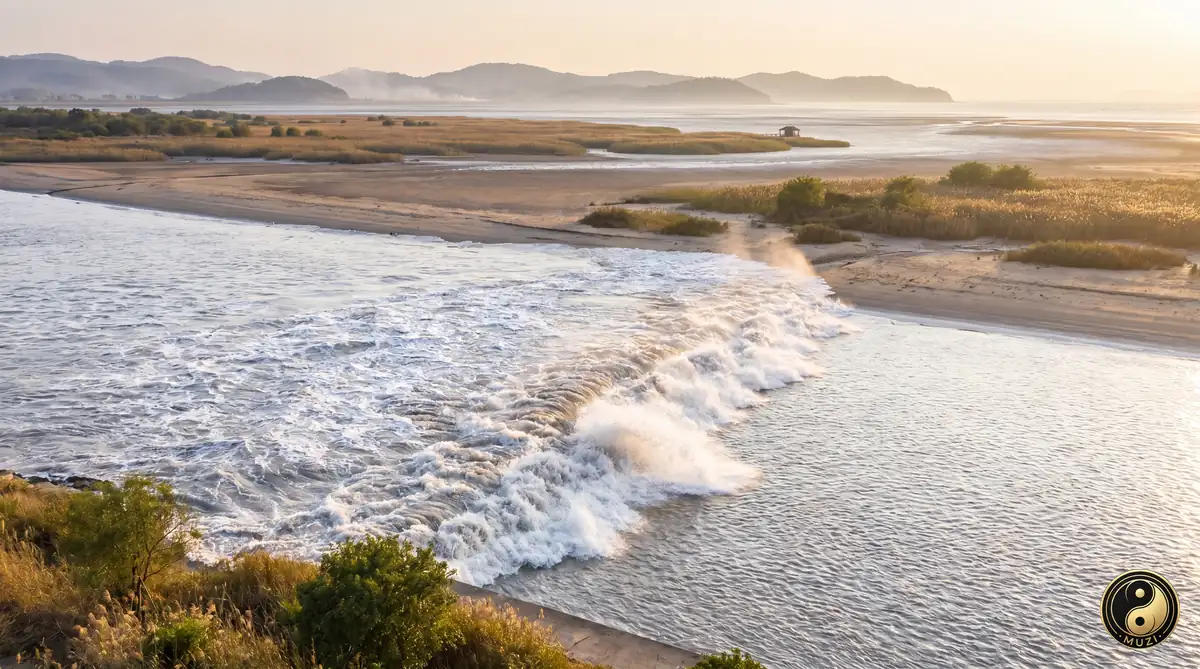 Rivers
The world's greatest tidal bore — every year on the eighteenth day of the eighth lunar month, a wall of water roars into Hangzhou Bay with earth-shaking fury.
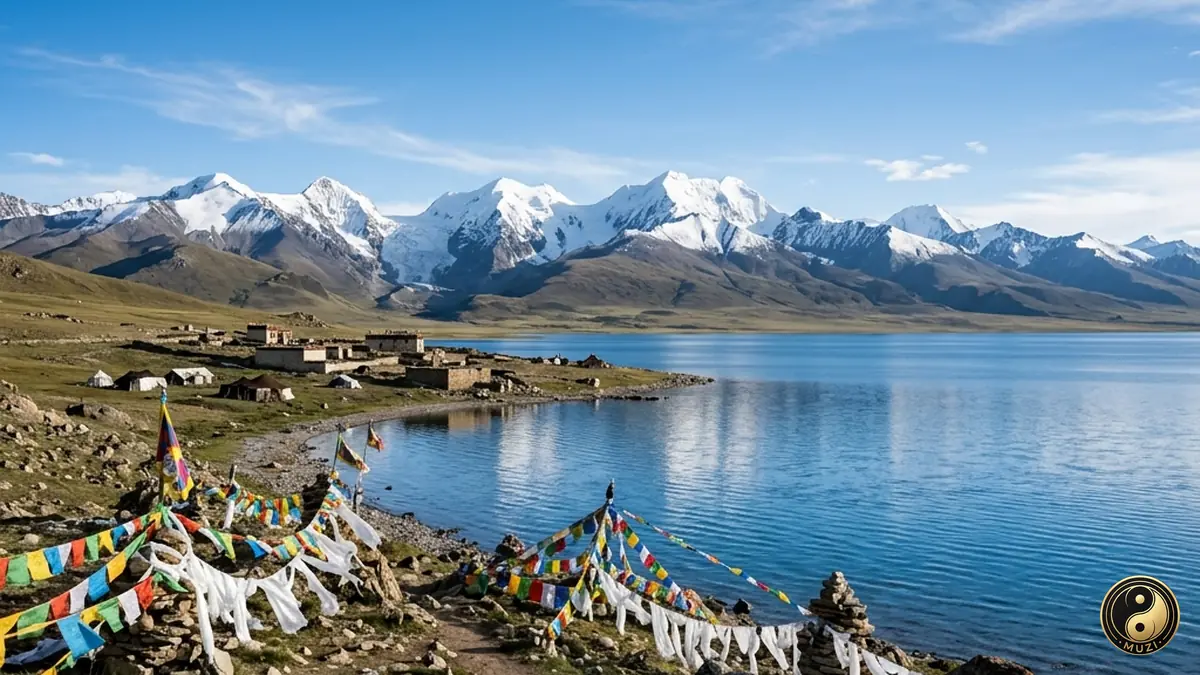 Lakes
Lakes
One of Tibet's three sacred lakes, the highest salt lake in the world — its waters mirror snow peaks and starry skies, pure as heaven's looking glass.
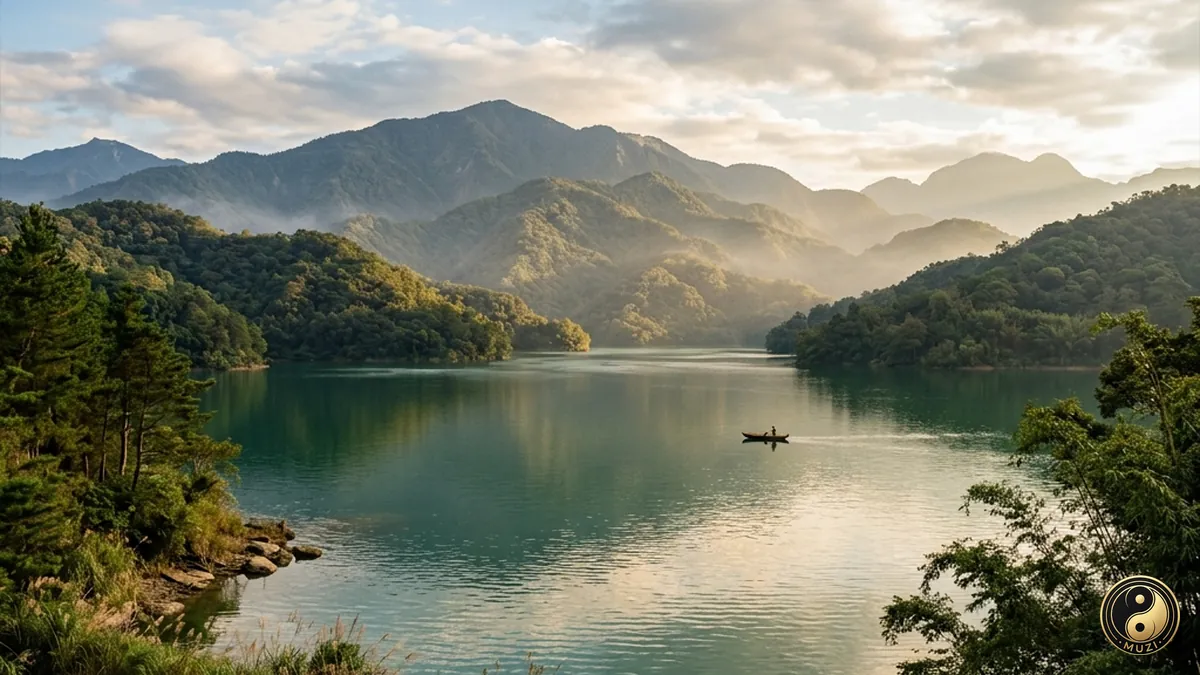 Lakes
Lakes
Taiwan's largest natural lake, a sapphire jewel embraced by mountains — gauzy morning mist, fiery sunset glow, the sacred waters where the Thao ancestral spirits rest.
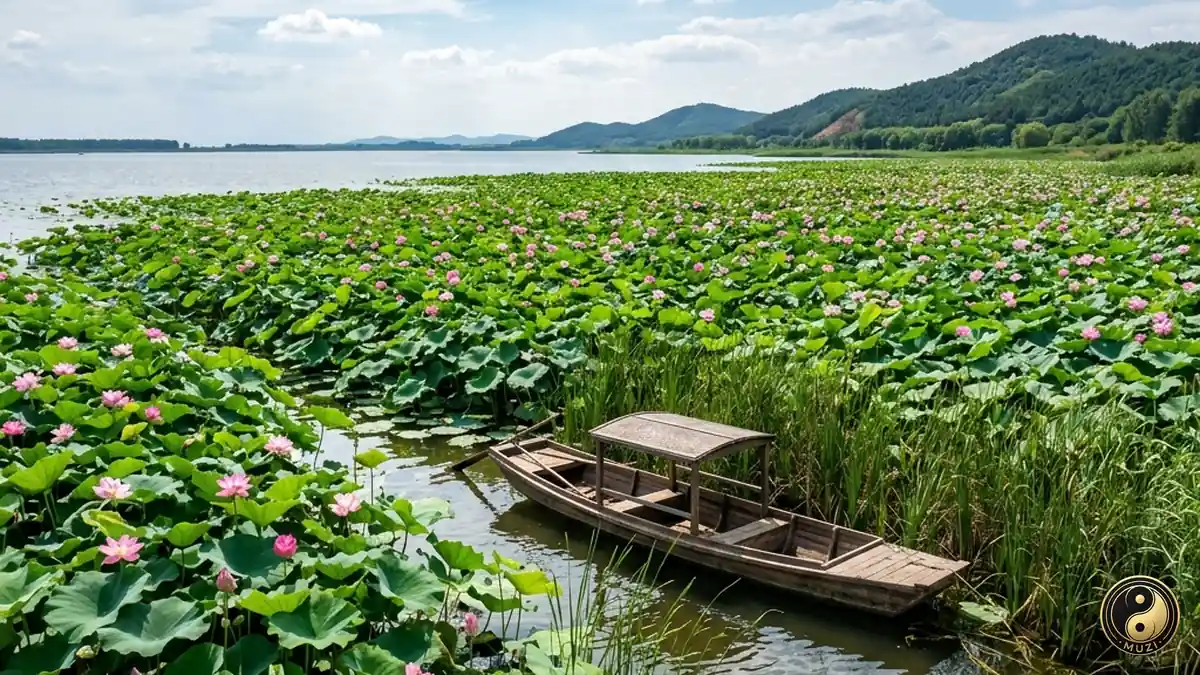 Lakes
Lakes
The largest lake north of the Yangtze, strung together by the Grand Canal — ten thousand acres of lotus, a thousand sails racing, guarding the throat of north-south water transport.
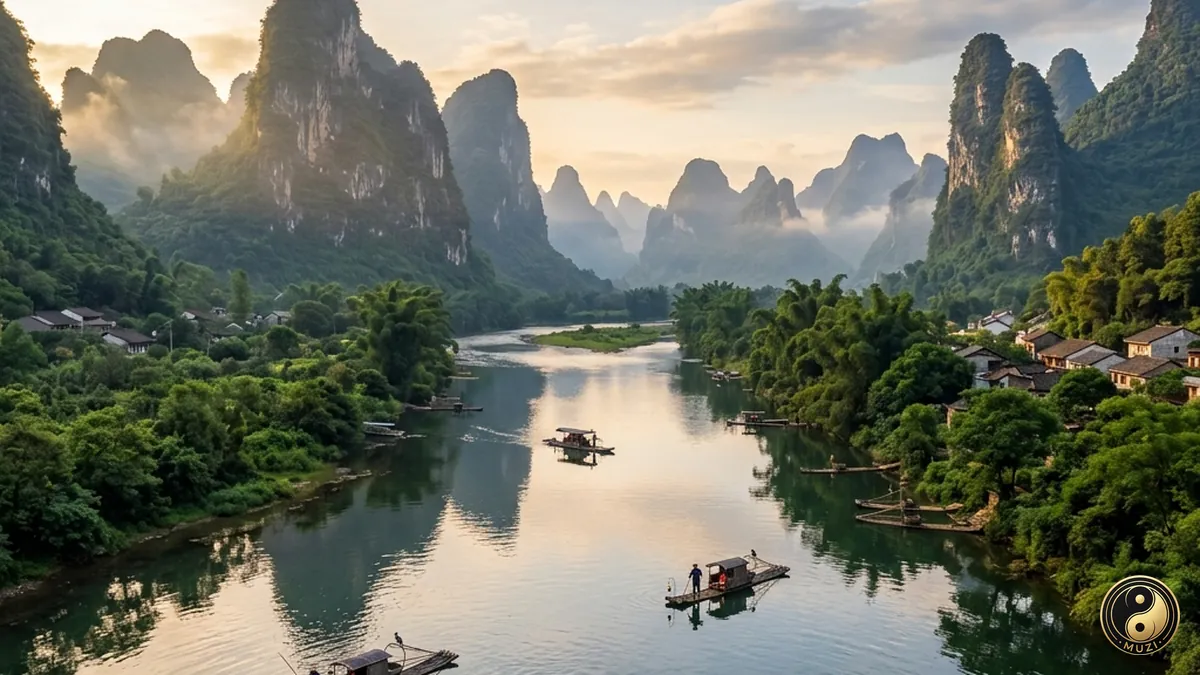 Rivers
The Li River winds through karst peaks, its reflections sustaining a classic landscape-painting tradition.
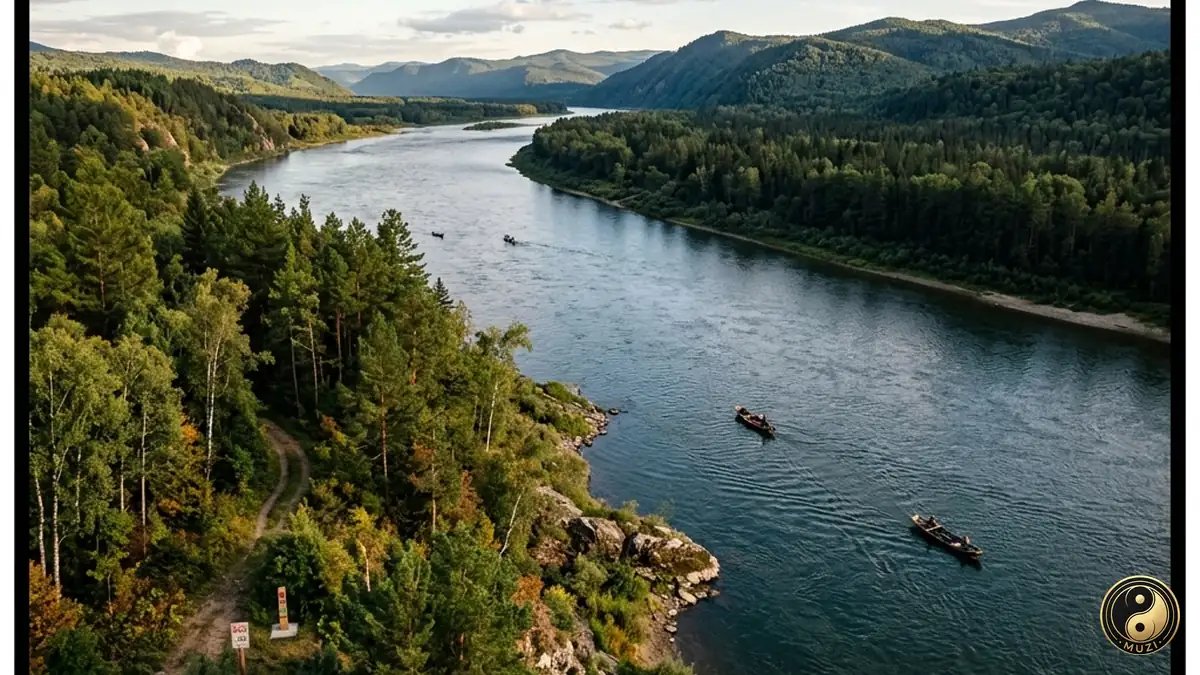 Rivers
The Heilongjiang runs along an international border, freezing for much of the year beside northeastern wetlands and farmland.
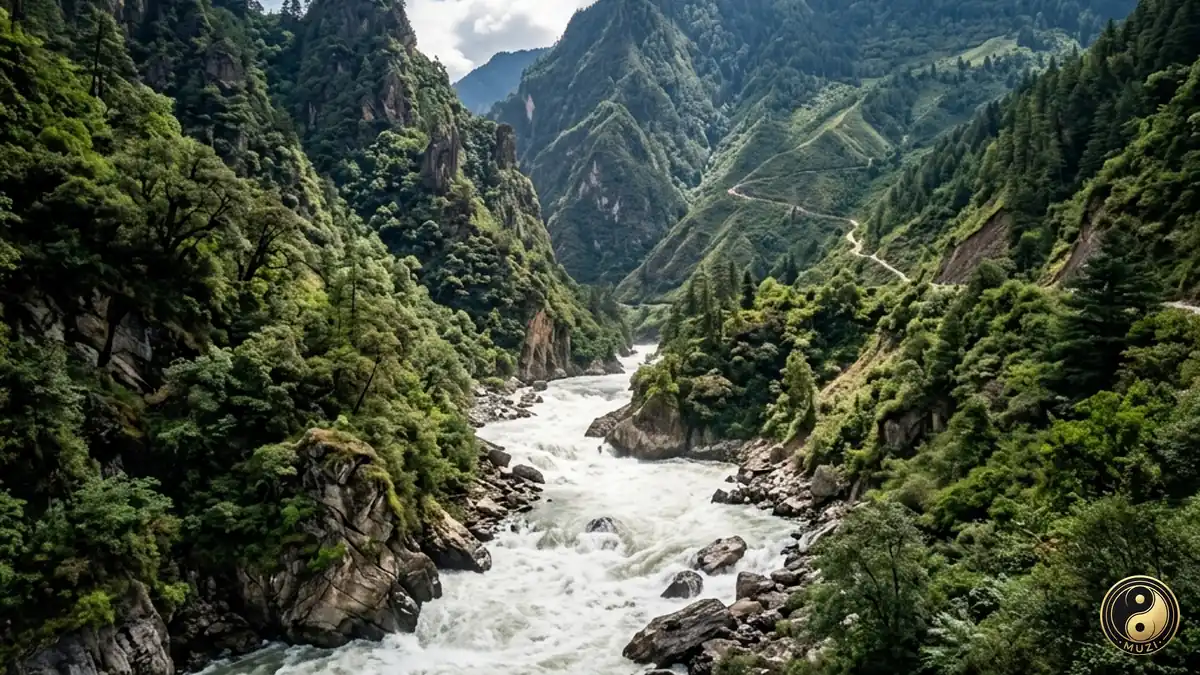 Rivers
A great international river surging down from the Tibetan Plateau — cutting through deep gorges in Yunnan before nourishing the entire Indochina Peninsula downstream as the Mekong.
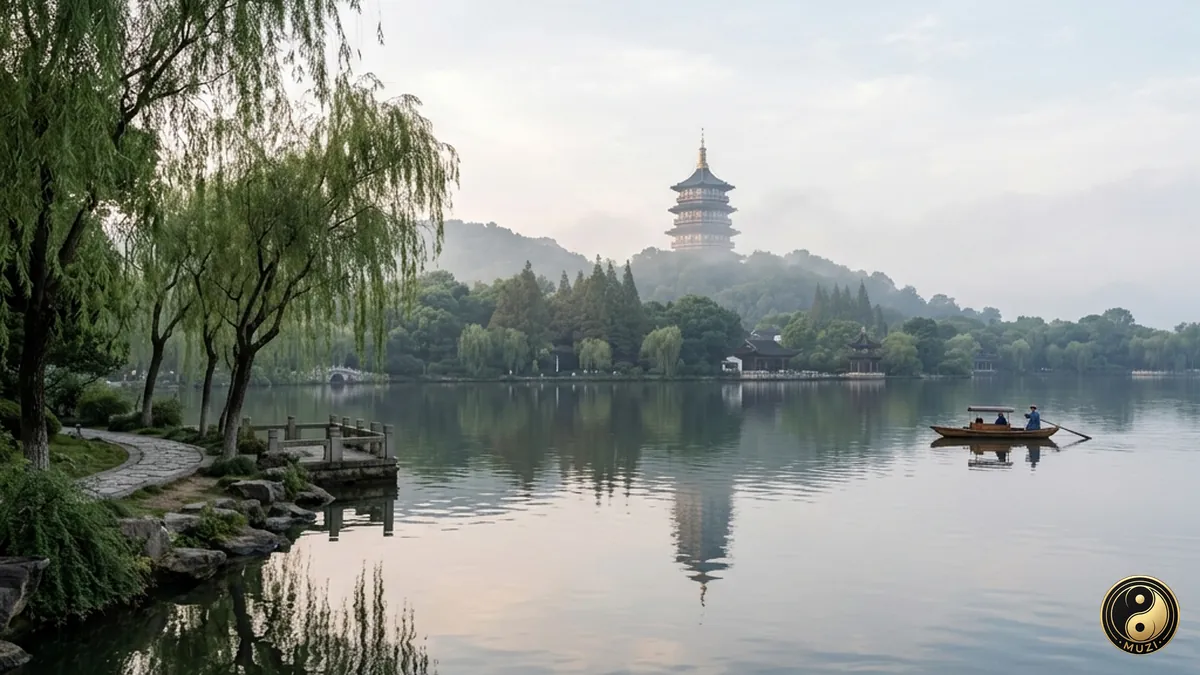 Lakes
Lakes
West Lake's cloud-wreathed hills, famous bridges, and causeways have shaped Jiangnan's poetic urban landscape for centuries.
 Basins
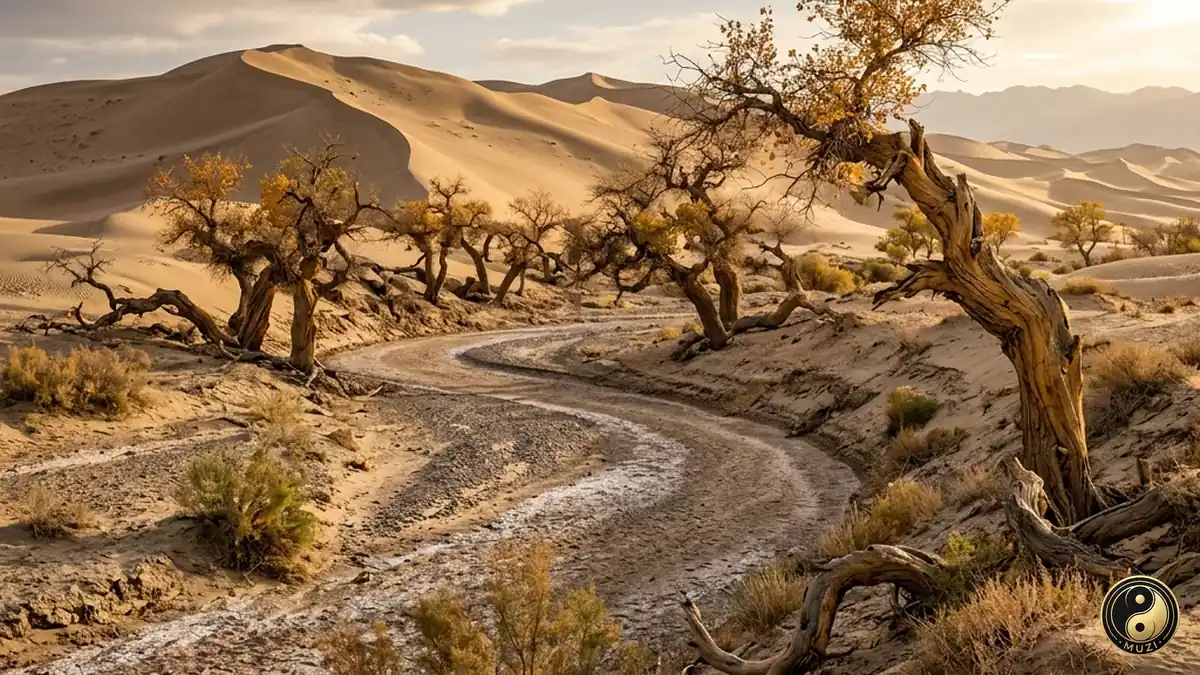
The Tarim Basin is a vast desert basin, arid at the surface yet rich in buried oil, gas, and Silk Road history.
 Mountains
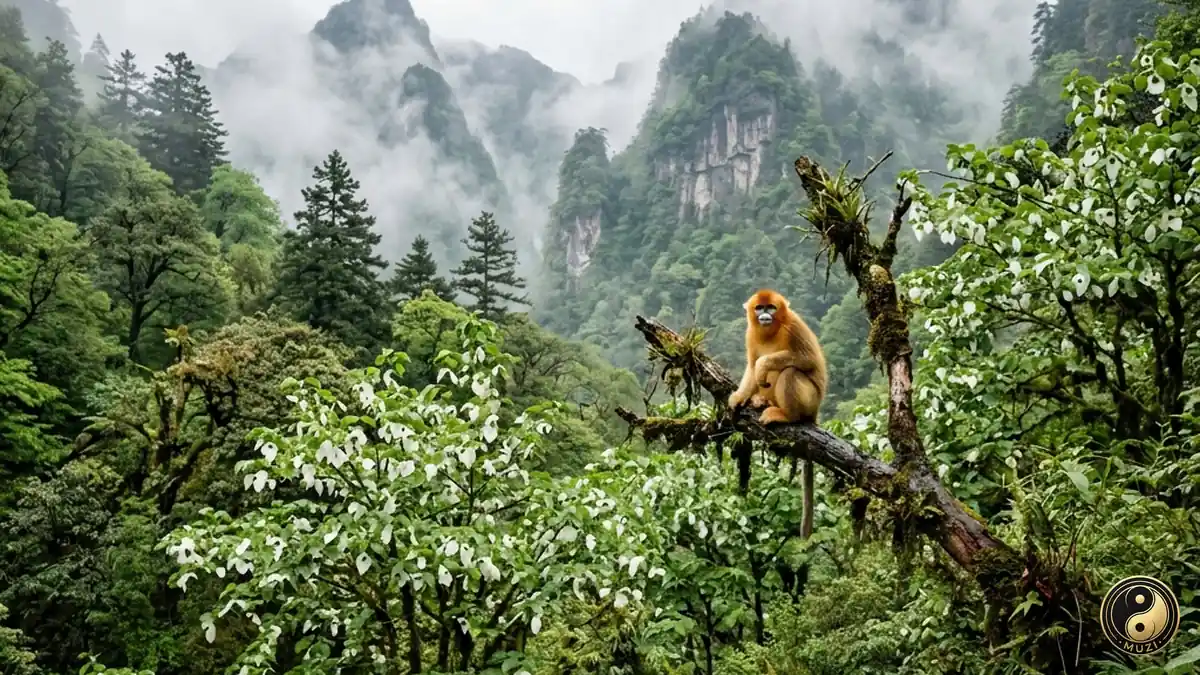
The roof of central China, a mysterious realm on the thirtieth parallel north — rumored home of the Wild Man, a primeval forest preserving vast numbers of ancient relict plants.
 Mountains
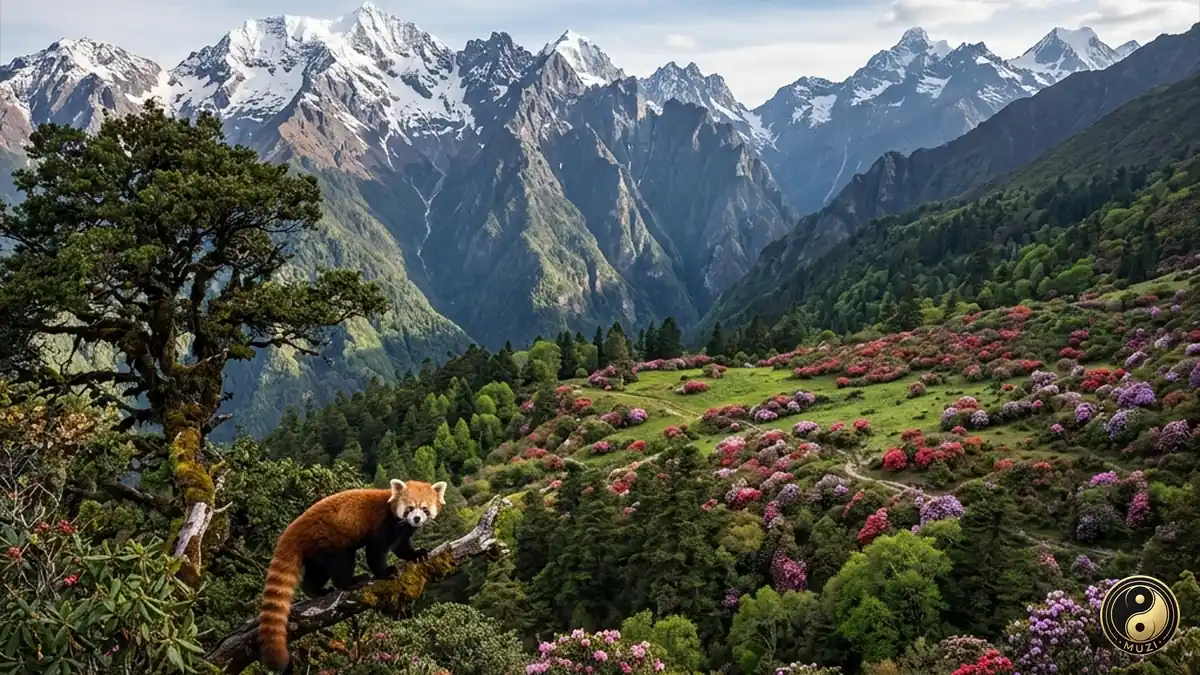
Several thousand meters of vertical drop compress tropical to frigid ecosystems onto a single mountain — an ultimate three-dimensional ecological corridor where one mountain holds all four seasons.
 Forests
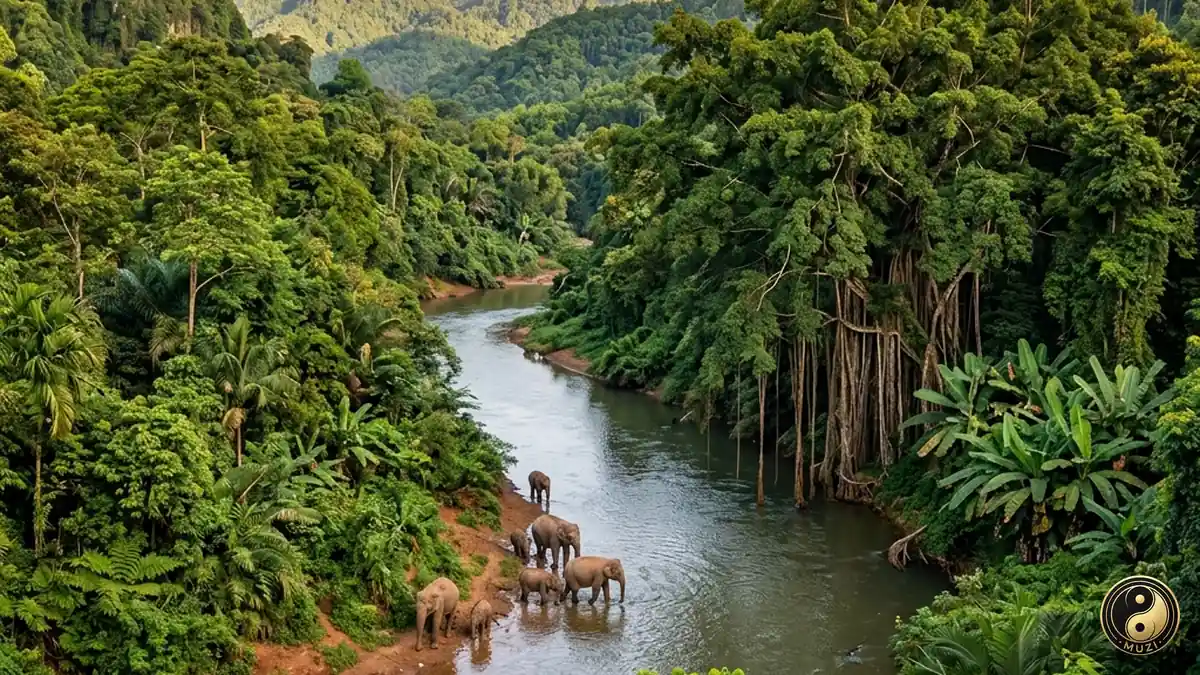
North of the Tropic of Cancer, Xishuangbanna preserves tropical rainforest habitat for elephants, peafowl, and diverse wildlife.
 Forests
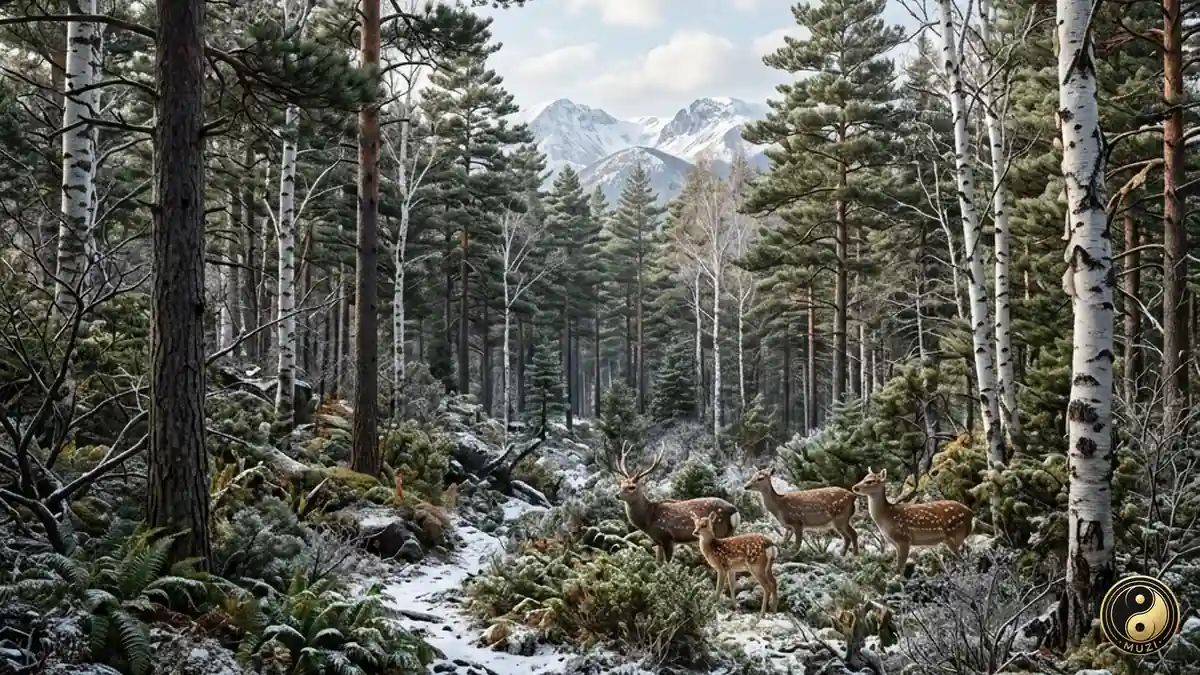
The vast forest sea where the Lesser Khingan and Changbai ranges meet — abundant in Korean pine and premium timber, the lumber mother port for dynastic palaces and naval fleets.
 Desert
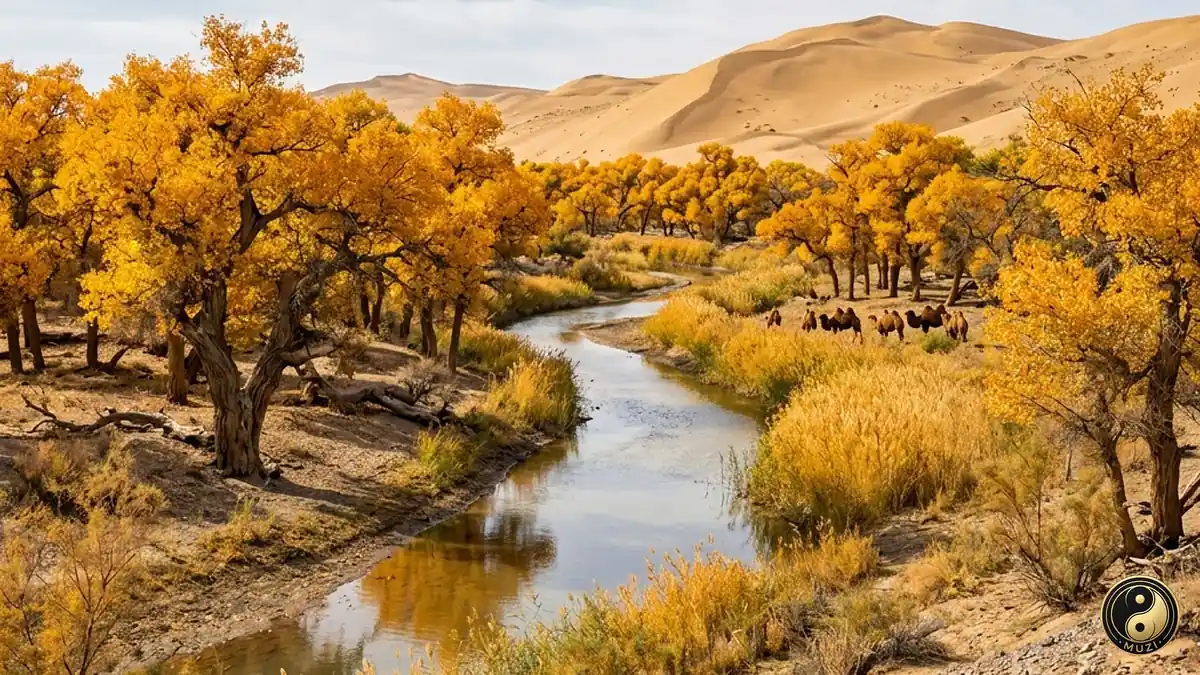
A poplar forest belt on the edge of the Badain Jaran Desert — living a thousand years, standing dead a thousand more, the iron-blooded warrior fighting desertification at the front line.
 Mountains
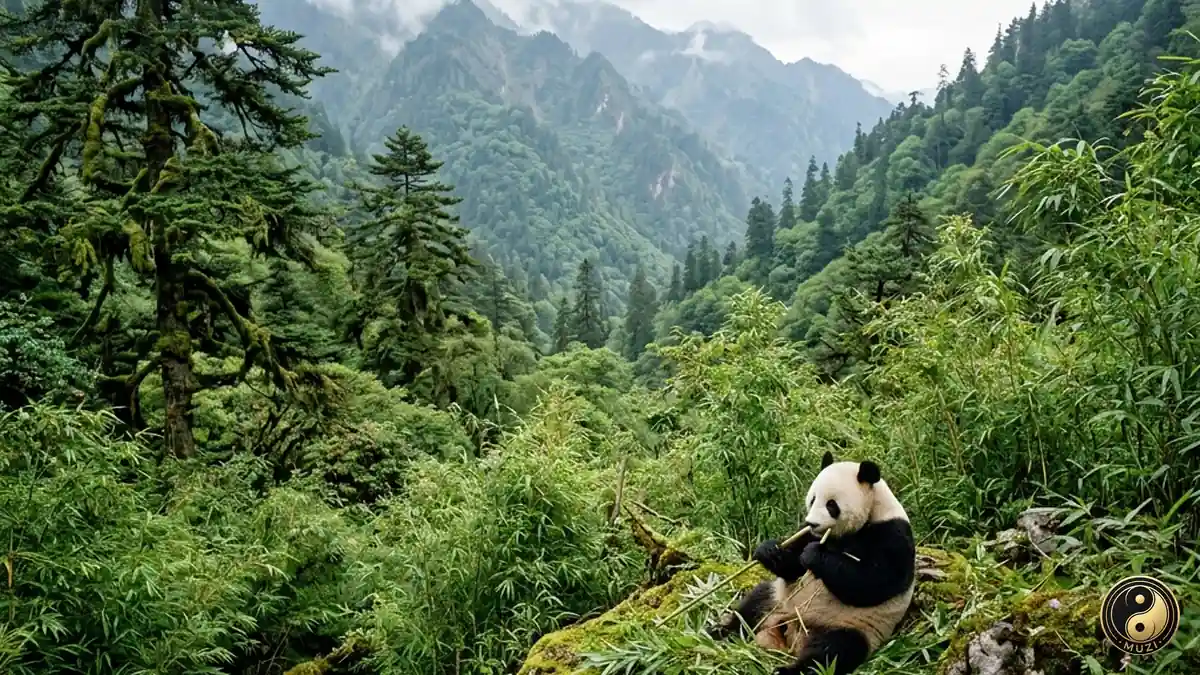
The last home of the giant panda — the bamboo forests of the Min and Qionglai ranges provide the ultimate refuge for this low-metabolic-rate marvel of evolution.
 Gorges
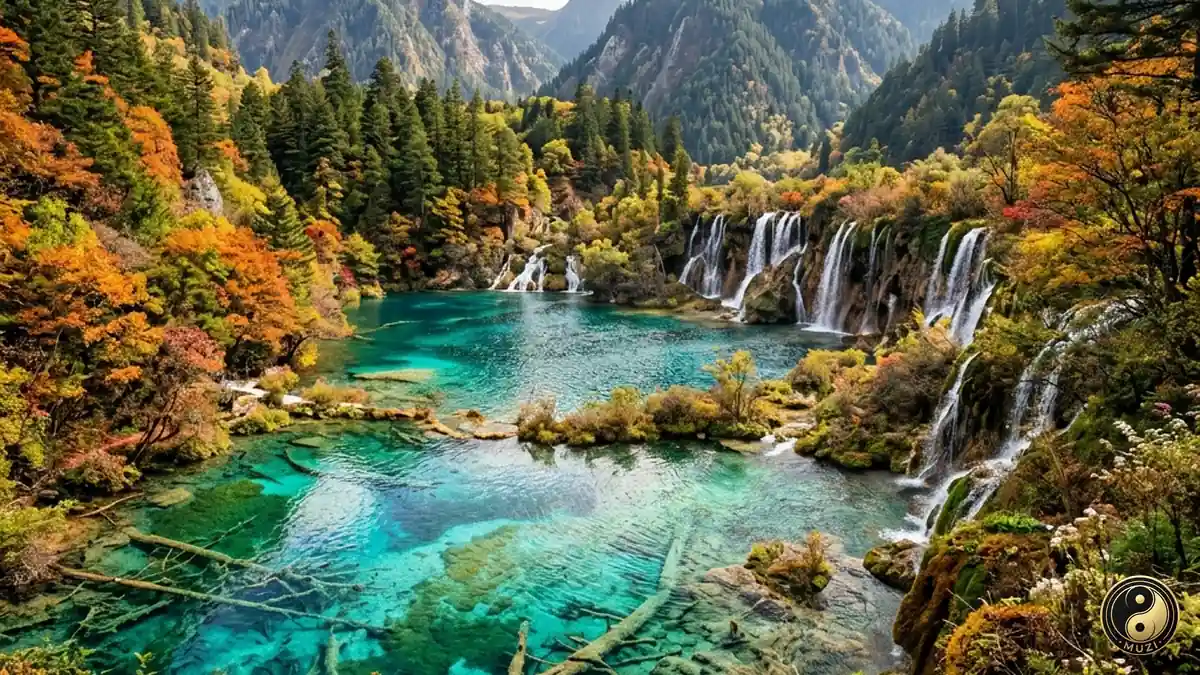
A fairyland of travertine pools and colorful forests — a pristine world deep in the highlands, a dazzling jewel of UNESCO World Natural Heritage.
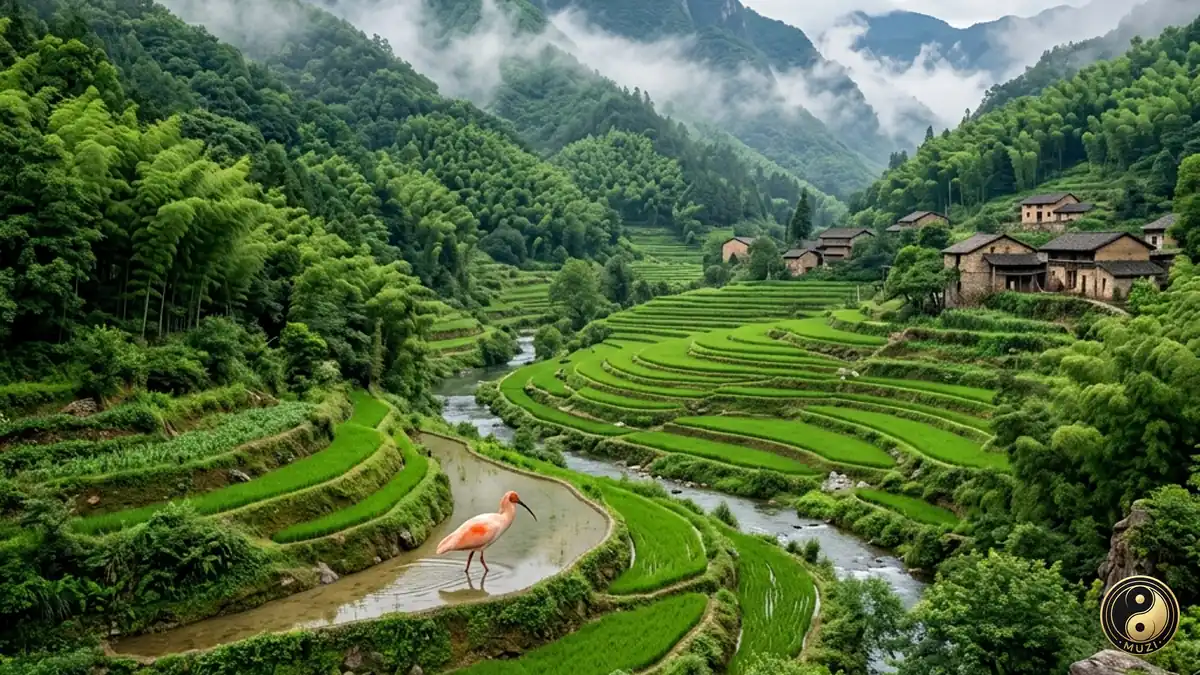 Mountains
Terraced fields and streams weave a network on the southern slopes of Qinling — where the last wild crested ibis was rediscovered, scripting a miracle of species resurrection from the brink of extinction.
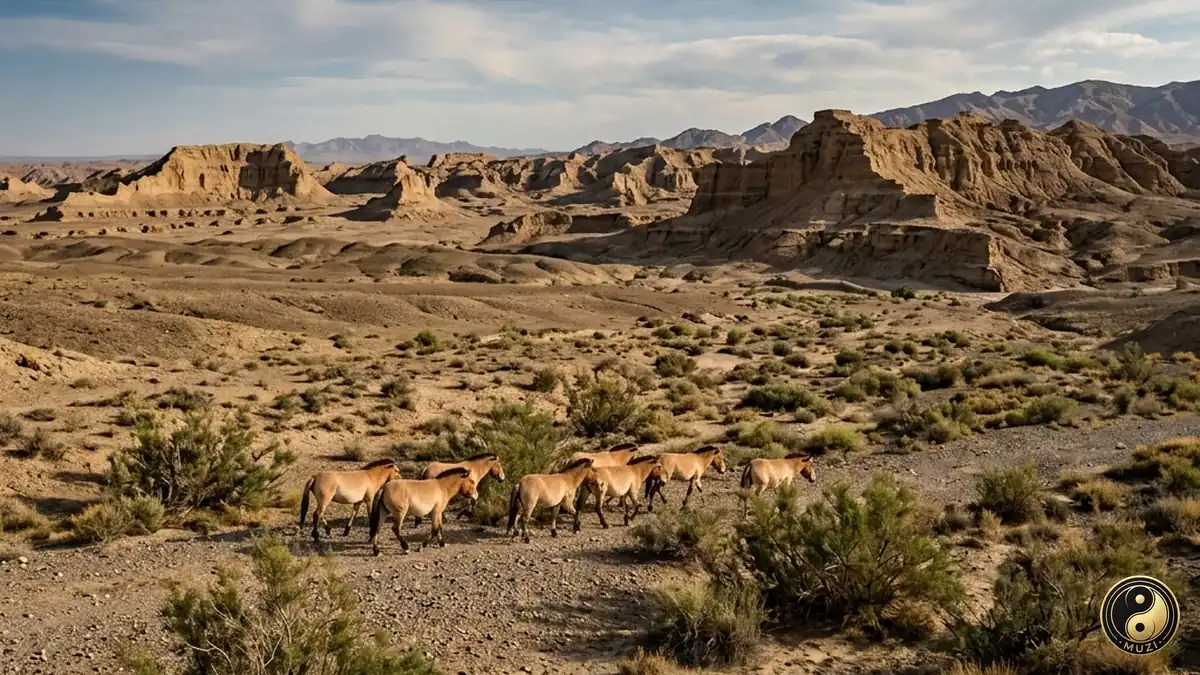 Desert
The vast gobi desert stretching from the Junggar Basin to the Mongolian Plateau — once the ancestral homeland where Przewalski's horses galloped free.
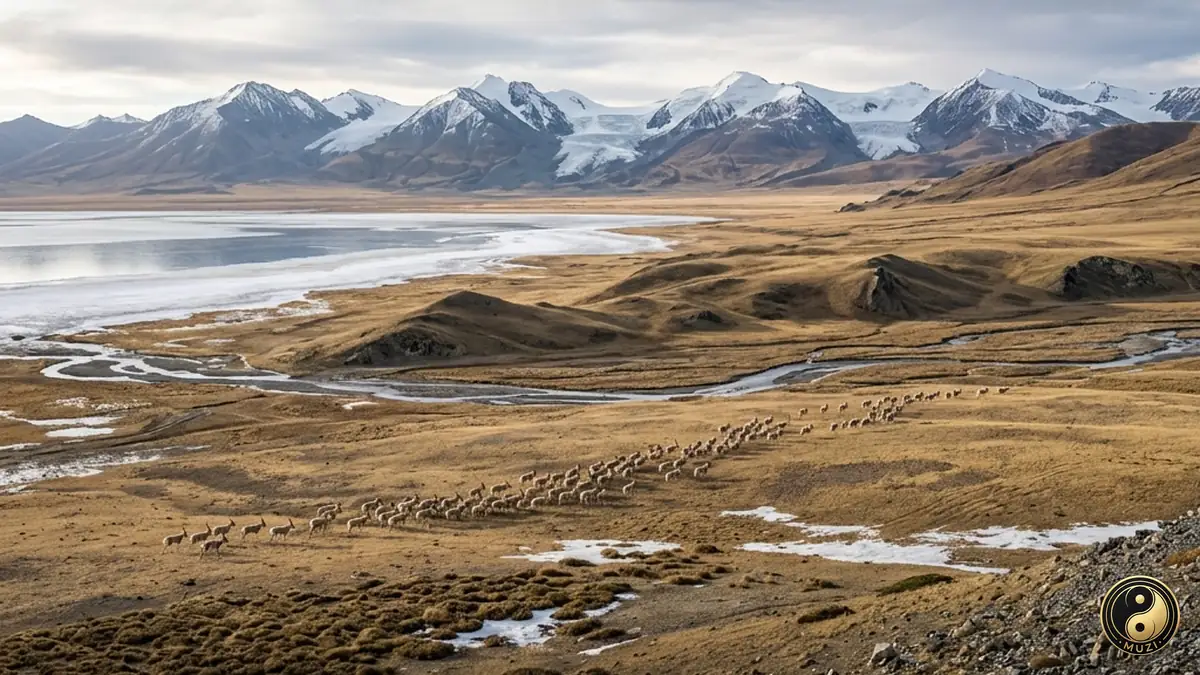 Desert
The uninhabited zone of the Third Pole — where Tibetan antelope stage their spectacular annual migration in one of the least-touched wildernesses on Earth.
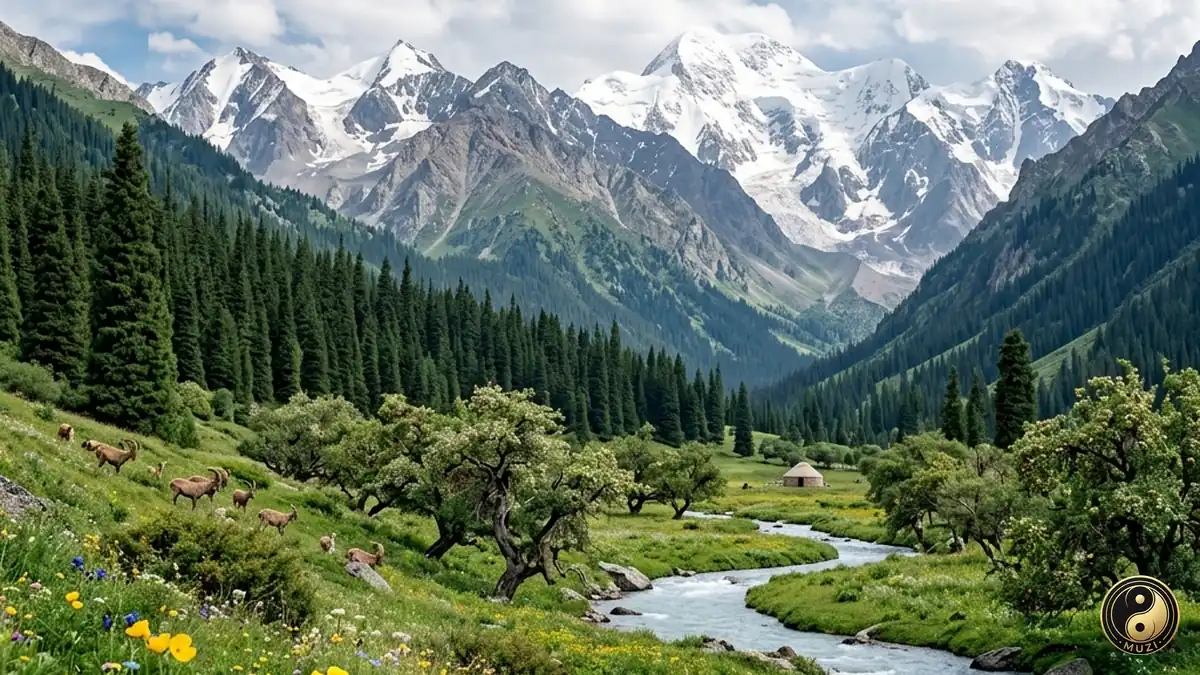 Mountains
Deep in the arid continental interior, a miracle of spruce forests clings to mountain slopes thousands of kilometers from any ocean — a high-altitude green reservoir suspended in the desert.
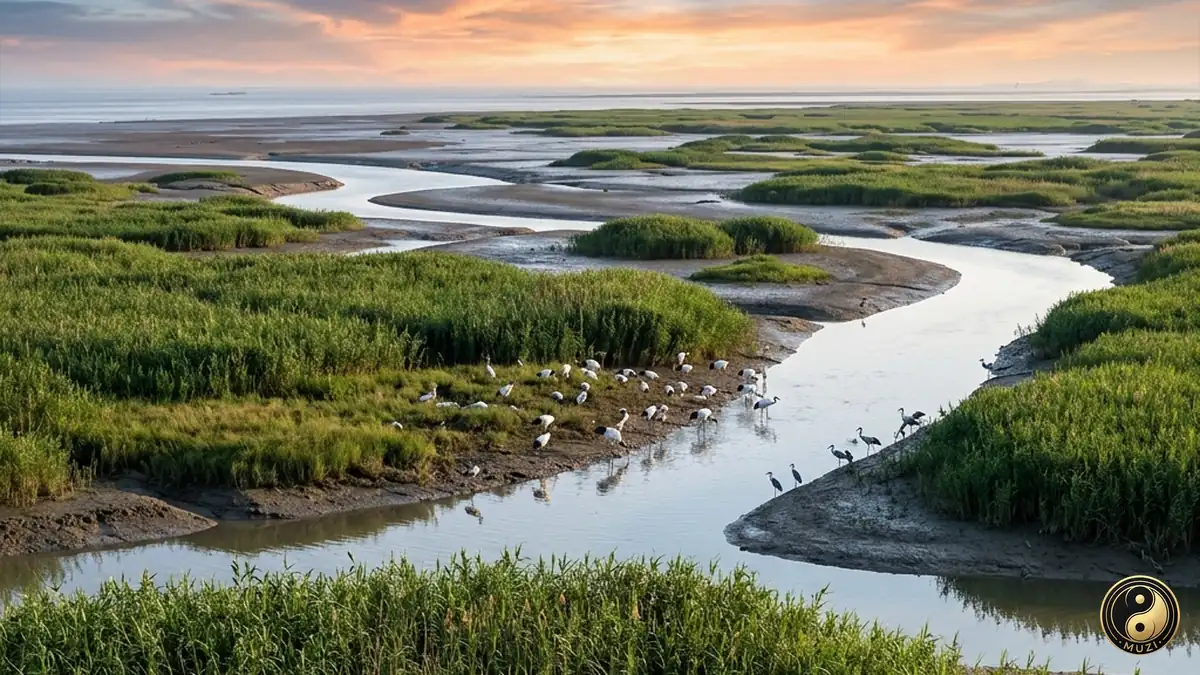 Wetlands
Where Yangtze sediment meets the sea, accumulating into tidal flats — the core refueling station on the East Asian-Australasian Flyway for millions of migratory birds.
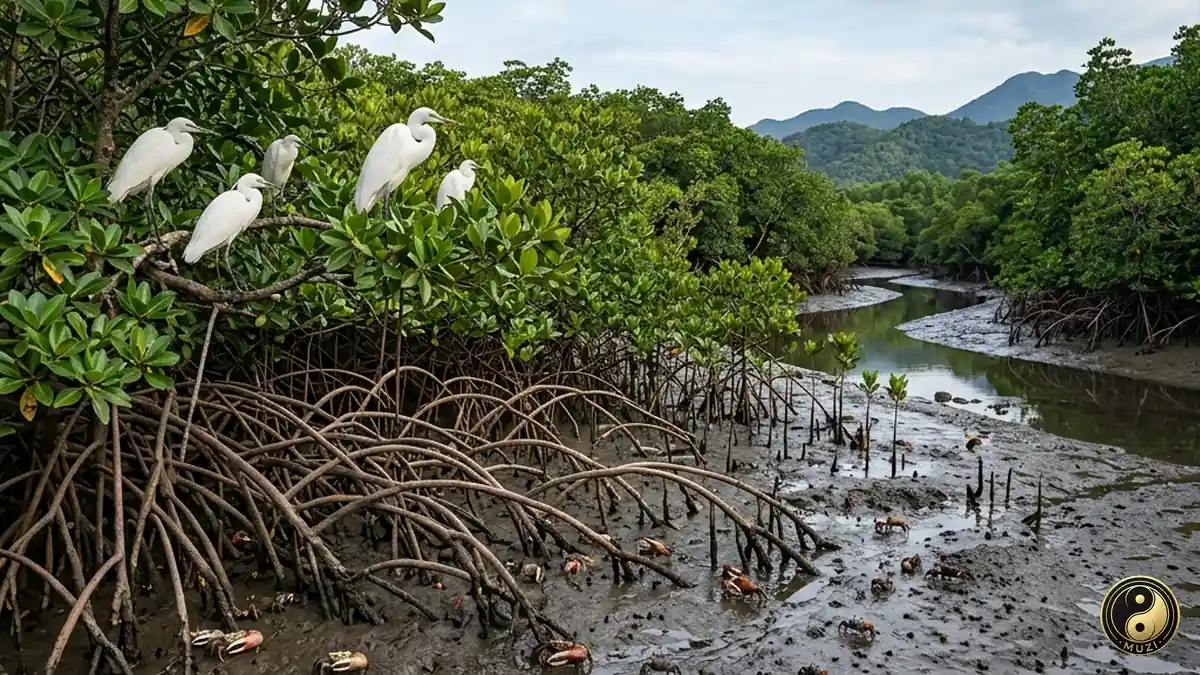 Coastal Regions
A green Great Wall in the intertidal zones of the southeast coast — viviparous plants rooting in salt water, a natural coastal buffer against typhoons and storm surges.
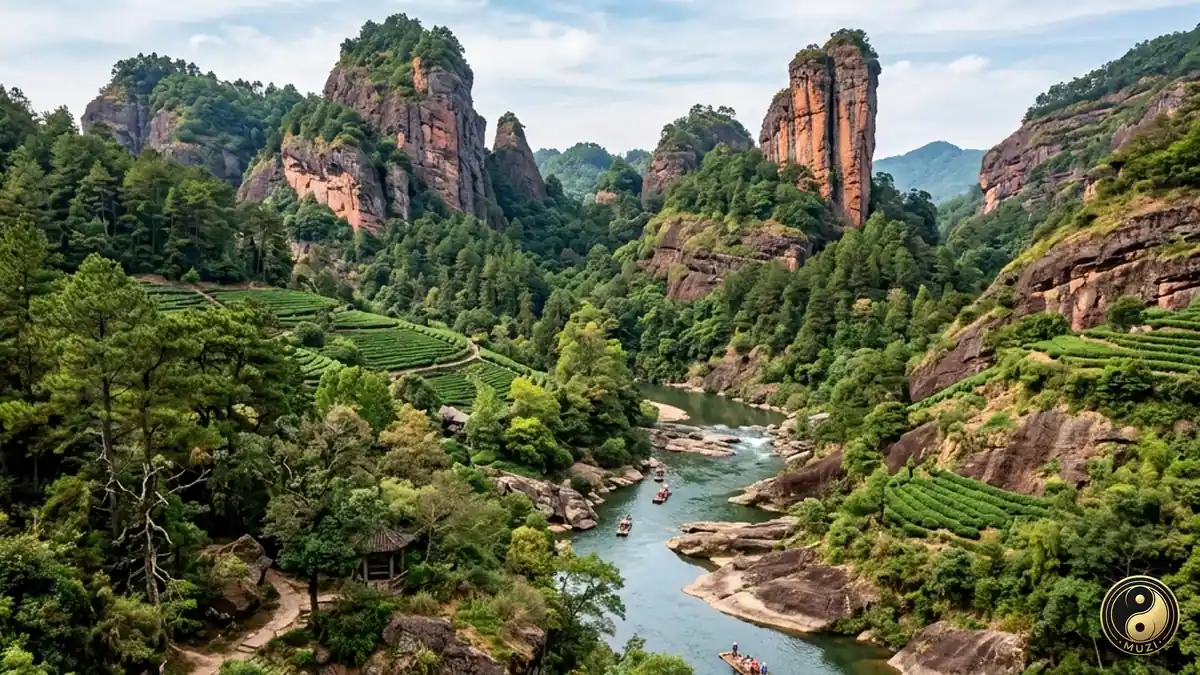 Mountains
The birthplace of black tea and oolong — the Danxia microclimate and mineral-saturated soil of the authentic rock-tea zone perfectly transcode geology into the world's finest tea aromas.
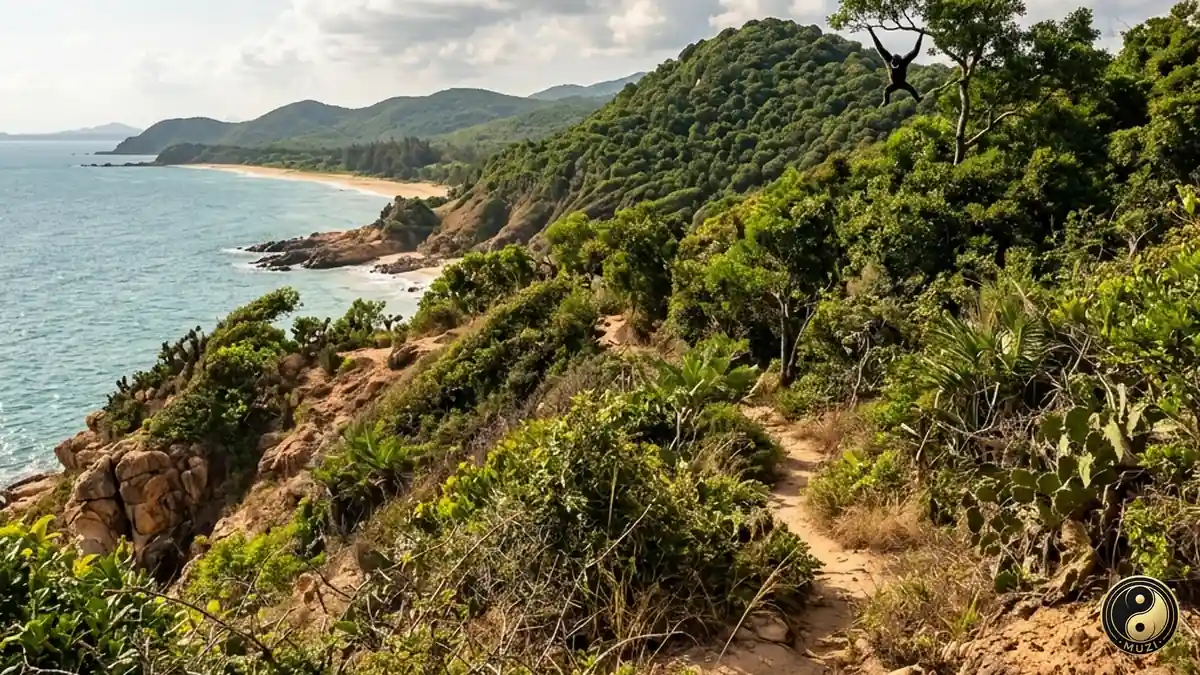 Forests
A unique savanna-scrub ecosystem on a tropical island — shaped by long-term geographic isolation, nurturing endemic species like the Hainan Eld's deer.
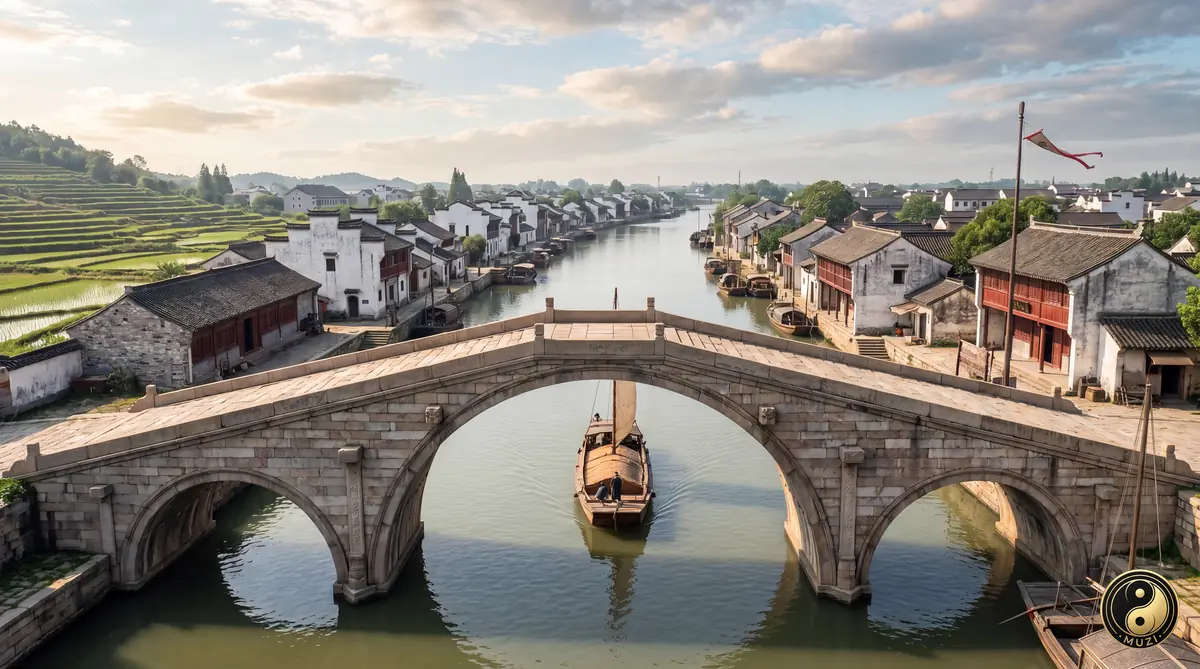 Civil Works
The world's longest man-made waterway — crossing five major river systems to connect north and south, continuously pumping southern grain and wealth into the empire's heart.
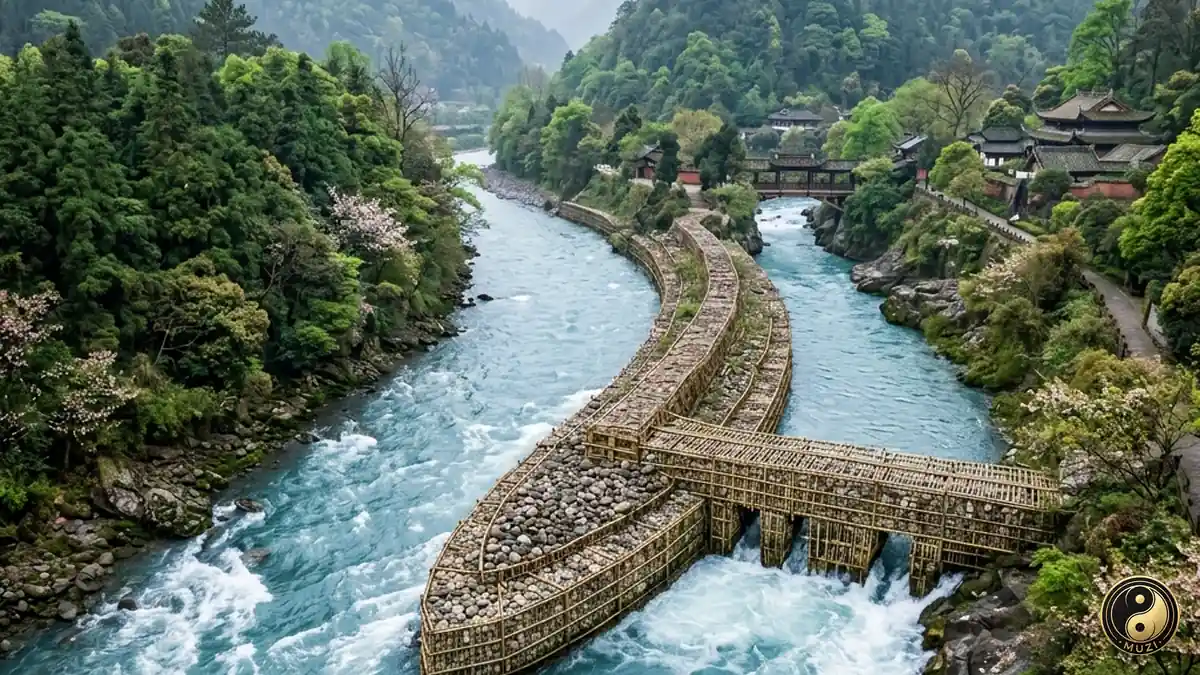 Civil Works
A two-thousand-year-old dam-free irrigation miracle — the fish-mouth divider, the flying-sand weir, and the bottle-neck channel still irrigating the Chengdu Plain's Land of Abundance today.
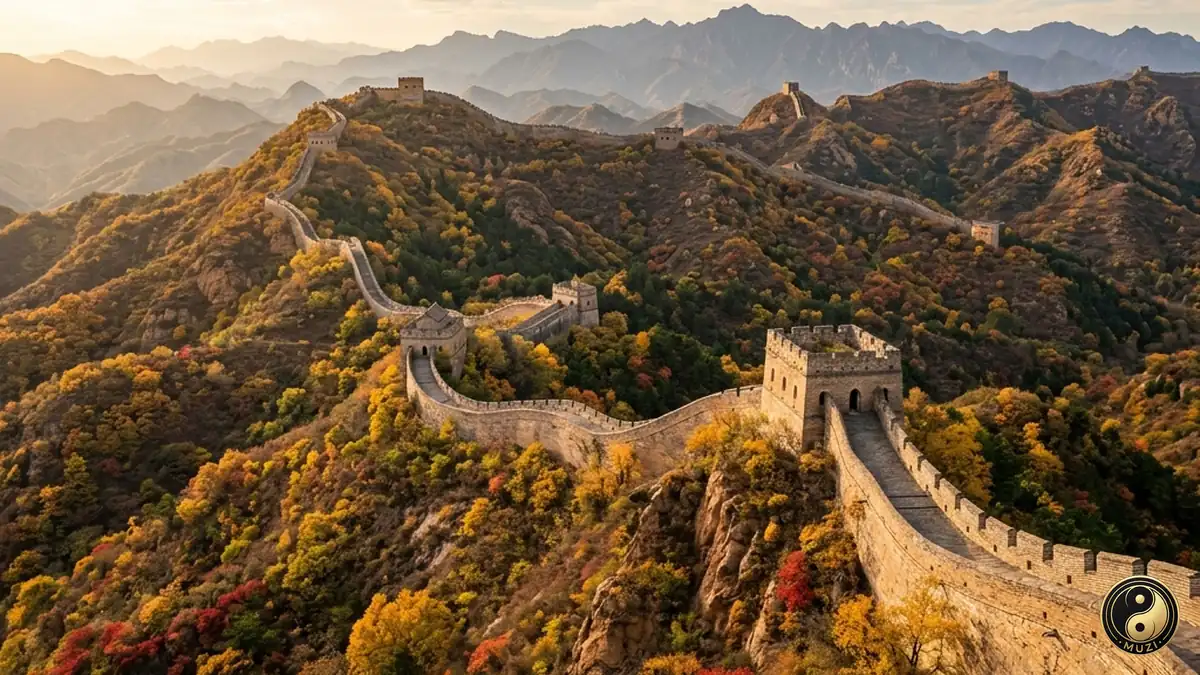 Civil Works
The longest military fortification in human history — winding ten thousand li along the northern ridges, guarding the boundary of agrarian civilization for two millennia.
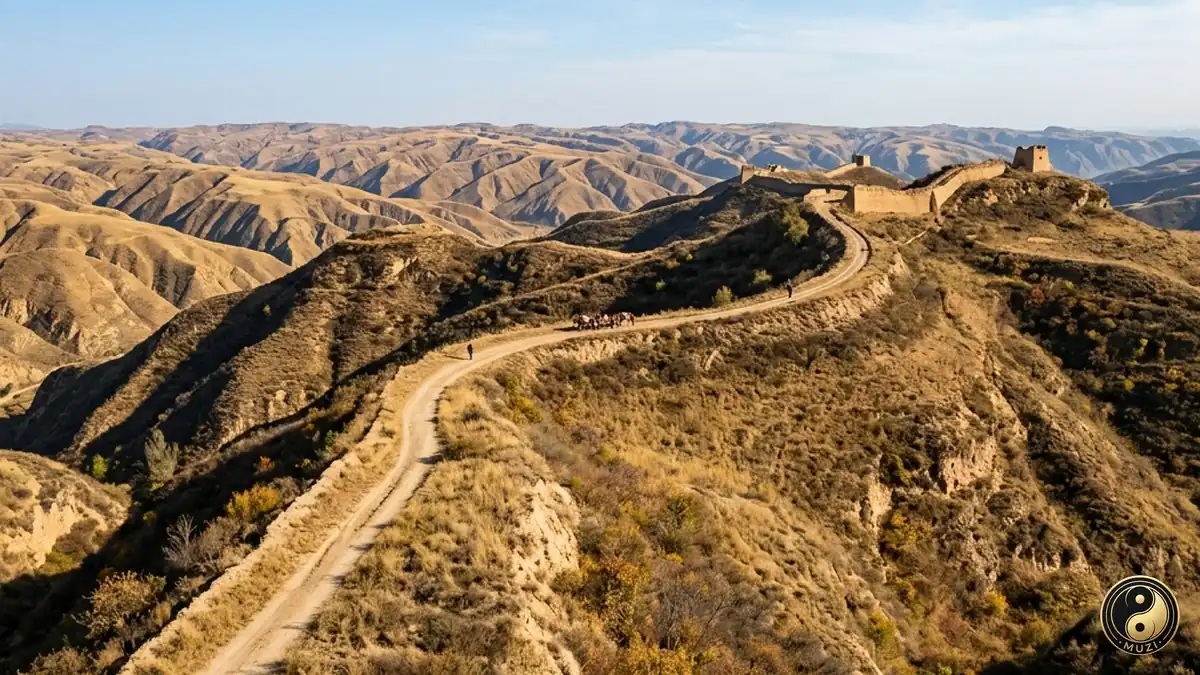 Civil Works
The ancient expressway built by Qin Shi Huang — a geometric military corridor stretching seven hundred kilometers straight along the loess ridge, enabling cavalry to reach the frontier in three days.
 Civil Works
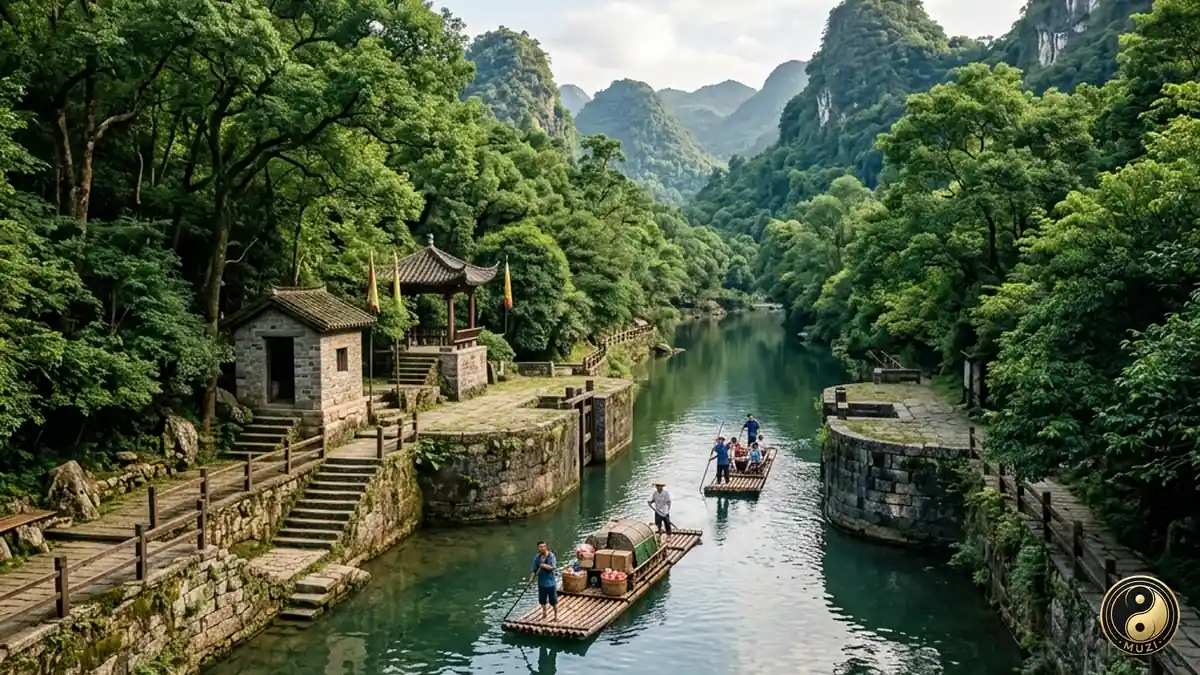
The Lingqu Canal crosses the Xiang-Li watershed to connect the Yangtze and Pearl River systems as an early cross-basin waterway.
 Civil Works
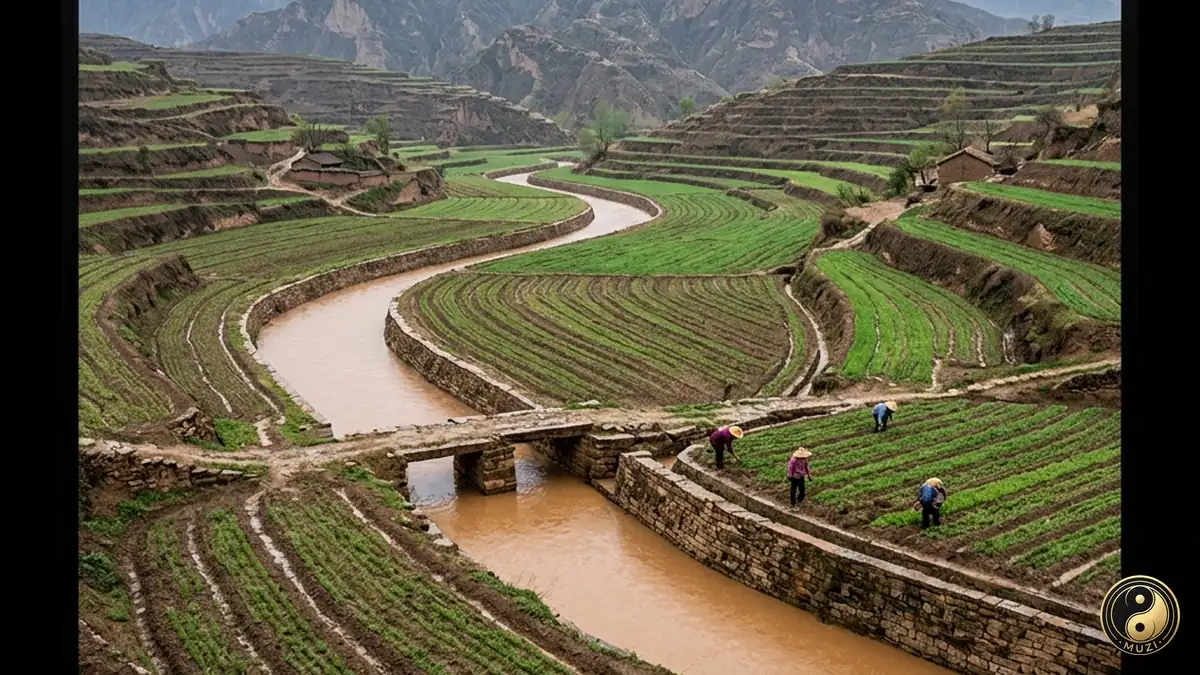
An irrigation canal that diverted silt-laden Jing River water to transform Guanzhong's saline-alkali land — a single engineering project that directly fueled Qin's war machine to conquer the six states.
 Passes
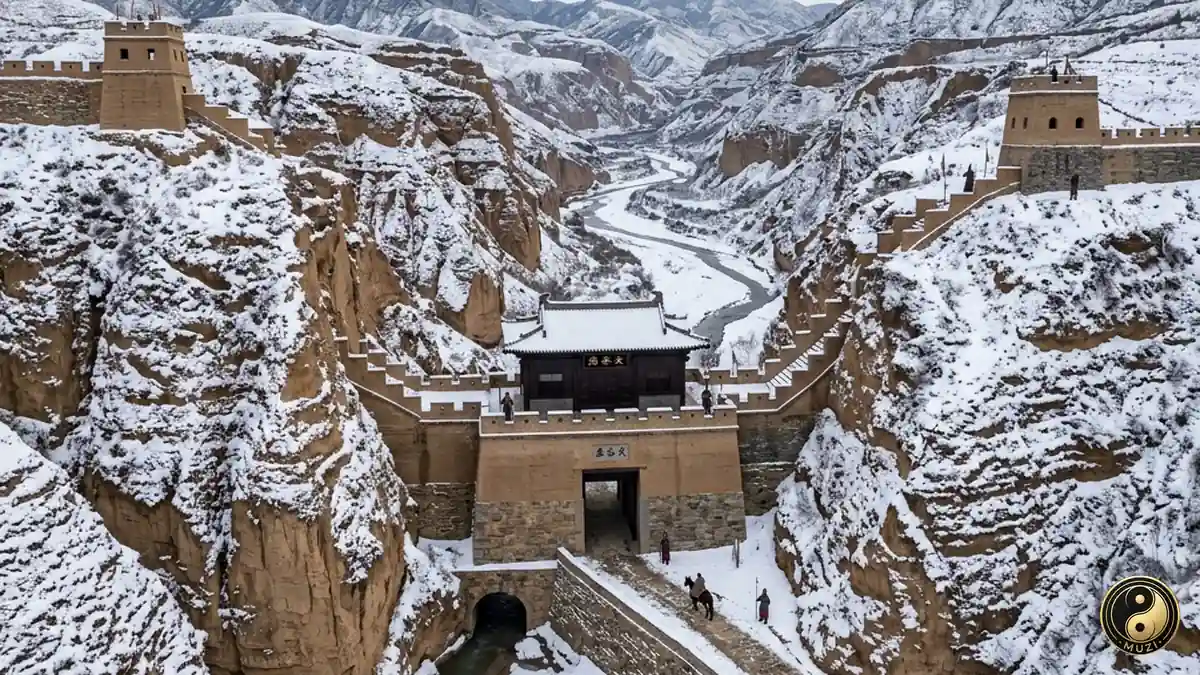
The natural choke point between the Xiao Mountains and the Yellow River — one man holding the pass against ten thousand, the most vital strategic gateway between ancient Guanzhong and the Central Plains.
 Passes
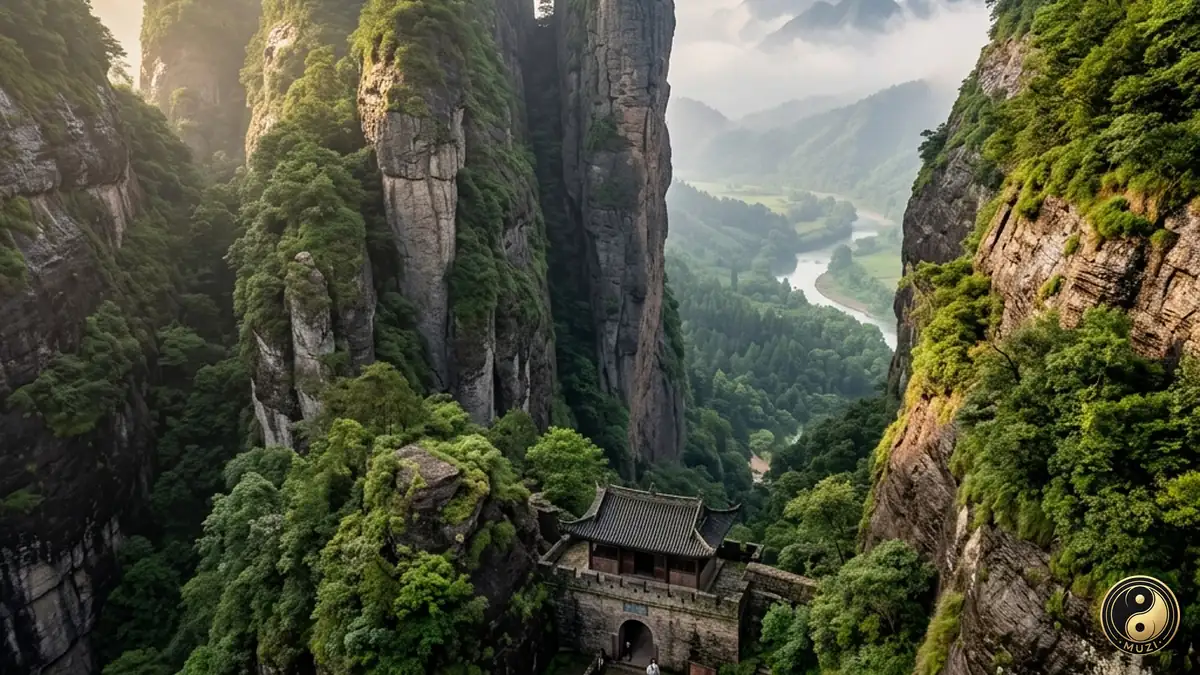
Seventy-two peaks standing like blades in confrontation where the Daba Mountains fractured — the only passage into Shu, nature's security black-box for separatist regimes.
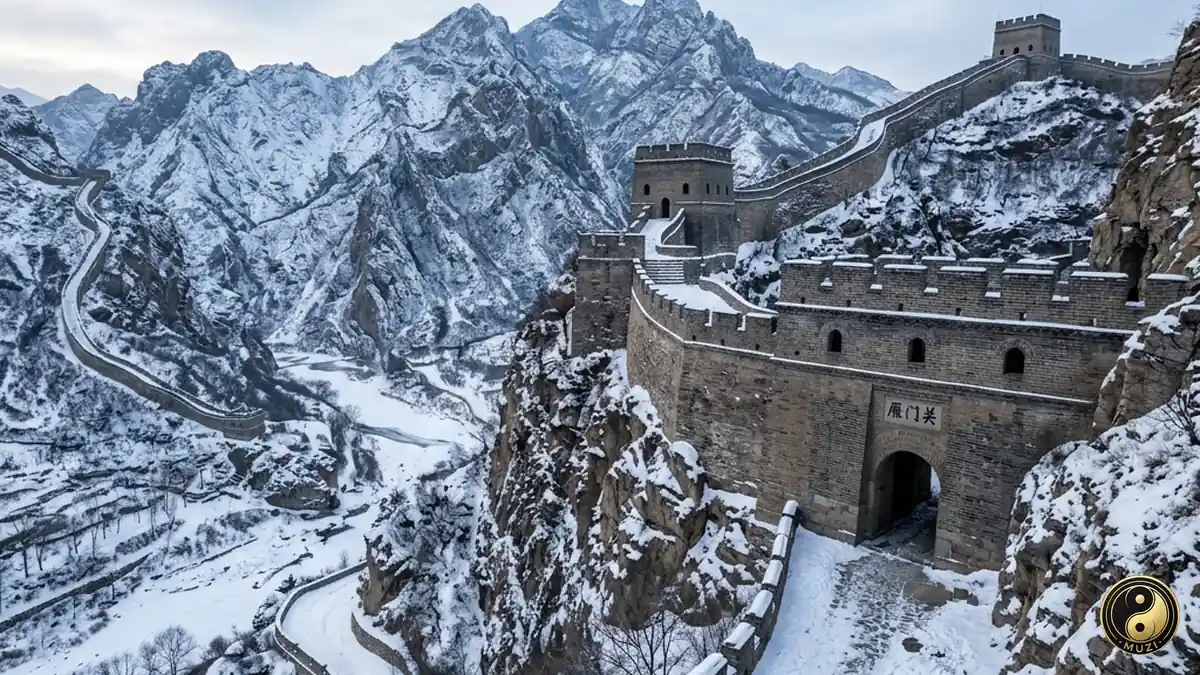 Passes
The perilous pass in the Heng Mountains — for millennia, one of the core defense lines where agrarian civilization withstood the high-intensity shock of northern nomadic cavalry.
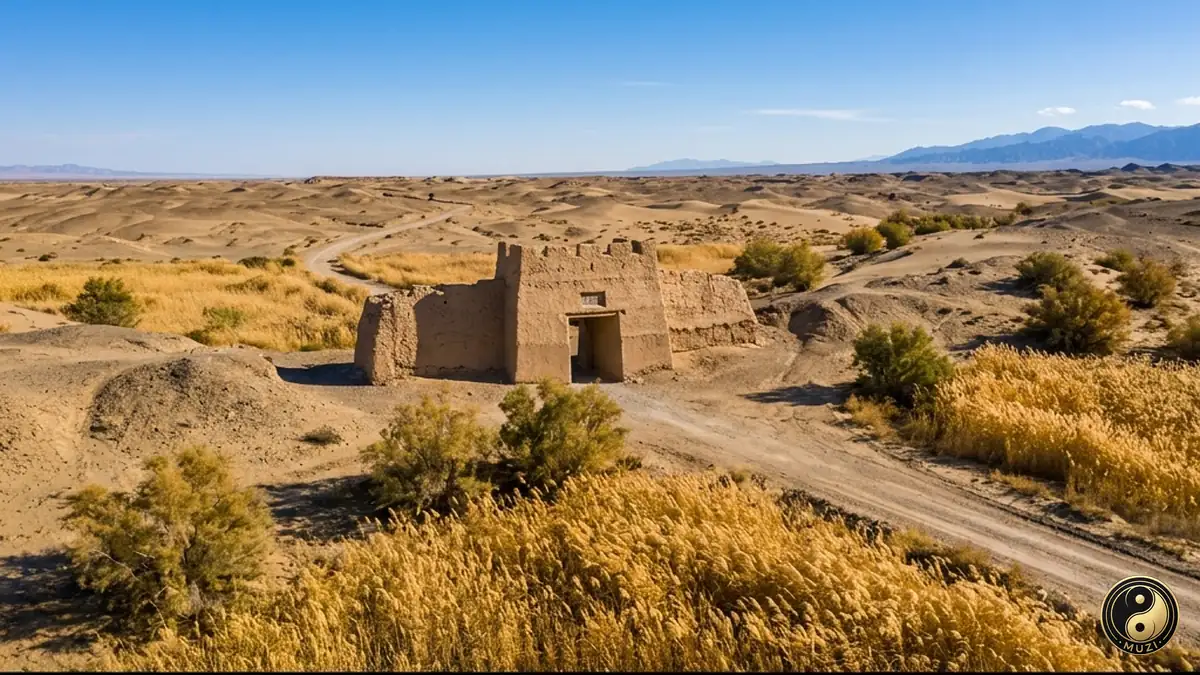 Passes
The Silk Road's western gateway — where the Han dynasty established the Protectorate of the Western Regions, the empire's westernmost terminal for exercising sovereignty over Inner Asia.
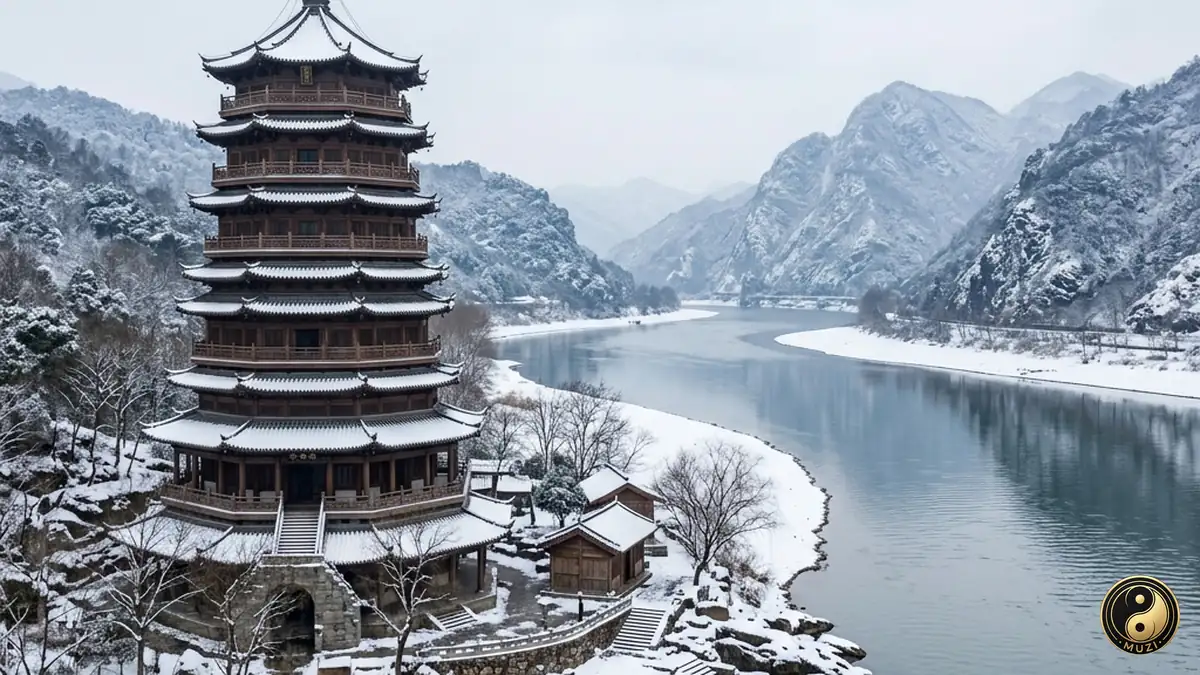 Civil Works
A thousand-year-old pagoda on the Qiantang riverside — both a tide-taming lighthouse and a spiritual monument to humanity's architectural will confronting the river's nonlinear fury.
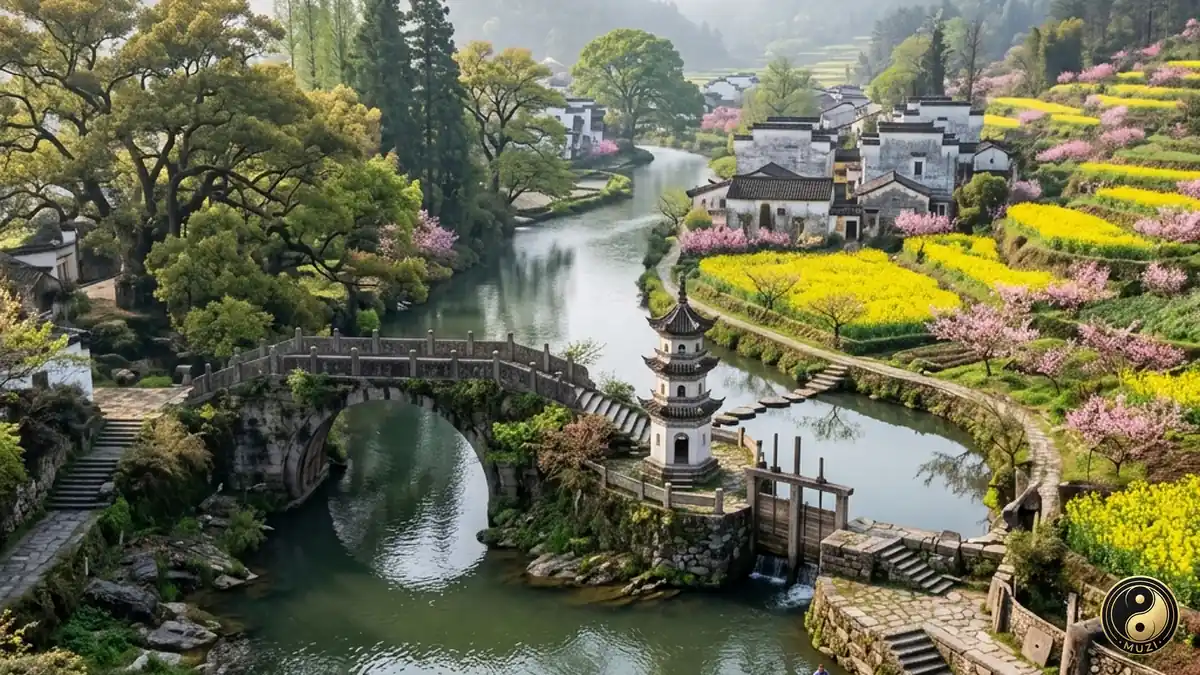 Civil Works
The main Huizhou Weir Dam section in Xixinan Town, Huizhou District, forms a carefully integrated irrigation system of weirs, ponds, channel outlets, water streets, and wells that follows the natural terrain and reflects the historical change and cultural continuity of the Huizhou (Huangshan) region.
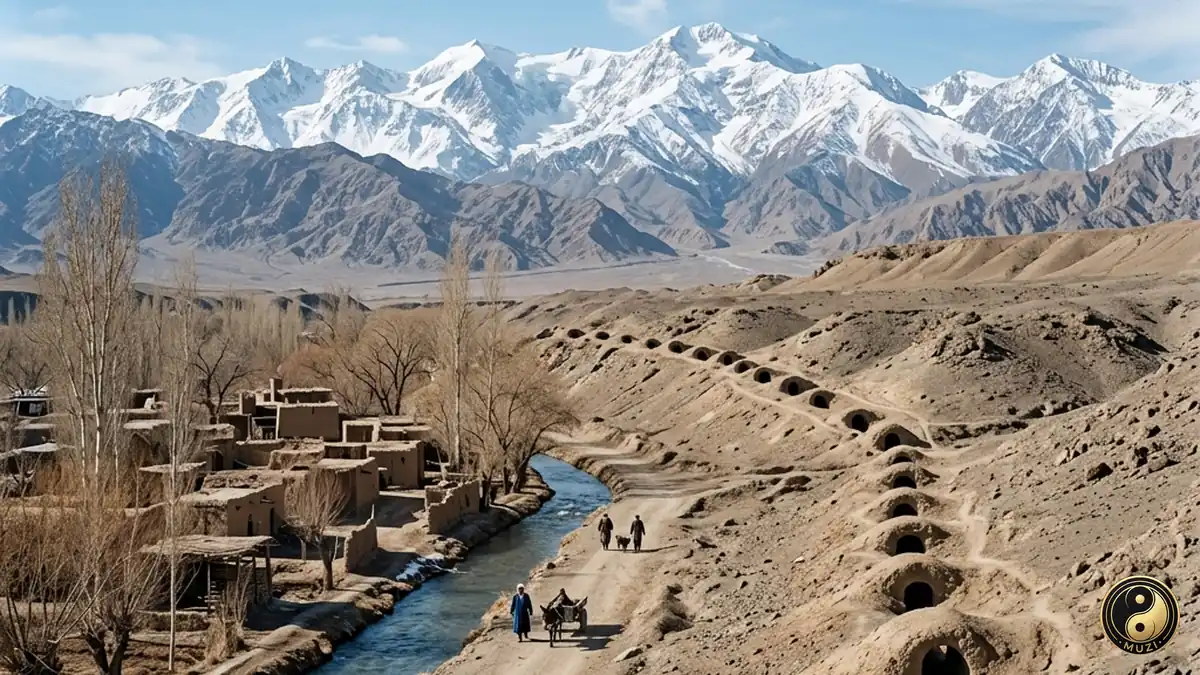 Civil Works
Turpan's Karez channels carry Tianshan snowmelt to oases with little evaporation, an enduring feat of underground water engineering.
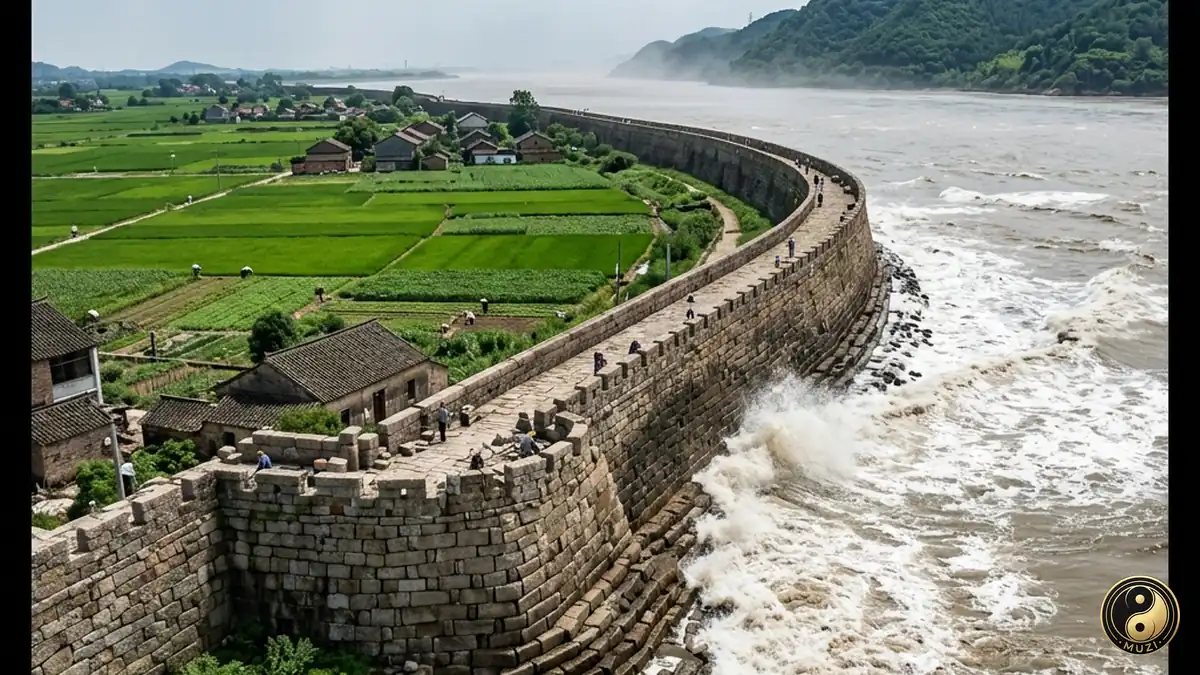 Civil Works
Hundreds of kilometers of stone seawall lying like a dragon — precision mortise-and-tenon joinery resisting violent tidal bores, defending the security of Jiangnan's wealthiest region.
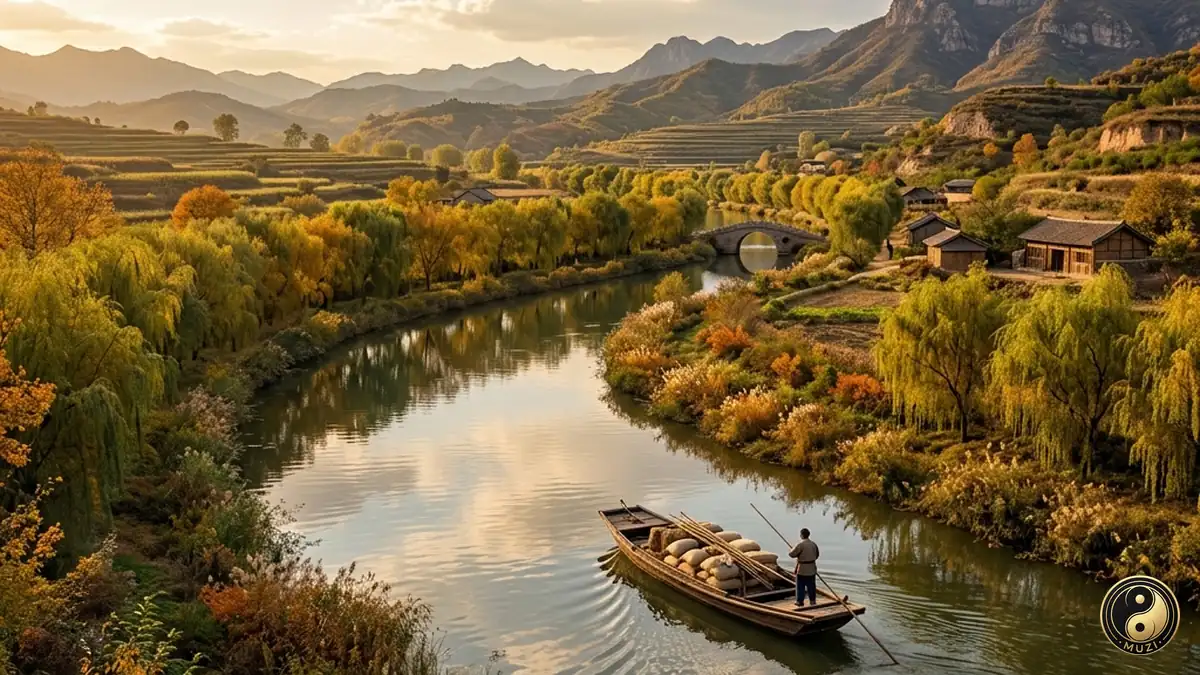 Civil Works
Emperor Yang of Sui's super waterway network — a herringbone pattern connecting the entire empire, maximizing the bandwidth for pumping Jiangnan wealth to the imperial center.
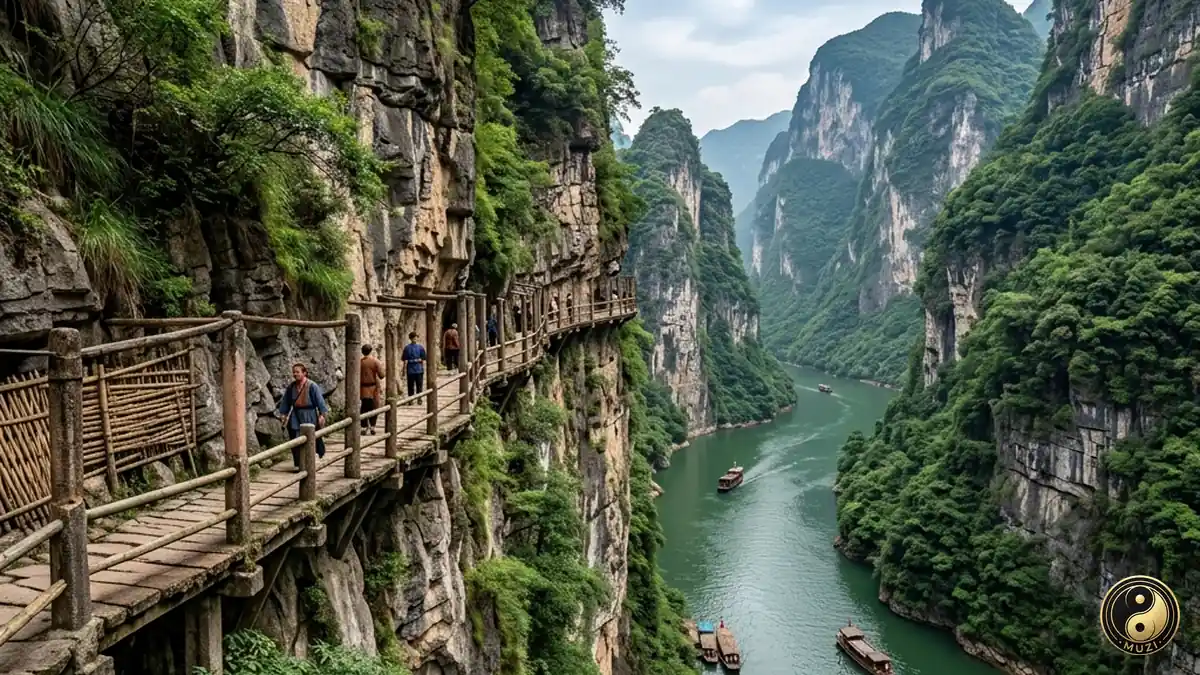 Civil Works
A suspended walkway carved into the vertical cliffs of the Three Gorges — trackers and soldiers clawing out a logistics miracle against heaven-defying terrain with bare hands.
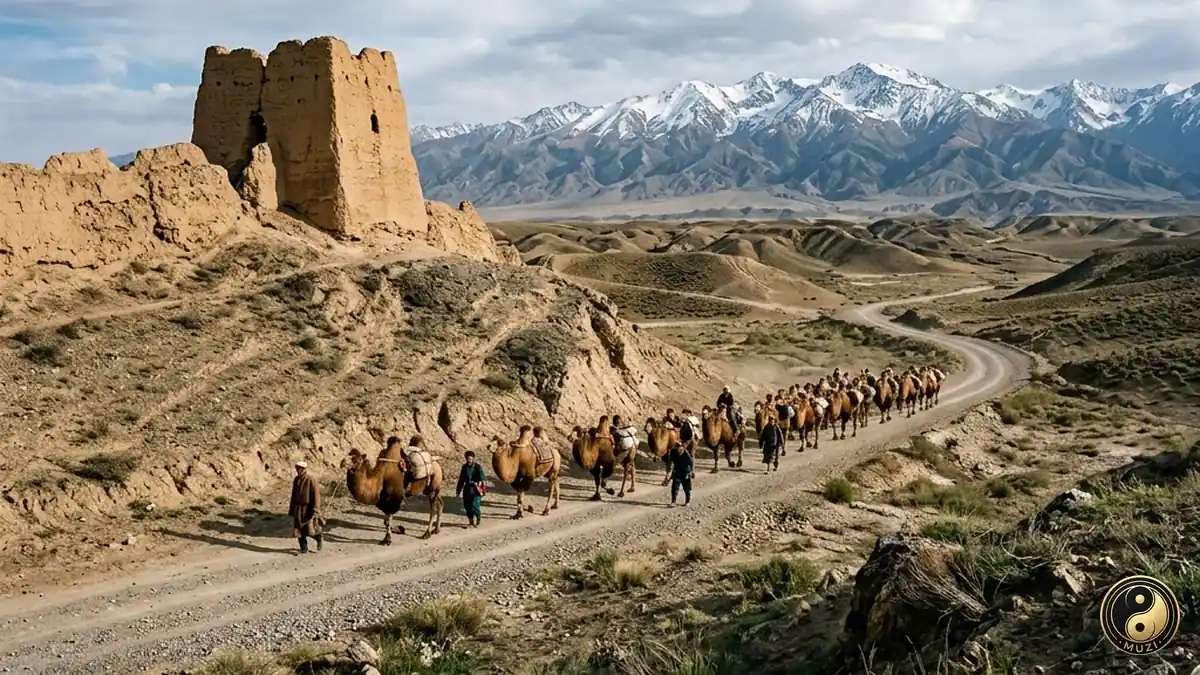 Regional Corridor
The narrow oasis belt pinched between the Qilian Mountains and the desert — the golden passage of the Silk Road, Chinese civilization's sole overland corridor into the heart of Eurasia.
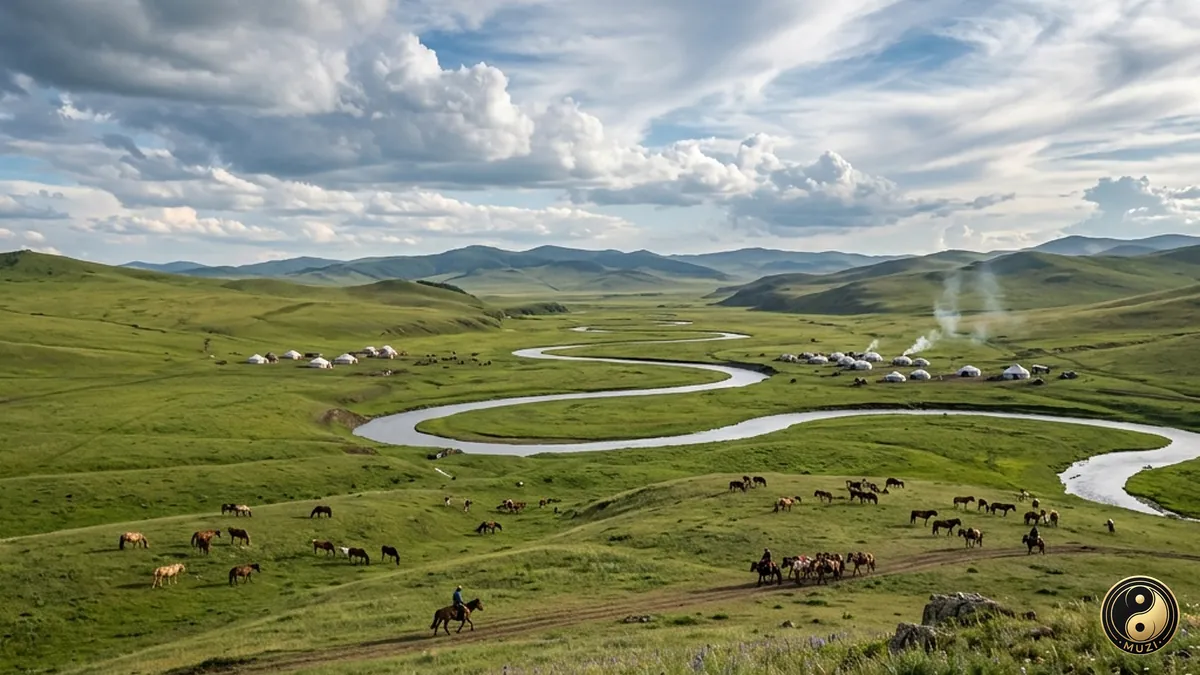 Regional Corridor
Hulunbuir's broad natural grasslands supported pastoral life and supplied horses and livestock beyond the Great Wall.
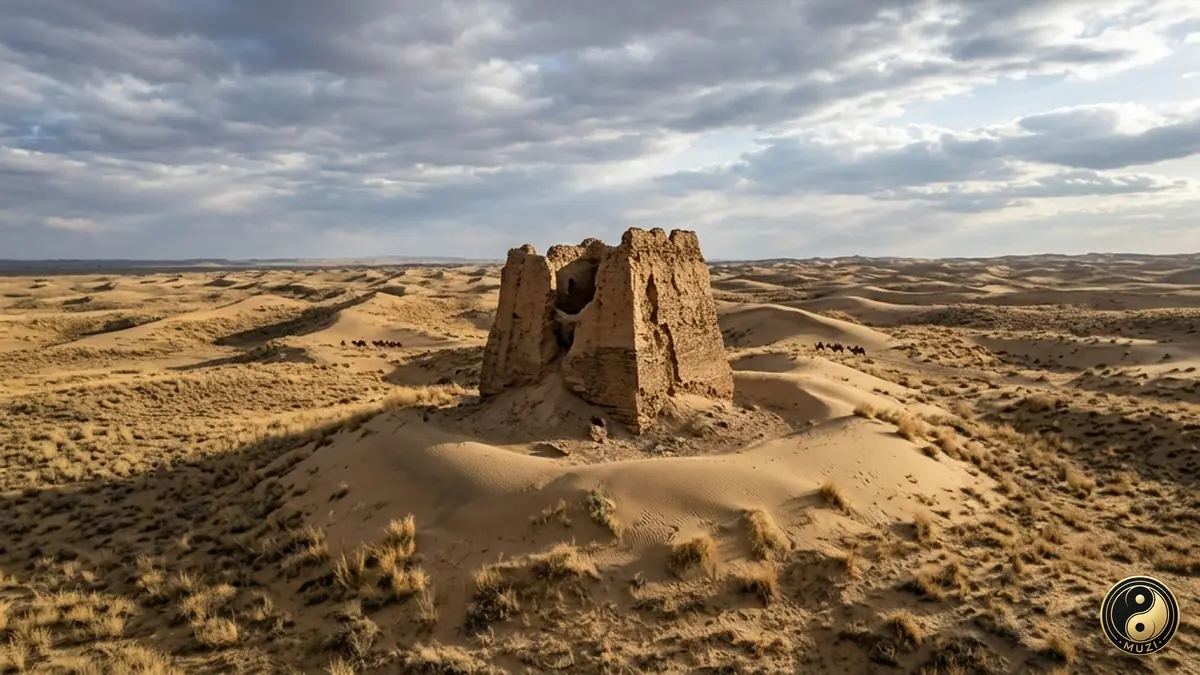 Regional Corridor
The semi-arid plateau enclosed by the Yellow River's great horseshoe bend — a suspended sword over Guanzhong and the Central Plains, the drill ground where farmers and herders clashed across history.
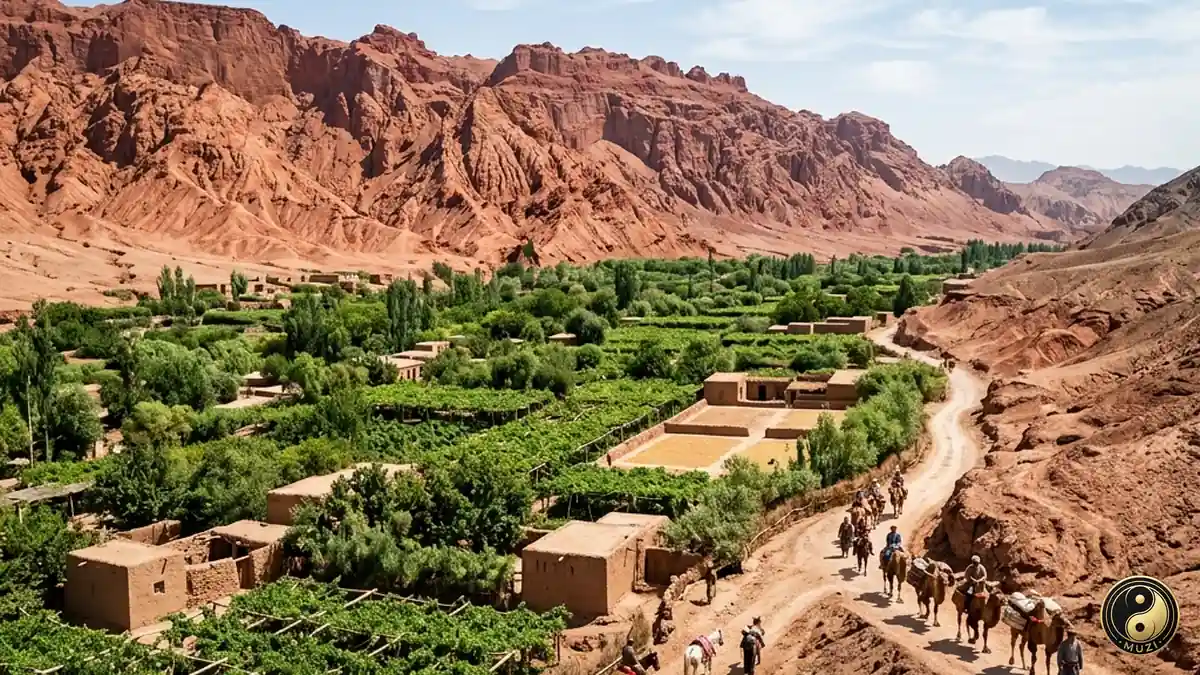 Regional Corridor
Turpan's low basin is exceptionally hot and dry, producing prized melons and sustaining the Karez canal tradition.
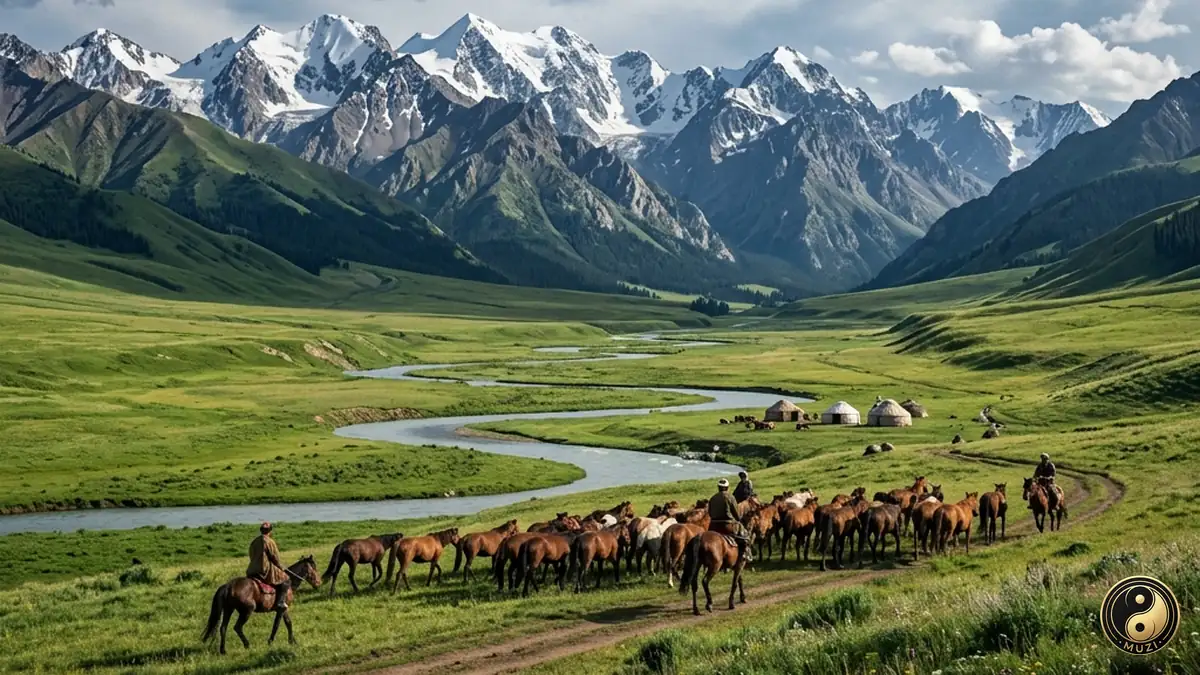 Regional Corridor
Where the Tianshan tears open a gap to capture Atlantic westerly moisture — a miraculous 'Jiangnan beyond the frontier' flourishing in the heart of the continent's extreme arid zone.
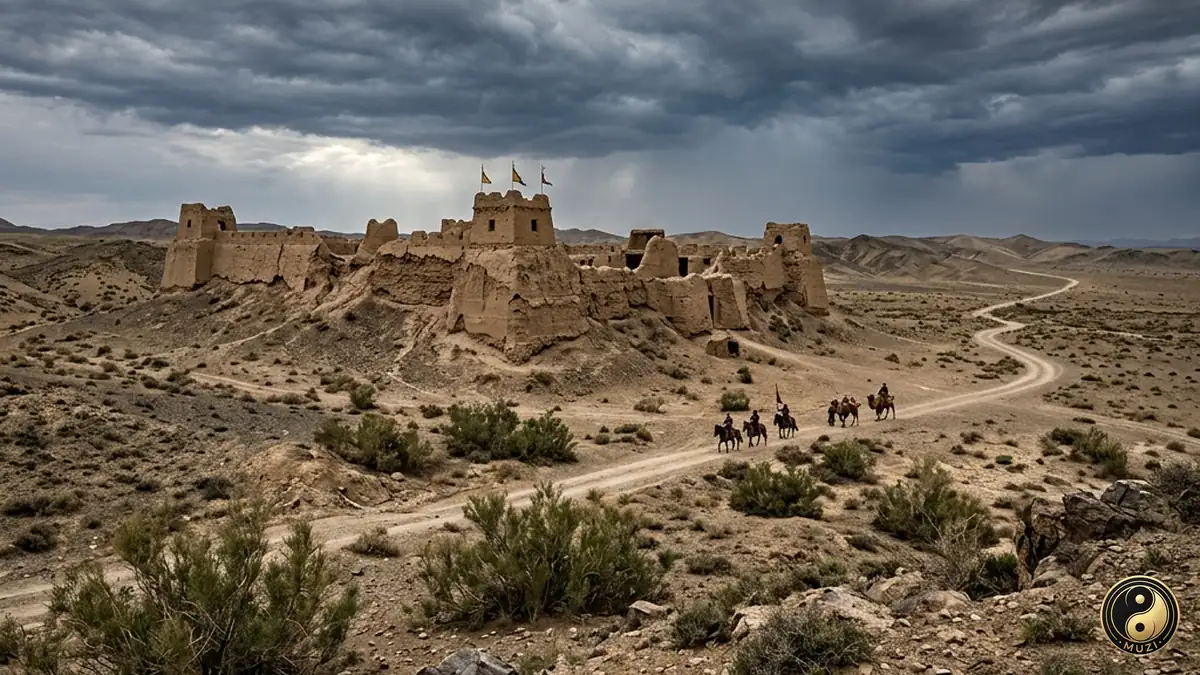 Regional Corridor
A semi-enclosed basin pinched between the Altai and Tianshan ranges — with lush pastures and a strategic position, the core base of successive nomadic empires.
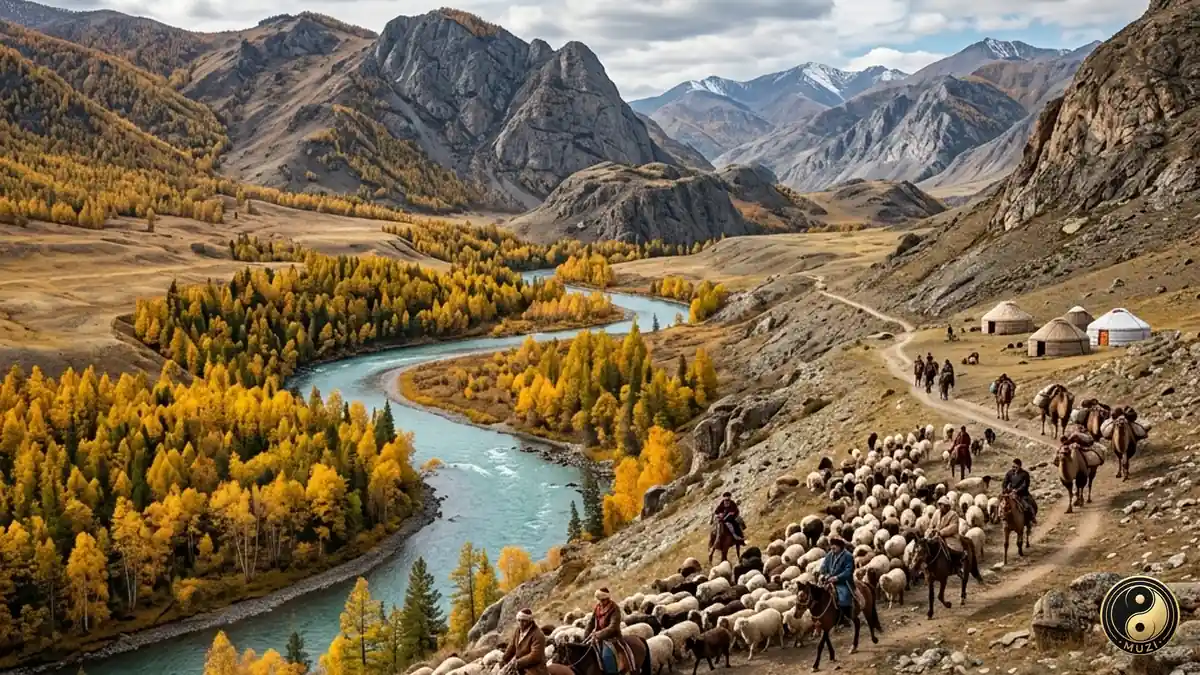 Regional Corridor
The Irtysh is a rare river that flows north toward the Arctic Ocean, cutting a green corridor through the Altai interior.
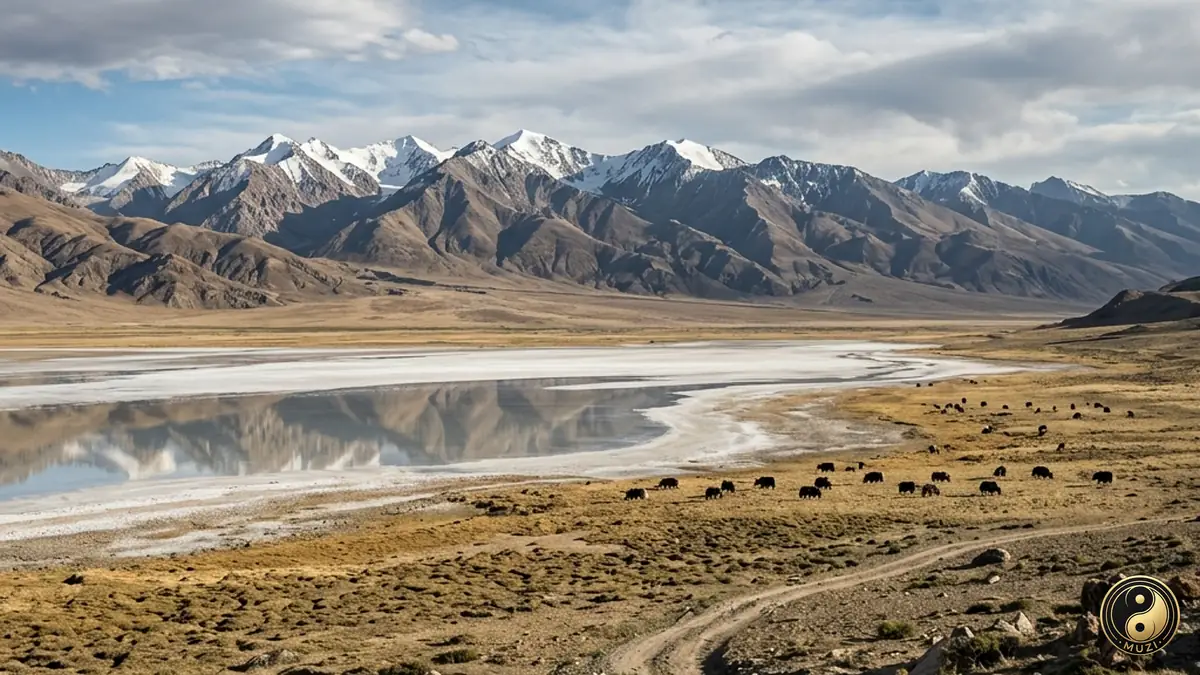 Regional Corridor
The hyper-enclosed uninhabited zone at the junction of the Kunlun and Qilian ranges — extreme altitudinal isolation creating a forbidden zone of life and the ultimate backup vault for Tibetan antelope and wild yak.
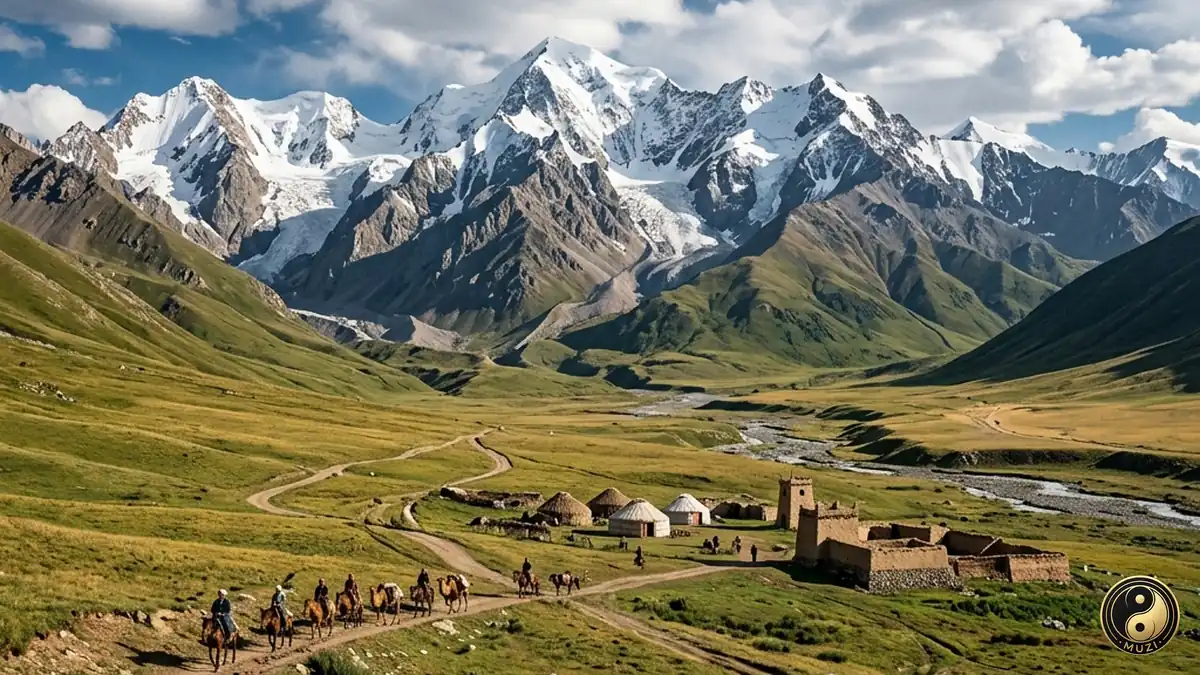 Regional Corridor
A high-altitude glacier belt straddling the south side of the Hexi Corridor — its endless frozen reservoir drip-irrigating the entire lifeline of the Silk Road.
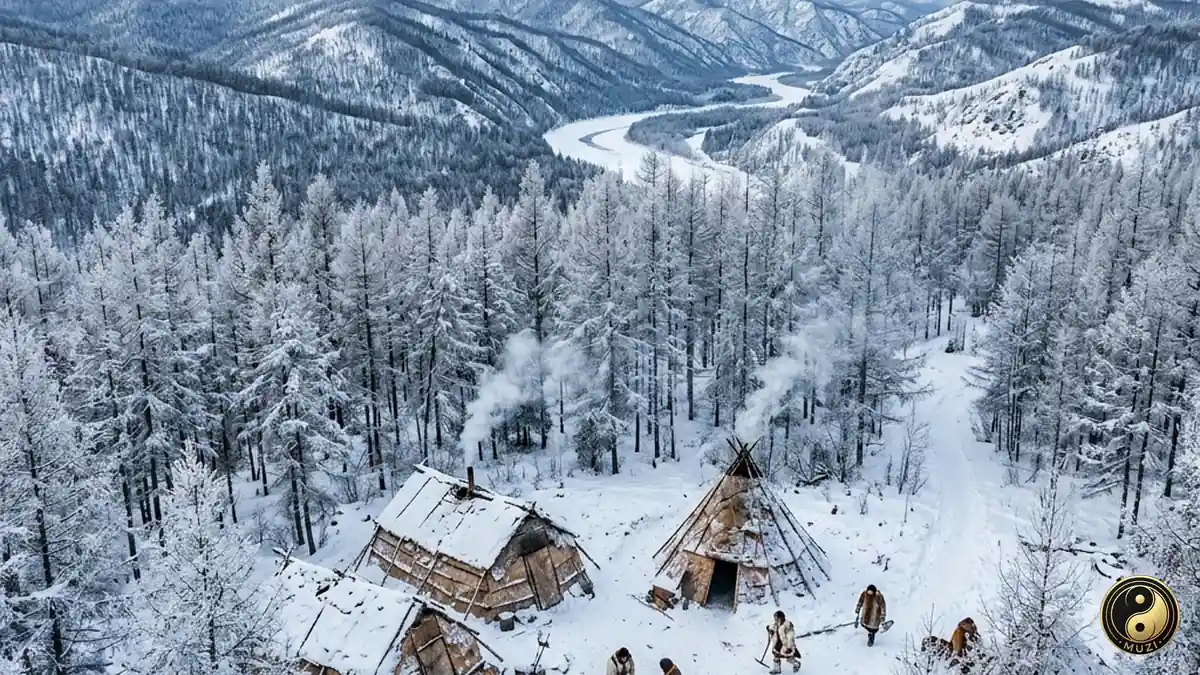 Regional Corridor
The steep ecological fault where taiga forest transitions abruptly to arid Mongolian steppe — the evolutionary cradle from which northern nomadic, hunting, and fishing peoples emerged from the forest onto the grassland to begin their conquest of the Central Plains.
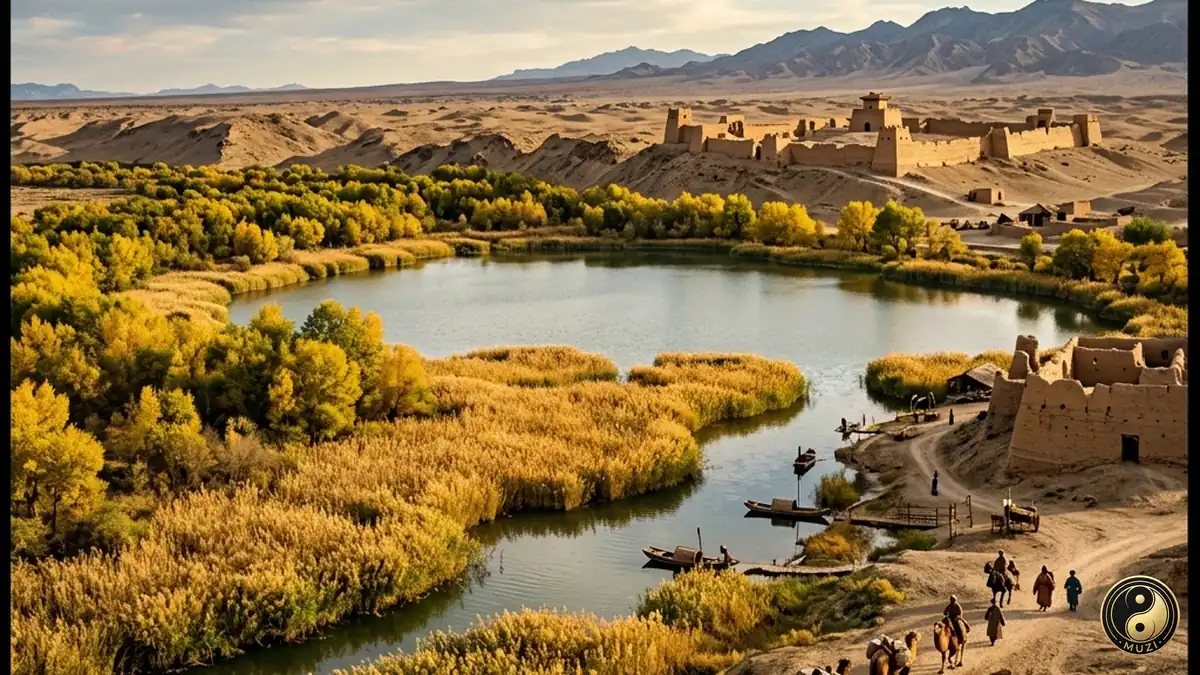 Regional Corridor
A terminal oasis where the Heihe River dies into the Badain Jaran Desert — the Han dynasty's extreme northern outpost, where military wooden slips were unearthed, a forward server of the Qin-Han empire in the Gobi.
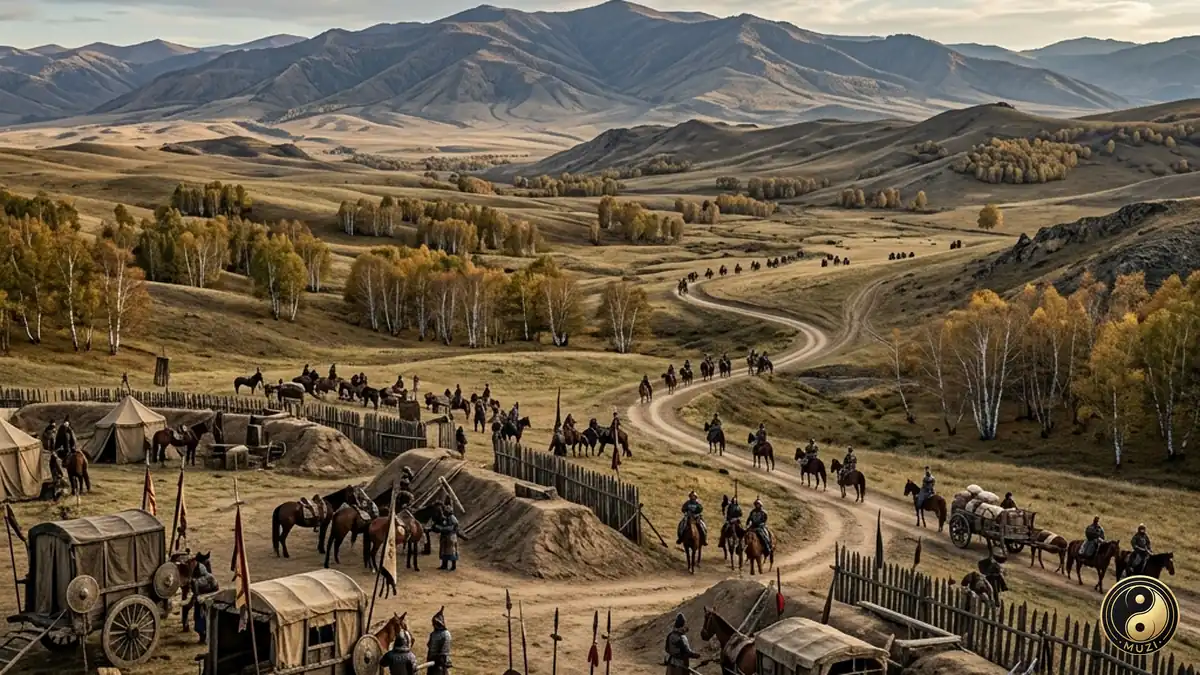 Regional Corridor
The grand grassland battlefield where the Kangxi Emperor personally led his army to crush the Zunghar threat — a rolling meadow arena that decided the final shape of the empire's northern frontier.
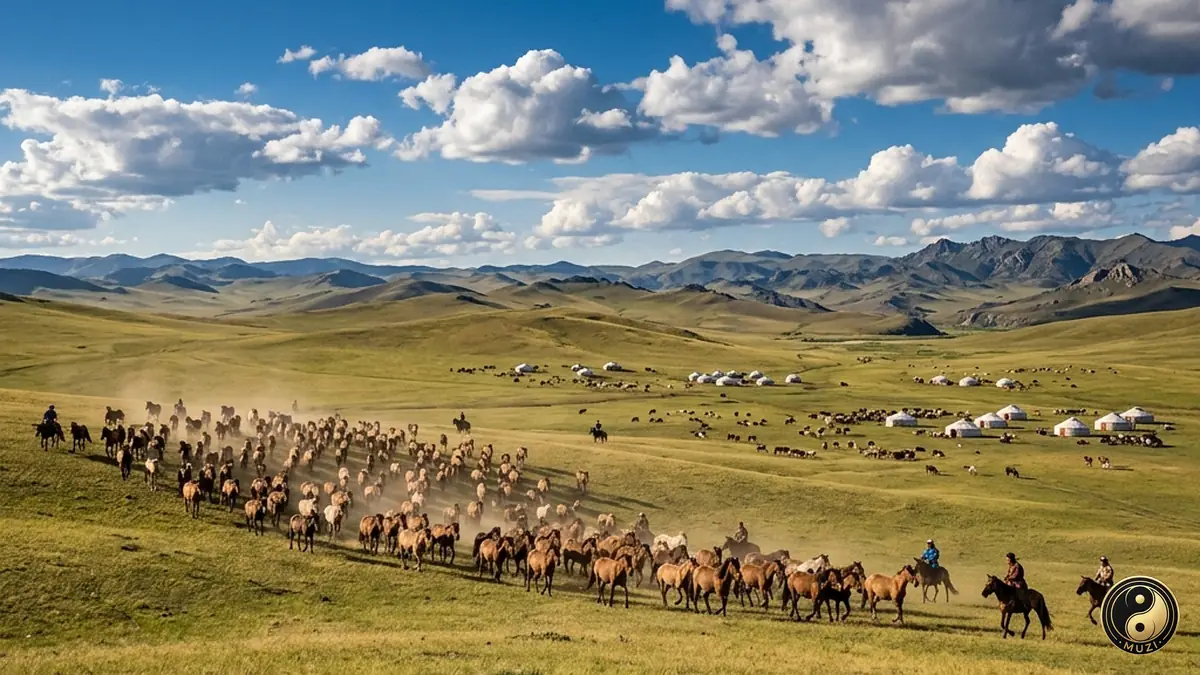 Regional Corridor
The quintessential temperate steppe of the Inner Mongolian Plateau core — the central stage and geopolitical buffer zone of nomadic courts through Yuan, Ming, and Qing dynasties.
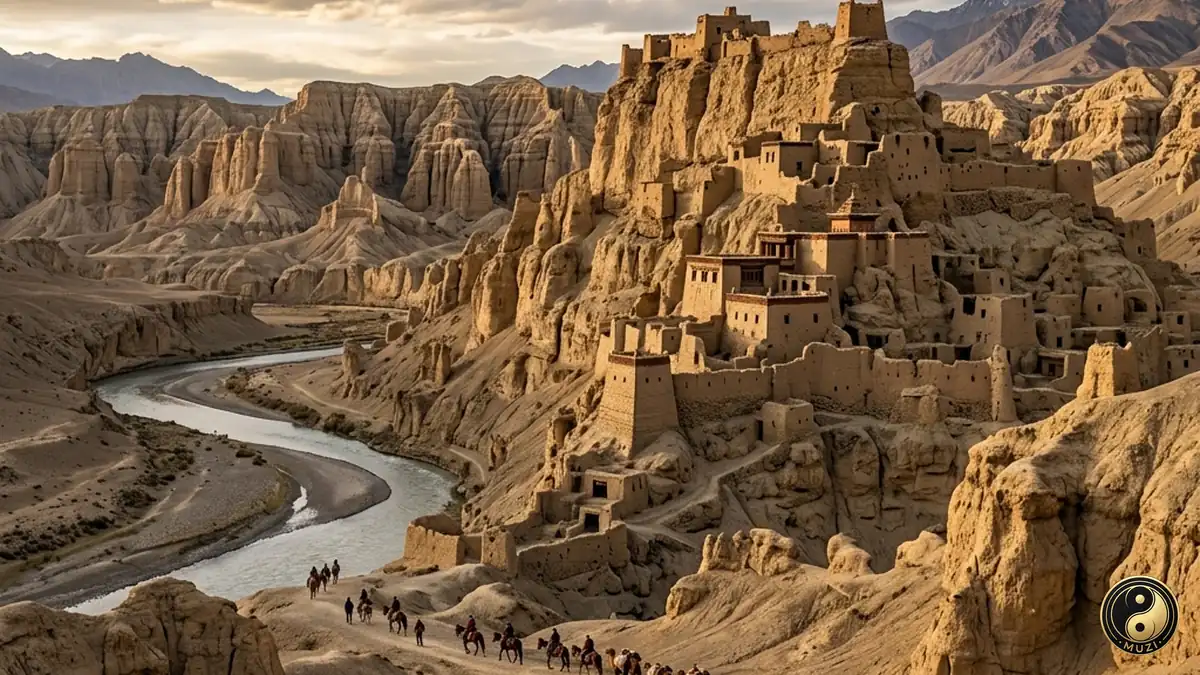 Regional Corridor
The site of the ancient Guge Kingdom — a colossal forest of yardang earth pillars carved by water erosion, a giant maze of clay geometries secretly hiding a vanished kingdom in extreme desolation.
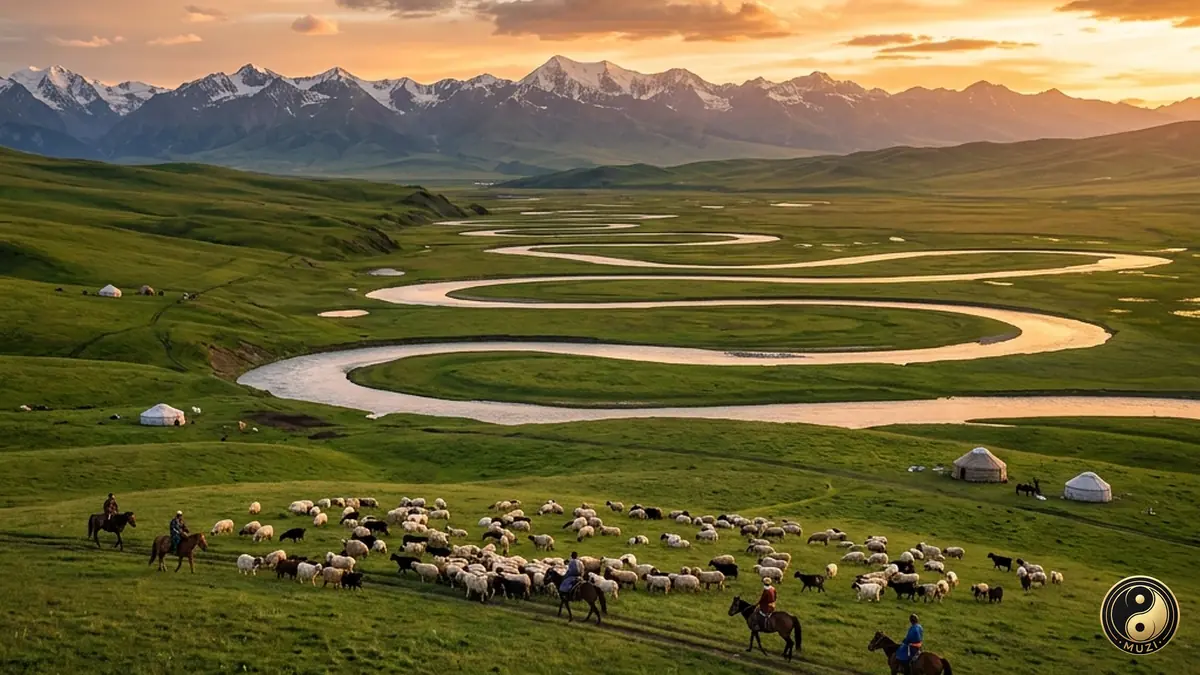 Regional Corridor
Alpine wetlands deep in the Tianshan, formed by the nine bends and eighteen meanders of the Kaidu River — the swans' homeland and the nomadic high-altitude liquid pasture.
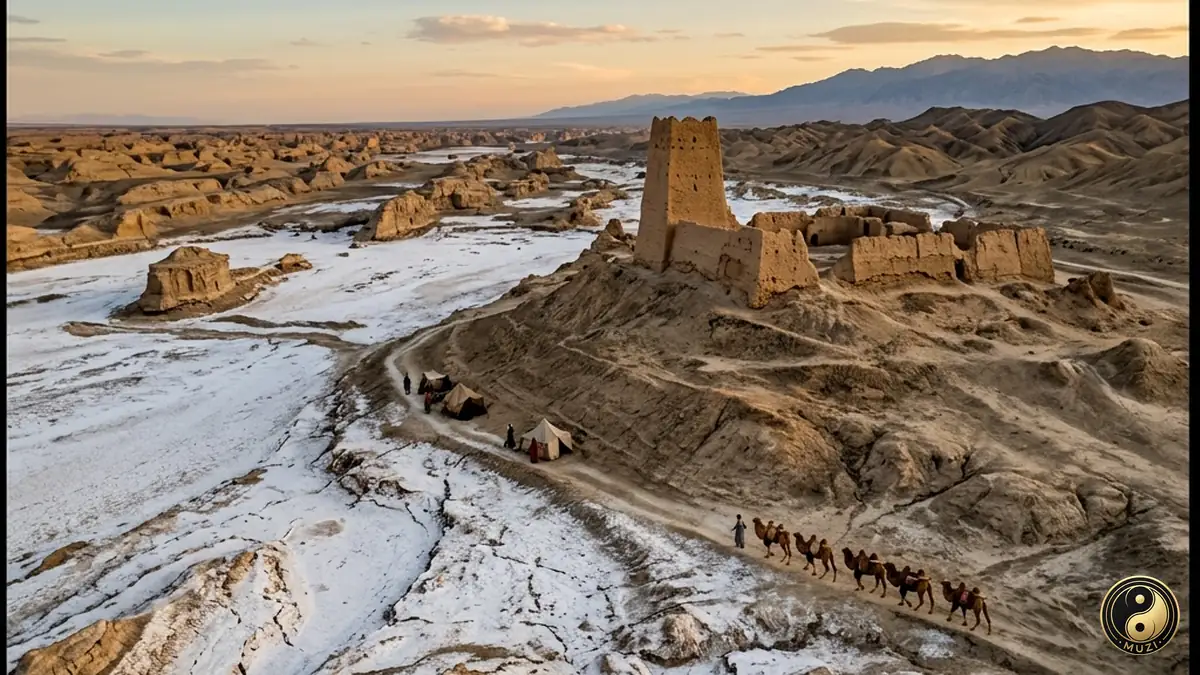 Regional Corridor
The burial ground of the Loulan Kingdom — a once-vast lake desiccated entirely into a giant ear-shaped salt crust, sealing and encrypting a thousand years of Silk Road exploration memory.
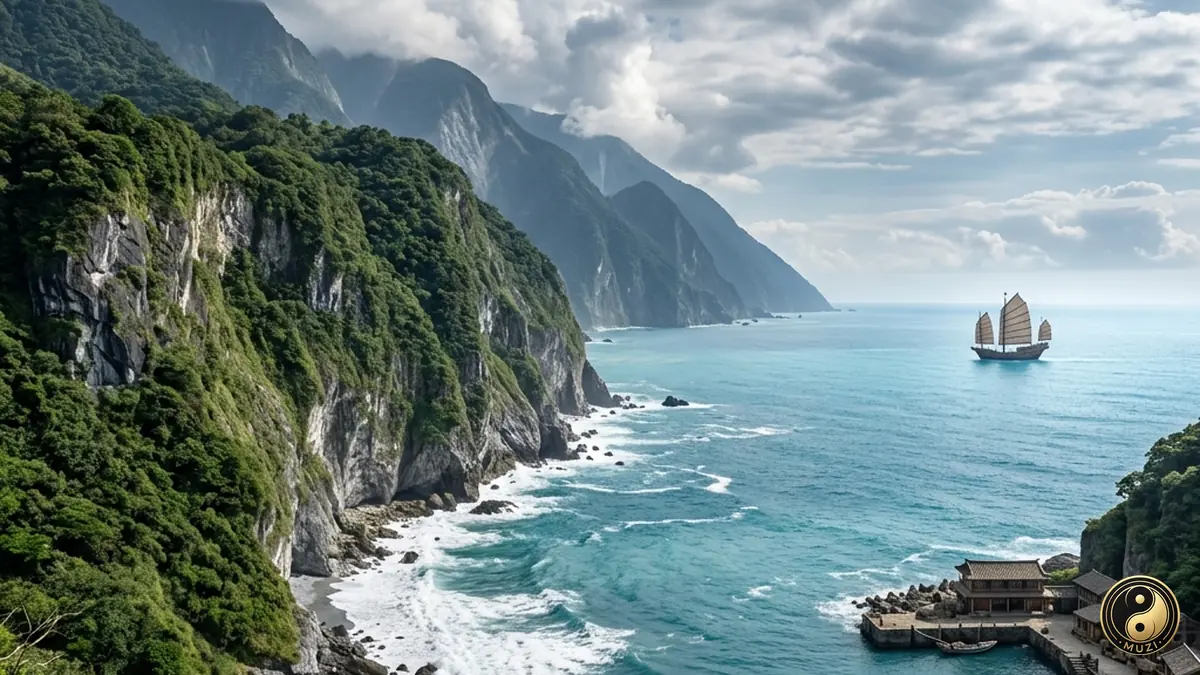 Islands
Huaxia's largest island, an emerald western-Pacific screen where ecosystems run from tropical rainforest to alpine tundra.
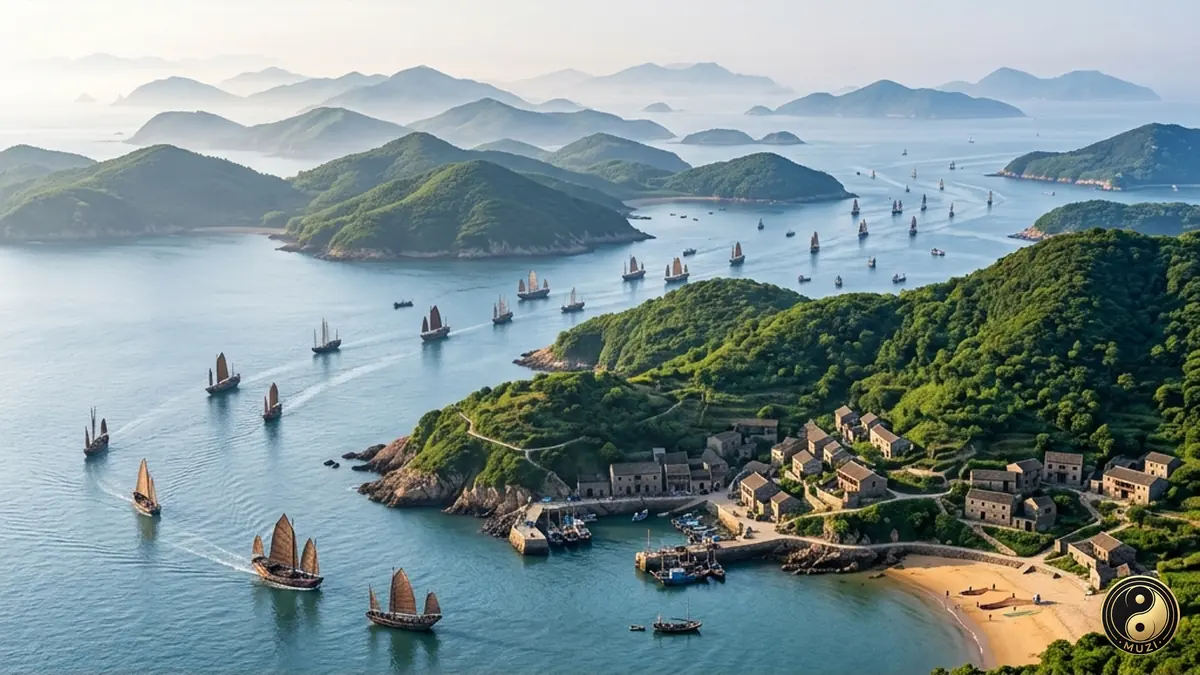 Islands
An archipelago of more than a thousand islands scattered across the East China Sea, linking riverine waters with open sea.
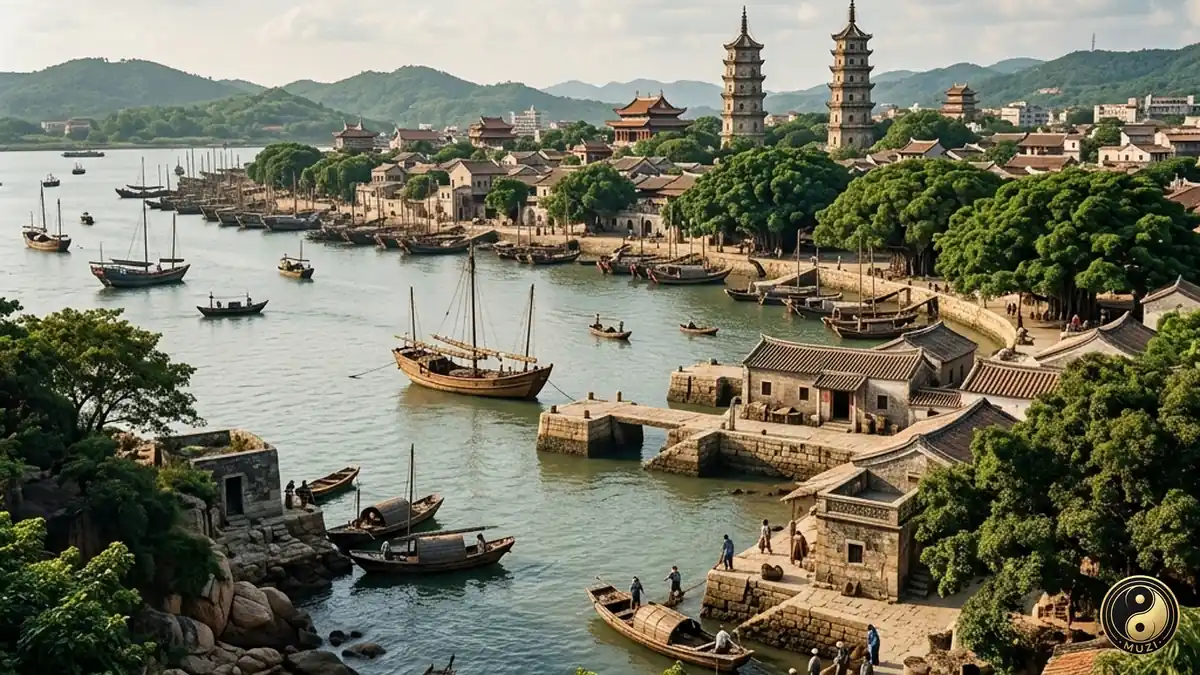 Harbor
The world's largest port during the Song and Yuan dynasties, the starting point of the Maritime Silk Road — where Marco Polo beheld the Zaytun city in full bloom, the Orient's greatest harbor.
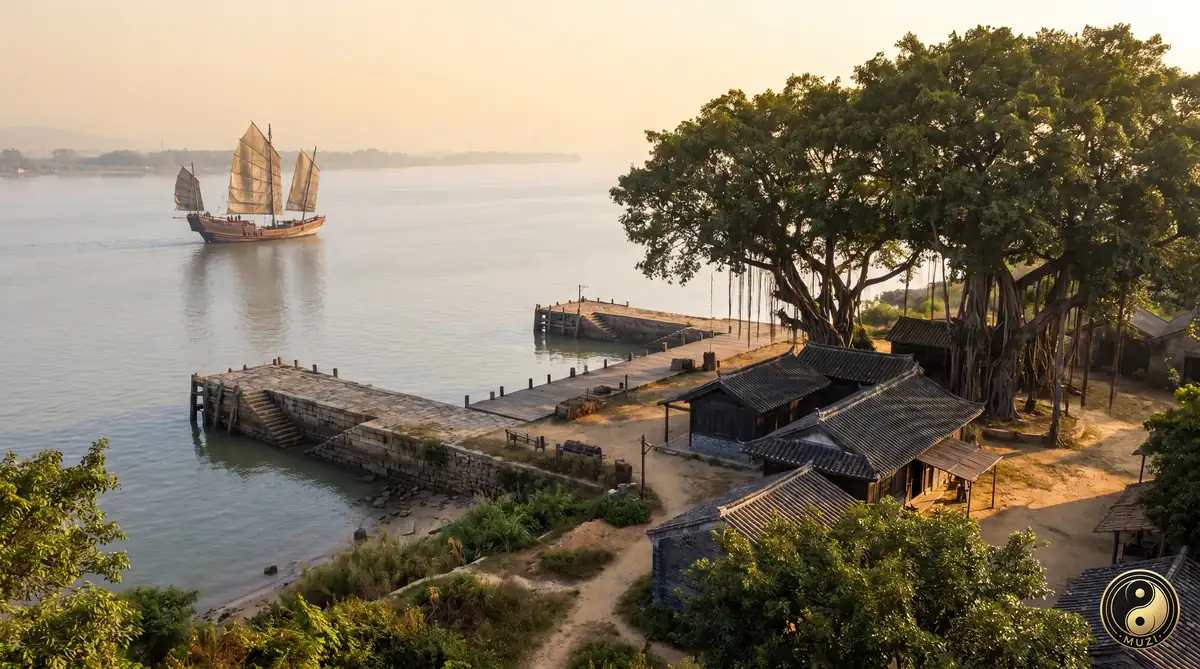 Harbor
The ancient port and customs office of Guangzhou — China's first national-level maritime trade authority, witnessing the prosperity of the Age of Discovery on the South China Sea.
 Islands
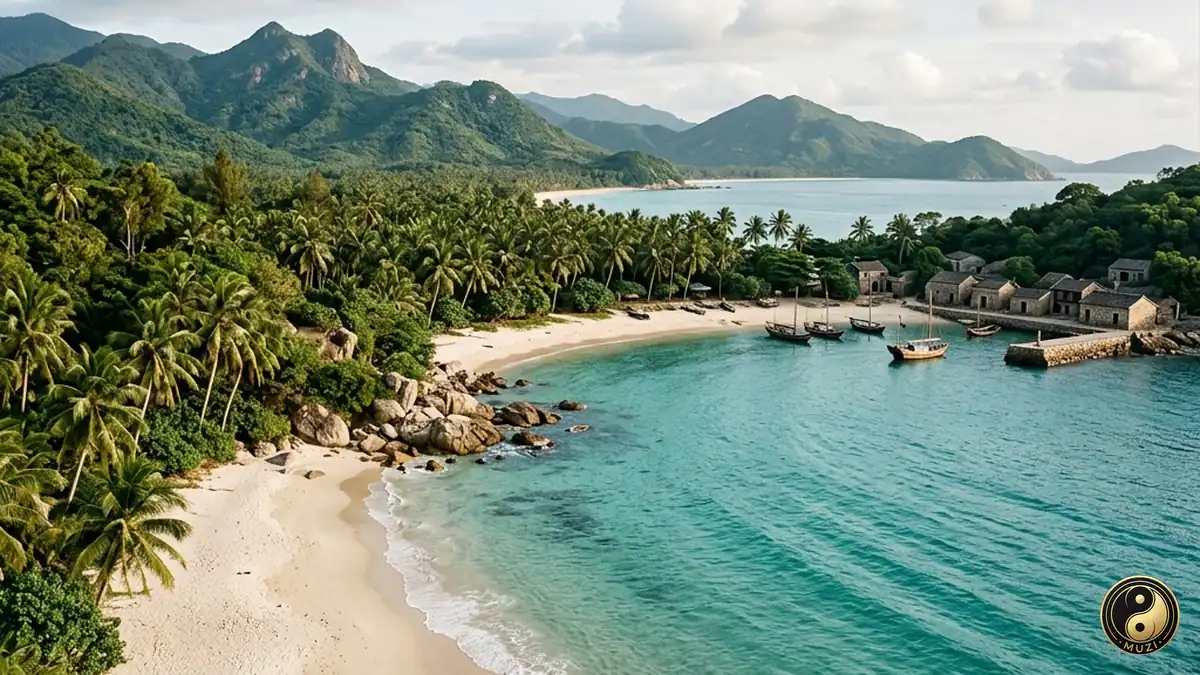
Hainan is a large tropical island of coconut breezes and sea, remembered in Su Dongpo's verse as a homeland.
 Islands
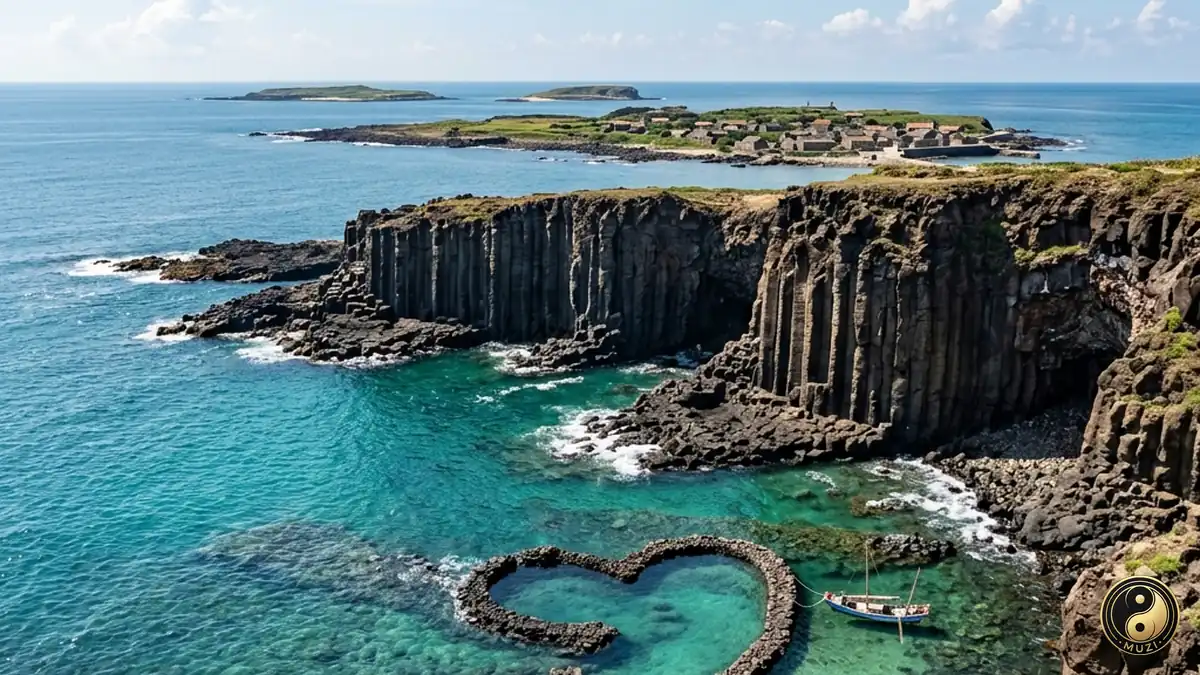
A chain of basalt islets in the middle of the Taiwan Strait — fishing lights and ancient village houses, the historic relay station and forward fortress between the two shores.
 Harbor
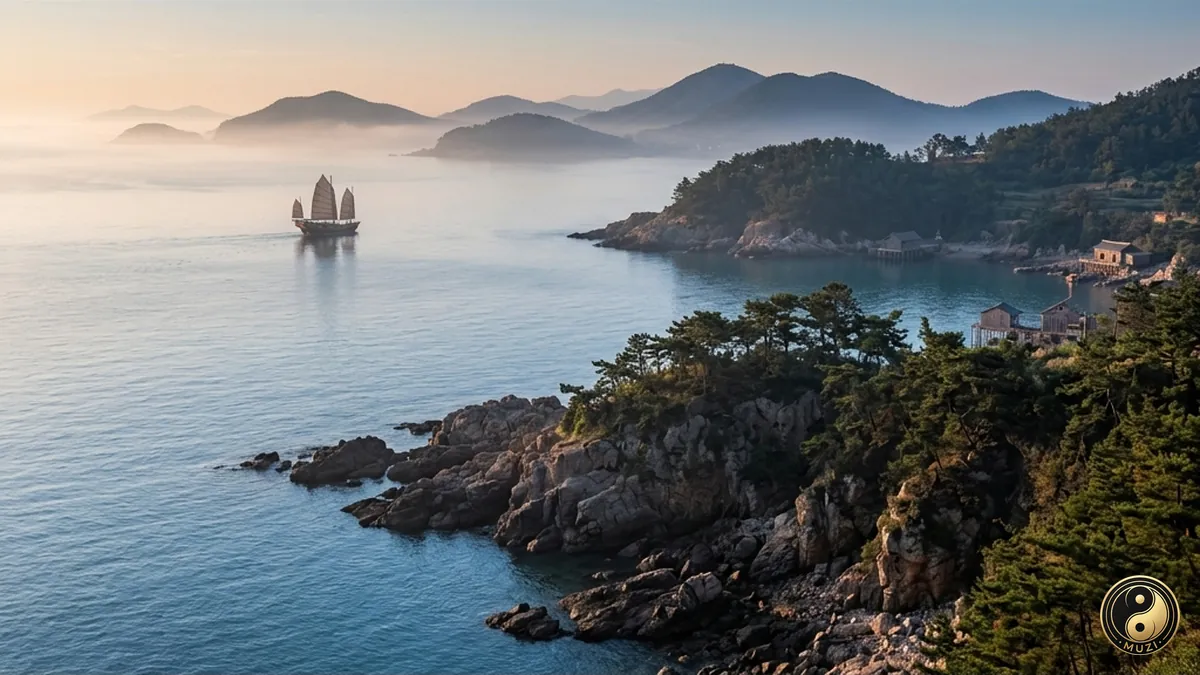
A natural deep-water harbor on the southern Shandong coast, where maritime trade and modern-era conflicts left a layered historical record.
 Coastal Regions
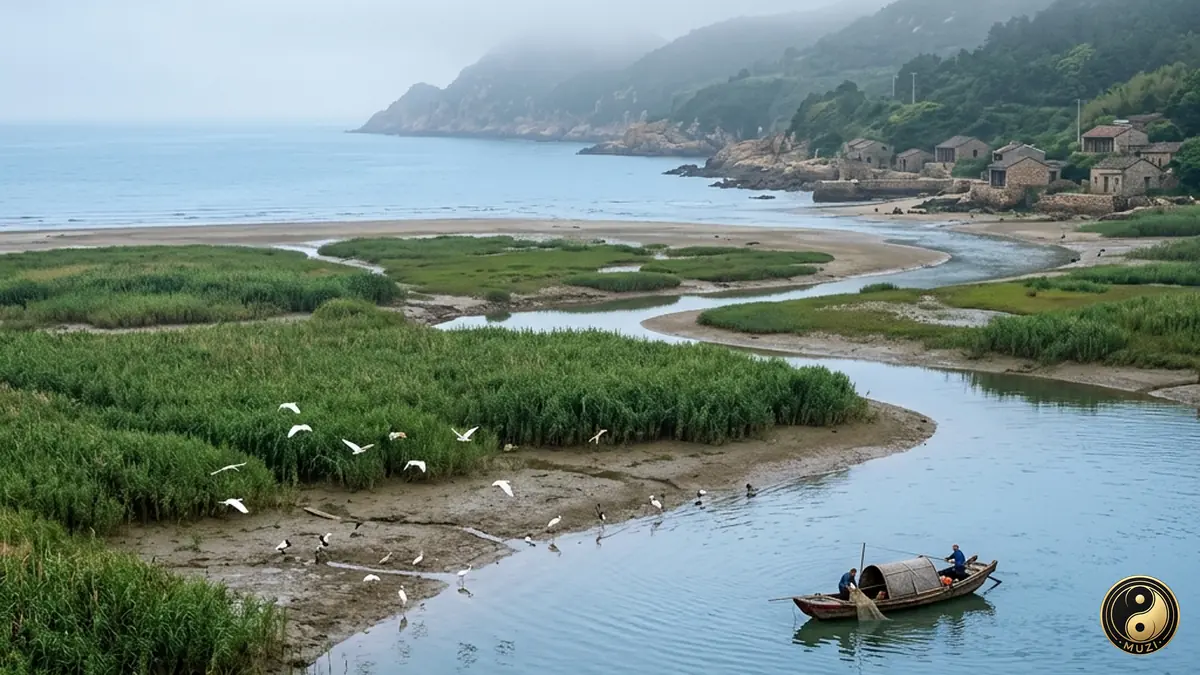
The winding waterway where the Min River breaks through the Zhejiang-Fujian hills to strike the East China Sea — rugged terrain that birthed the unofficial private maritime trade and pirate legends of the Ming-Qing era.
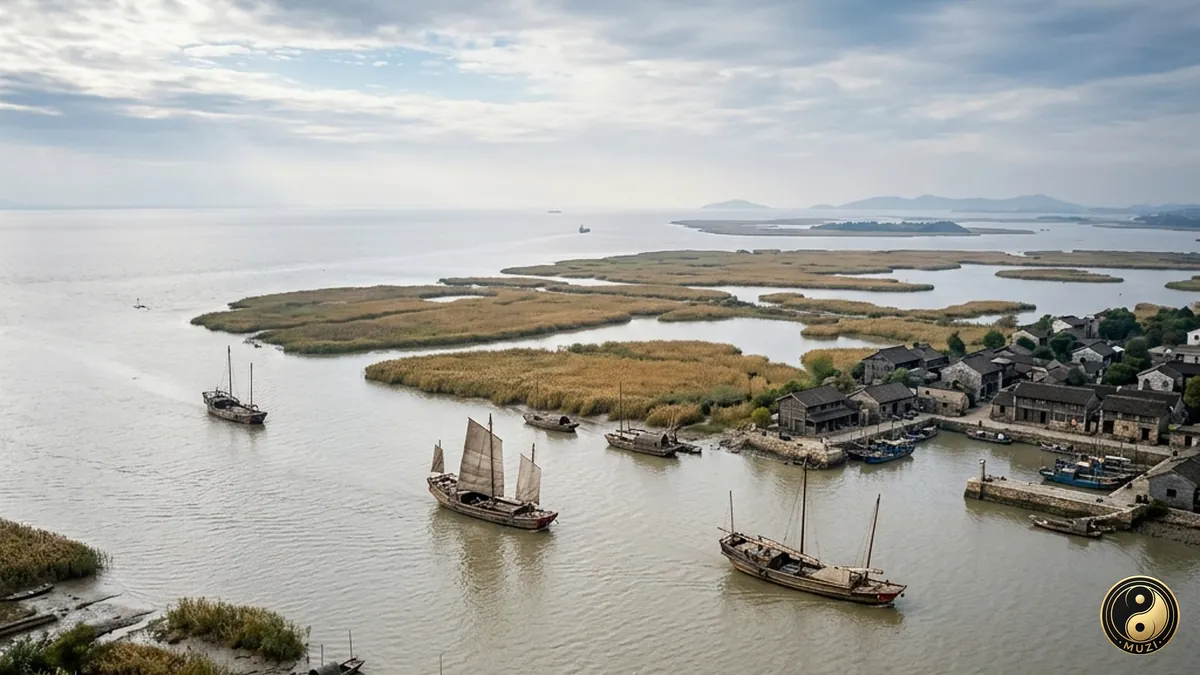 Coastal Regions
At the Yangtze's mouth, river sediment meets the sea and gradually builds new delta land.
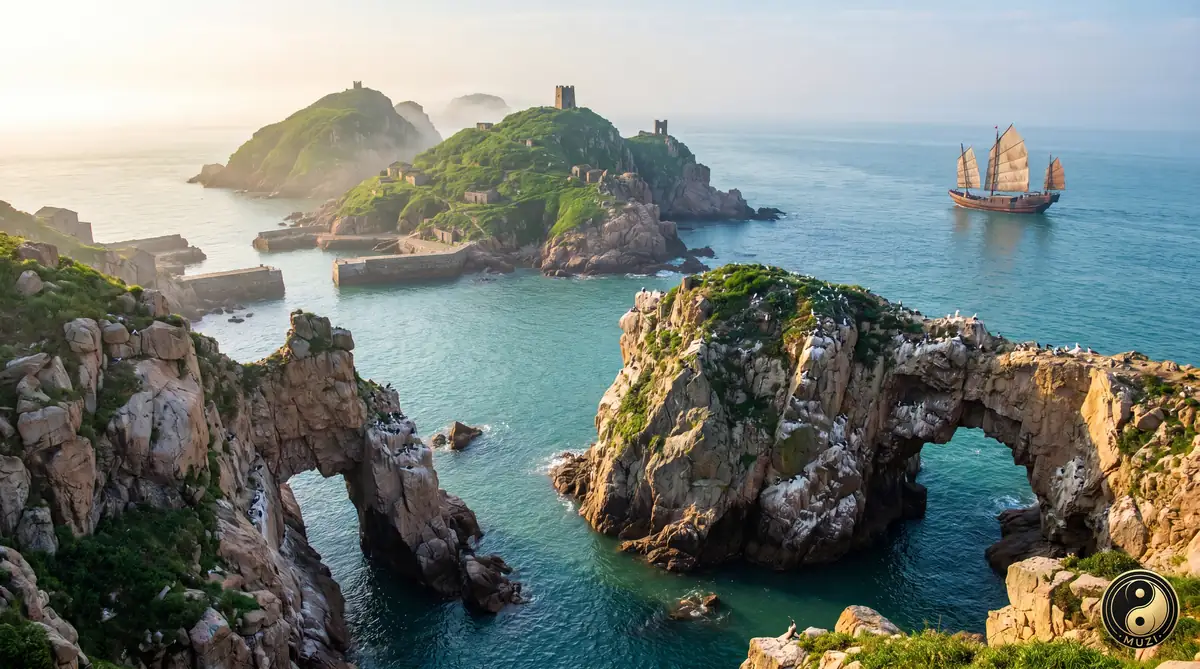 Islands
A chain of stepping-stone islets locking the Bohai Strait between the Shandong and Liaodong peninsulas — the final iron chain of maritime defense guarding the capital region.
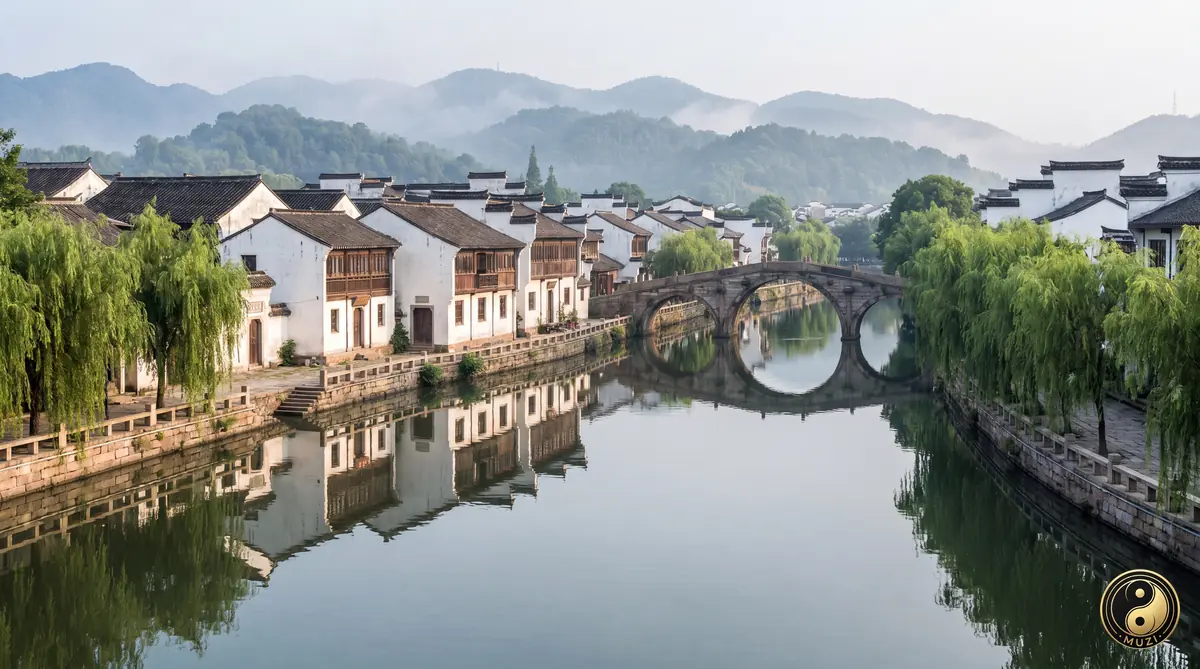 Harbor
Ningbo joins the Grand Canal and Maritime Silk Road as a historic port for trade with Japan and Korea.
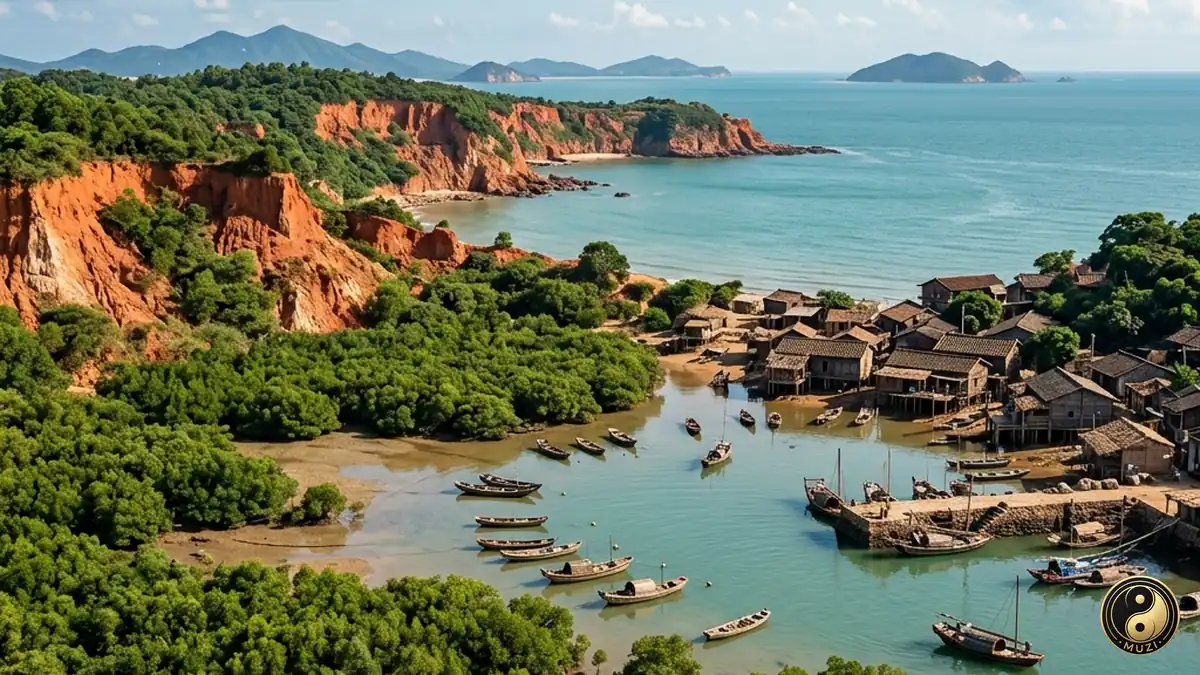 Coastal Regions
Leizhou Peninsula reaches into the Beibu Gulf; sea, wind, and lowland habitats define its coast.
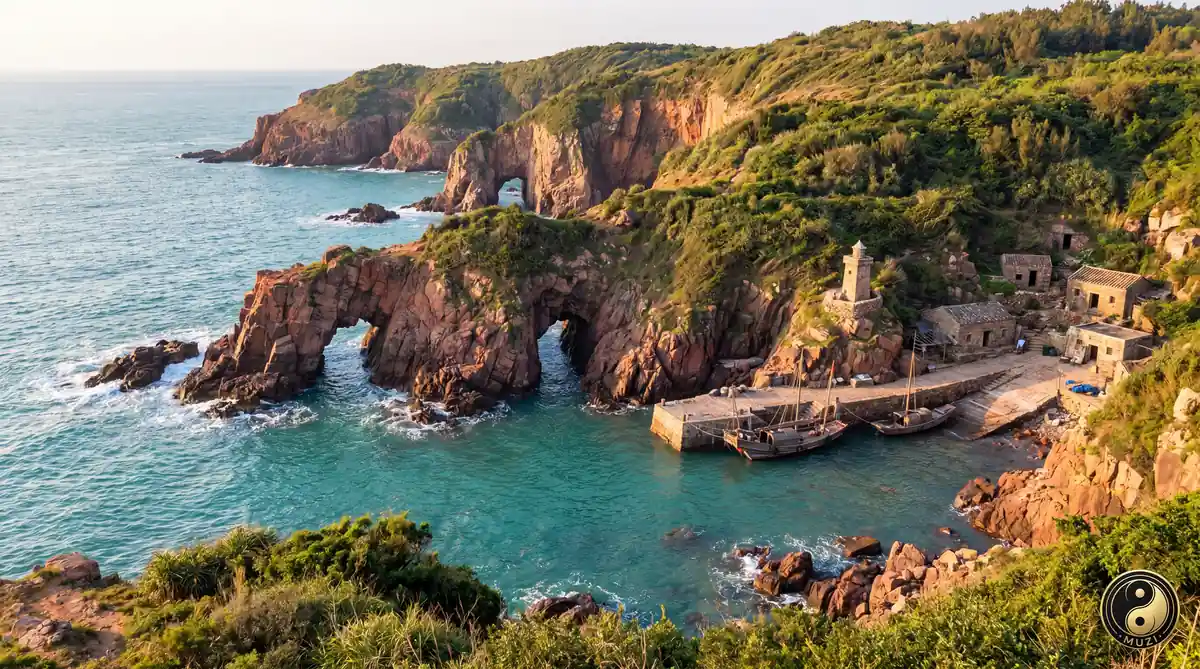 Islands
A young volcanic island in the Beibu Gulf, marked by sea caves carved by erosion and coastal habitats.
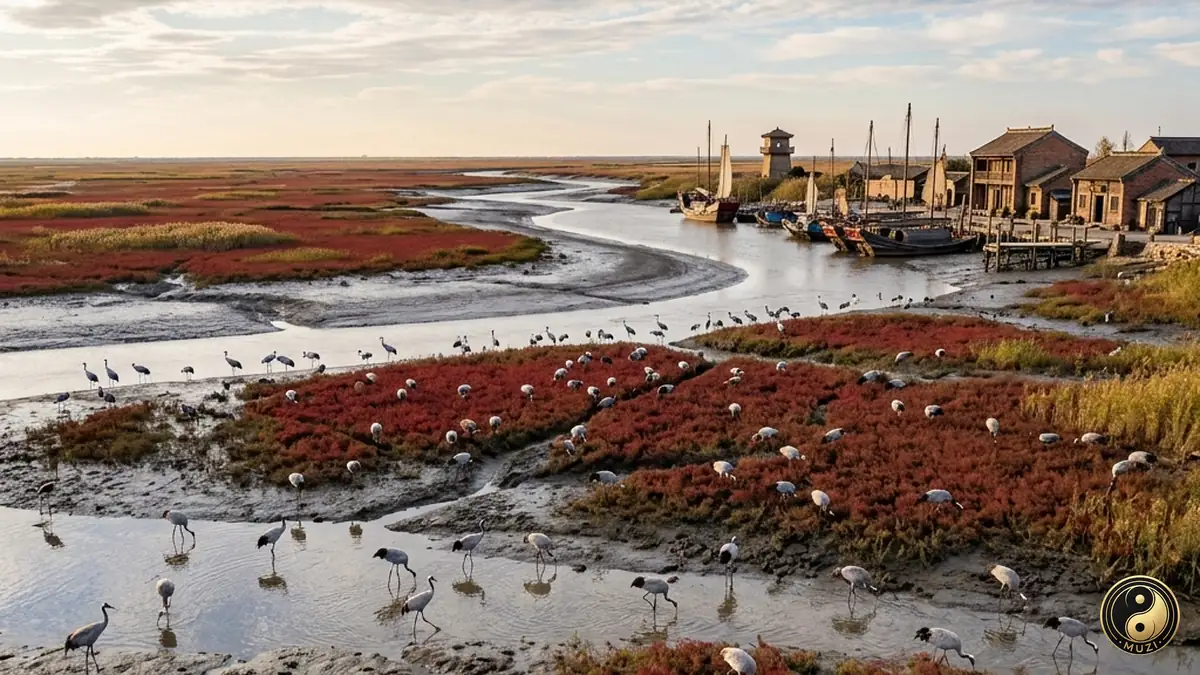 Coastal Regions
Yancheng's coastal tidal flats support a major sea-salt industry and recall the ancient salt-and-iron economy.
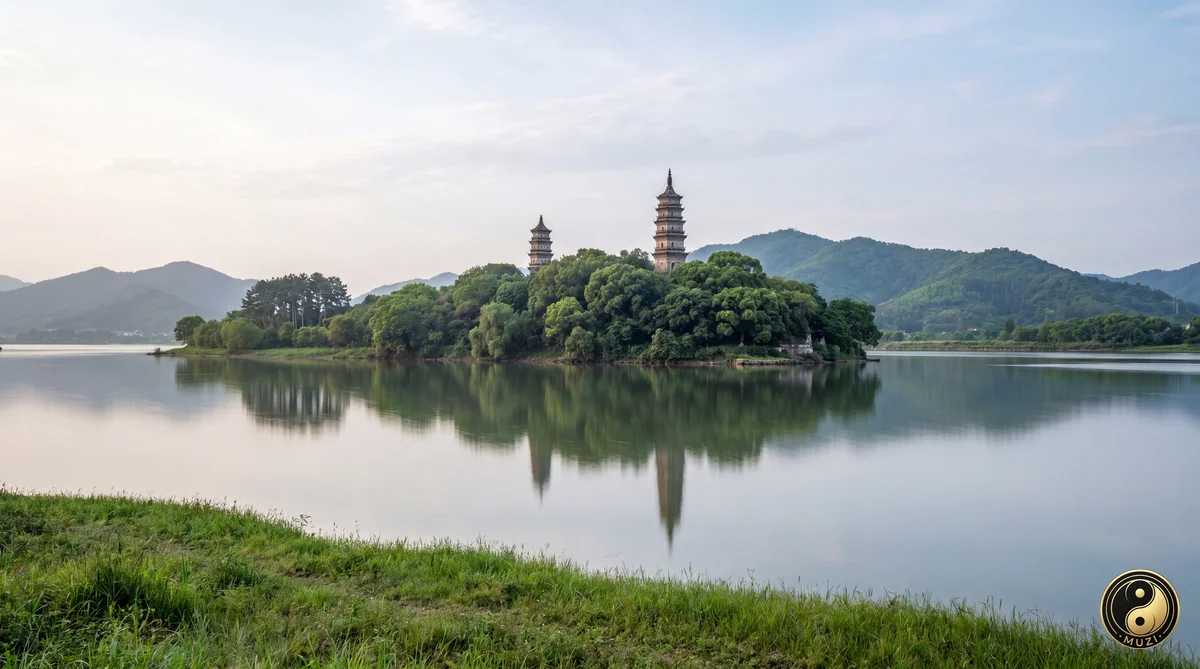 Harbor
A natural deep-water port wedged in the crevice of the Zhejiang-Fujian mountains — from here, Wenzhou merchants departed with the monsoon winds, laying their commercial networks across the entire globe.
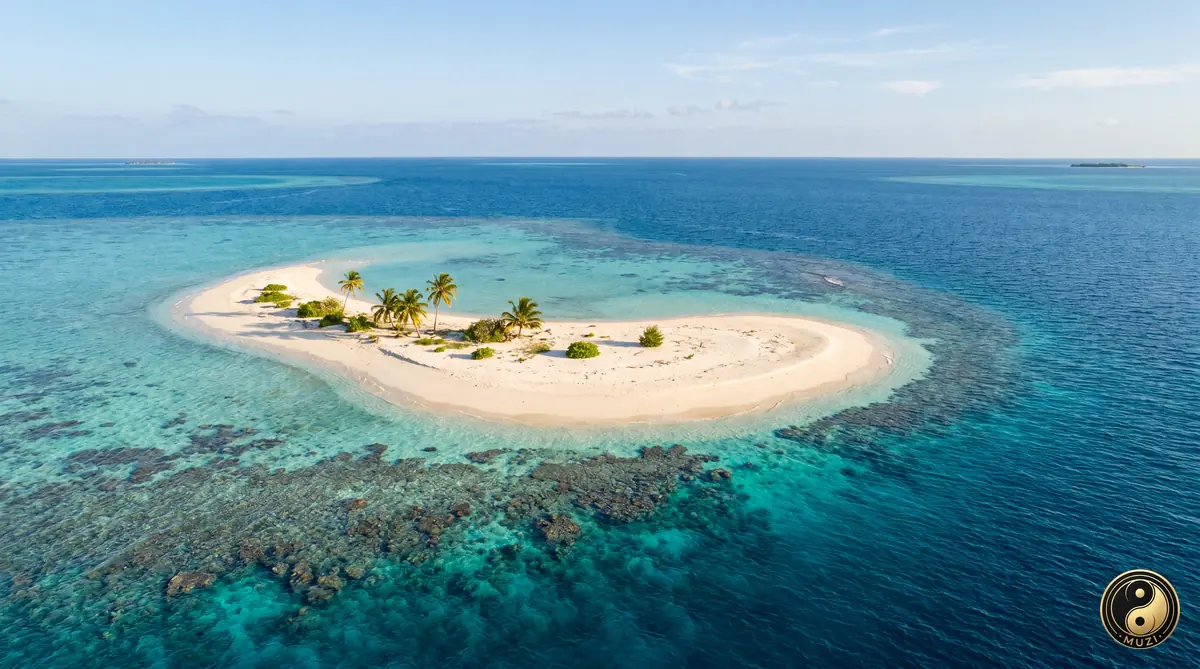 Islands
Coral islands, reefs, and shoals scattered across the South China Sea form a far-reaching marine landscape.
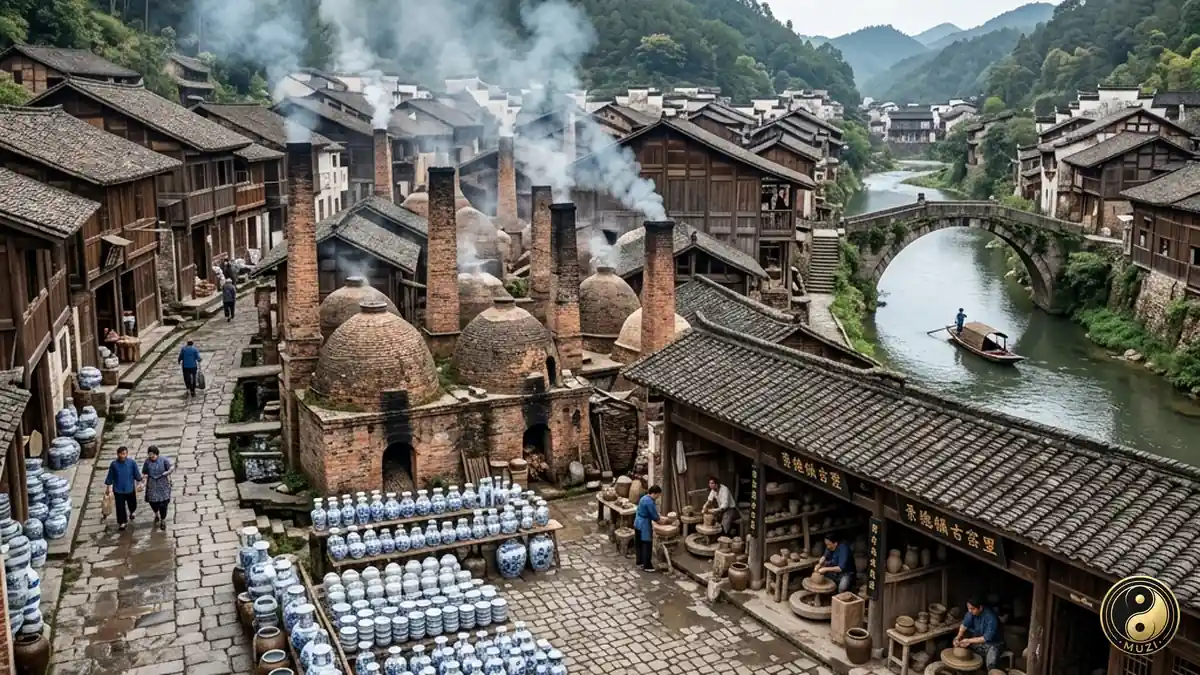 Historic Cities
The thousand-year porcelain capital — where kaolin clay and Chang River water combine to produce the synonym for Chinese ceramics, the porcelain fountainhead of the Maritime Silk Road.
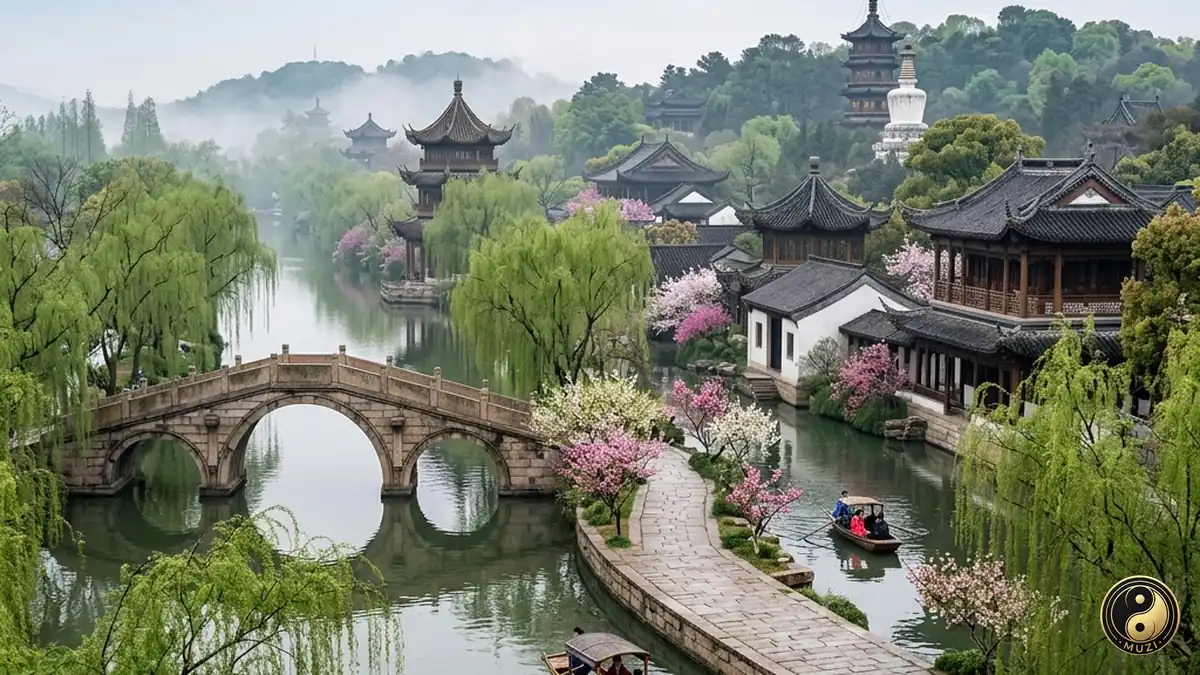 Historic Cities
The wealth crossroads where the Grand Canal meets the Yangtze — the center of the imperial salt monopoly, birthing Yangzhou's extravagant salt-merchant culture and aesthetics.
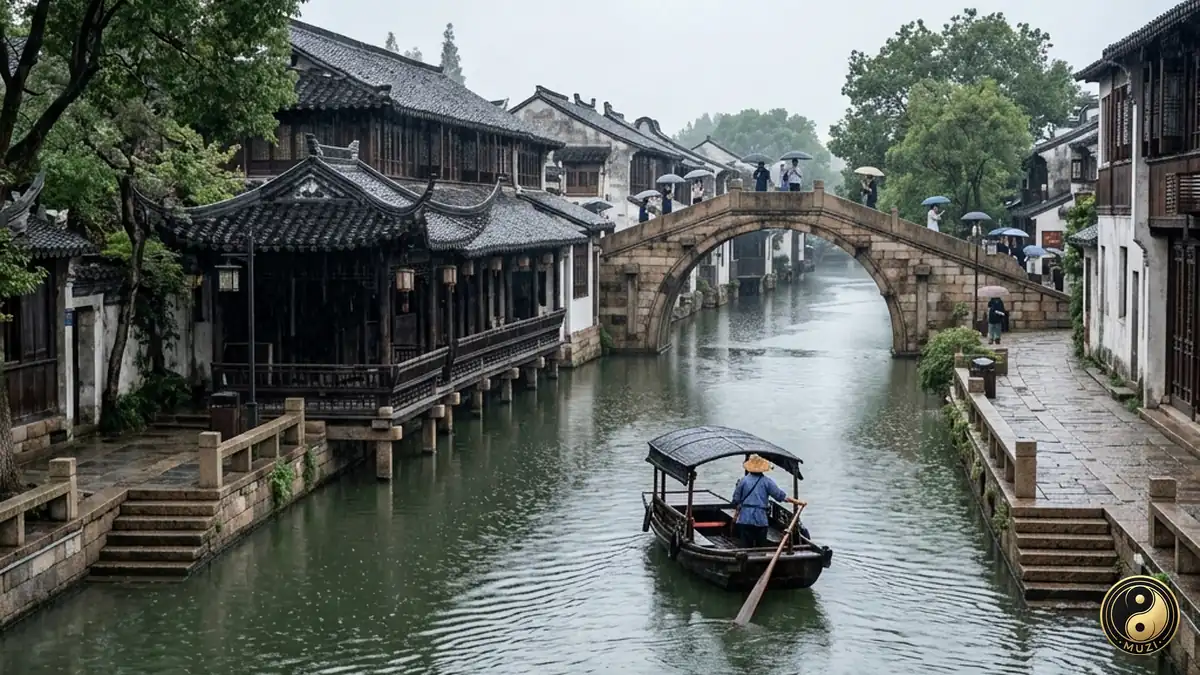 Historical Villages & Towns
Wuzhen's bridges, streams, waterside homes, and covered corridors preserve a lived-in Jiangnan water-town character.
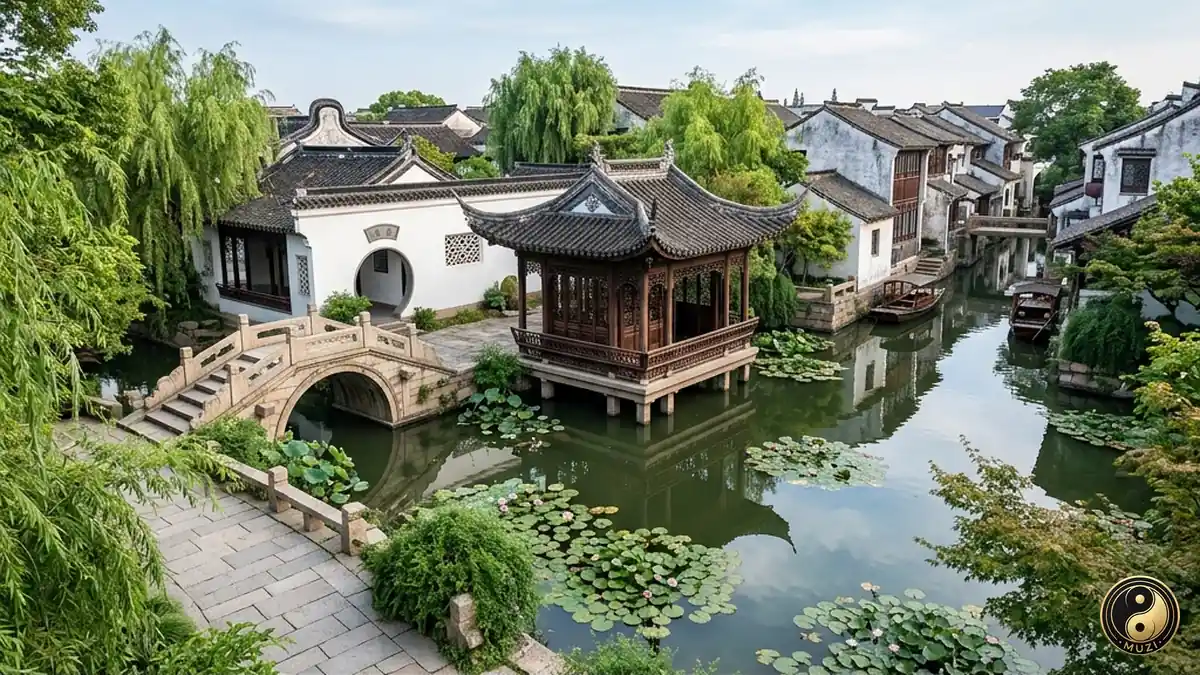 Historic Cities
A dual-chessboard ancient city of parallel waterways and streets — precision hydraulic logistics networks seamlessly embedded with literati refinement into the urban fabric.
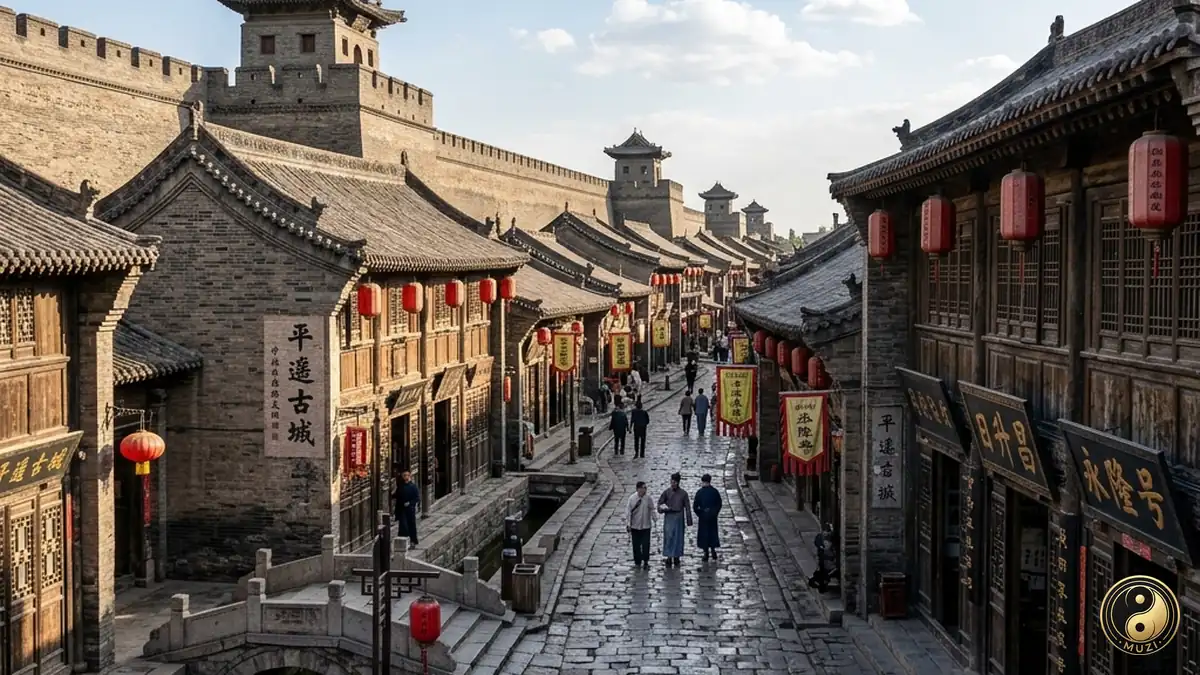 Historic Cities
Pingyao is one of the best-preserved Ming-Qing walled cities, with Shanxi merchant finance and inland silver routes embedded in its urban fabric.
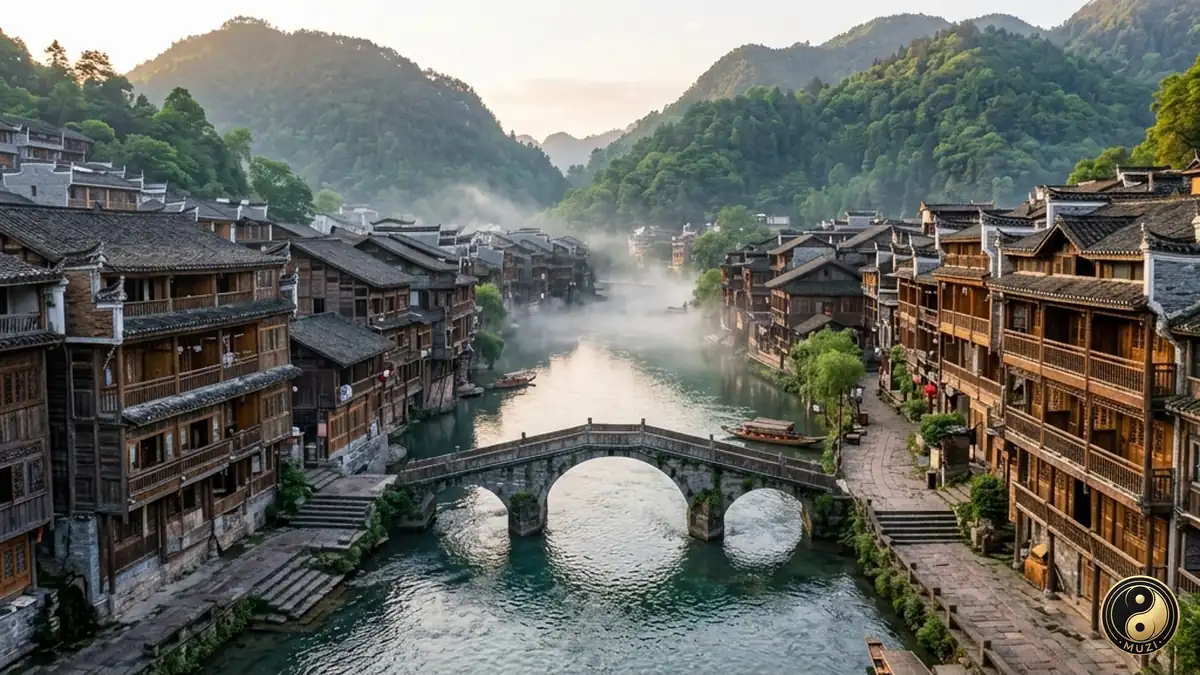 Historic Cities
A Xiangxi frontier town on the Tuo River — stilted houses perched tier upon tier on both sides of the steep valley, the collision zone of Miao and Tujia cultures with the Han frontier wall.
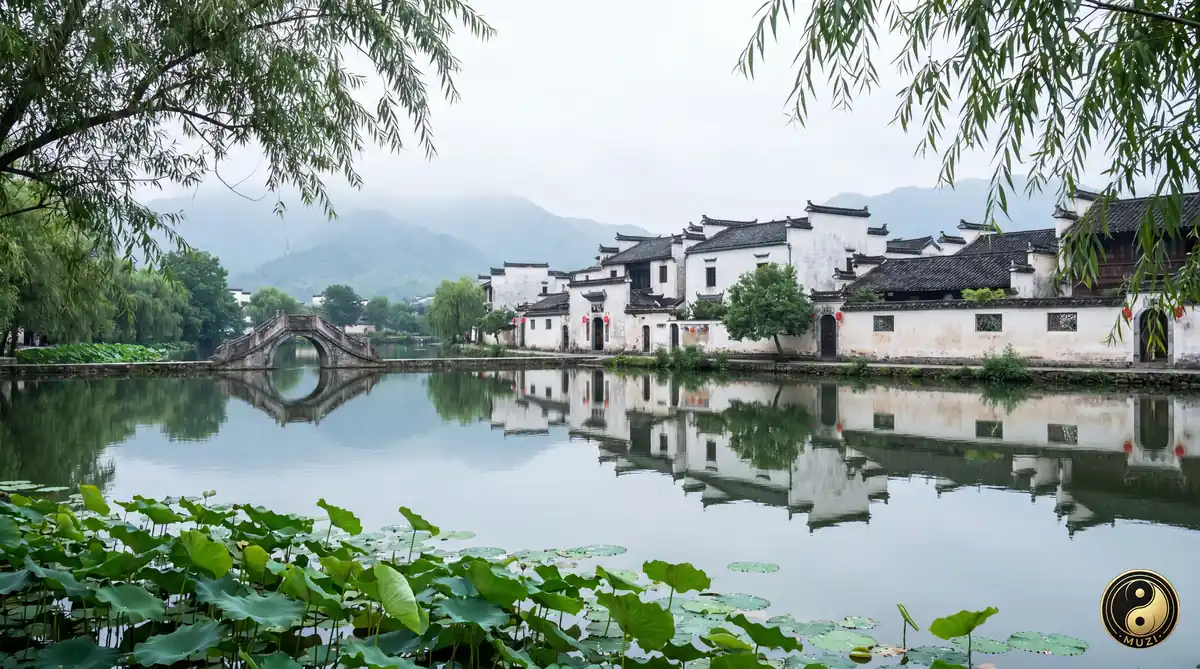 Historical Villages & Towns
Hongcun's ox-shaped layout, Moon Pond, and water channels turn gravity-fed planning into a distinctive Huizhou village landscape.
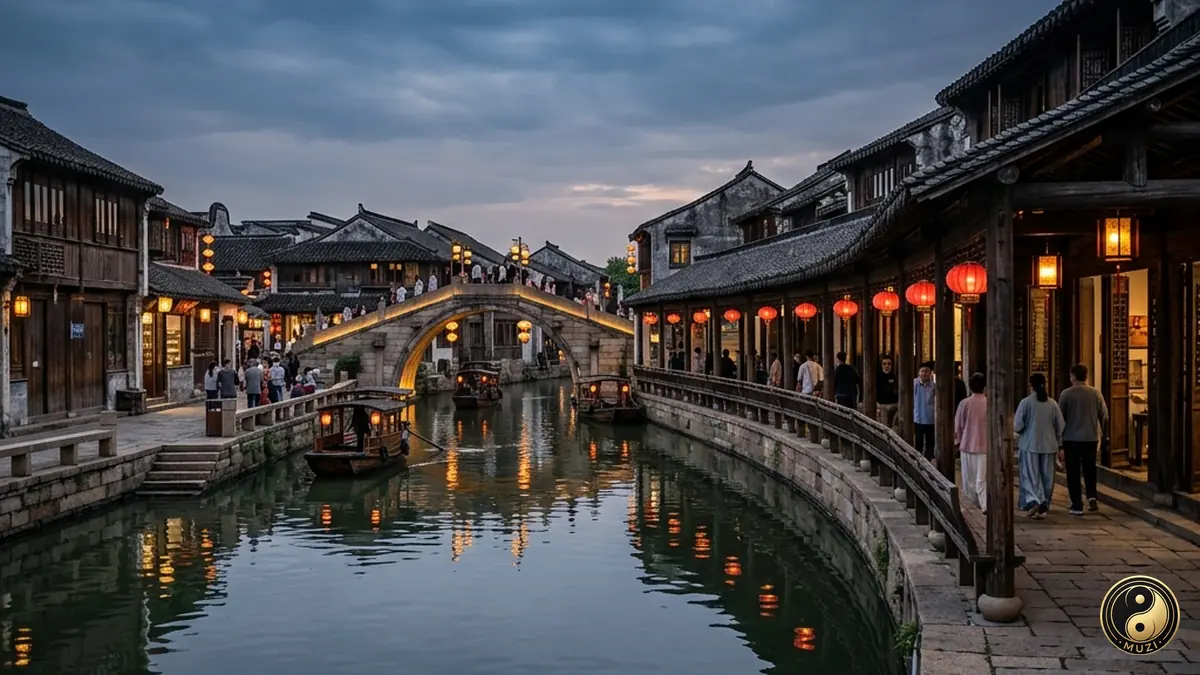 Historical Villages & Towns
Xitang's Misty Rain Corridor — kilometers of covered waterside arcades winding like a dragon, a bottom-up human-scale commercial interface self-organized by commoners without any official planning.
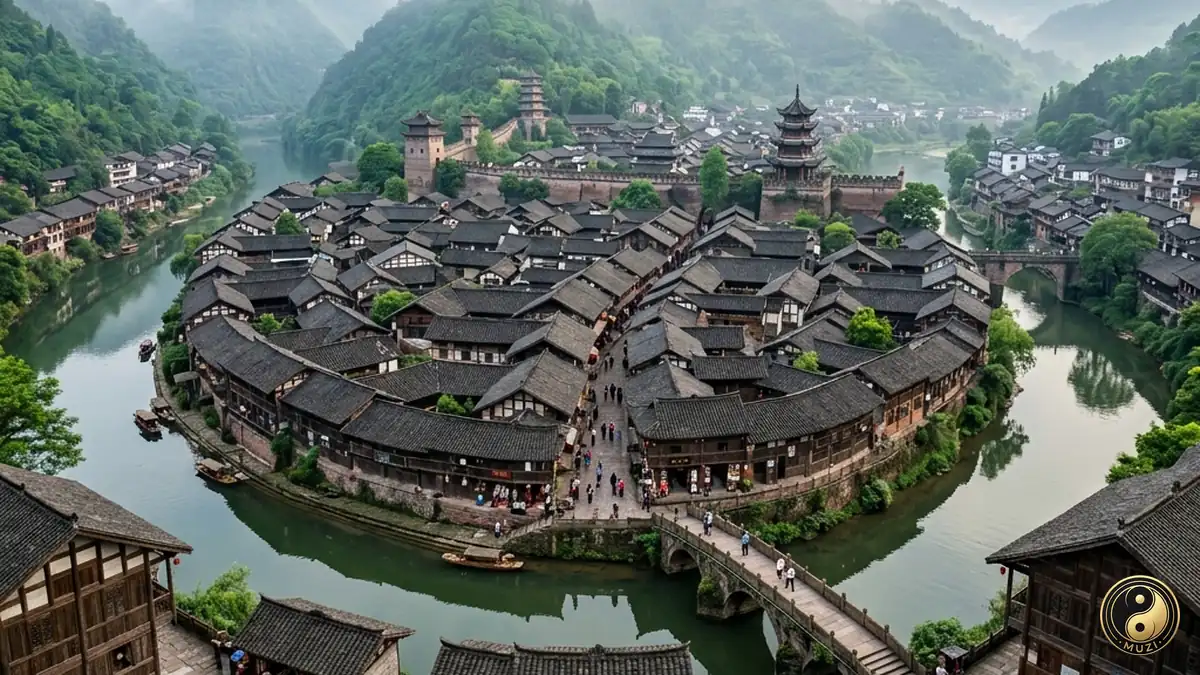 Historic Cities
Langzhong at the great omega bend of the Jialing River — ringed by mountains on four sides and water on three, the ultimate living specimen of classical Chinese fengshui site-selection algorithm.
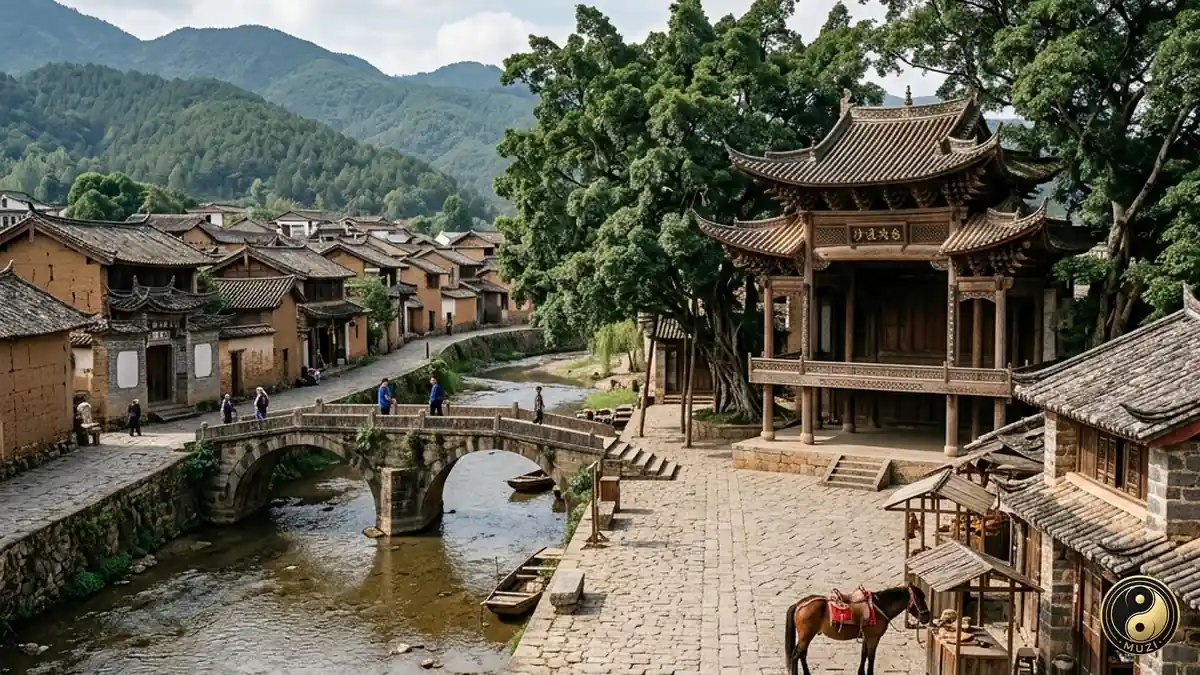 Historical Villages & Towns
The only surviving market town on the Tea Horse Road — a dense plaza unit of red-earth fortress, ancient stage, and horse inns, a high-altitude international trade router carved by muleteers' flesh and blood.
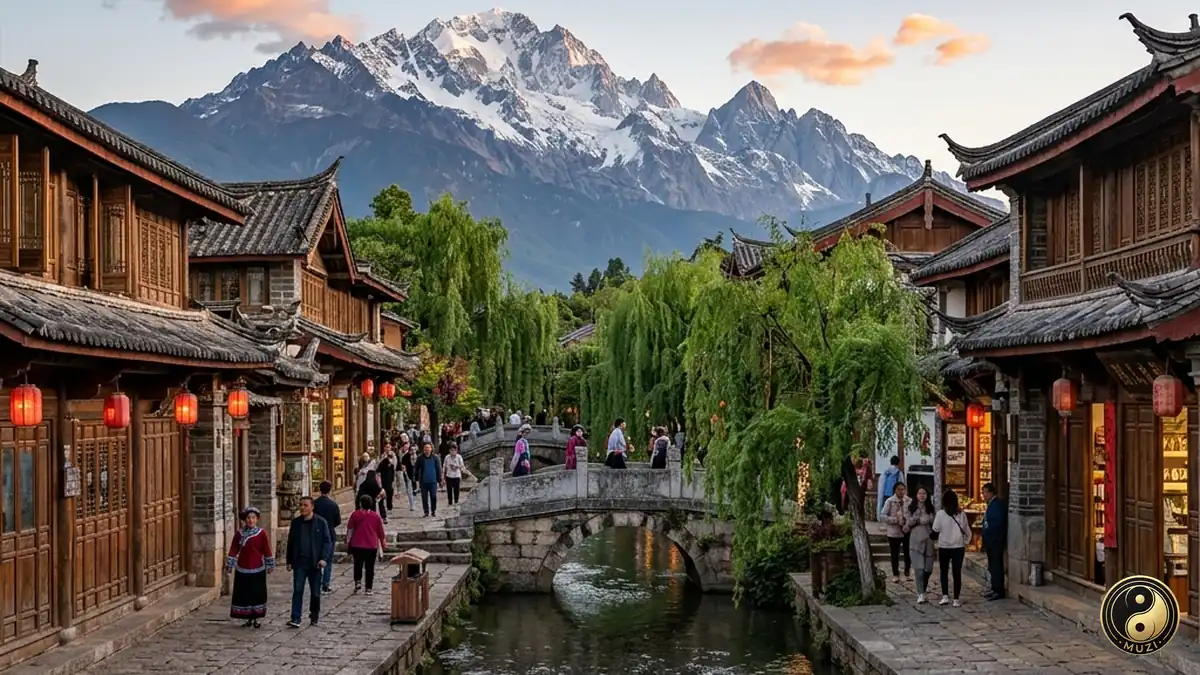 Historic Cities
A Naxi city at the foot of Jade Dragon Snow Mountain — unwalled, spring water flowing freely through every street, a fluid space of free trade and multicultural convergence breaking all Han axial orthodoxy.
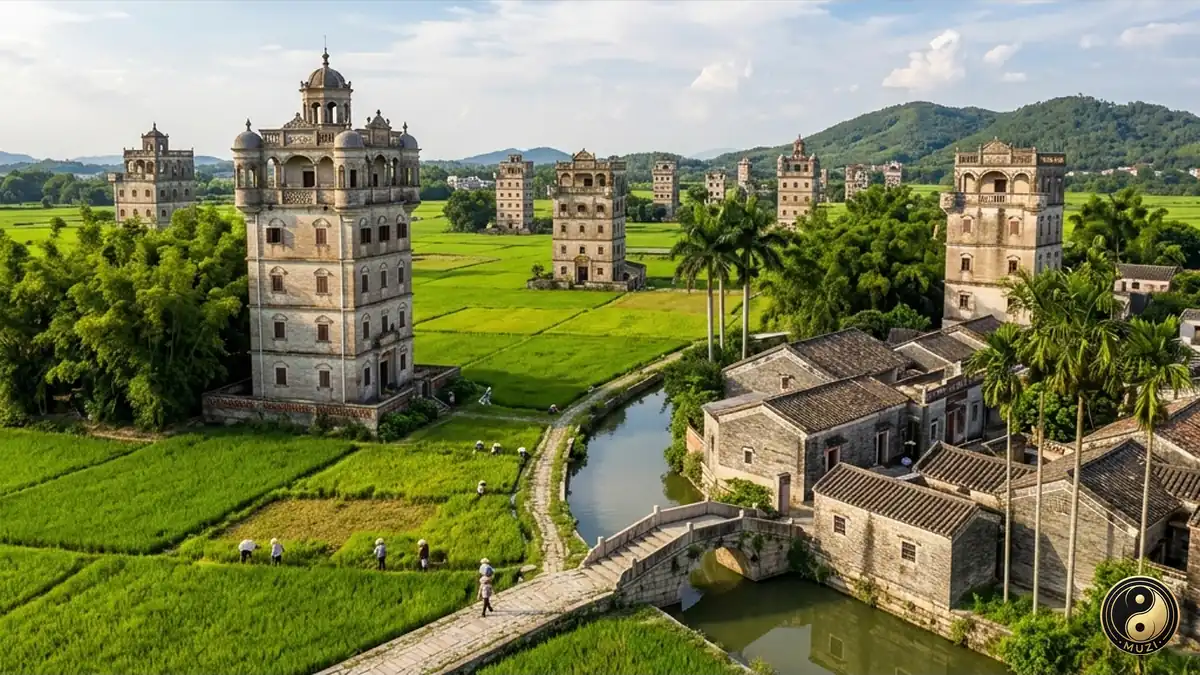 Historical Villages & Towns
Fortified tower clusters built by returned overseas Chinese in Guangdong's Siyi region — reinforced concrete castles blending Chinese and Western architecture, recording a century of diaspora and homecoming.
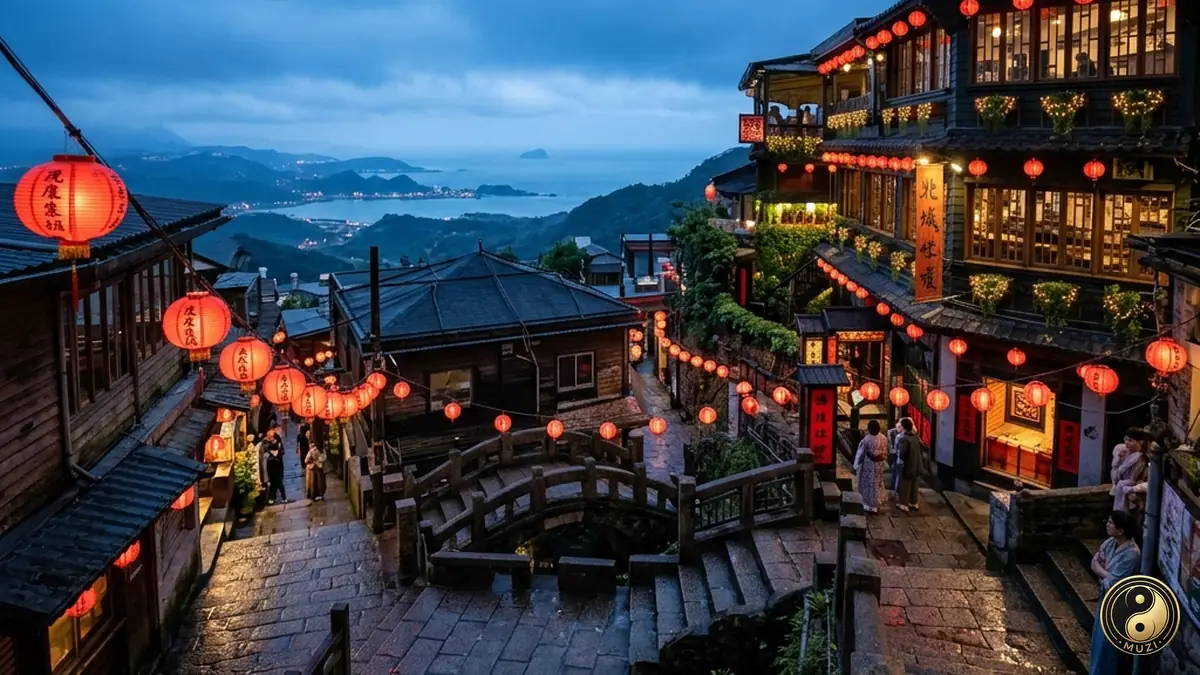 Historical Villages & Towns
A mountainside mining town in Taiwan — narrow stone steps and red lanterns sketching a Spirited Away fantasy of mountain-and-sea nightscape.
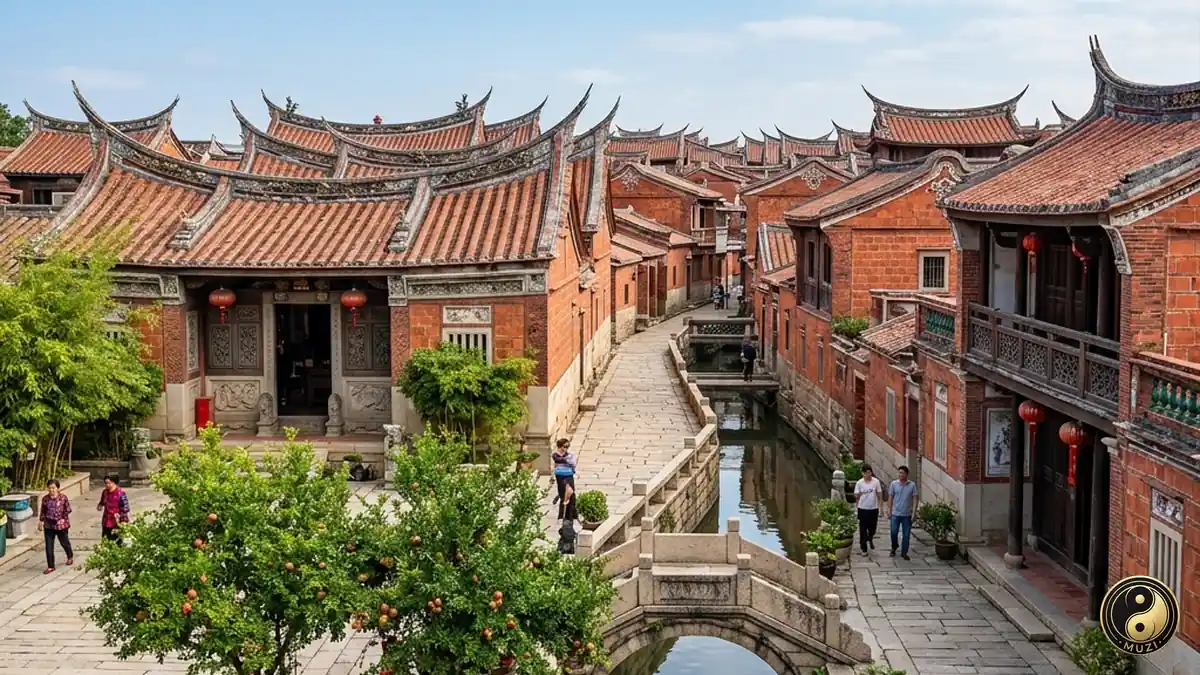 Historic Cities
A dense lineage-based red-brick settlement on the southern Fujian coast — swallowtail ridges and brick-in-stone craftsmanship, witnessing the wealth and faith of Minnan clans on the Maritime Silk Road diaspora.
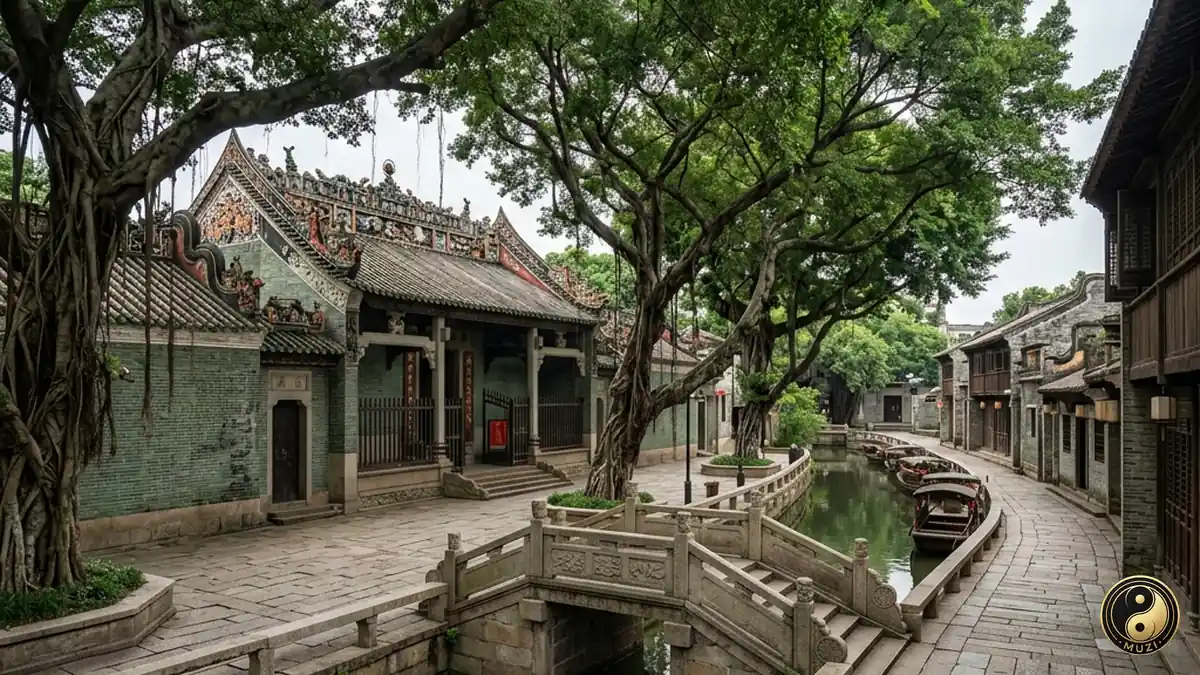 Historic Cities
The heavy-industry town of the Ming-Qing era — a dense cluster of private iron-smelting, casting, and textile workshops, the most famous civilian industrial antenna of medieval China powering ironware exports to Southeast Asia.
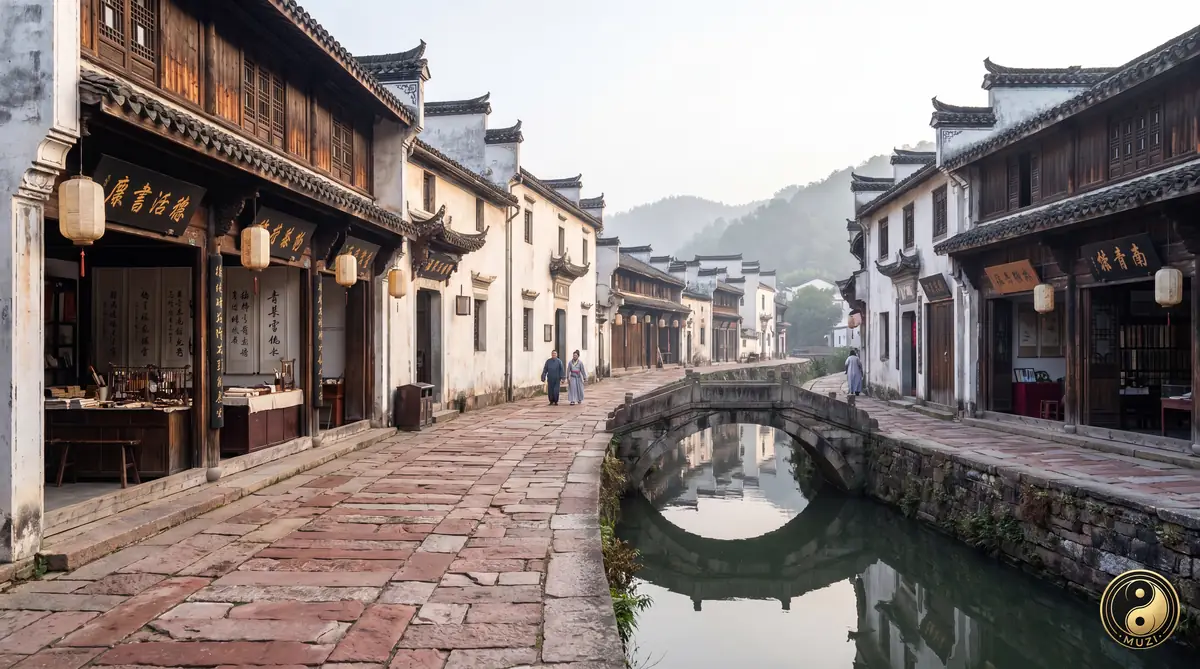 Historical Villages & Towns
A fishbone-shaped old street on the Xin'an River crystallized by Huizhou merchant mountain-goods wharfs — the starting line from which Huizhou's white silver was pumped outward along the Xin'an bus.
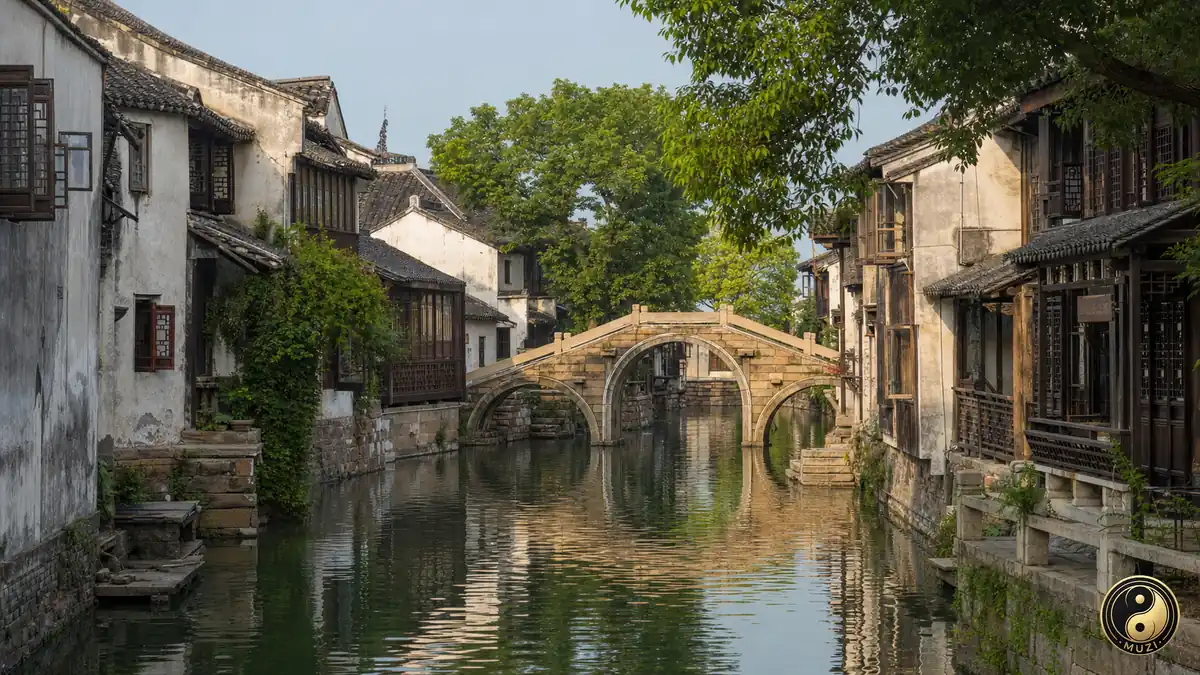 Historical Villages & Towns
Zhouzhuang's Double Bridges, Shen Hall, and Zhang Hall preserve a millennium of Jiangnan water-town and merchant history.
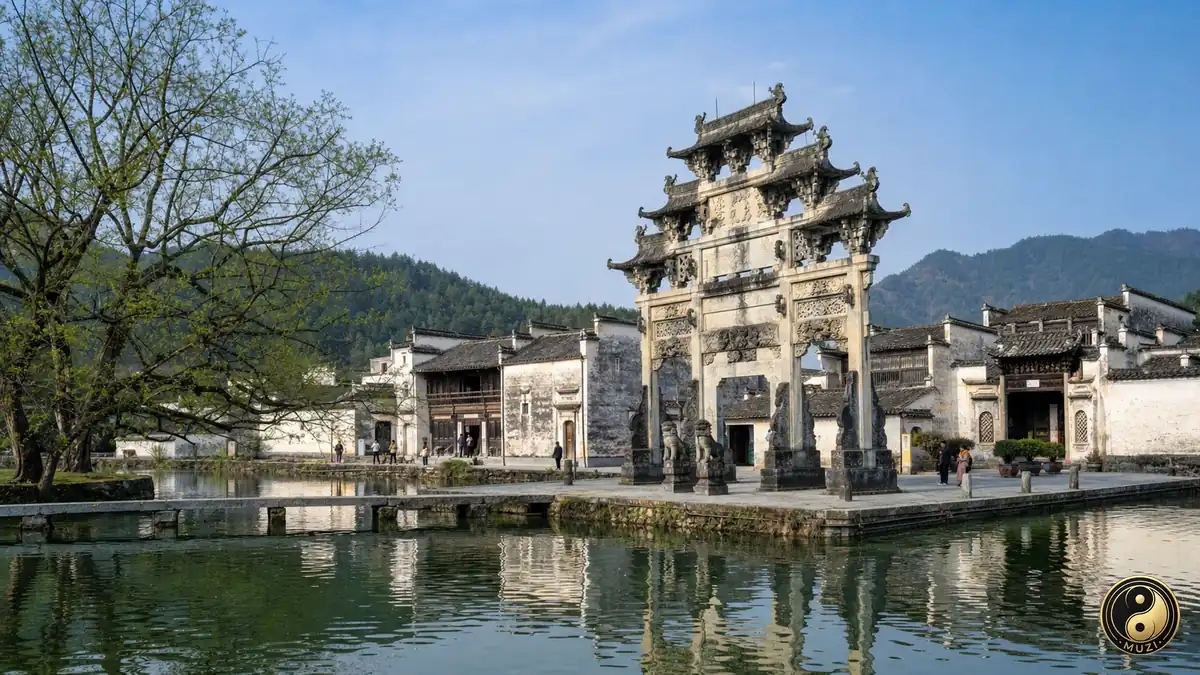 Historical Villages & Towns
UNESCO World Heritage; well-preserved Ming-Qing Hui-style houses; Hu Wenguang Archway and Pursuit Hall carry the Hu clan's ancestral glory.
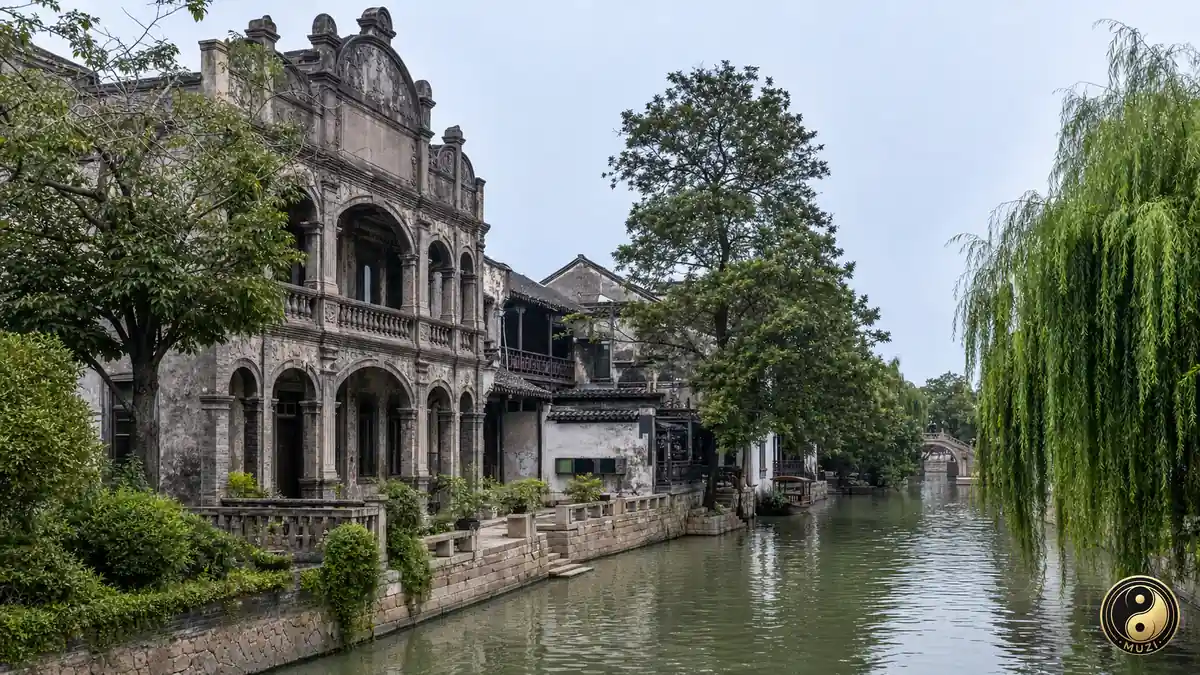 Historical Villages & Towns
Jiangnan water town as a Chinese-Western architectural fusion; silk magnate Zhang Shiming's former residence and Hundred Rooms Alley showcase modern Jiangnan prosperity.
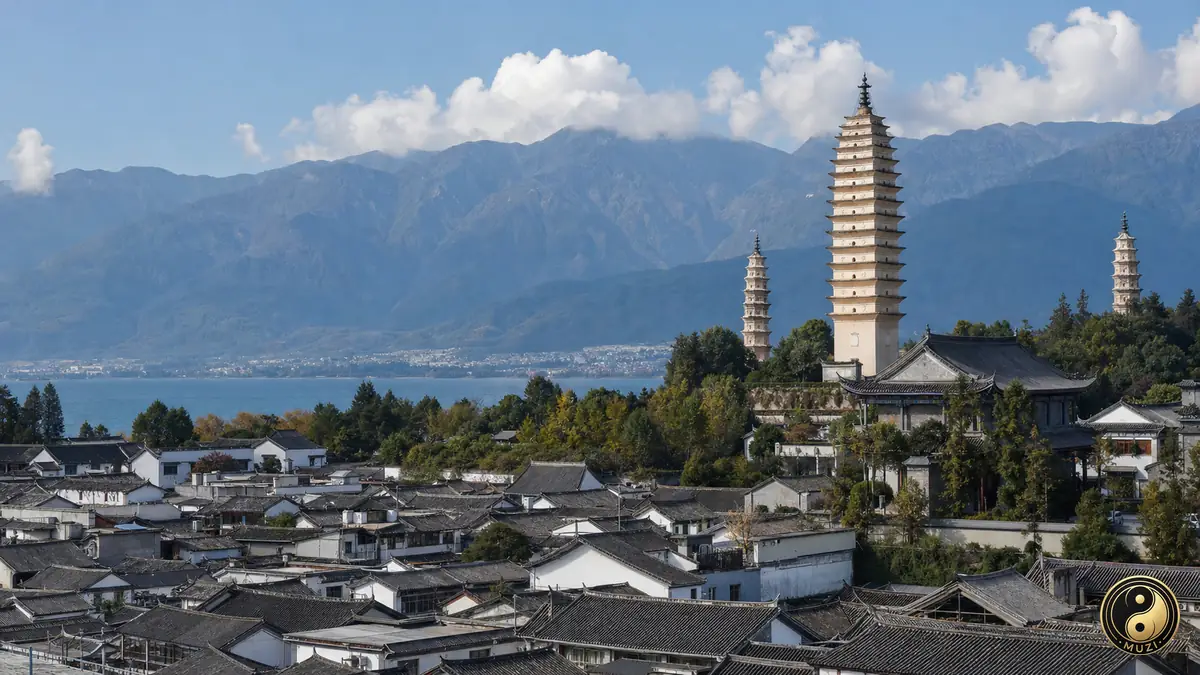 Historical Villages & Towns
Capital of the Nanzhao and Dali kingdoms; a scholarly city between Cangshan and Erhai; the Three Pagodas of Chongsheng Temple embody a millennium of Buddhist heritage.
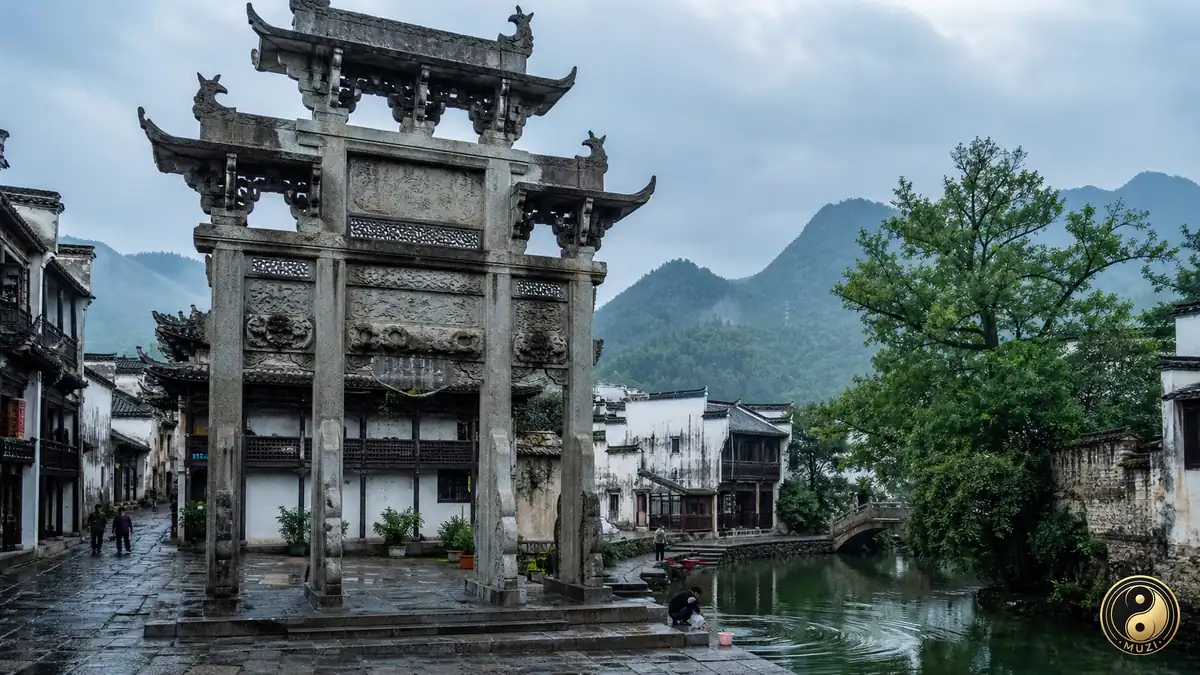 Historical Villages & Towns
Cradle of Hui culture; the Xu Guo Stone Archway and Huizhou merchants' hometown condense a thousand years of Huizhou heritage and commerce.
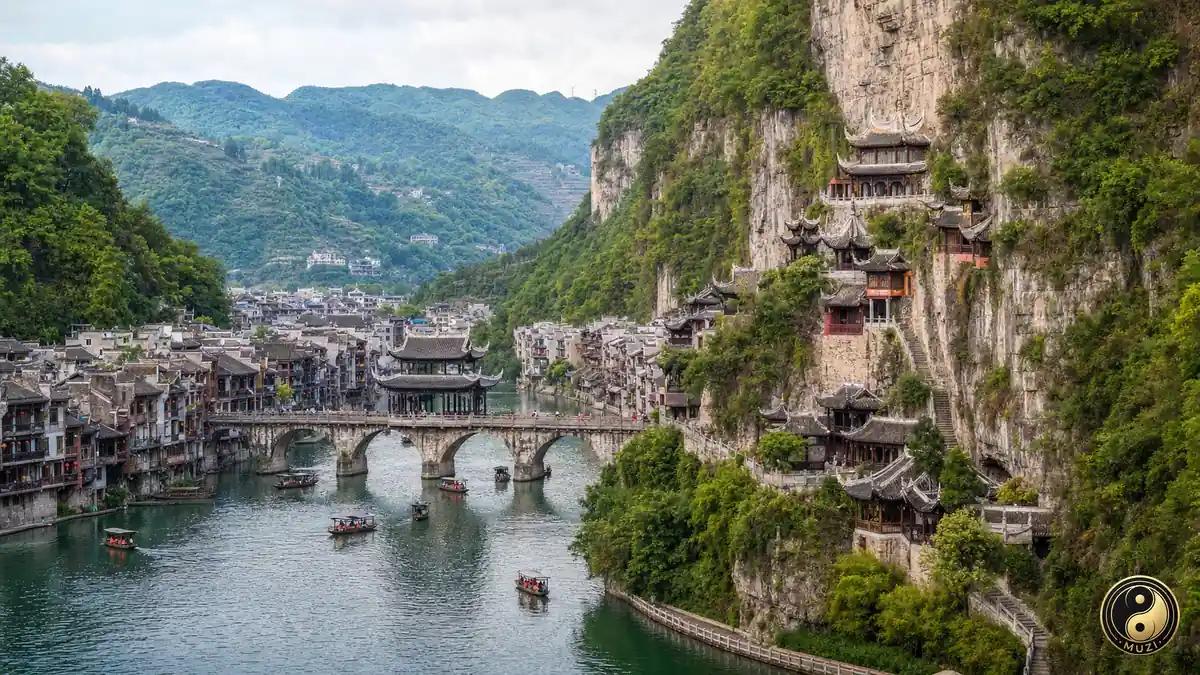 Historical Villages & Towns
Millennium-old military-trade post on the Wulong River; the Qinglong Cave complex hangs from sheer cliffs; Zhusheng Bridge spans the two banks.
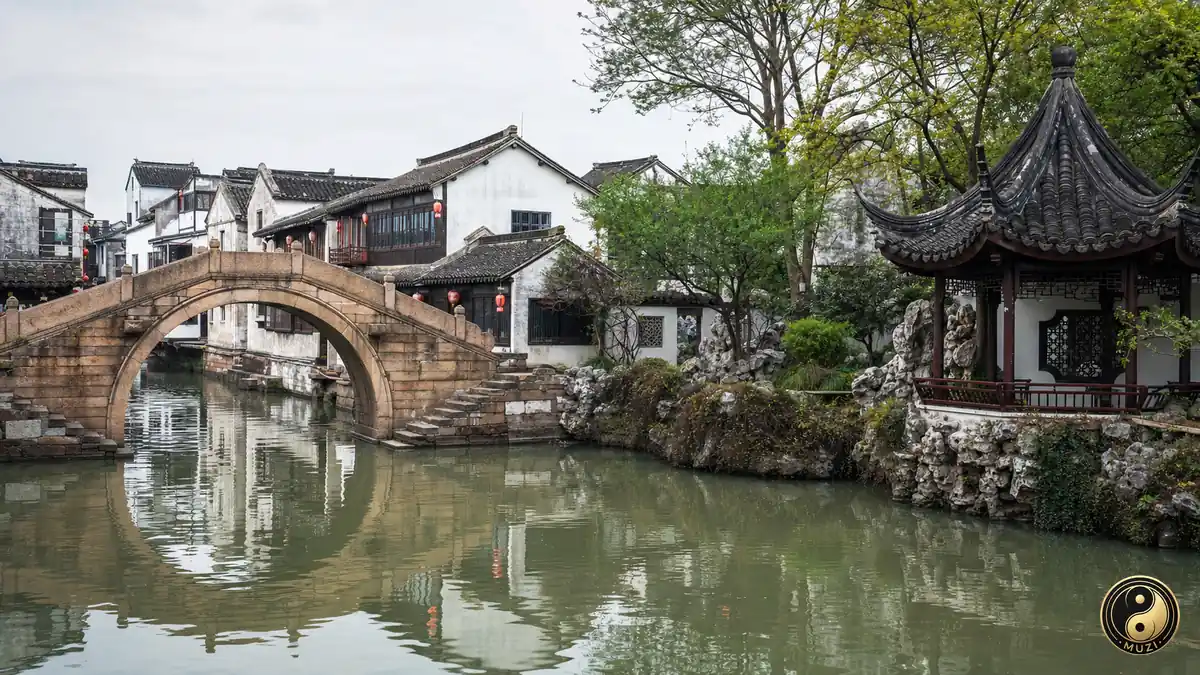 Historical Villages & Towns
Shanghai's premier water town; Fangsheng Bridge arches over Caogang River; Kezhi Garden epitomizes Jiangnan garden elegance.
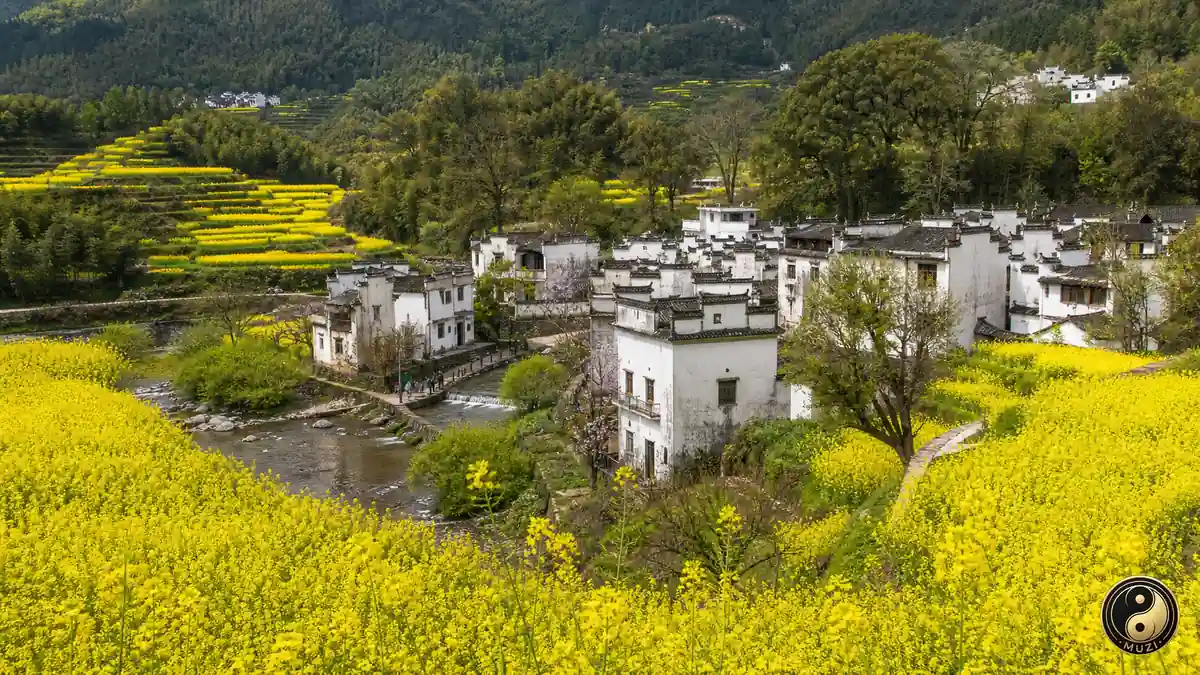 Historical Villages & Towns
Wuyuan's rapeseed fields and white-walled Huizhou houses compose a golden Jiangnan countryside.
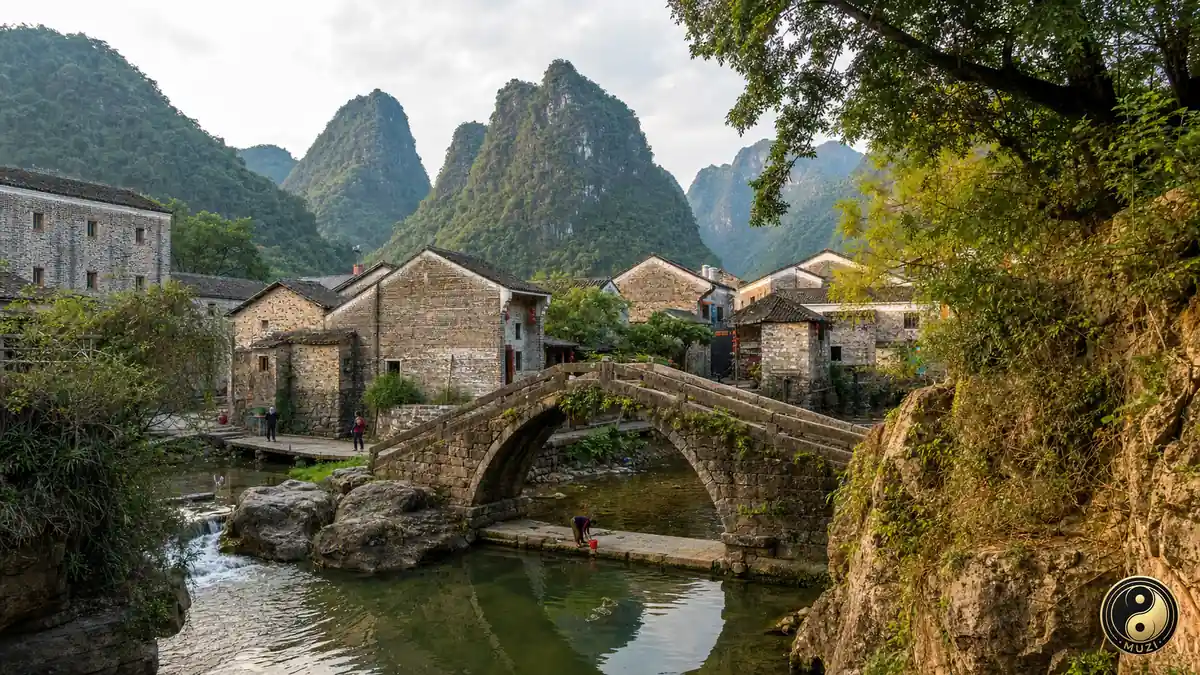 Historical Villages & Towns
Millennium-old town embraced by karst peaks; Dailong Bridge and the Immortal's Ancient Well preserve authentic Lingnan life.
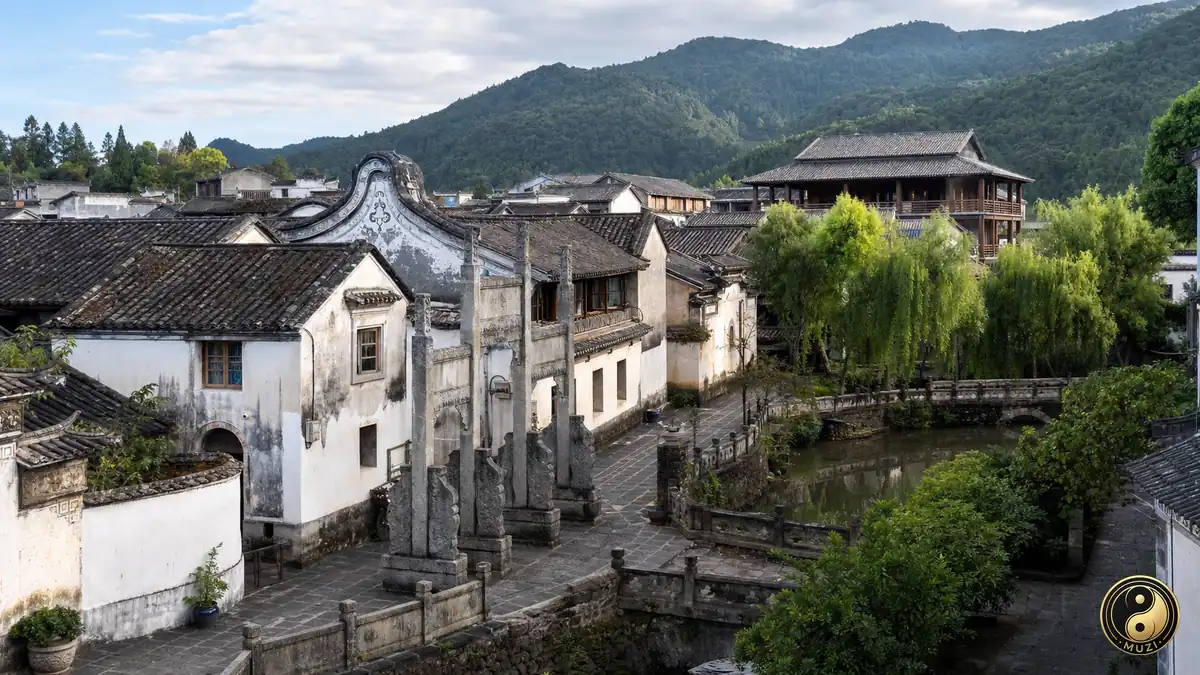 Historical Villages & Towns
Heshun's Southwest Silk Road heritage, rural library, and Ai Siqi residence anchor a borderland cultural town.
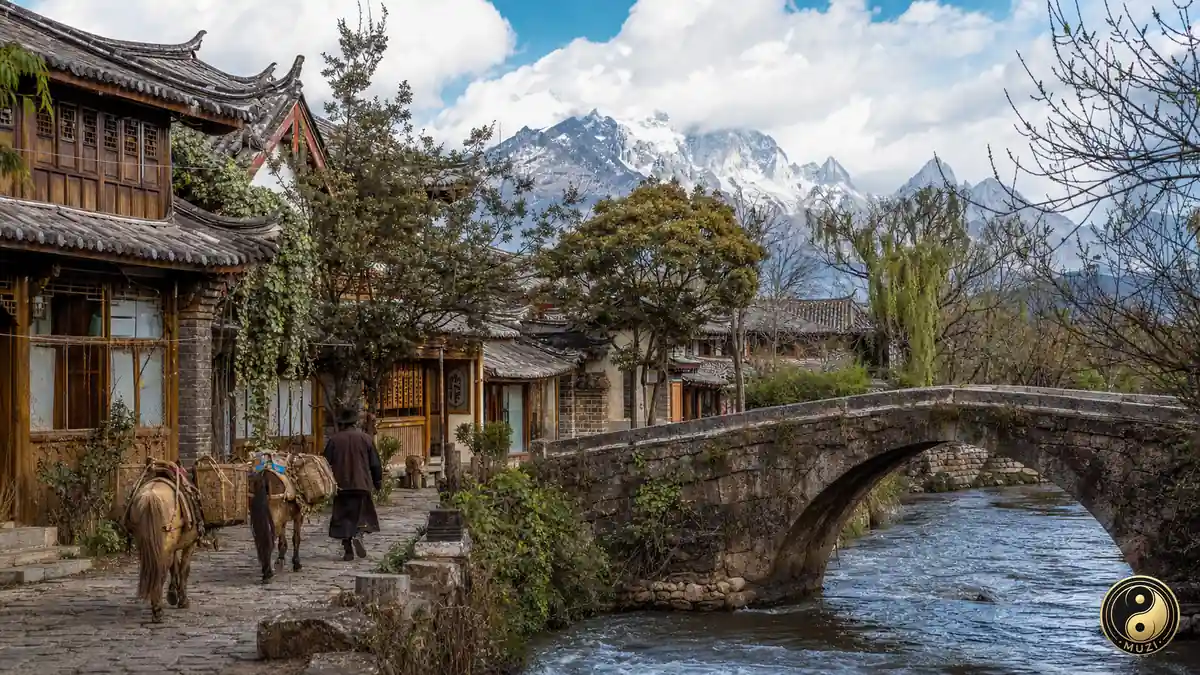 Historical Villages & Towns
Best-preserved caravan stop on the Ancient Tea Horse Road; Qinglong Bridge and Naxi houses retain the rustic charm of horse-caravan days.
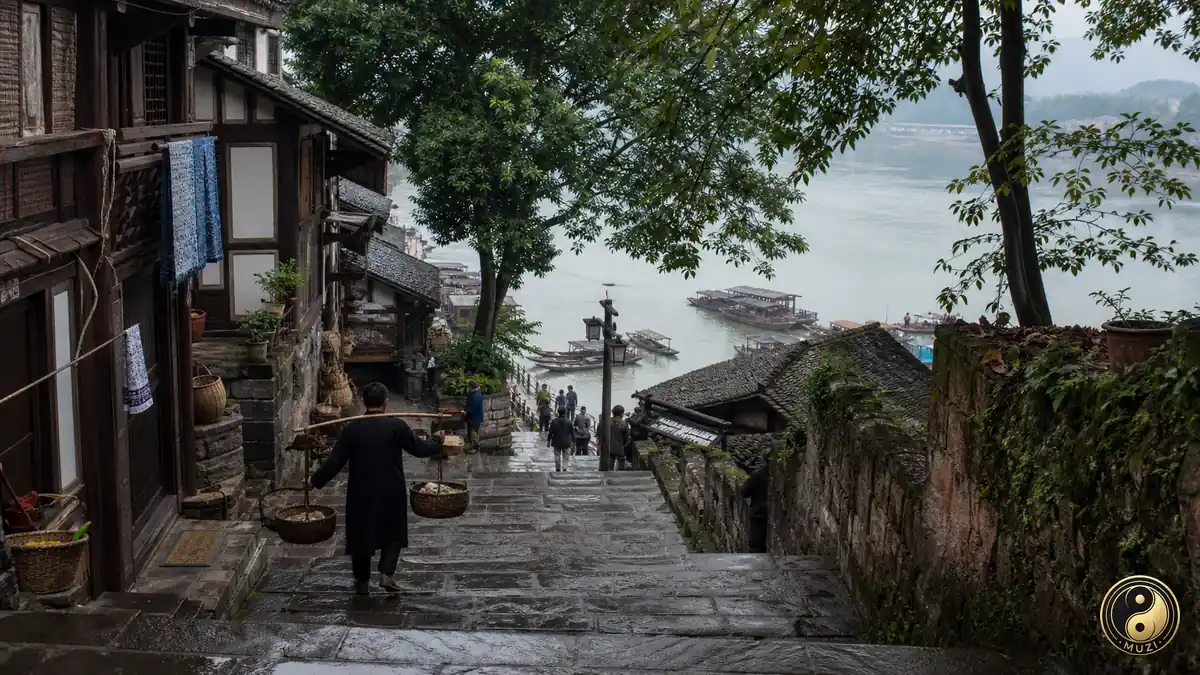 Historical Villages & Towns
Chongqing's thousand-year-old dock town; Bayu folkways and mountain-city life converge; Chen Mahua twists and Maoxuewang tripe are famous far and wide.
 Historical Villages & Towns
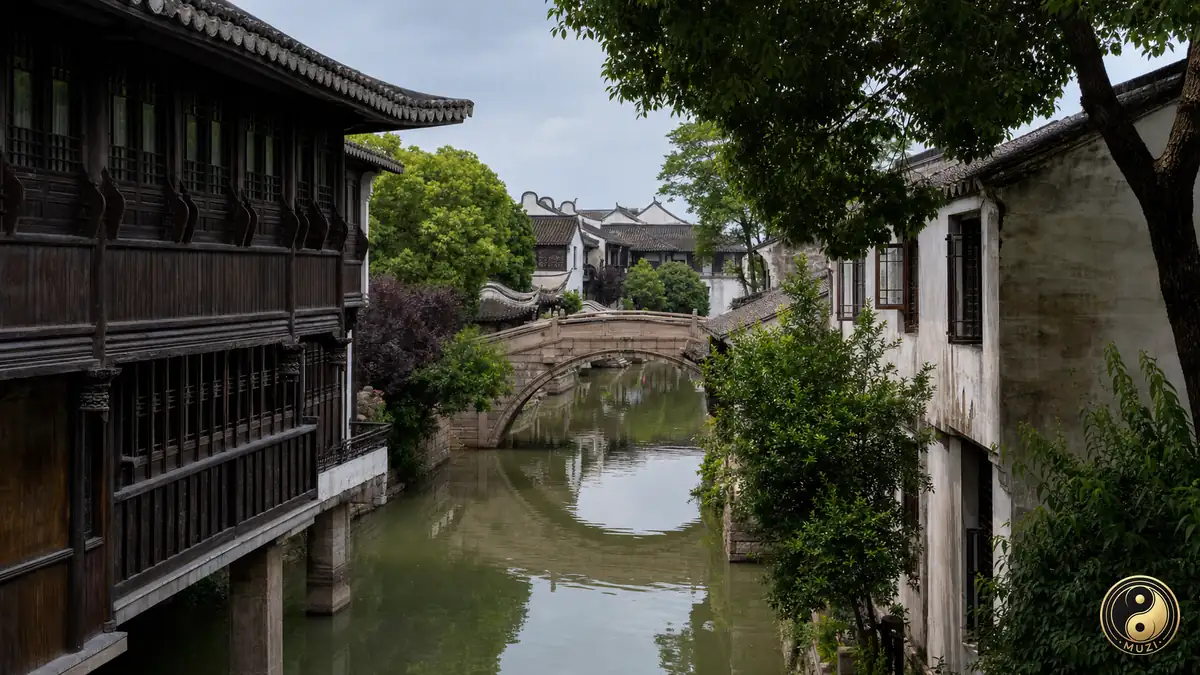
Foremost garden town of central Wu; Emperor Qianlong visited six times; Yan's Garden and Hongyin Mountain House epitomize Jiangnan refinement.
 Historical Villages & Towns
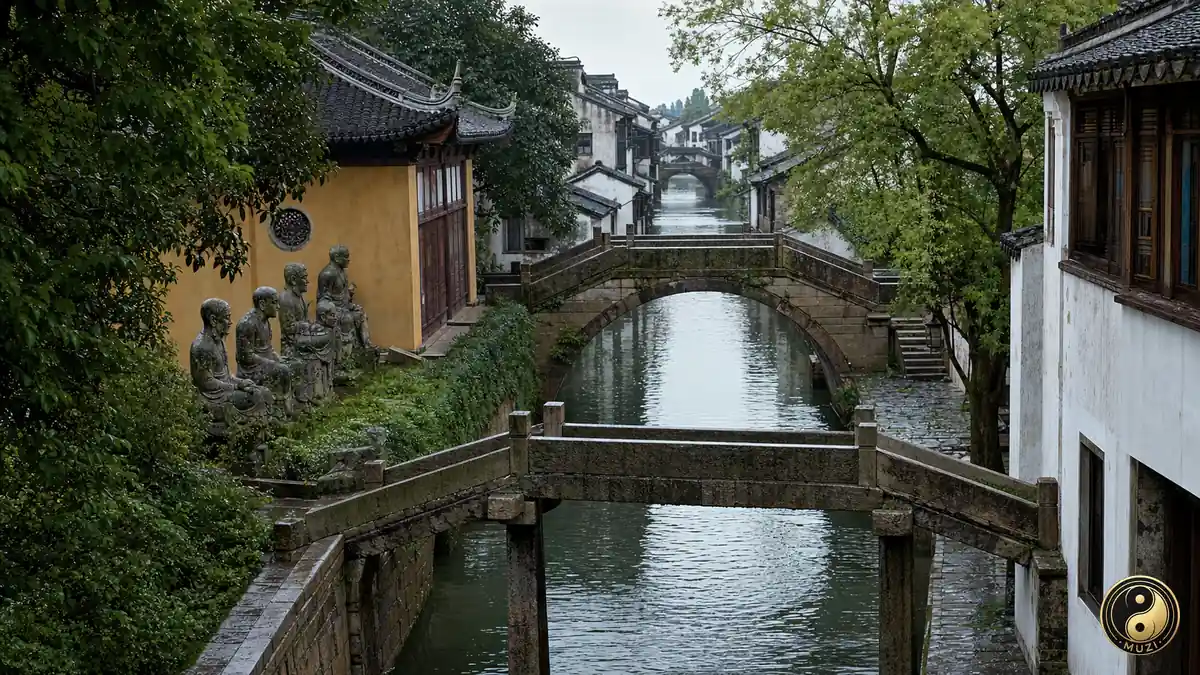
Tang-dynasty arhat sculptures at Baosheng Temple are national treasures; a bridge every few steps in this water town; Ye Shengtao taught and wrote here.
 Historical Villages & Towns
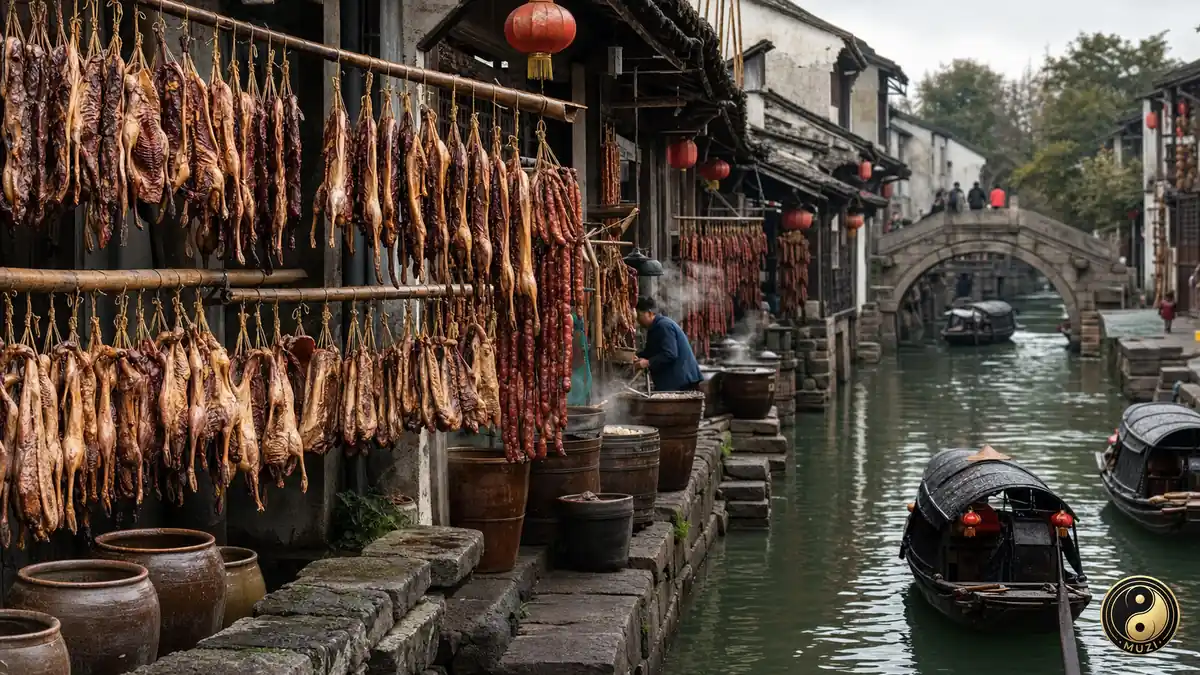
Hometown of shifu private advisers and Shaoxing rice wine; the December festival drapes streets with cured duck and sausage — Jiangnan's most lived-in water town.
 Historical Villages & Towns
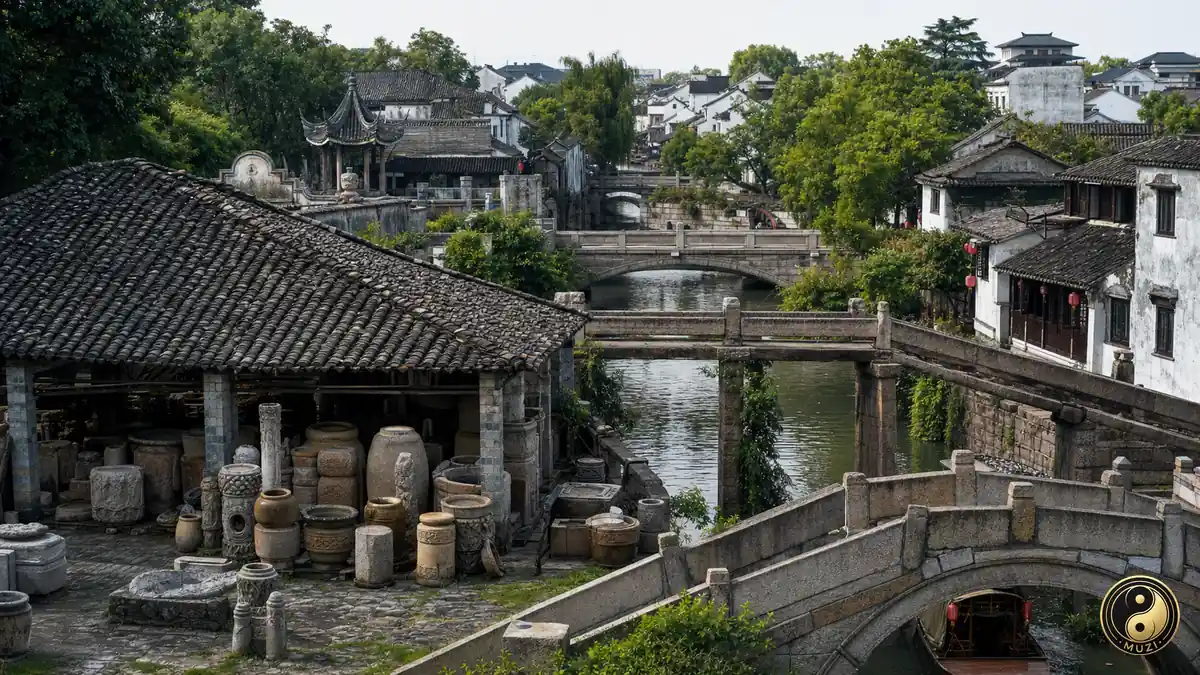
Jinxi's folk museums, ancient kilns, and Southern Song heritage give the town a distinctive cultural profile.
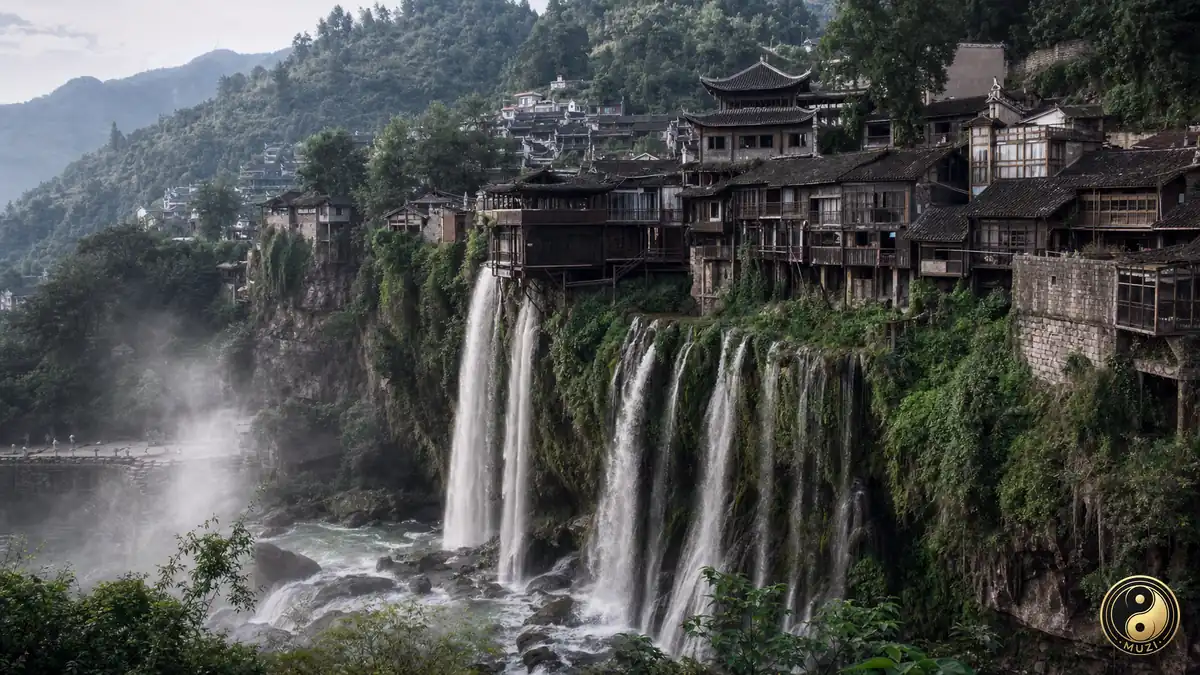 Historical Villages & Towns
Thousand-year-old town suspended over a waterfall; the Qin-Han Western Youyang city site; Tujia stilted houses hang over the great cascade.
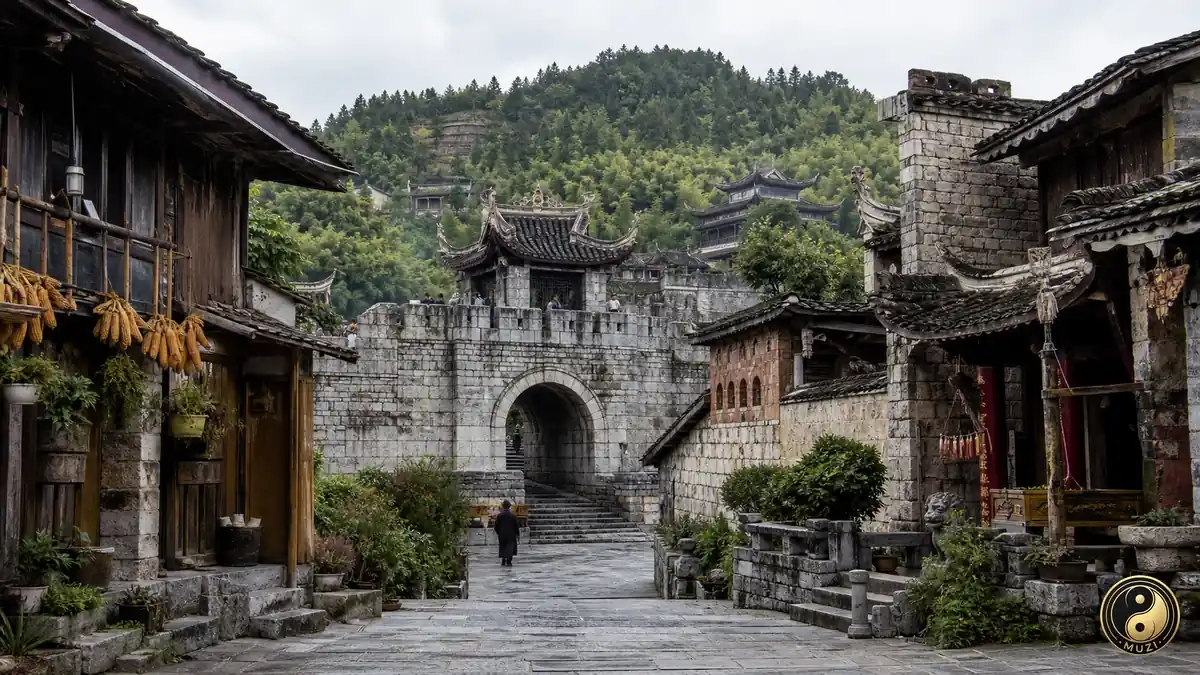 Historical Villages & Towns
Ming-dynasty military stronghold where Confucianism, Buddhism and Taoism coexist; the ancient wall and lu zhu jiao (braised pig trotters) are Qingyan's icons.
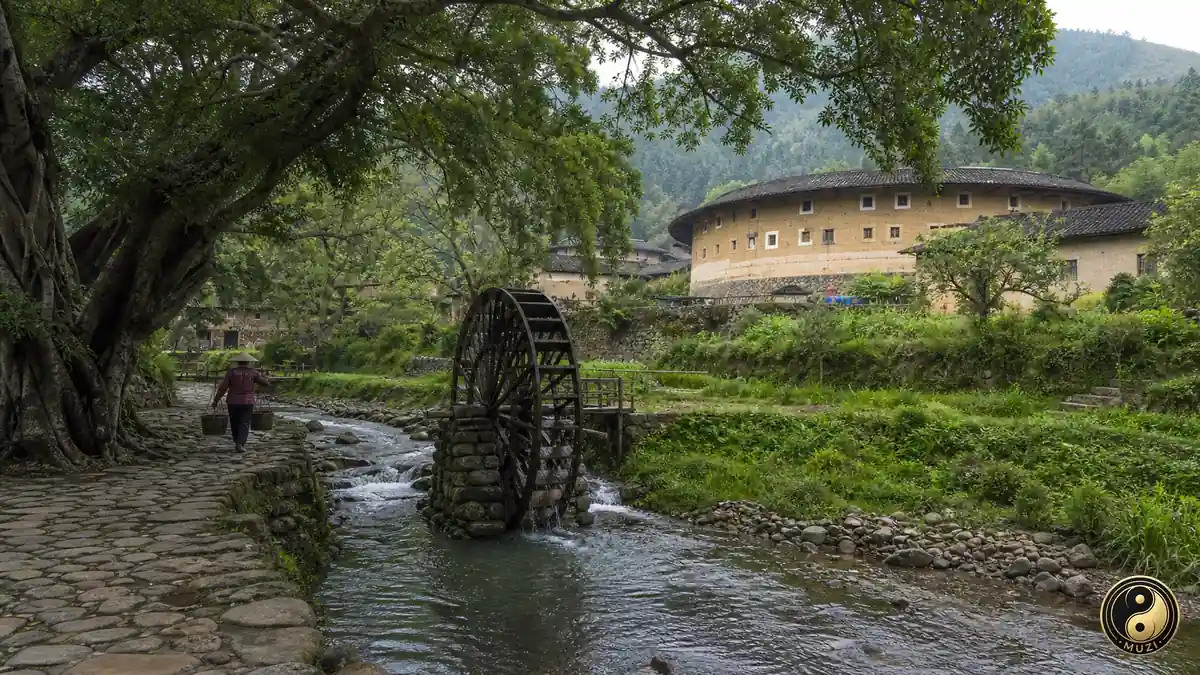 Historical Villages & Towns
Part of the UNESCO Fujian Tulou World Heritage site; Yunshuiyao ancient path and waterwheels compose a pastoral idyll.
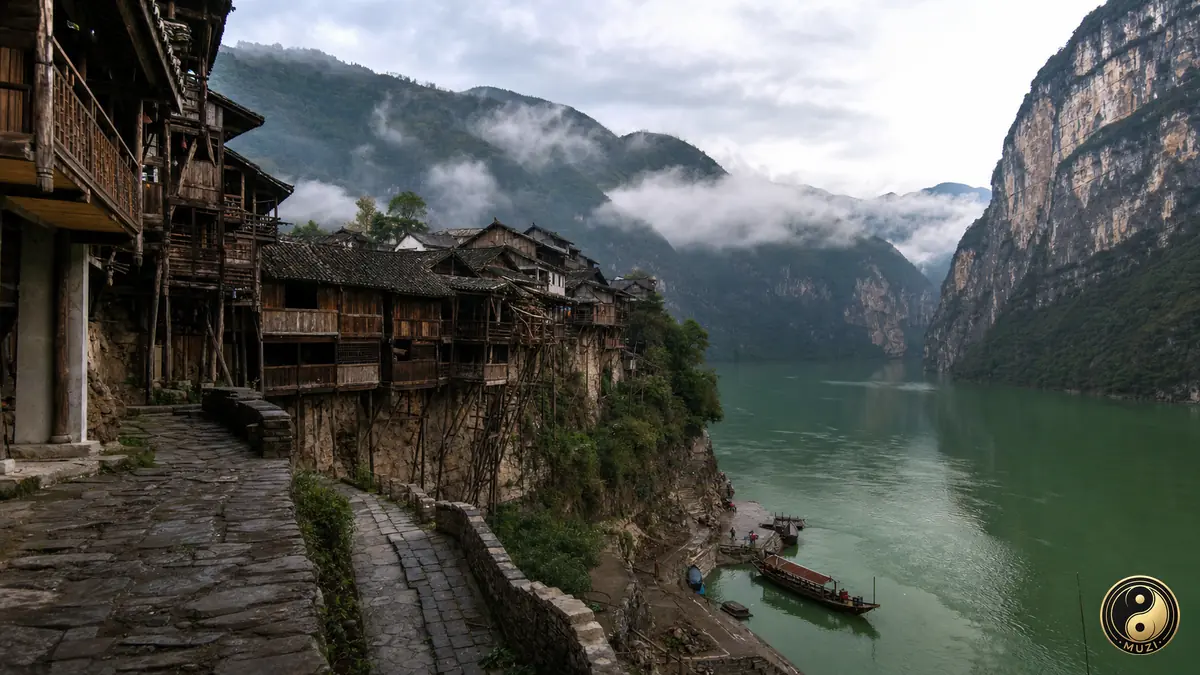 Historical Villages & Towns
Sheer-cliff town on the Wujiang Gallery; Tujia stilted houses tier down the slope; the flagstone old street continues a salt-trade legacy since Three Kingdoms.
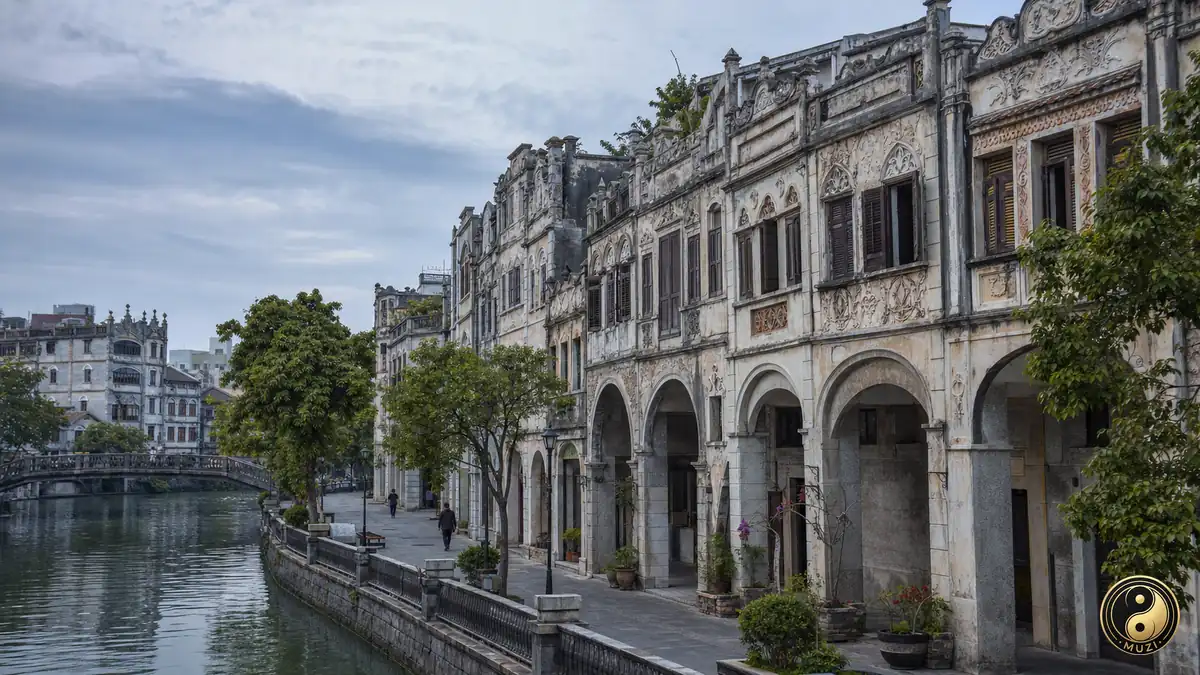 Historical Villages & Towns
Lingnan arcade-building museum; overseas Chinese culture crystallized in Guan Library and European-style villas.
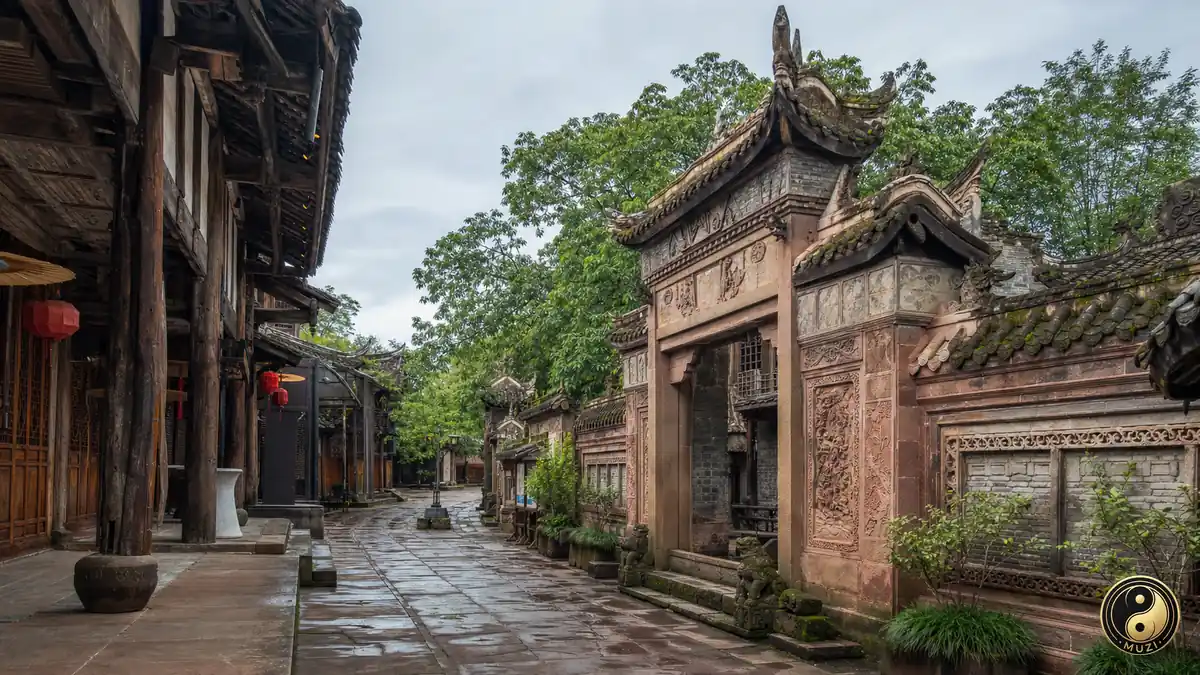 Historical Villages & Towns
Luodai's Hakka guildhalls, foodways, and community traditions anchor a cultural town west of Chengdu.
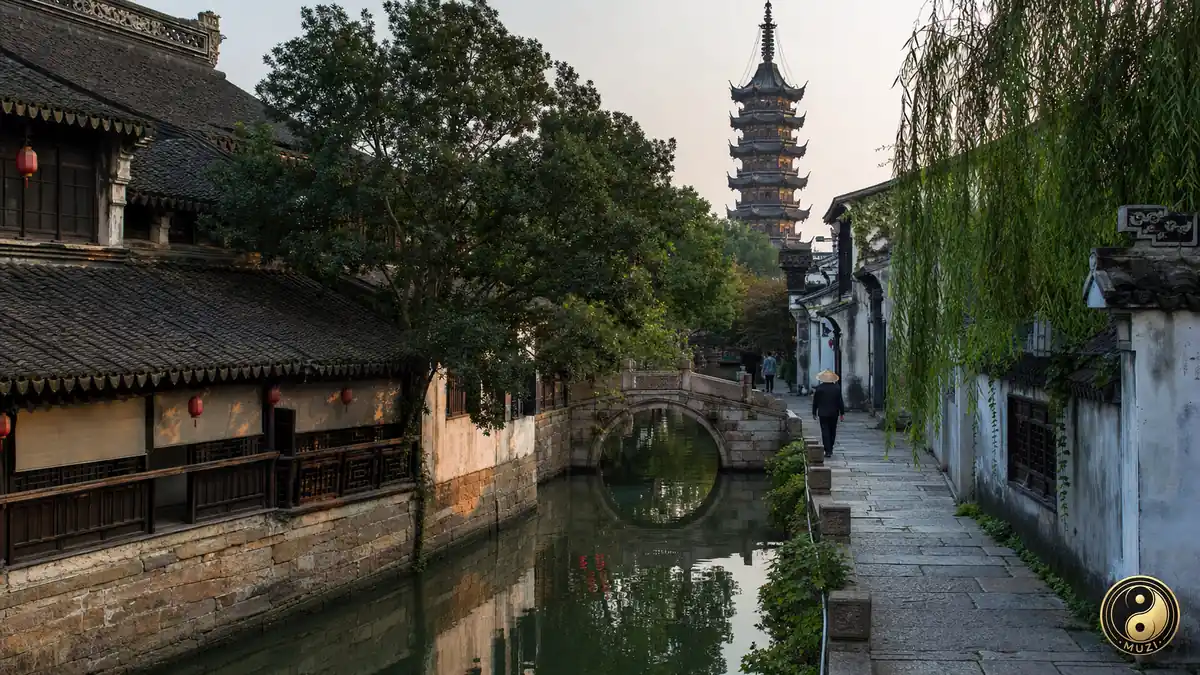 Historical Villages & Towns
Birthplace of Kunqu opera and hometown of Gu Yanwu; Qinfeng Pagoda and the flagstone street witness 2,500 years of Wu-region heritage.
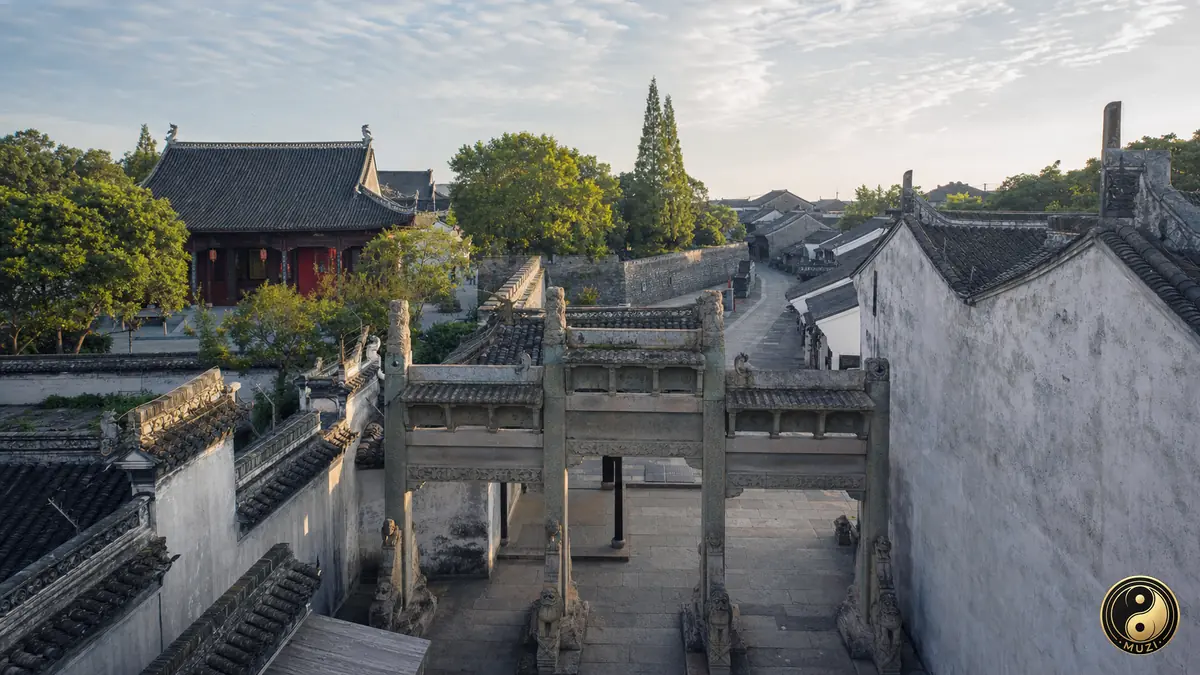 Historical Villages & Towns
Foremost ancient county town in Jiangnan; Tang-dynasty urban layout preserved intact; filial piety culture and the Confucian Temple carry a thousand-year lineage.
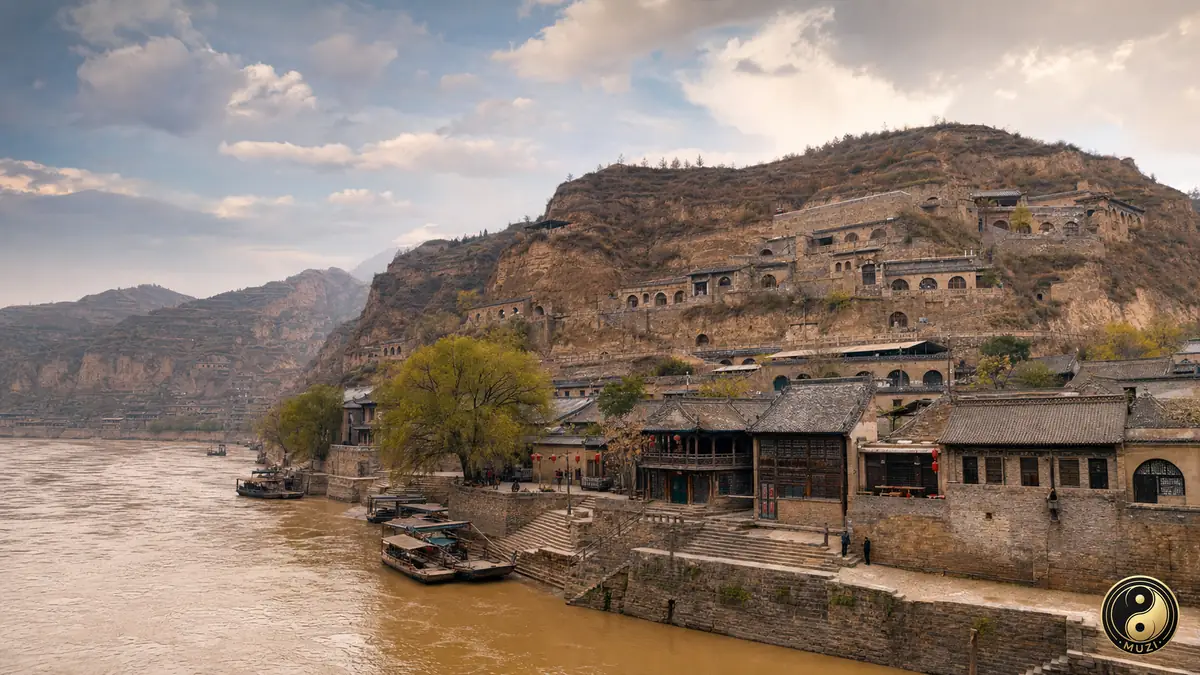 Historical Villages & Towns
No.1 town on the Yellow River's nine bends; key ferry port for western Shanxi merchants; Lijiashan cave dwellings are the Potala Palace of the Loess Plateau.
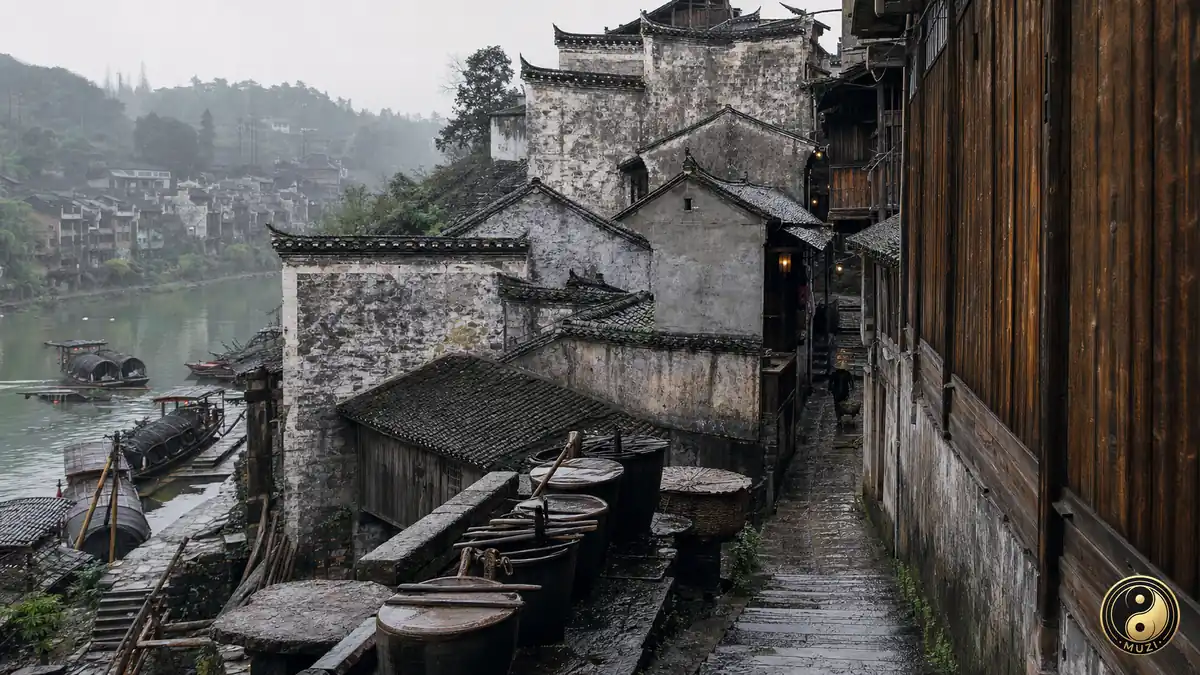 Historical Villages & Towns
Hongjiang preserves Ming-Qing commercial streets, Yinzhiwu houses, and the tung-oil trade history of western Hunan.
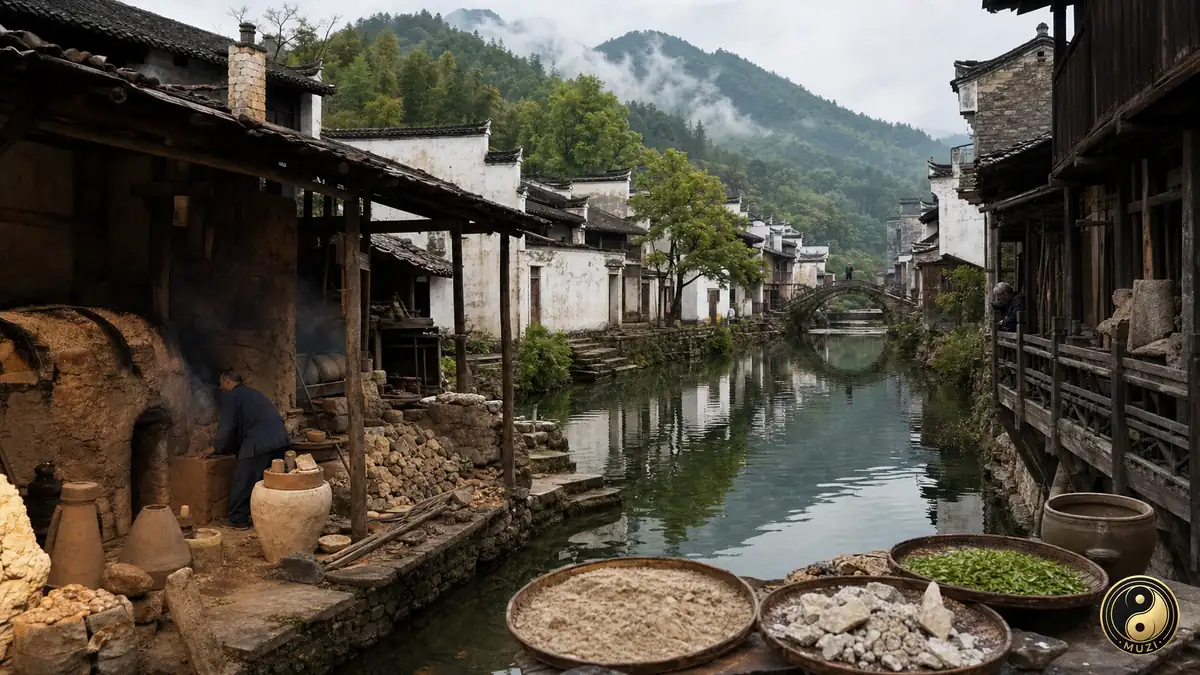 Historical Villages & Towns
Source of porcelain, homeland of tea, sea of forests; the raw material origin for Jingdezhen ceramics; Ming-Qing commercial street testifies to bygone bustle.
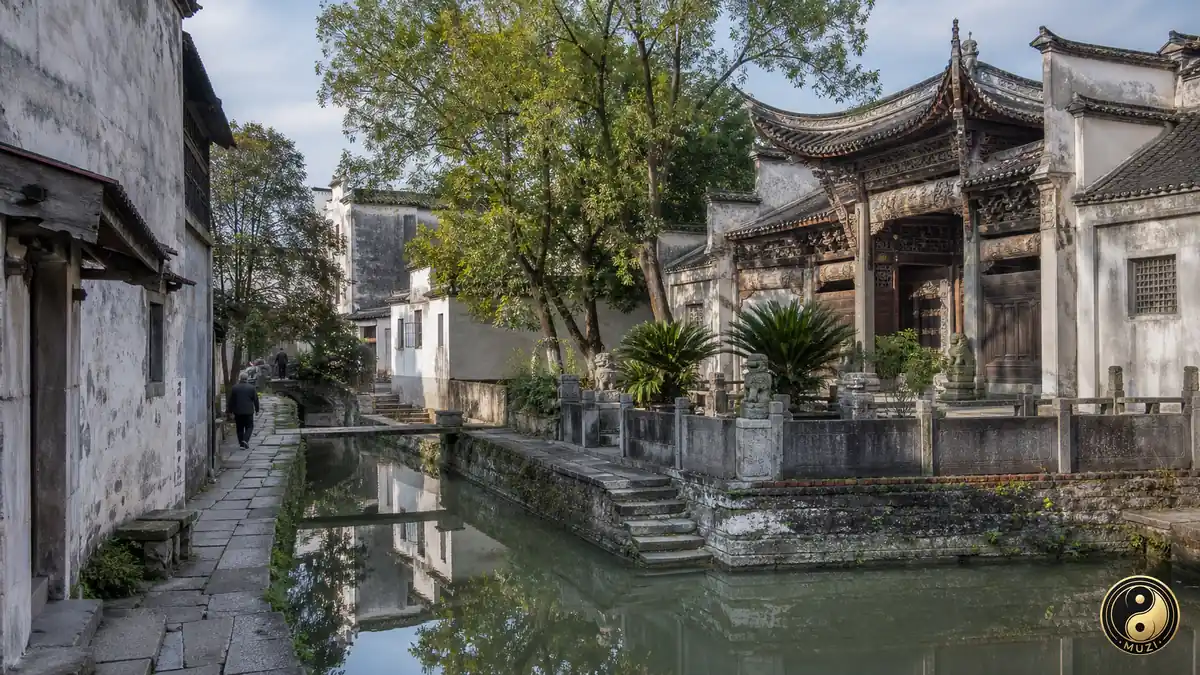 Historical Villages & Towns
Ming-Qing village in Jiangnan threaded by a Bagua water system; the Tong clan ancestral hall and exquisite carvings showcase eastern Zhejiang clan culture.
 Historical Villages & Towns
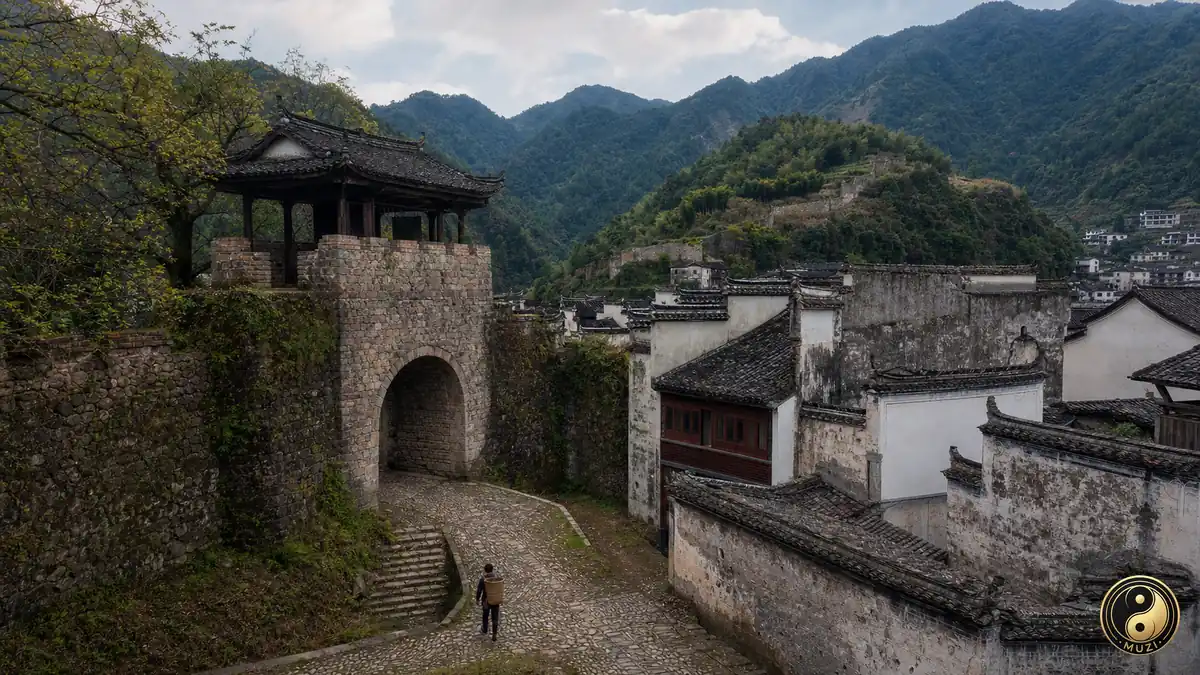
Unique ancient town straddling three provinces where a hundred surnames gather; Fengling Pass and Ming-Qing buildings are living fossils of military-commercial hybrid history.
 Historical Villages & Towns
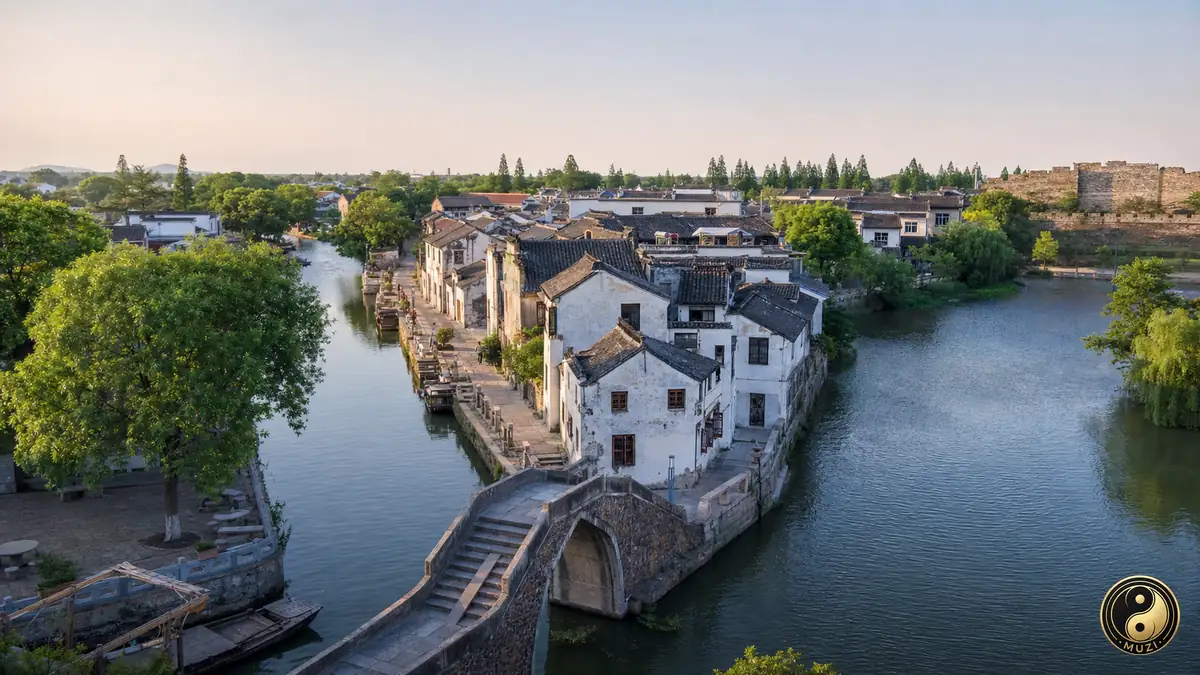
Water town where the Fengle and Hangbu rivers meet; Yang Zhenning's former residence and the Taiping army ancient wall carry deep history.
 Historical Villages & Towns
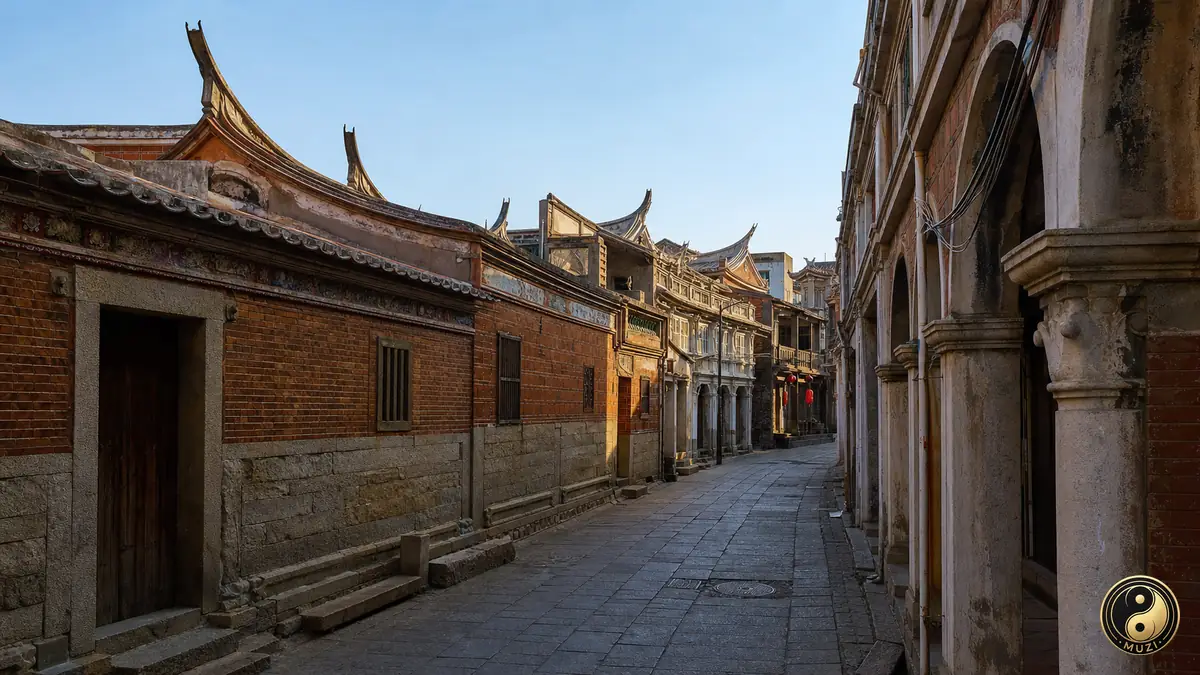
Core region of southern Fujian culture; Tang-Song city layout coexists with Ming-Qing arcade buildings; Taiwan Road old street testifies to Fujian-Taiwan kinship.
 Historical Villages & Towns
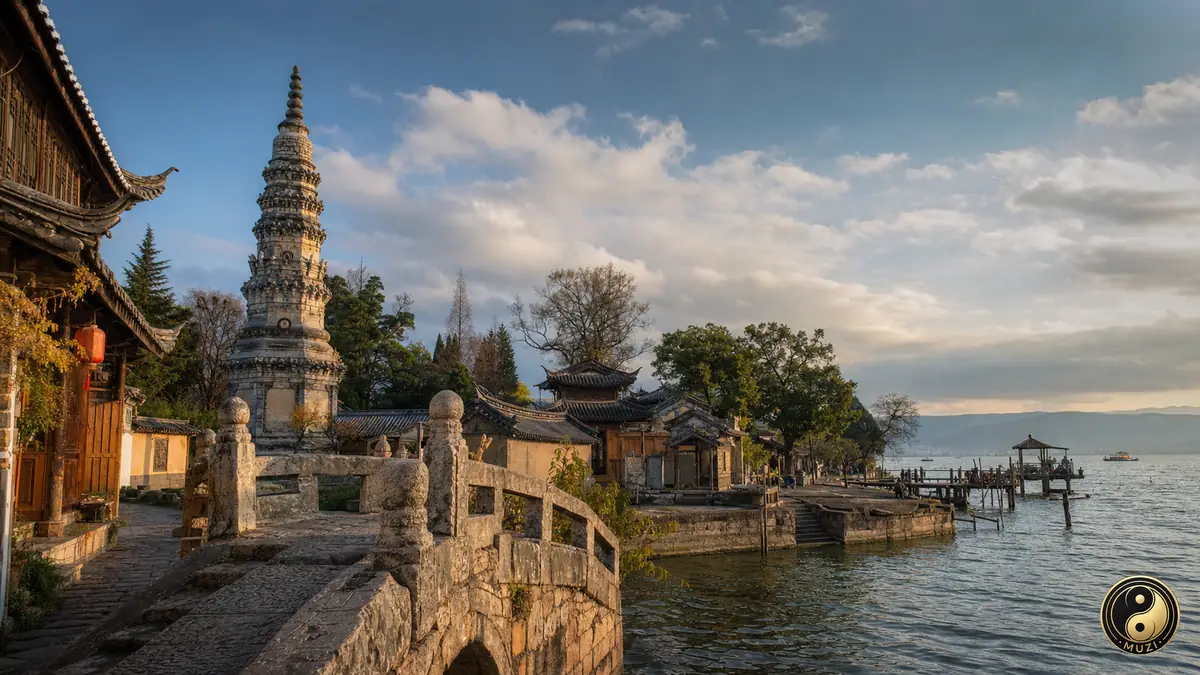
Tang-dynasty Nanzhao ferry port; Miaozhan Temple Diamond Throne Pagoda is the foremost vajra throne pagoda in central Yunnan; once the busiest trade port on Lake Dian.
 Historical Villages & Towns
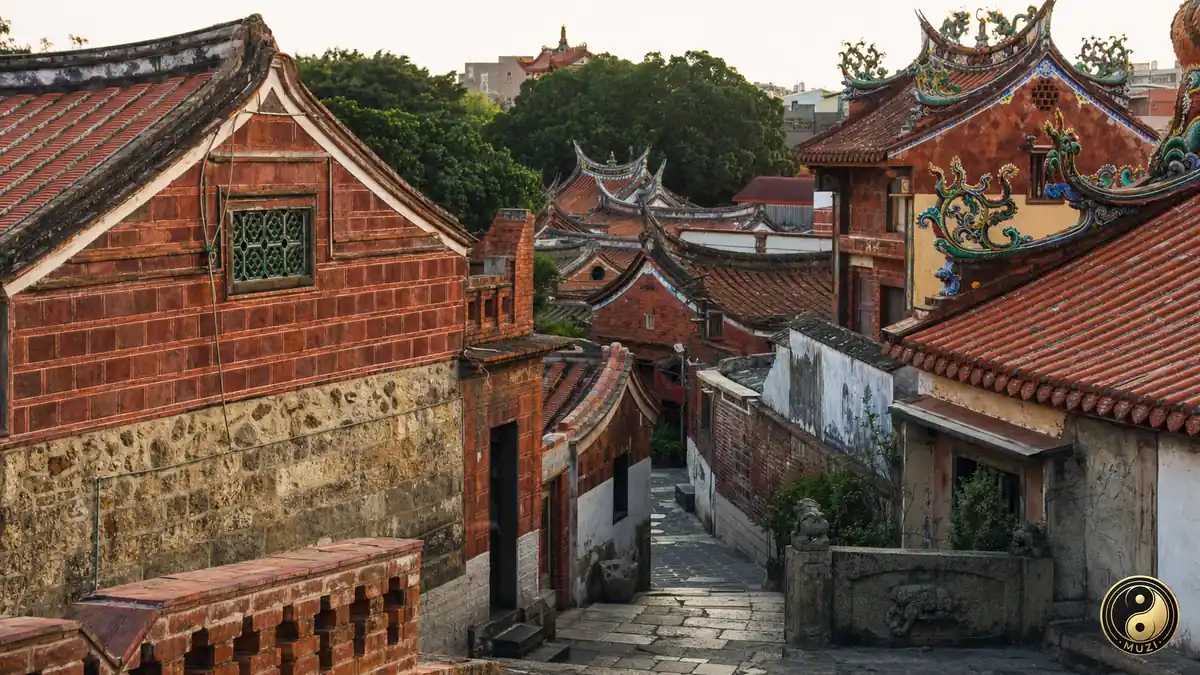
Taiwan's most historic port town; officially opened for trade during the Qing era; dense temples and southern Fujian-style old houses bear witness to its golden age as 'one government, two deer, three Monga'.
 Historical Villages & Towns
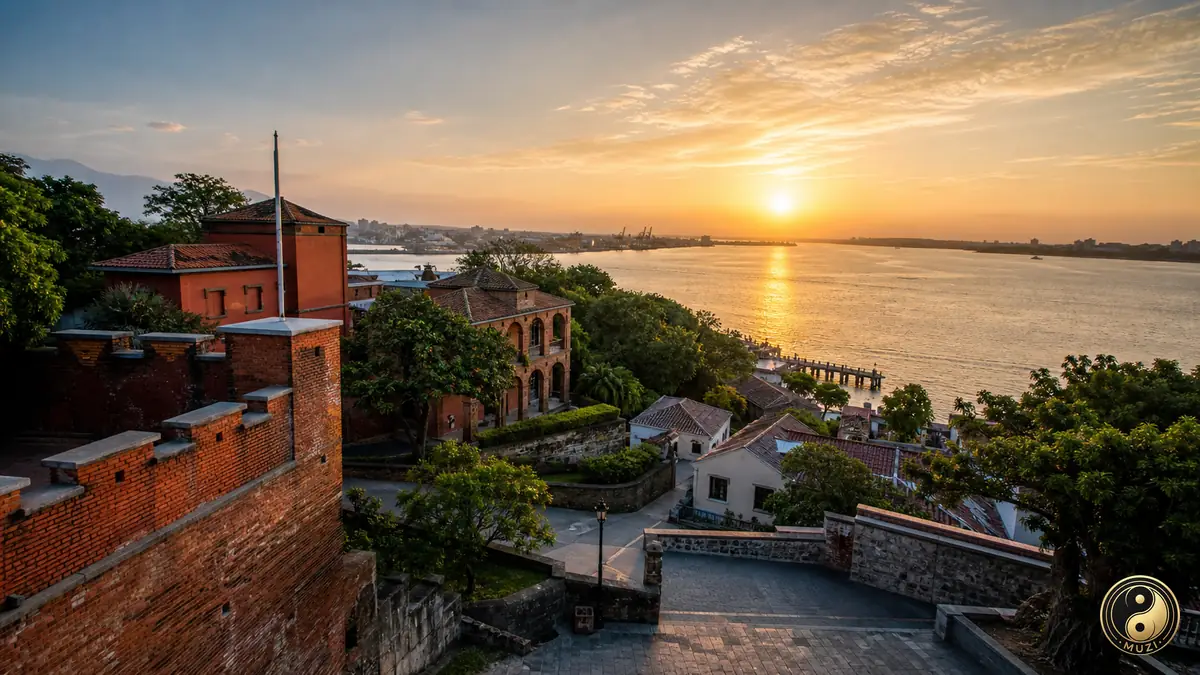
Port town at the mouth of the Tamsui River; Fort Santo Domingo and consulate buildings tell the story of modern Taiwan's international trade; Dr. George Mackay preached and practiced medicine here.
 Historical Villages & Towns
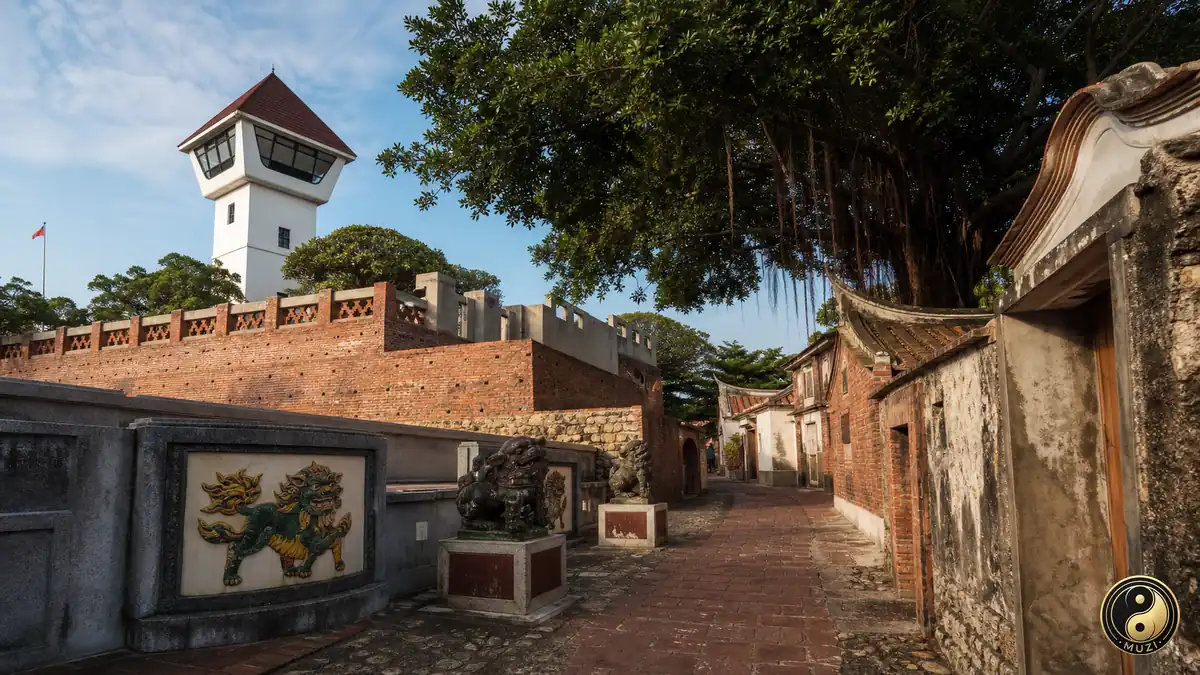
The earliest Han Chinese settlement in Taiwan; Sword Lion tablets and Anping Fort carry Ming-Zheng-era memories; narrow lanes and old walls are living fossils of Taiwan's pioneering history.
 Historical Villages & Towns
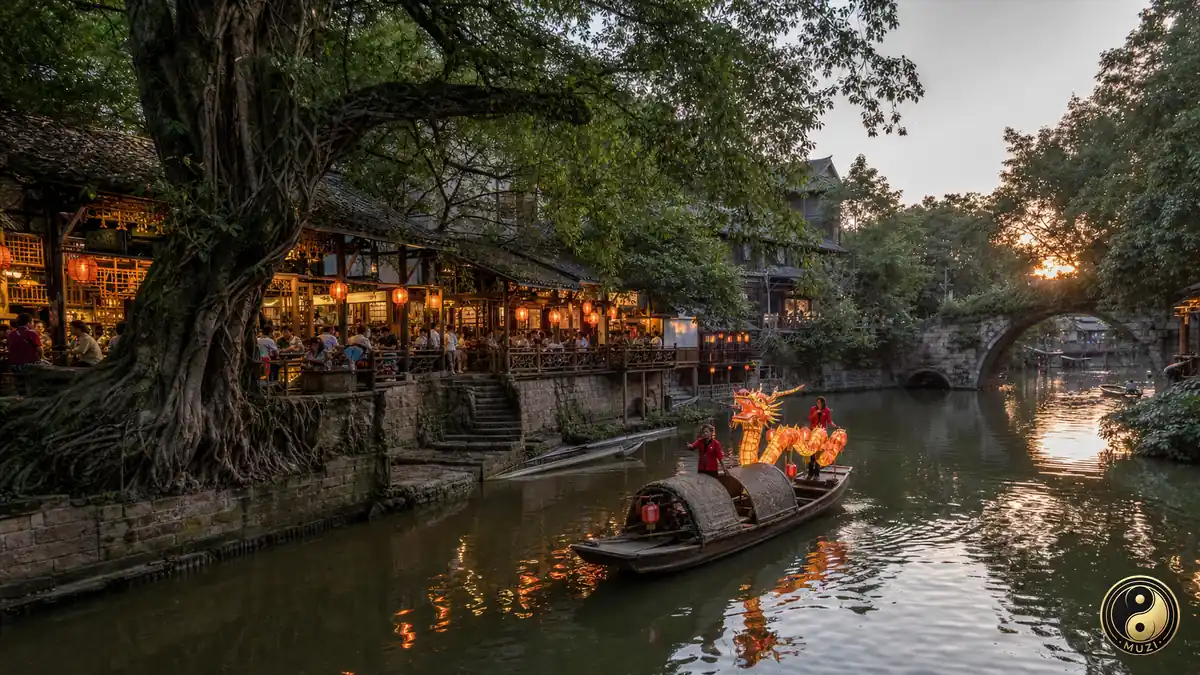
Best-preserved thousand-year-old river-wharf town in western Sichuan; ancient banyan trees and stilted houses line the Fu River; fire-dragon lantern dance and 'one-noodle' are the town's living cultural icons.
 Historical Villages & Towns
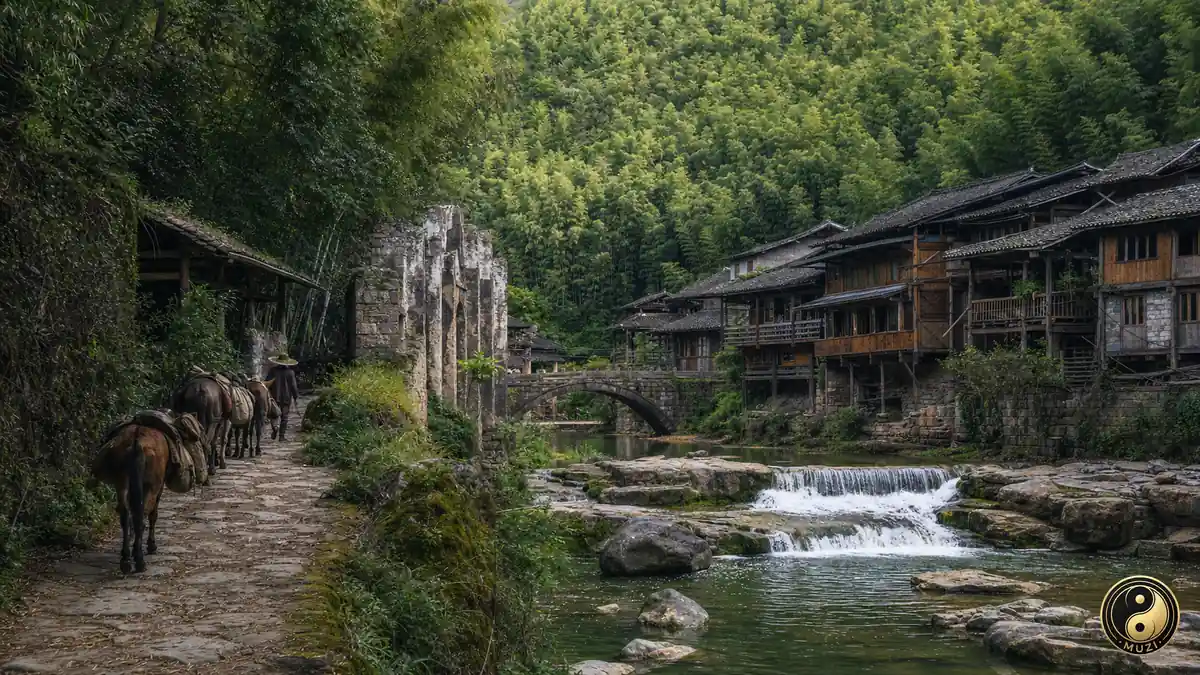
Top-ranked town in western Sichuan on the Ancient Tea Horse Road; Qin-Han post roads and ancient paper-making workshops survive; ten thousand mu of bamboo sea encircles the town like a green wall.
 Historical Villages & Towns
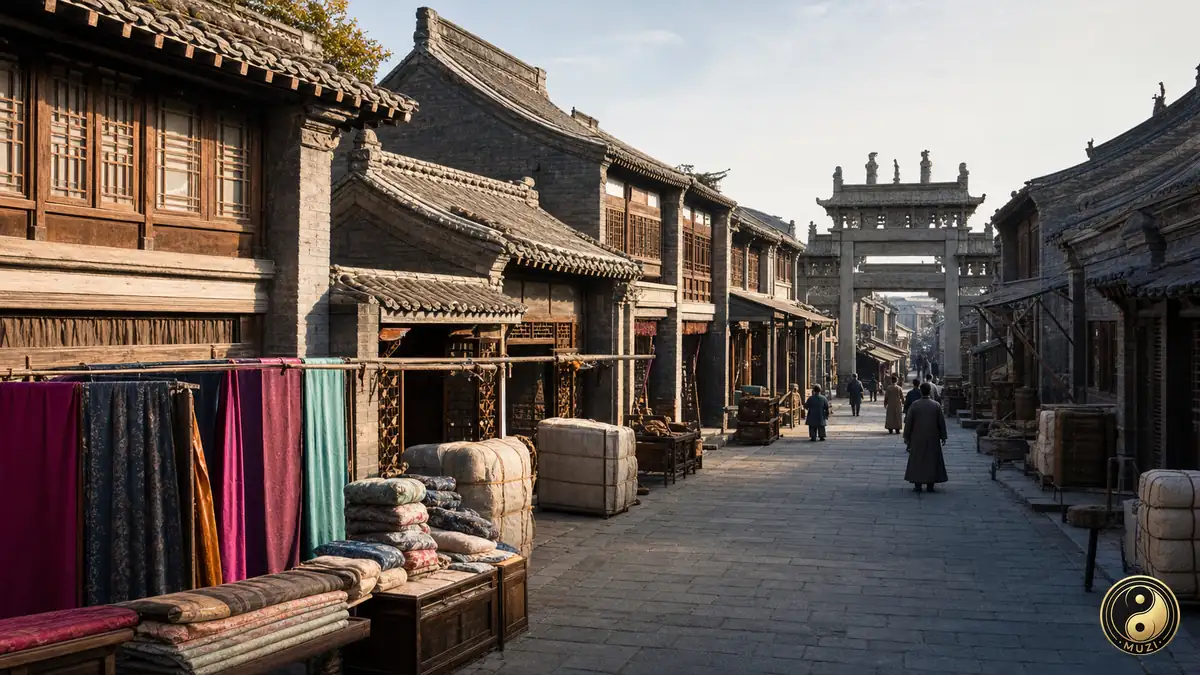
Known as 'No.1 village under heaven' and 'dry dock'; Ming-Qing era cradle of Lu merchants and northern silk distribution center; filming location for The Dyeing House and other TV dramas.
 Historical Villages & Towns
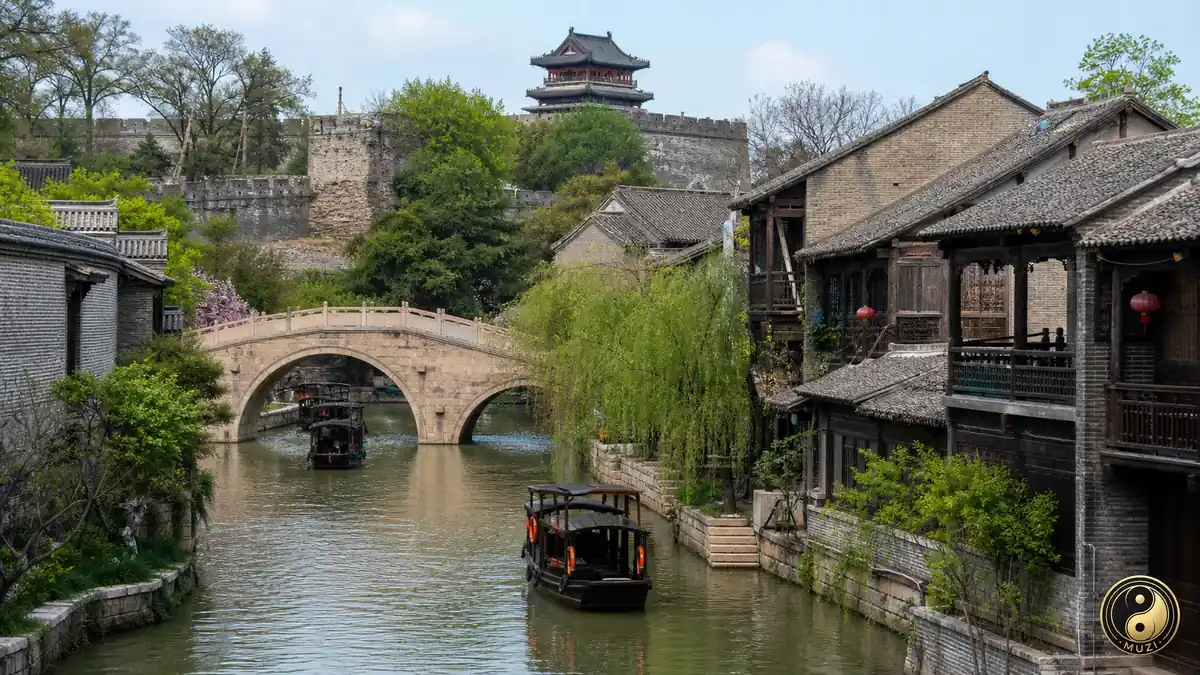
Grand Canal town once famous for 'merchants gathering, river full of fishing lanterns'; rebuilt after the Battle of Taierzhuang in WWII; now a world-renowned memorial ancient city.
 Historical Villages & Towns
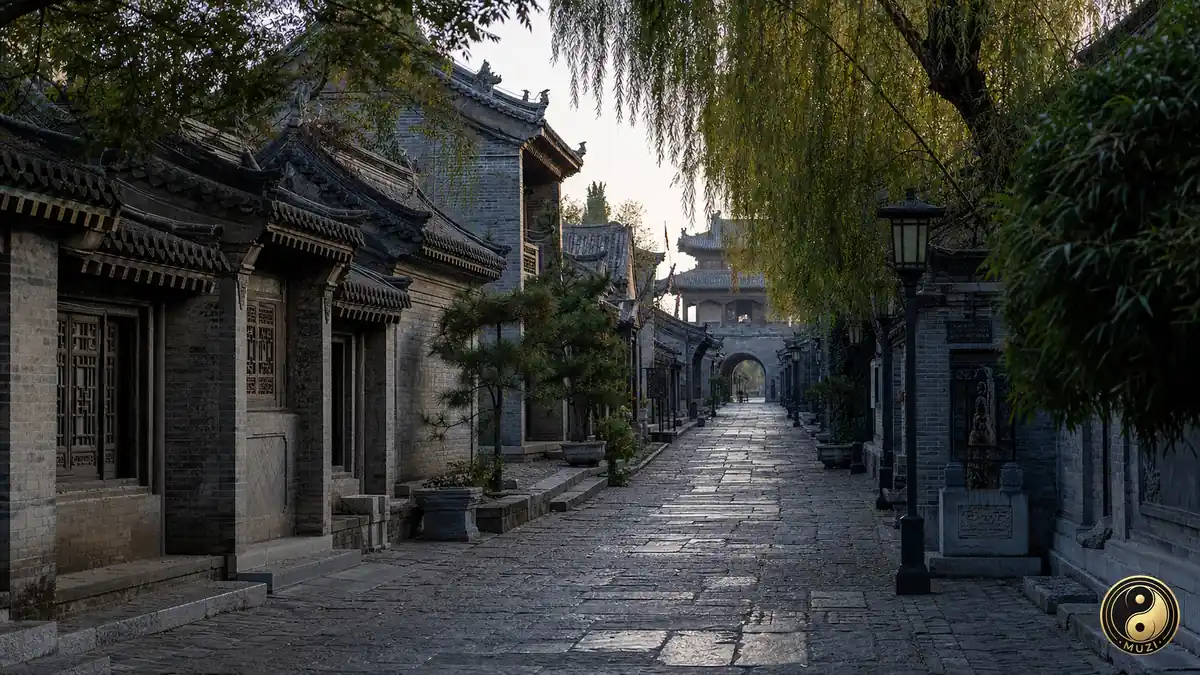
One of the Nine Ancient Provinces; centuries-old hub between sea and Mount Tai; Ming-Qing old streets and Occasional Garden preserve the complete ancient city pattern.
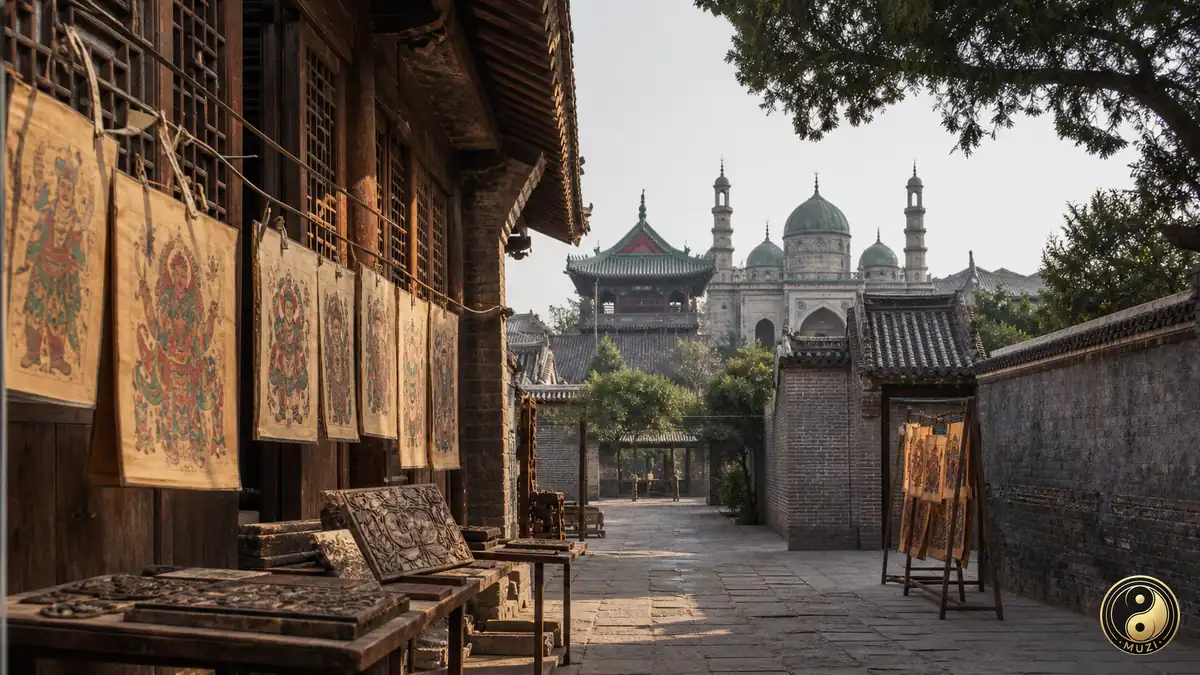 Historical Villages & Towns
Zhuxian Town preserves woodblock New Year prints, Yue Fei-era military history, and multi-ethnic trade heritage around its mosque and ancient temple.
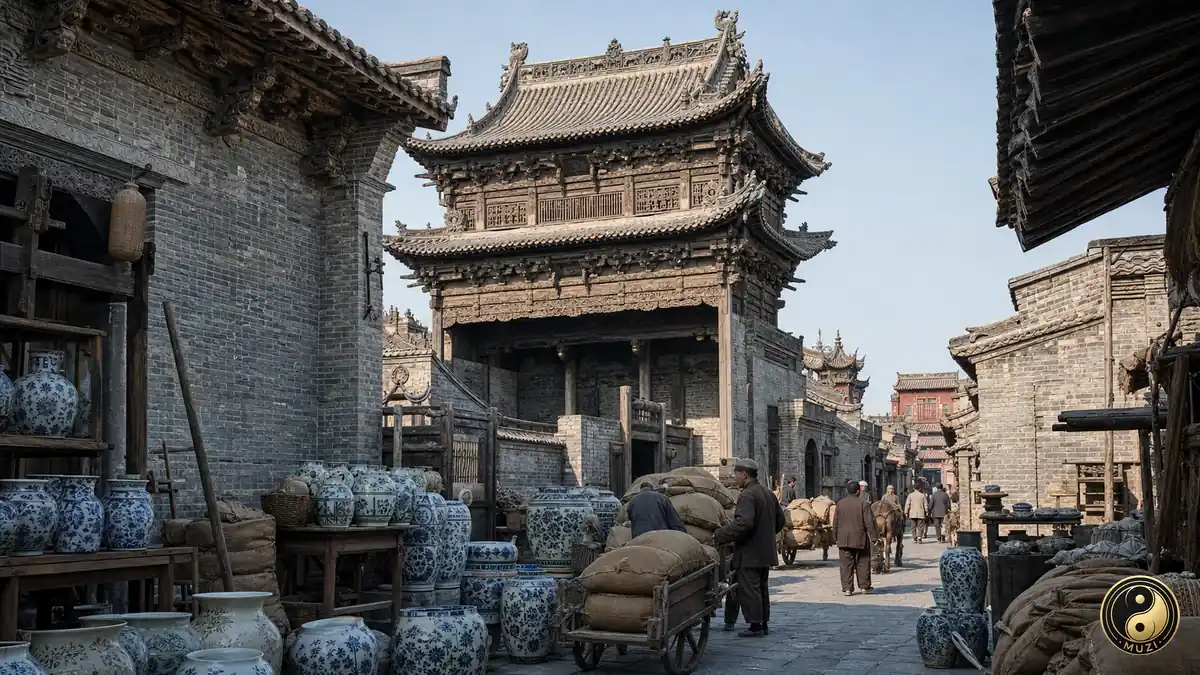 Historical Villages & Towns
Key transfer station on the Ten-Thousand-Mile Tea Road and porcelain trade hub; the Shaanxi-Shanxi Guildhall and Fire God Temple preserve exquisite commercial architecture unrivaled in central China.
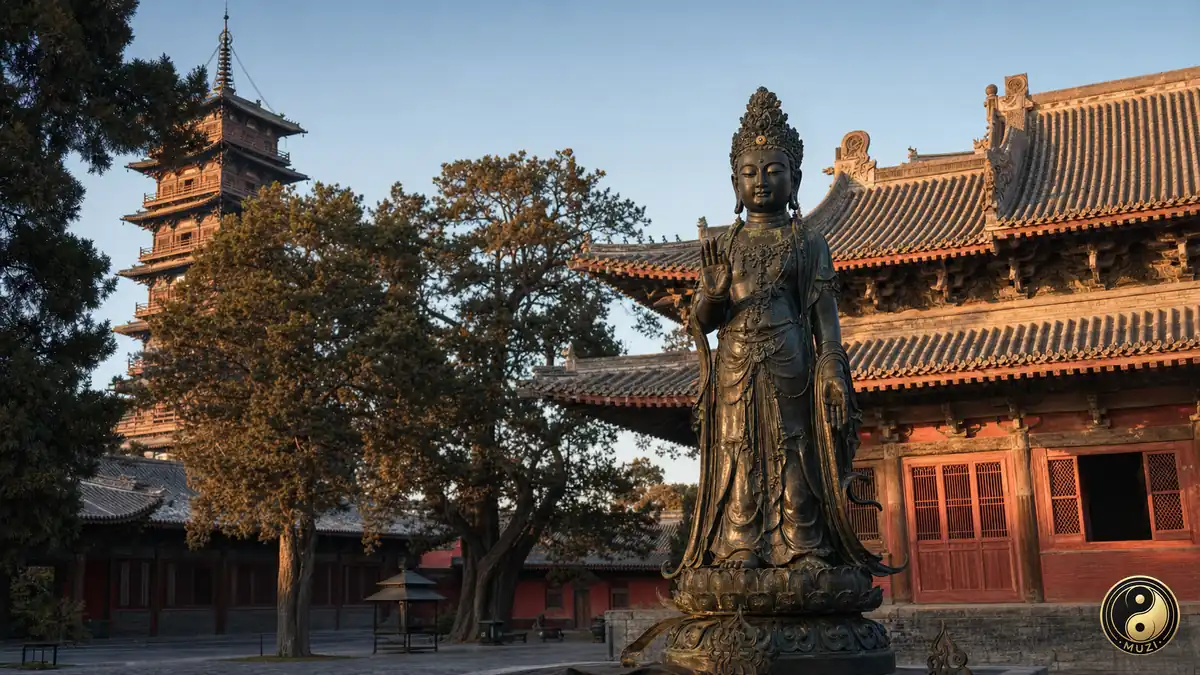 Historical Villages & Towns
Zhengding preserves an ancient Buddhist landscape, Longxing Temple's cast-bronze Guanyin, Linji Temple heritage, and a Dream of the Red Chamber film set.
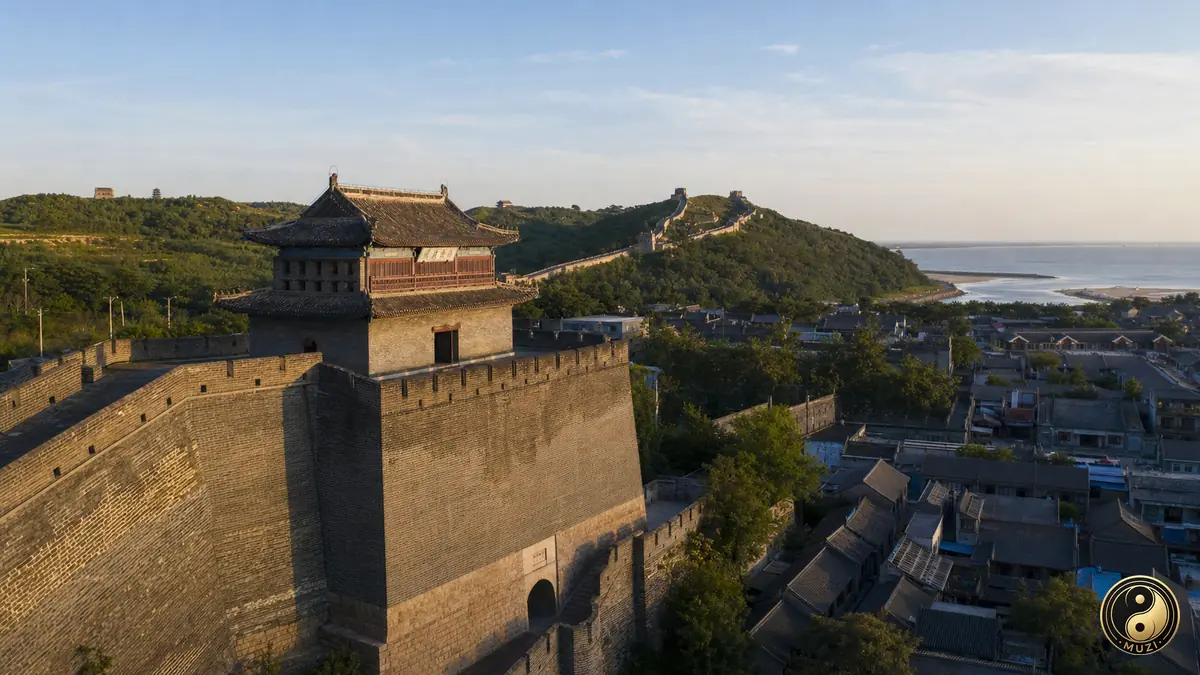 Historical Villages & Towns
Eastern starting point of the Great Wall; 'No.1 Pass Under Heaven' commands the mountains and sea; Ming-Qing military fortress and city layout preserved intact; iconic Great Wall landmark.
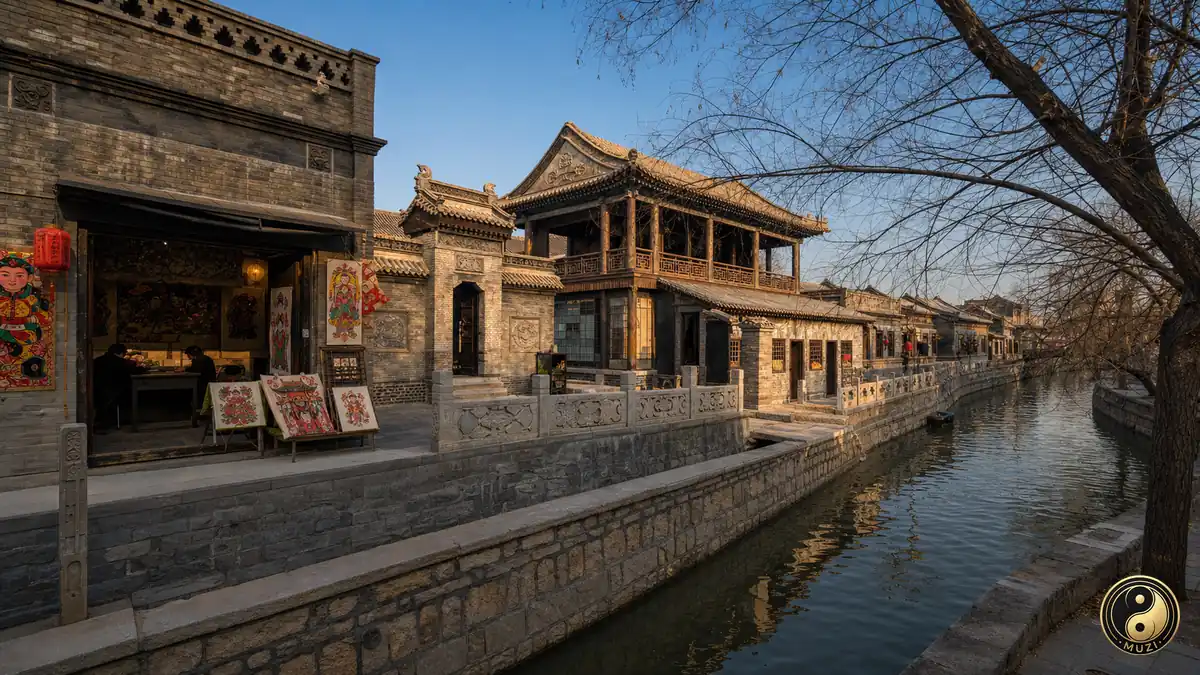 Historical Villages & Towns
Hometown of China's woodblock New Year prints; northern folk-custom town nourished by the Grand Canal; Shi Family Mansion and opera stage showcase Tianjin merchant refinement.
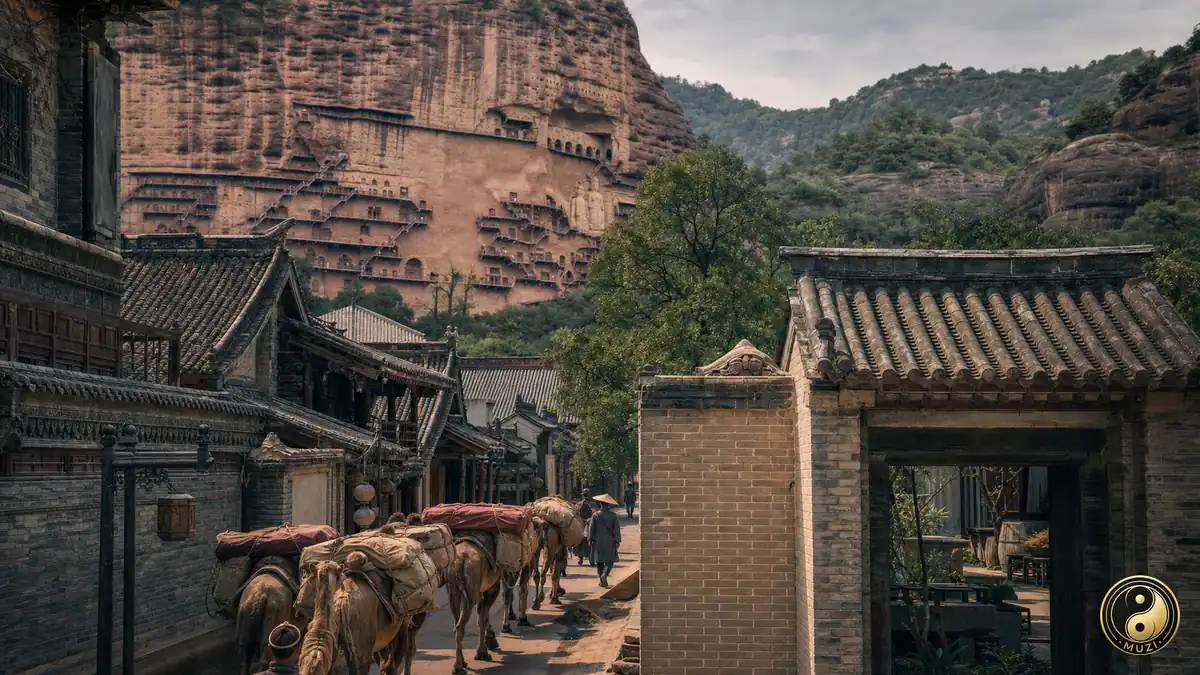 Historical Villages & Towns
Tianshui joins Fuxi and Silk Road heritage with the Maijishan Grottoes, ancient streets, and Hu's Residence.
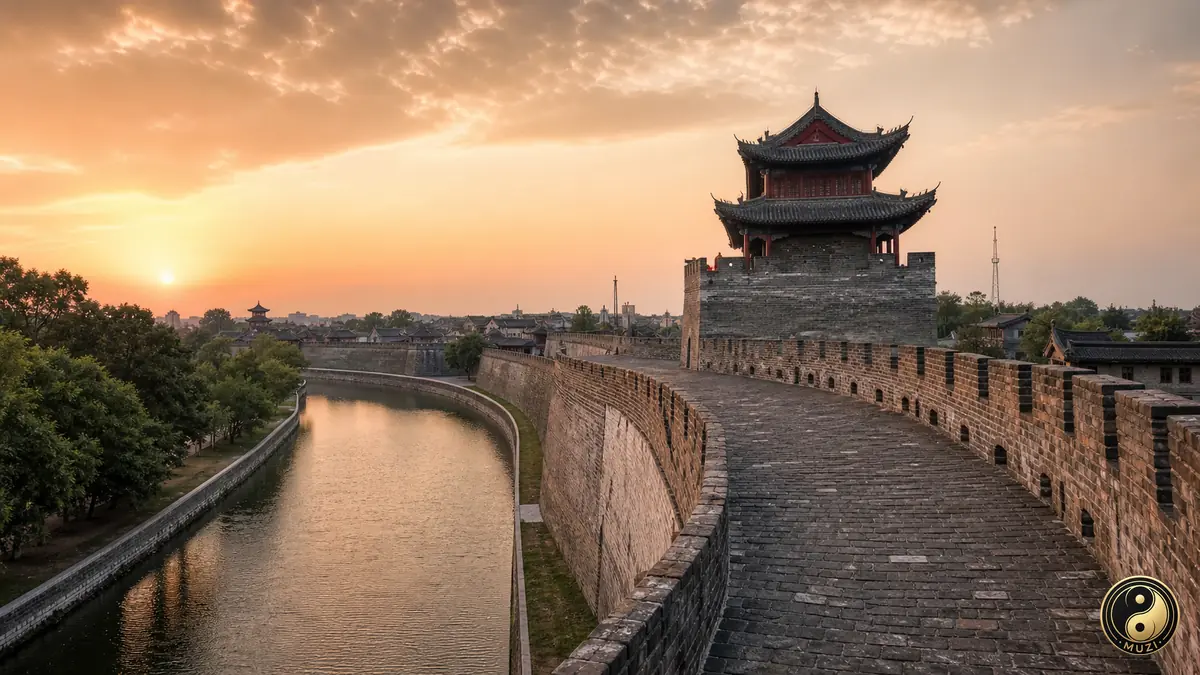 Historical Villages & Towns
Jingzhou preserves Chu and Three Kingdoms heritage, with a Ming wall among the best-preserved city walls in the Jianghan region.
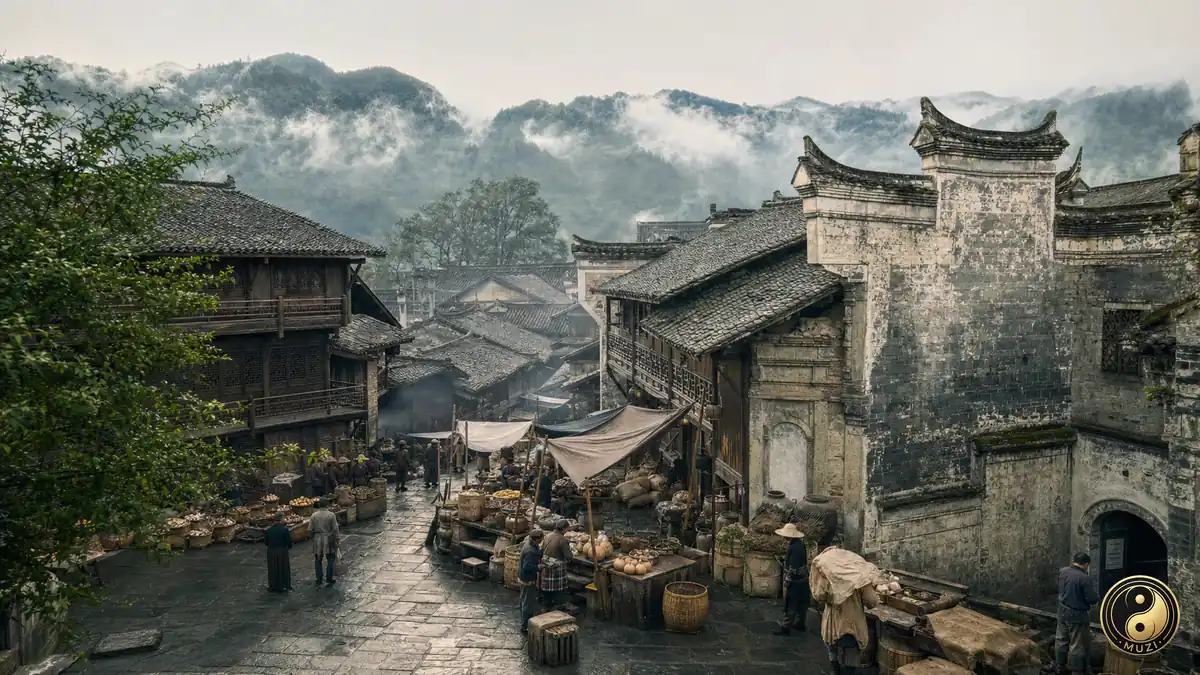 Historical Villages & Towns
Where Shaanxi, Gansu and Sichuan meet — a town where three provinces converge; Wei Fuxuan's mansion and Huilongchang Old Street witness Republican-era border trade prosperity under a local 'warlord'.
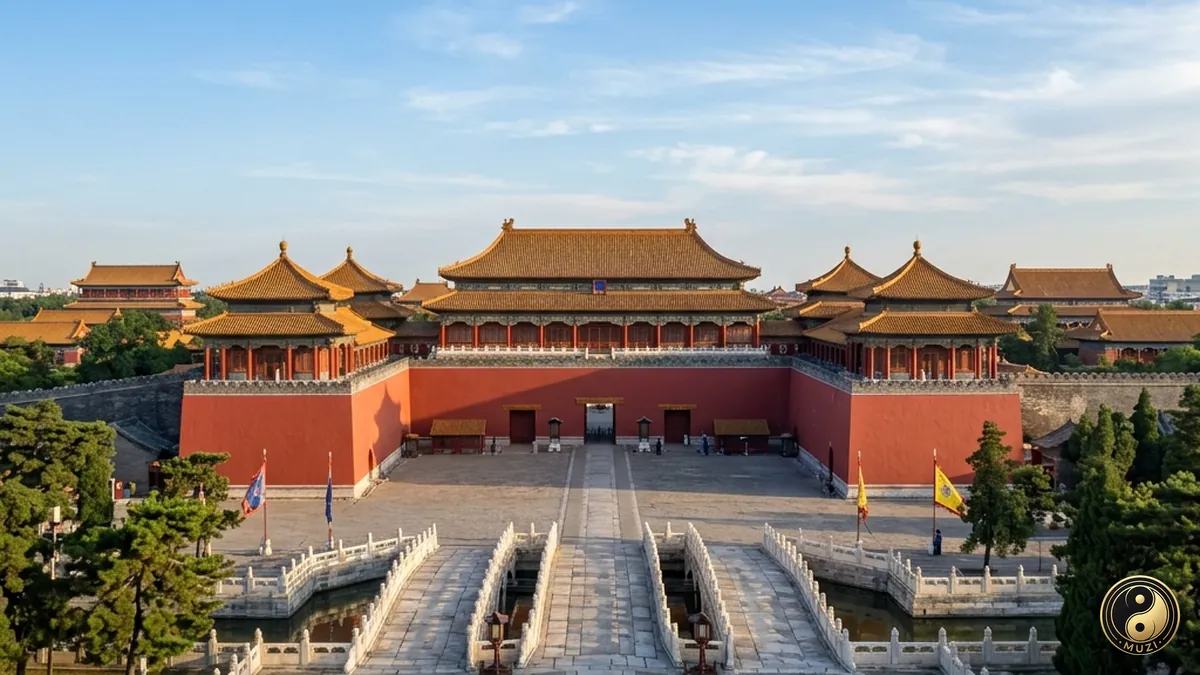 Historic Site
A north–south urban axis through Beijing's historic heart, uniting 15 heritage components and a capital-planning tradition rooted in the Yuan founding of Dadu.
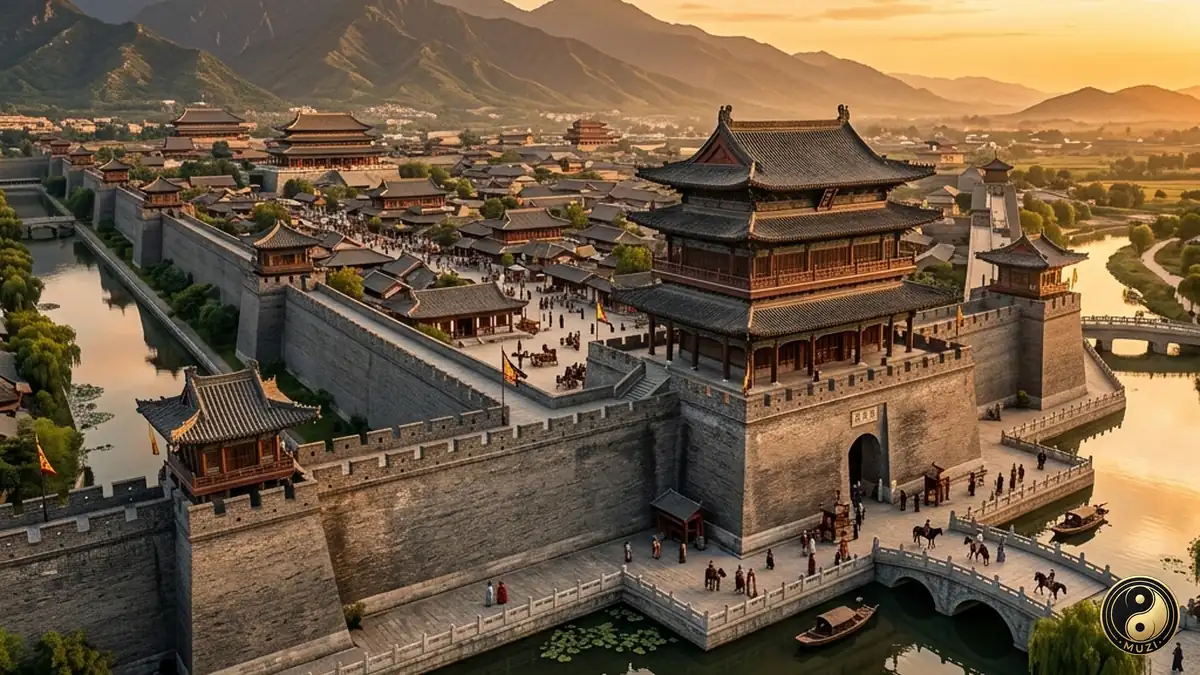 Historic Site
Sui-Tang Chang'an — one hundred and eight wards laid out like a chessboard grid, the largest and most orderly imperial capital planning masterpiece of the ancient world.
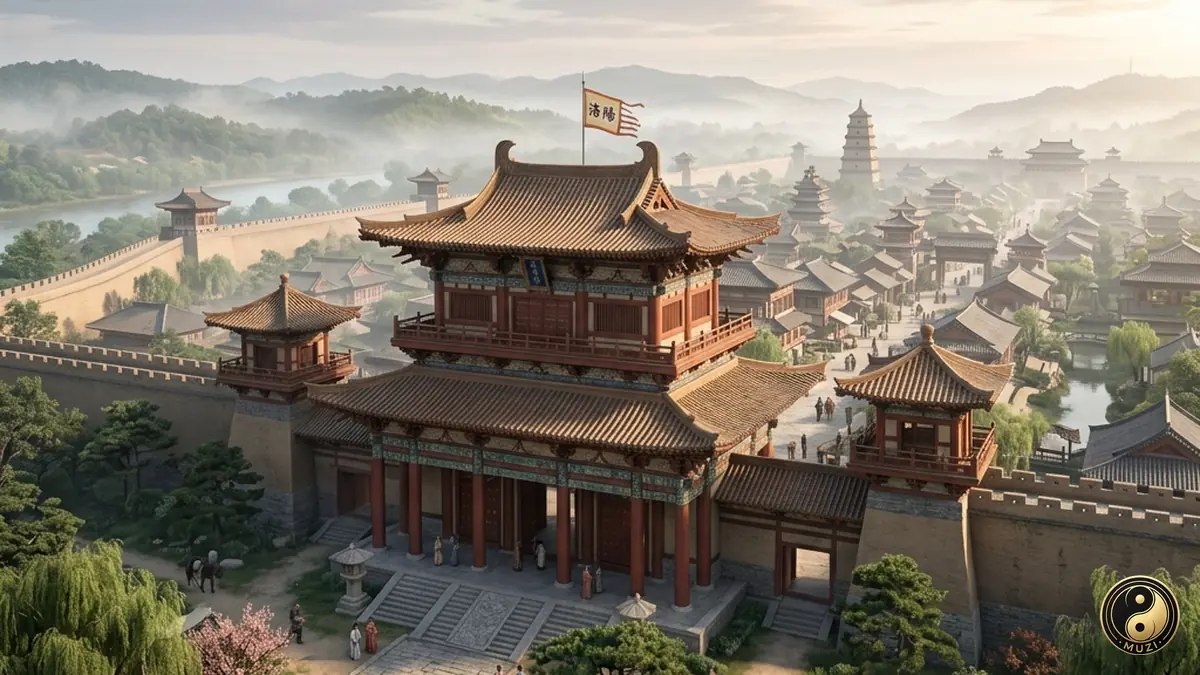 Historic Site
Luoyang, Center of All Under Heaven — the survey benchmark established at the Gaocheng Observatory, capital of thirteen dynasties, the orthodox capital coordinate every emperor dreamed of anchoring legitimacy to.
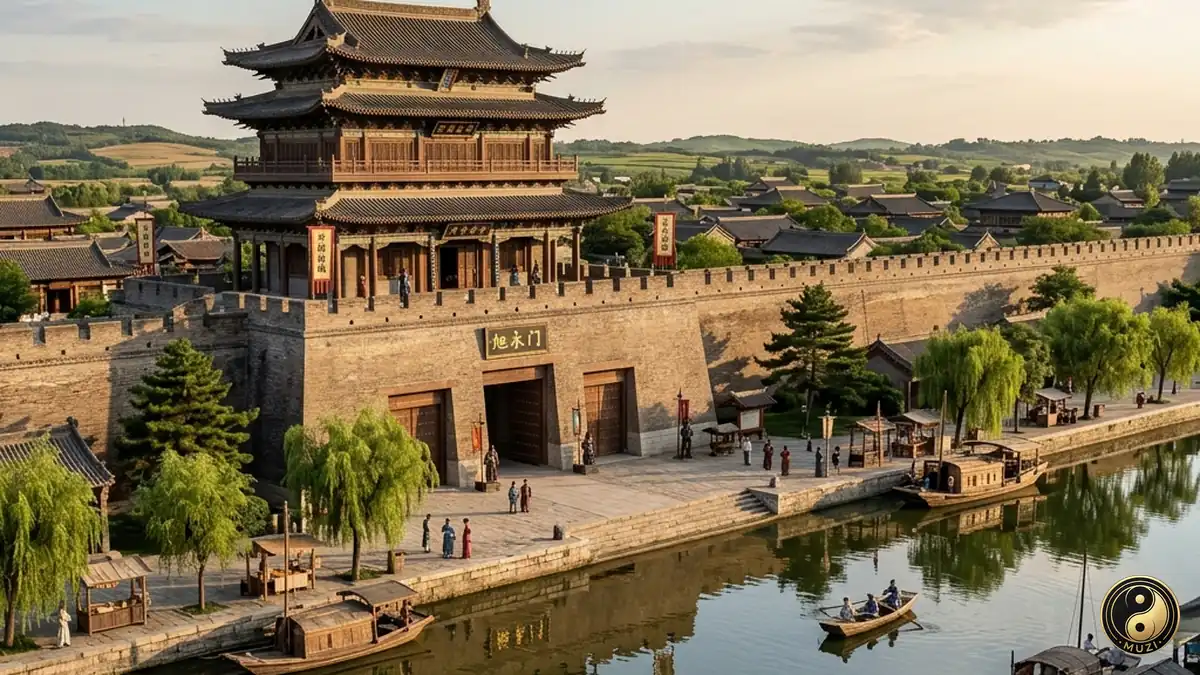 Historic Site
Northern Song Kaifeng's waterways opened space for night markets and urban life beyond the ward walls.
 Historic Site
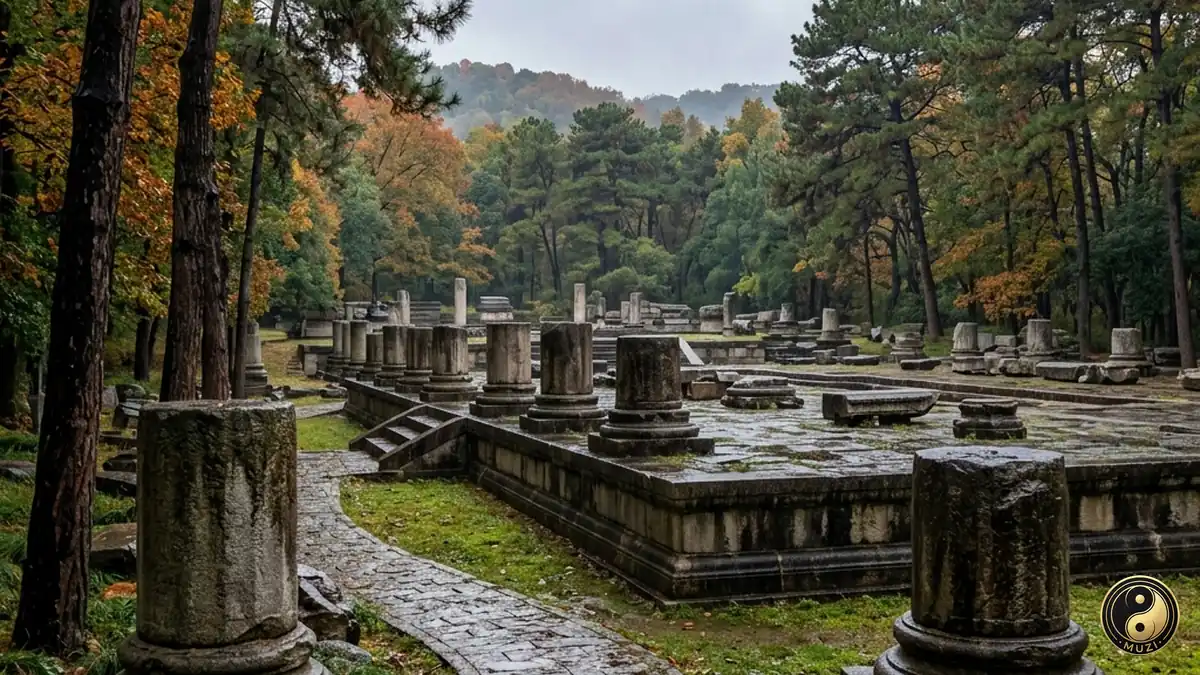
The Ming Palace ruins of Nanjing — capital of six dynasties and ten kingdoms, where every time the north fell, Han regimes retreated here to continue the mantle of Chinese civilization.
 Historic Site
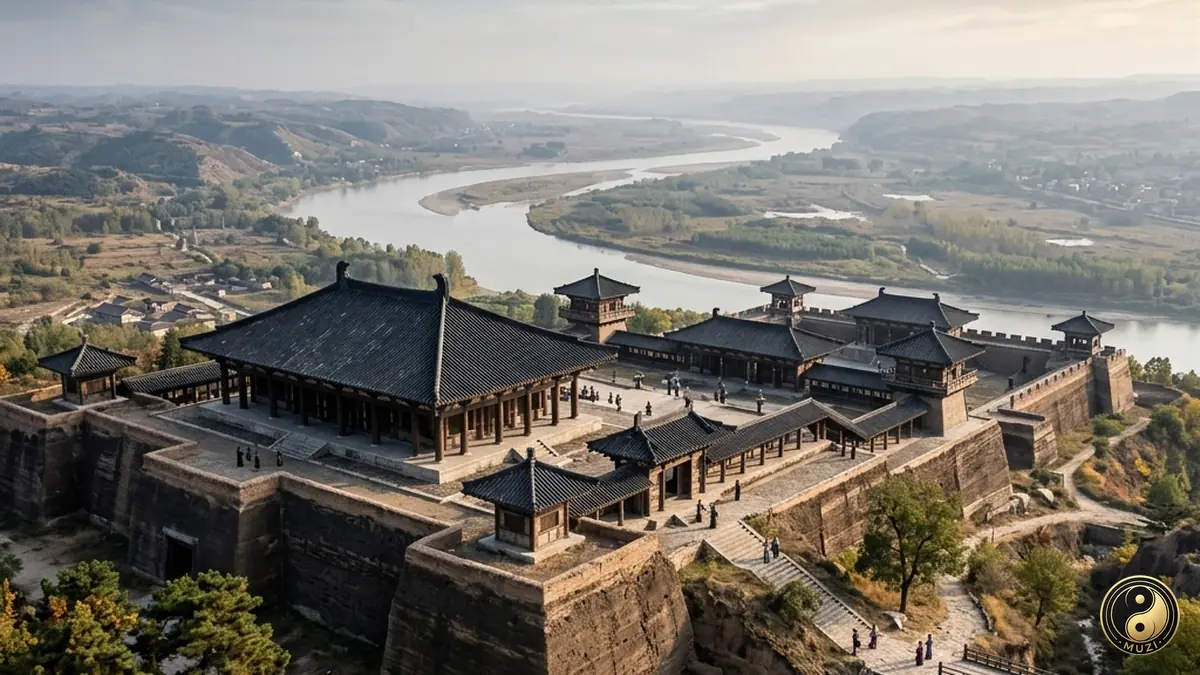
The Qin Xianyang Palace ruins — spanning the Wei River, mapping its separate halls onto the constellations, humanity's earliest super-stage for performing sovereignty through landscape geometry.
 Historic Site
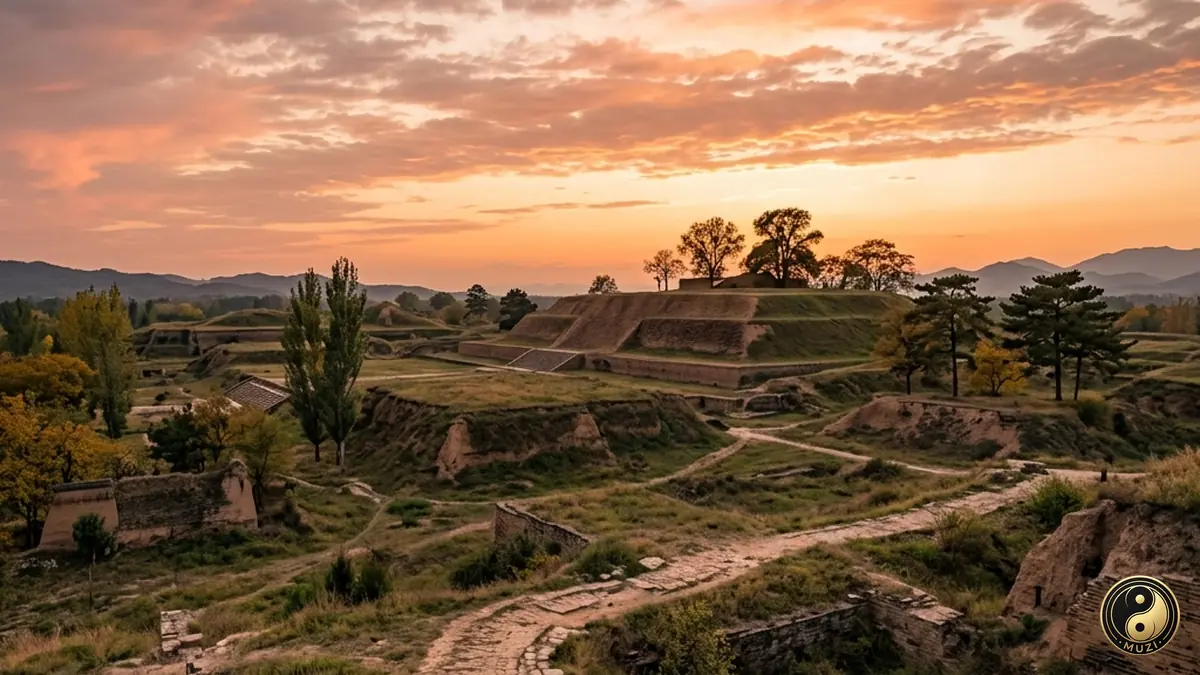
The Han Weiyang Palace ruins — a monumental palace built atop a colossal rammed-earth platform, using extreme vertical perspective to manufacture suffocating awe before imperial authority.
 Historic Site
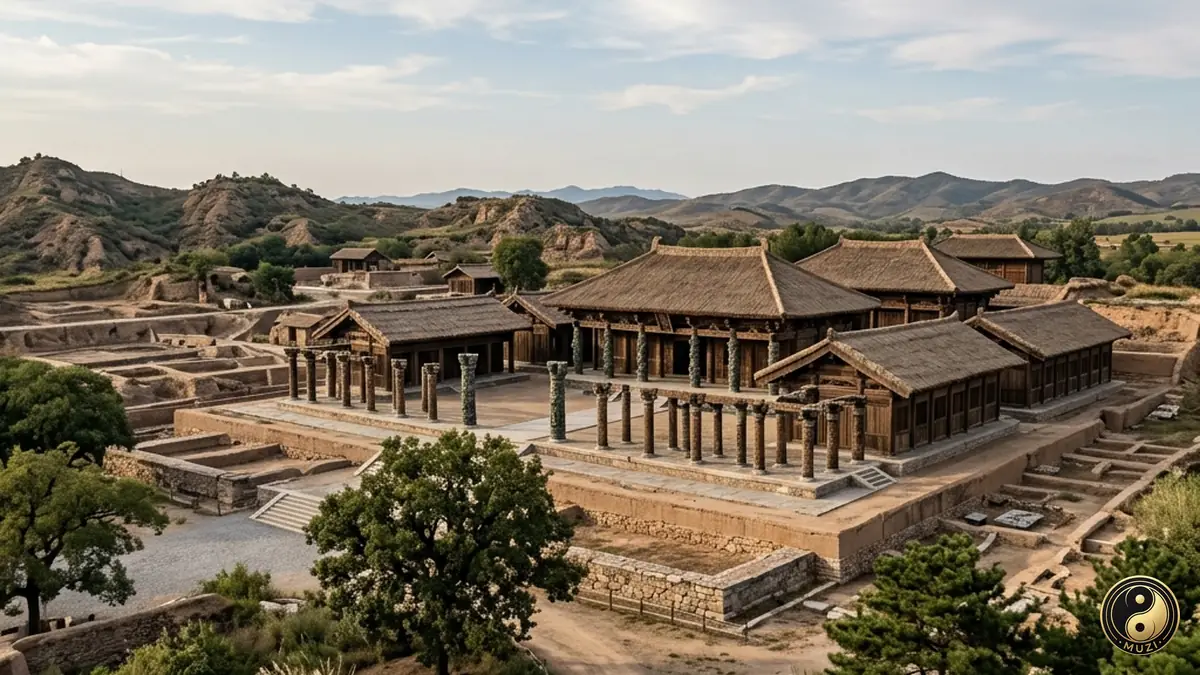
The ruins of Yin at Anyang — where oracle bones were unearthed, the Shang ancestral temples and bronze foundries, the dawn of Chinese written history and the pinnacle of the Bronze Age.
 Historic Site
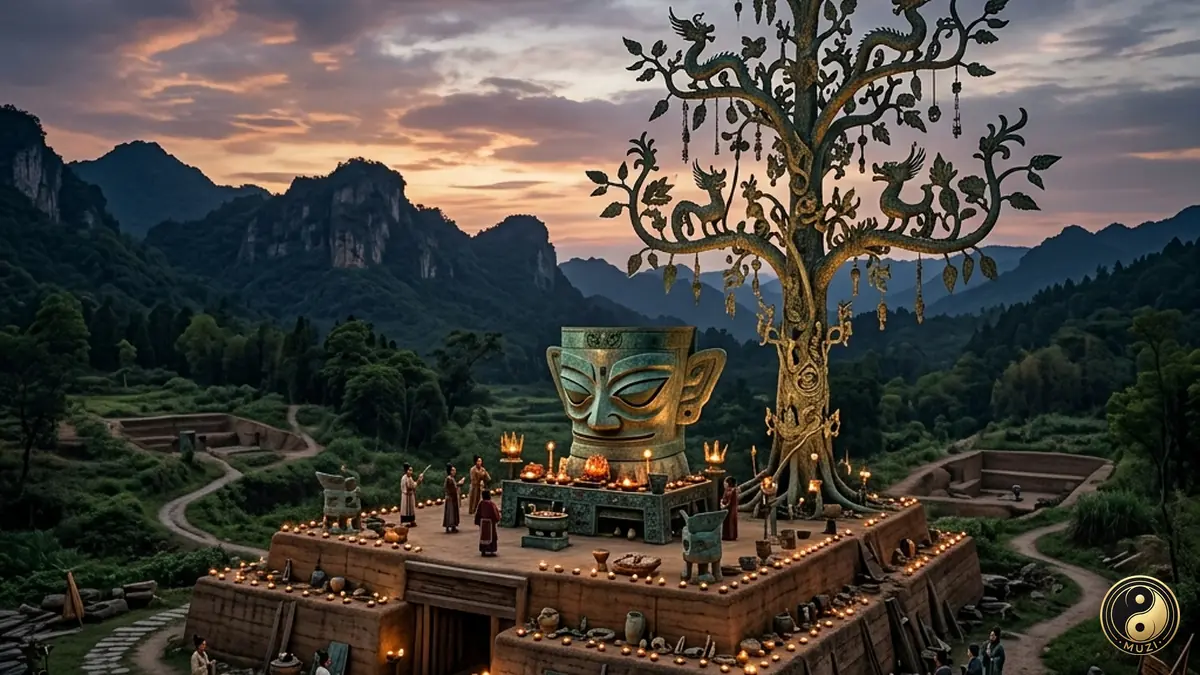
The Sanxingdui ruins — a bronze sacred tree and golden masks that stunned the world, a mysterious ancient Shu civilization center operating on a completely different ritual logic from the Yellow River basin.
 Imperial Tombs
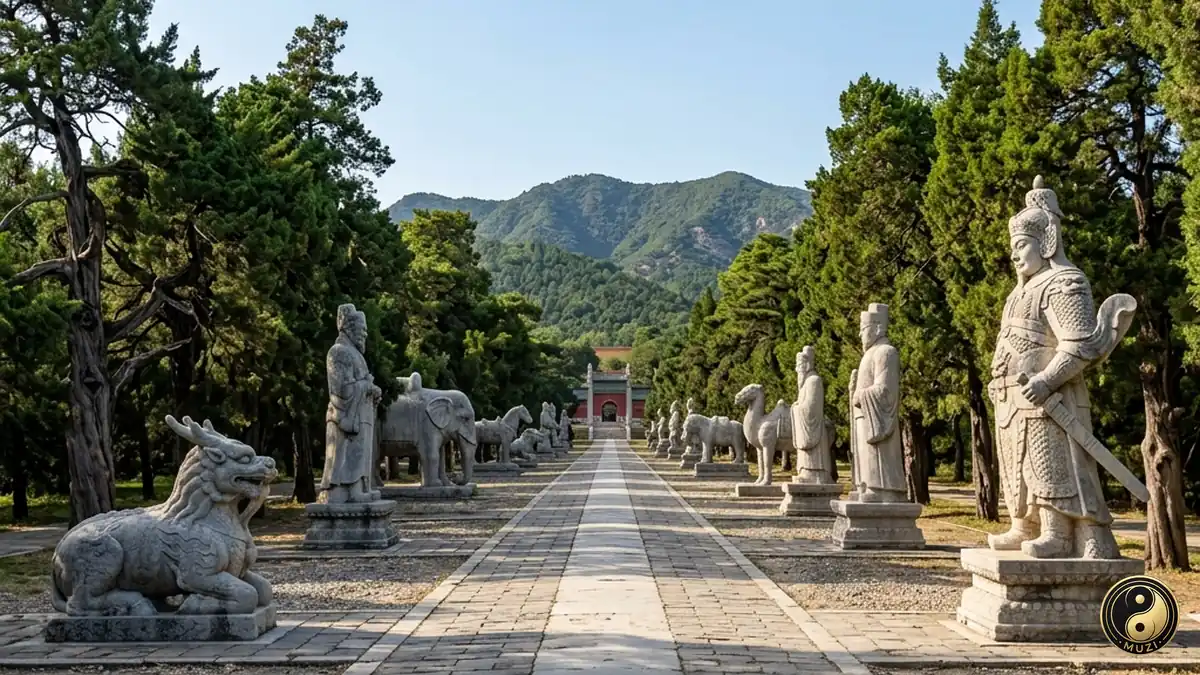
The thirteen Ming imperial tombs — perfectly following the arc of the Tianshou Mountains, a grand mausoleum matrix using the natural peaks as cemetery walls, the ultimate underground political landscape.
 Imperial Tombs
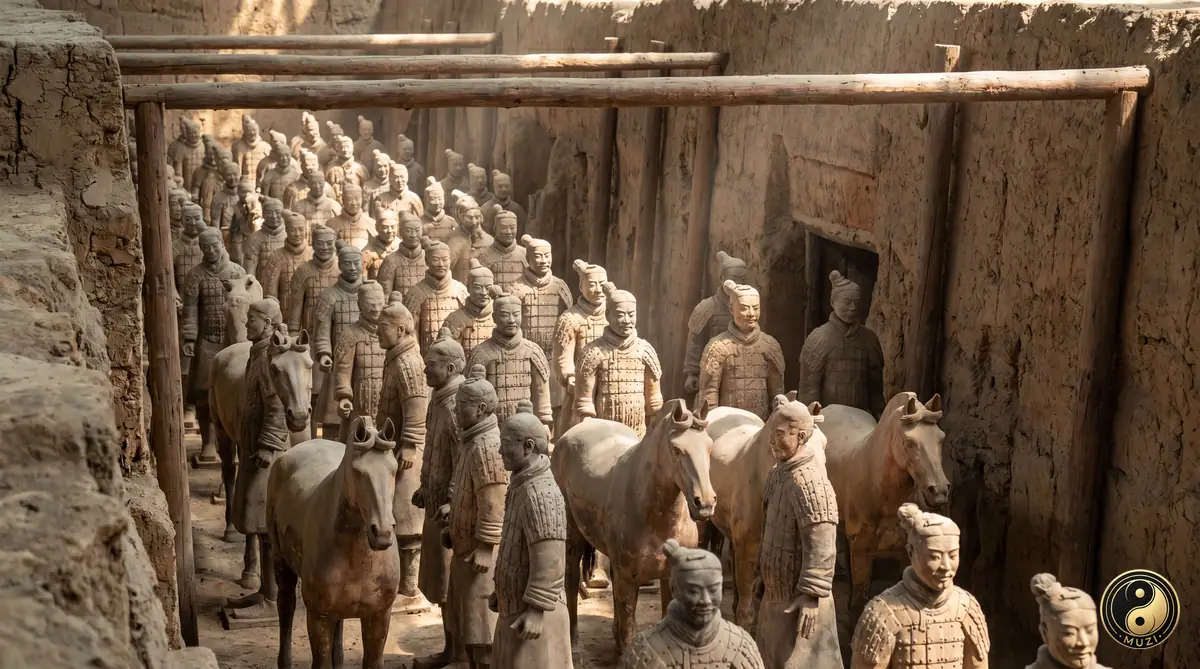
The Qin Shihuang Mausoleum — eight thousand terracotta warriors arrayed underground in full battle formation, the ultimate subterranean palace seeking to replicate supreme earthly sovereignty in the underworld.
 Imperial Tombs
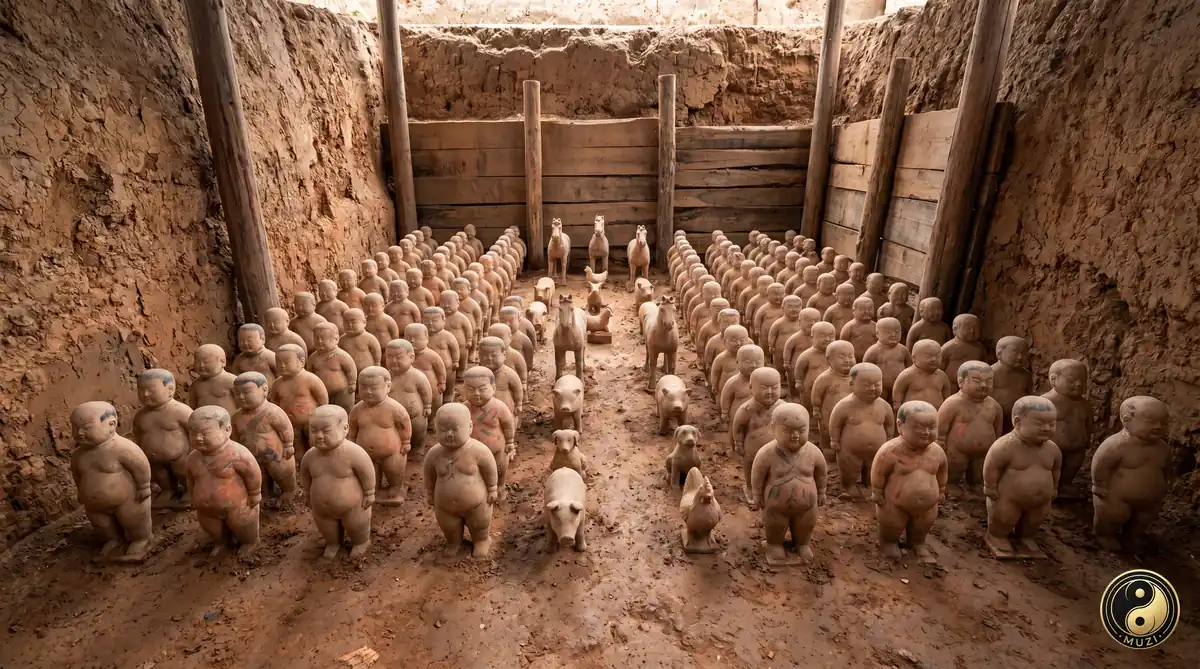
The Han Yangling Mausoleum — a vast collection of miniature pottery figurines and granary models entombed, locking state assets into an underground model, the foundational work of the Chinese imperial tomb system.
 Imperial Tombs
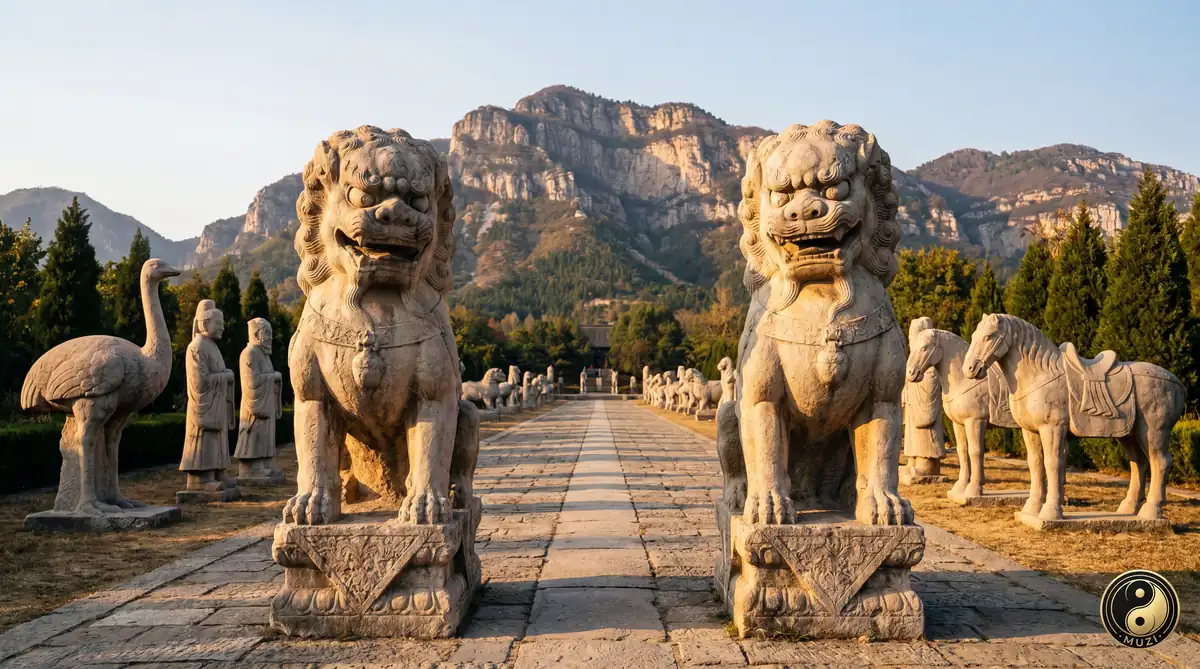
The Tang Qianling Mausoleum — using a natural double-peaked karst mountain as the tumulus, Wu Zetian's blank stele standing on the spirit way, a timeless masterpiece that lets posterity judge her merits and faults.
 Imperial Tombs
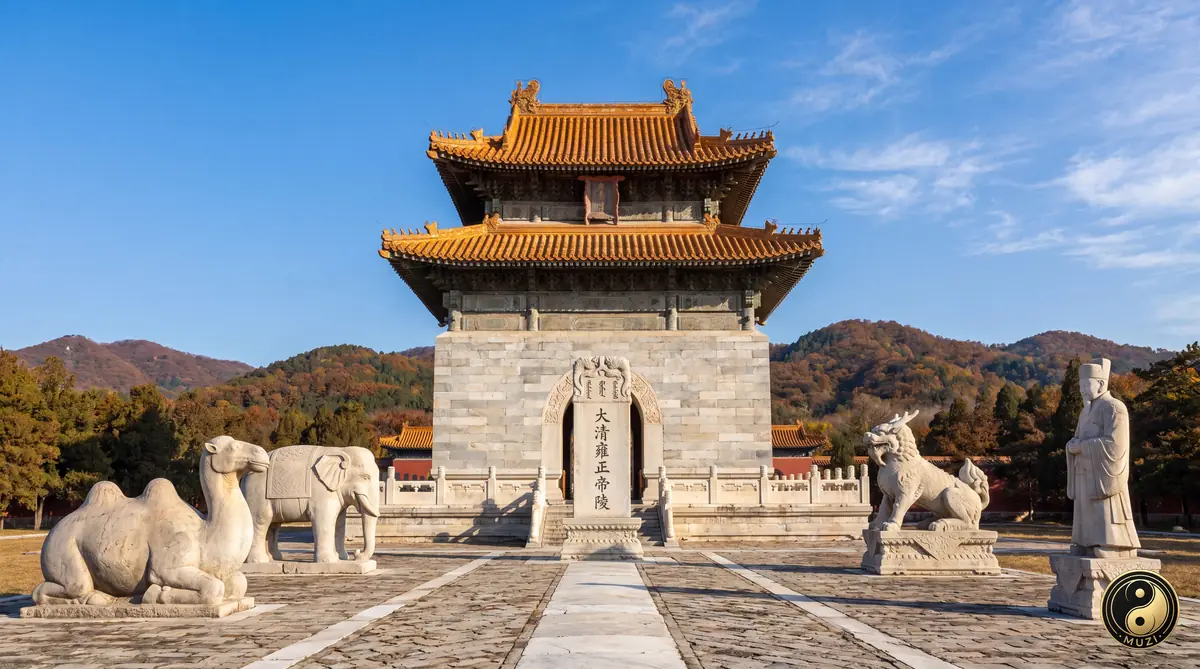
The largest imperial tomb complex inside the Great Wall — a Manchu-Han synthesis wrapping shamanic northern wildness and Confucian ritual order into the dynasty's underground ledger.
 Historic Site
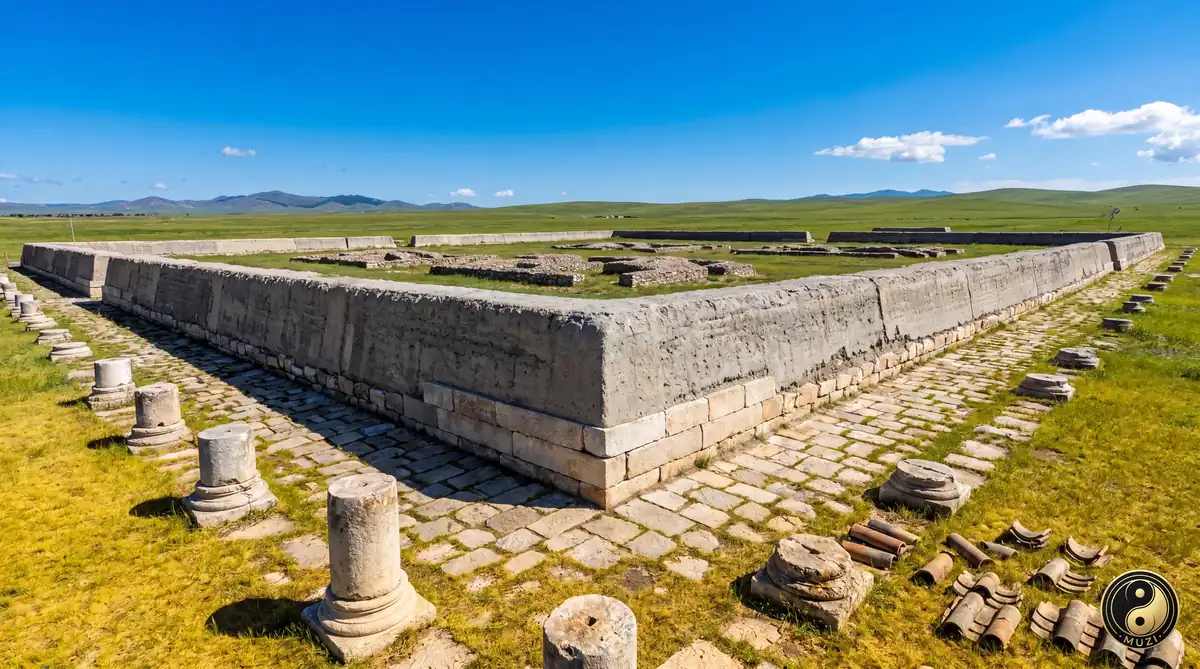
The Yuan Upper Capital ruins — a surreal dual capital nesting the rectangular Han axial grid within the circular nomadic tent ethic on the vast grassland, the northern power gateway of the Mongol empire.
 Historic Site
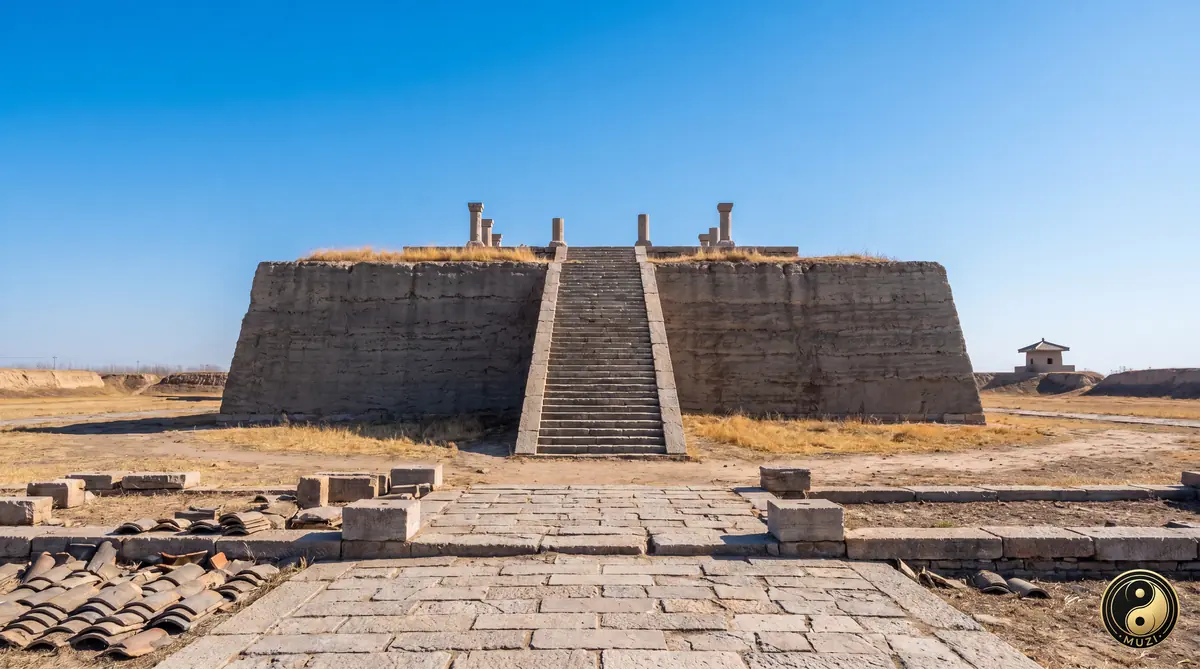
The Cao-Wei Ye City ruins — the first capital to isolate the ruler's core citadel outside the grid of wards, shattering the Han chaos of mixed officials and commoners, the ancestral template for a thousand years of rigidly compartmentalized imperial city planning.
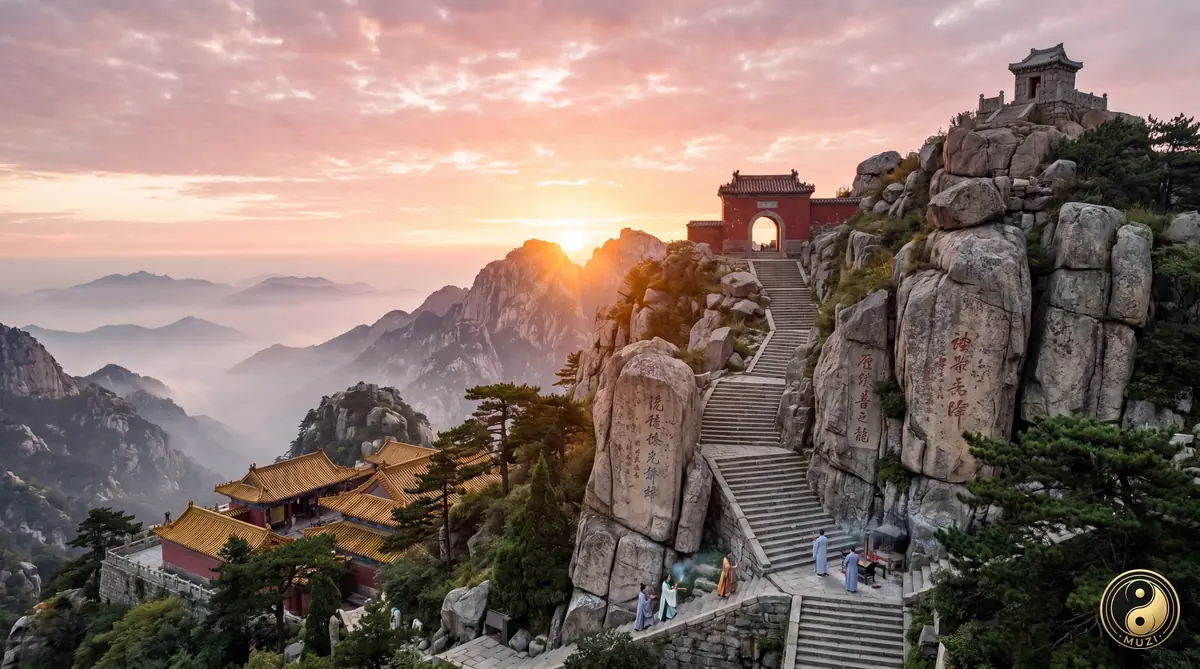 Ceremonial Sites
The Fengshan altar at the summit of Mount Tai — where every dynastic emperor must ascend in the flesh to sacrifice to Heaven and Earth, broadcasting to the cosmos the mandate of legitimate rule.
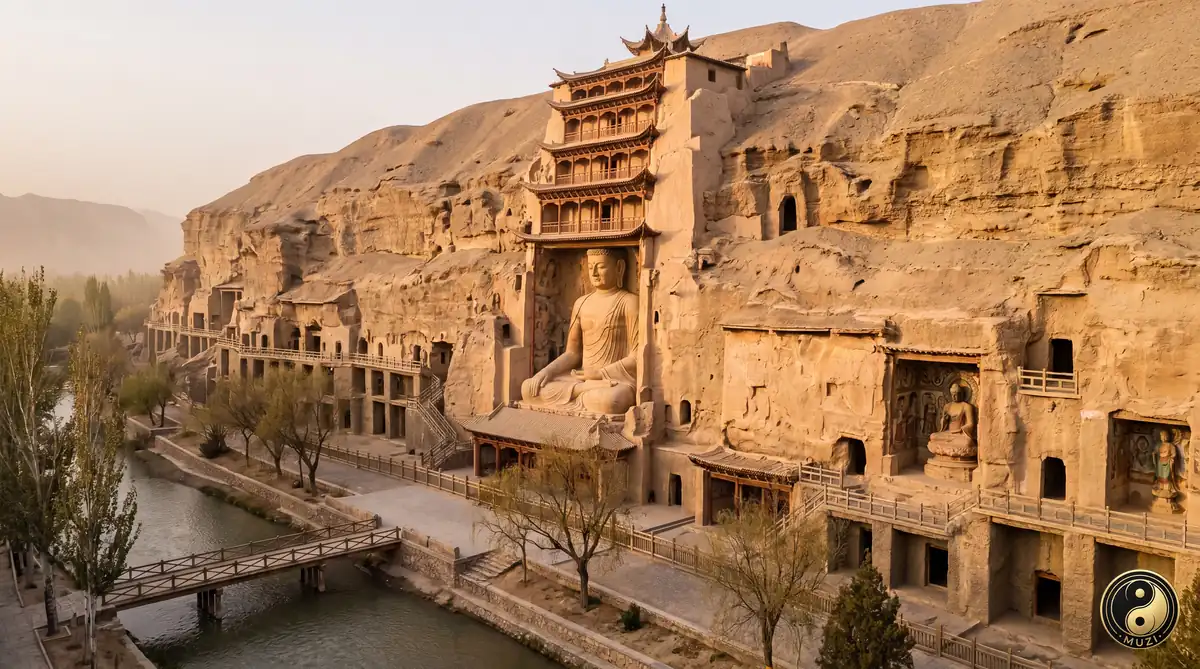 Grottoes
The Dunhuang Mogao Caves — a treasure-house of Buddhist art on the Silk Road, over seven hundred grottoes preserving forty-five thousand square meters of murals, a thousand-year three-dimensional art history.
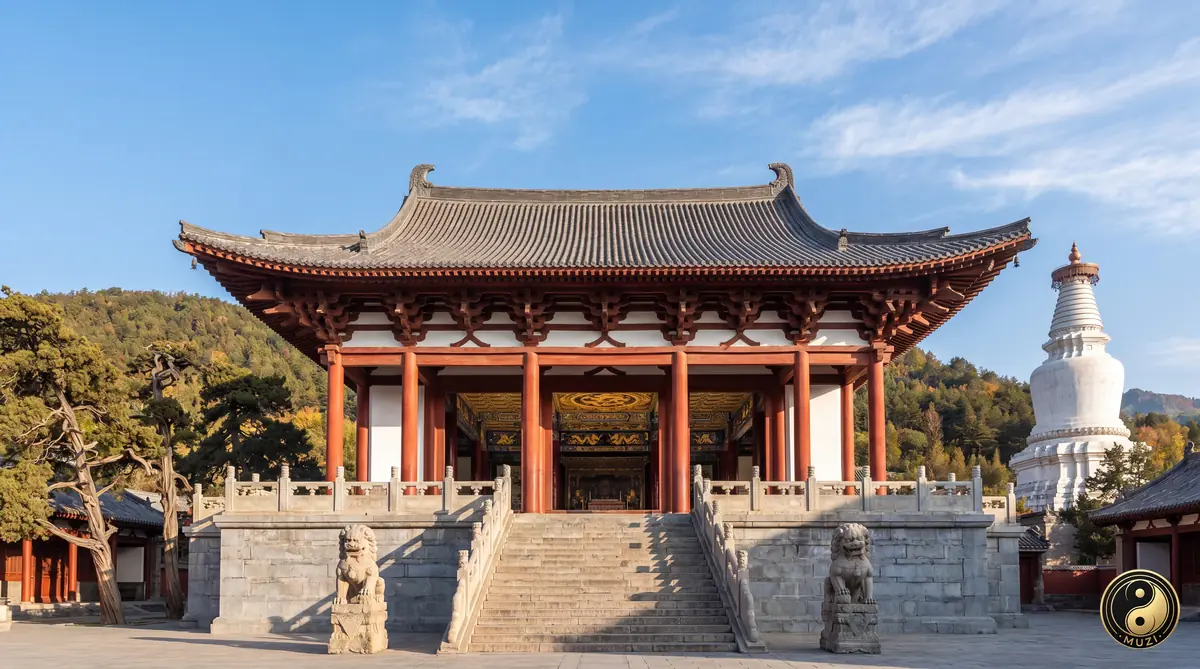 Mountains
Mount Wutai, the bodhimanda of Manjusri — where Han, Tibetan, and Mongolian Buddhism converge, a vast ancient architectural complex built by successive dynasties through imperial patronage.
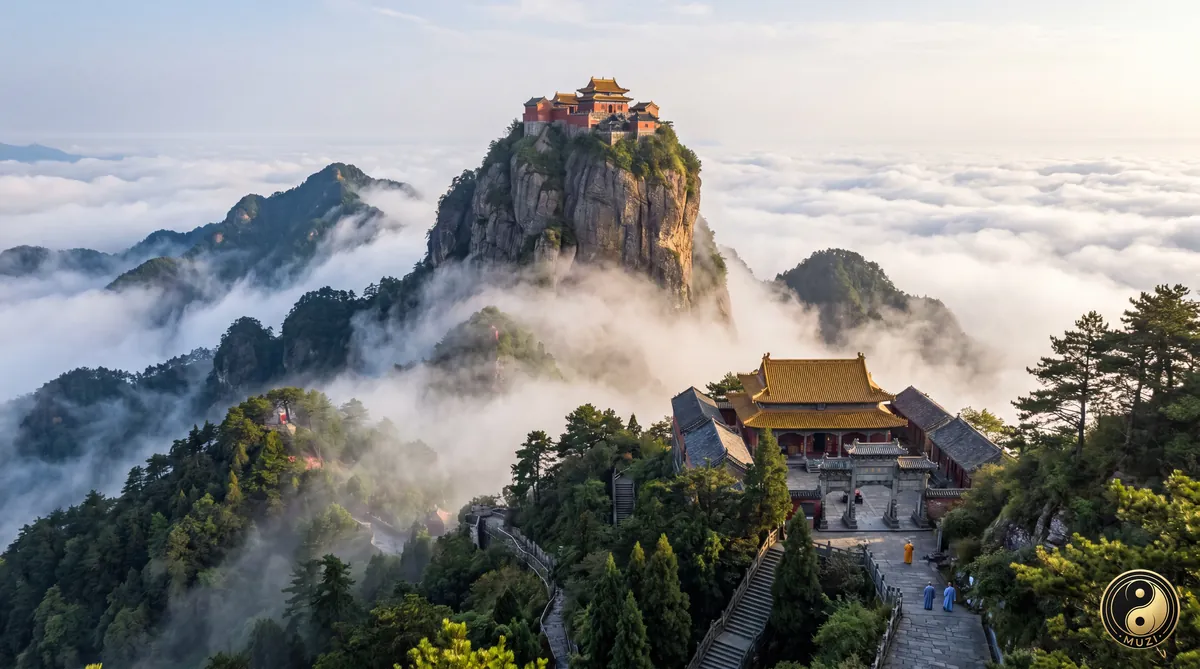 Mountains
Mount Wudang, foremost of Daoist mountains — the Yongle Emperor dispatched hundreds of thousands to carve this proclamation of imperial legitimacy into heaven-defying cliffs, a royal faith spectacle.
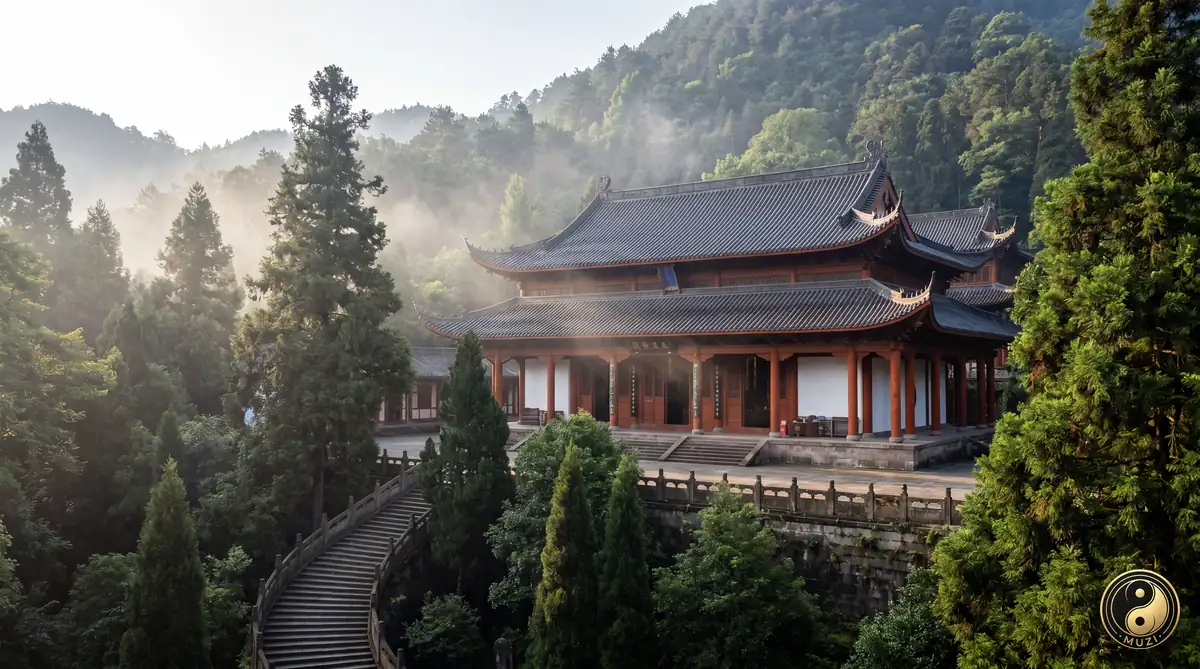 Mountains
Qingcheng, the most tranquil place under heaven — one of Daoism's birthplaces, where temples dissolve seamlessly into primeval forest, pursuing zero-impedance harmony with the natural world.
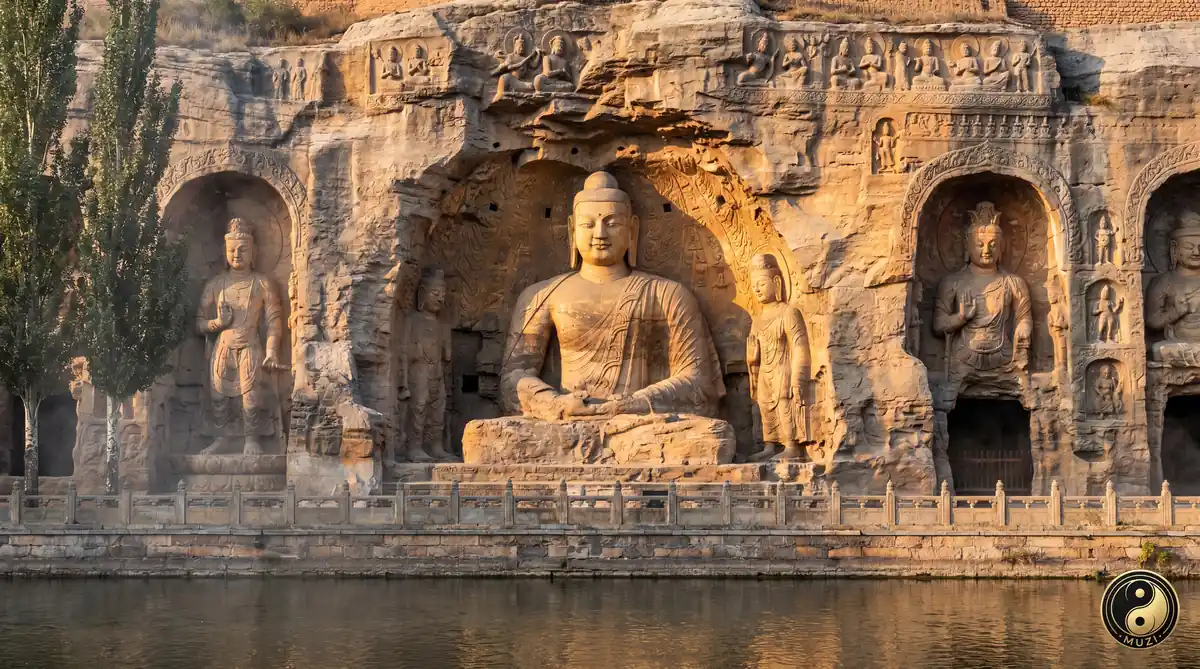 Grottoes
The Yungang Grottoes — colossal Buddha statues carved in stone by the Northern Wei Xianbei, a grand fusion of Indian, Persian, and Chinese artistry, a stone monument legitimizing nomadic rule through Buddhist authority.
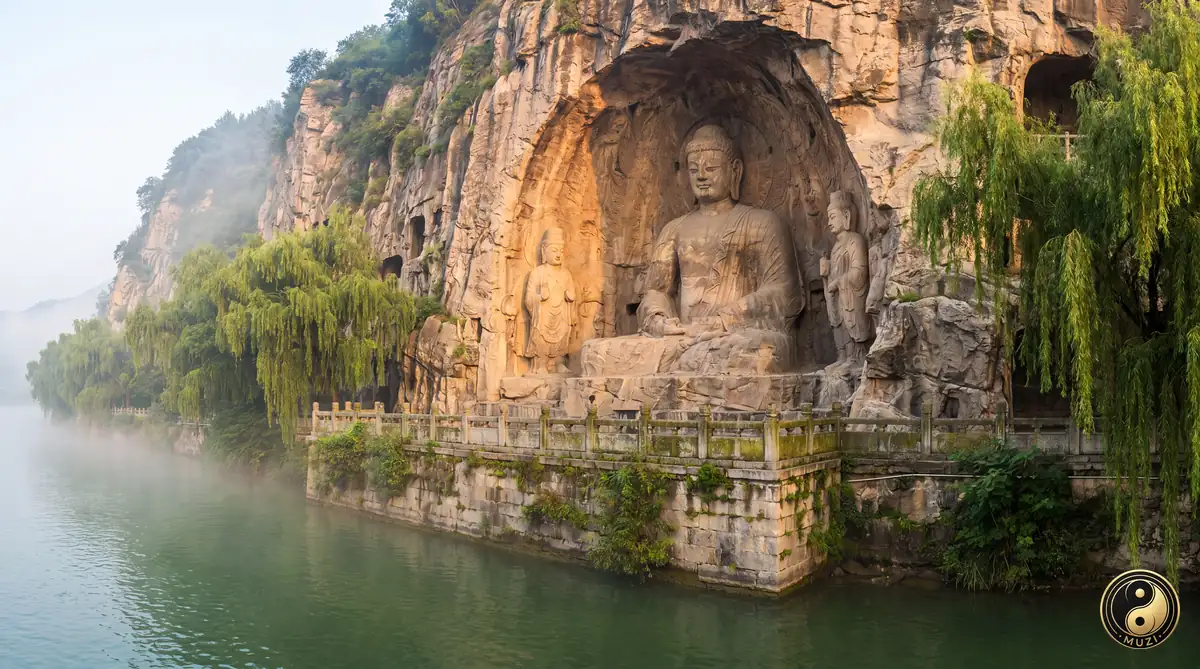 Grottoes
Longmen's Fengxian Temple — the Vairocana Buddha seated serenely above the Yi River, the eternal solidification of Wu Zetian's countenance and the supreme confidence of the High Tang.
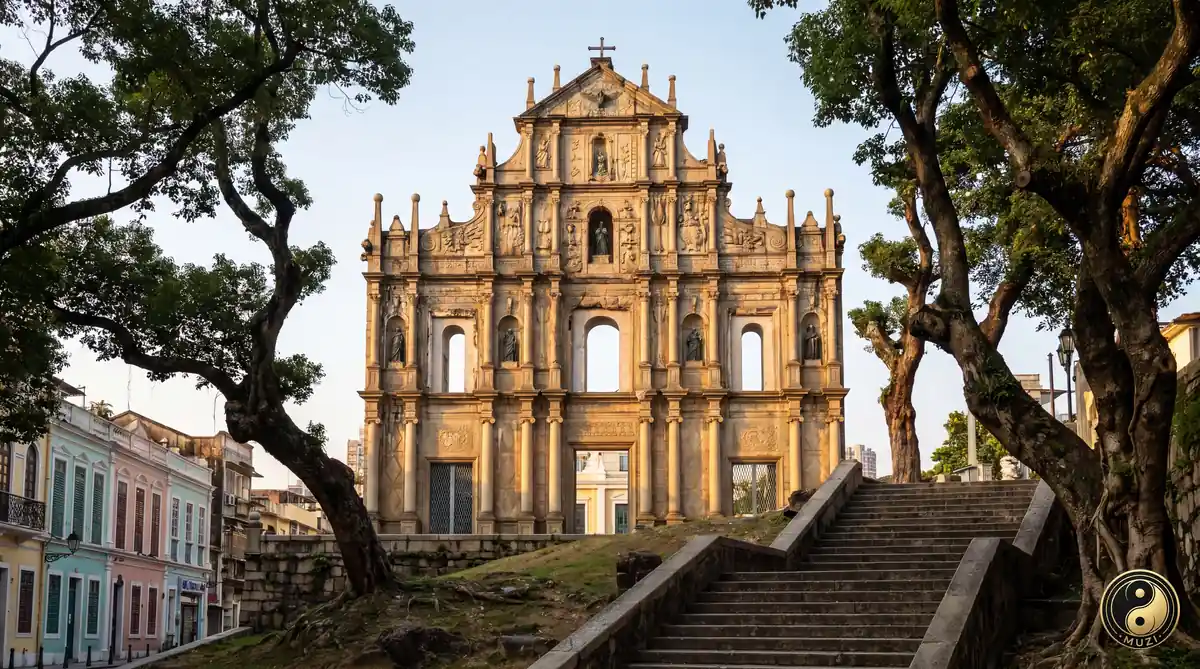 Churches
The facade of St. Paul's in Macau — begun by the Jesuits in 1602, the largest Catholic church in the Far East blending Baroque and Eastern motifs, a UNESCO World Heritage landmark and the eternal witness of East-West civilizational dialogue.
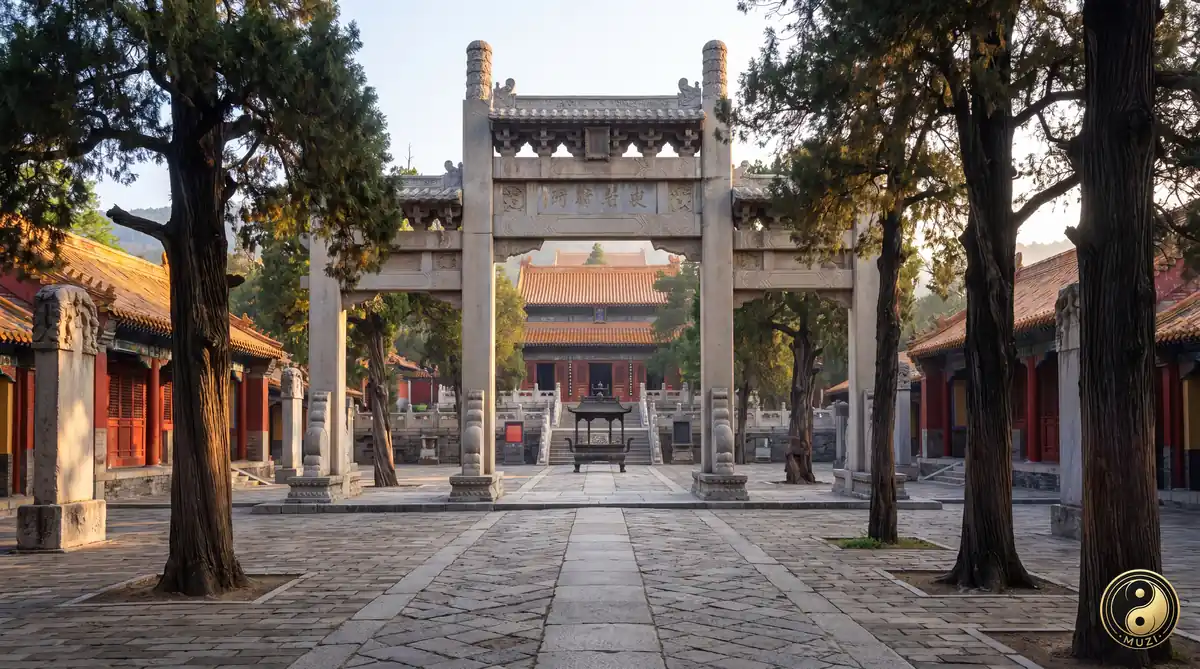 Temples
The Zhongyue Temple on Mount Song — situated at the very survey benchmark of the Center of Heaven and Earth, an ancient Daoist complex that formatted raw mountain worship into a state-sanctioned orthodox ritual order.
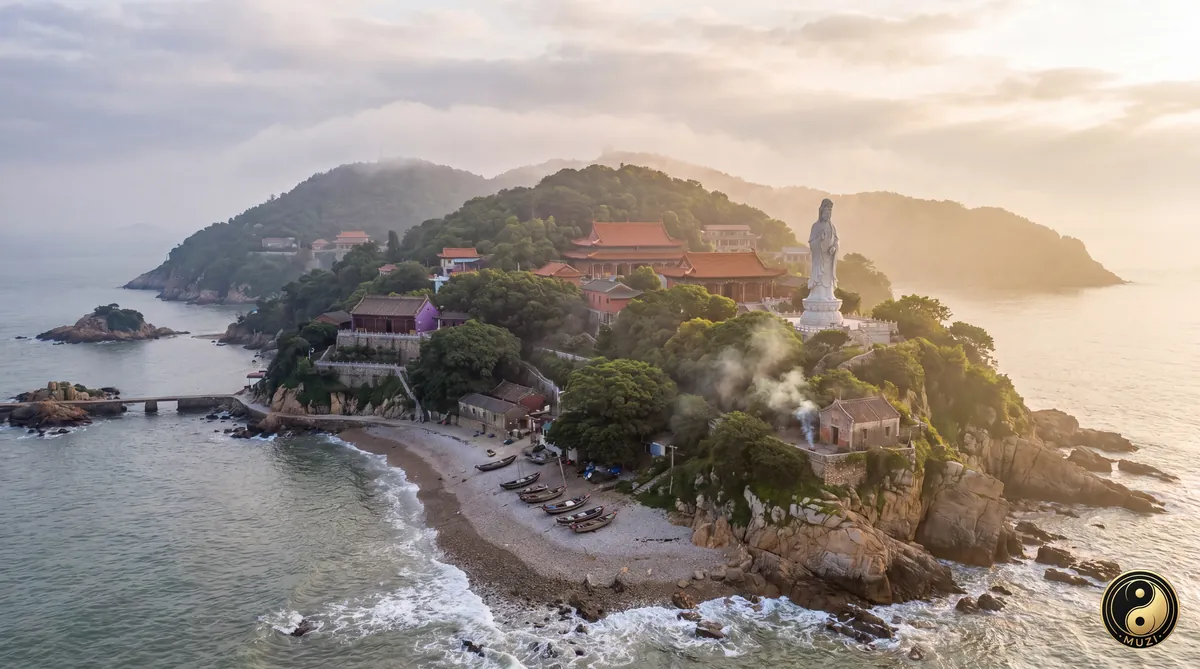 Islands
Mount Putuo, the bodhimanda of Guanyin — a sacred island Buddhist realm suspended alone in the East China Sea's waves, a spiritual lighthouse whose thousand-year Sanskrit chanting and tidal rhythm illuminate the return path for seafarers.
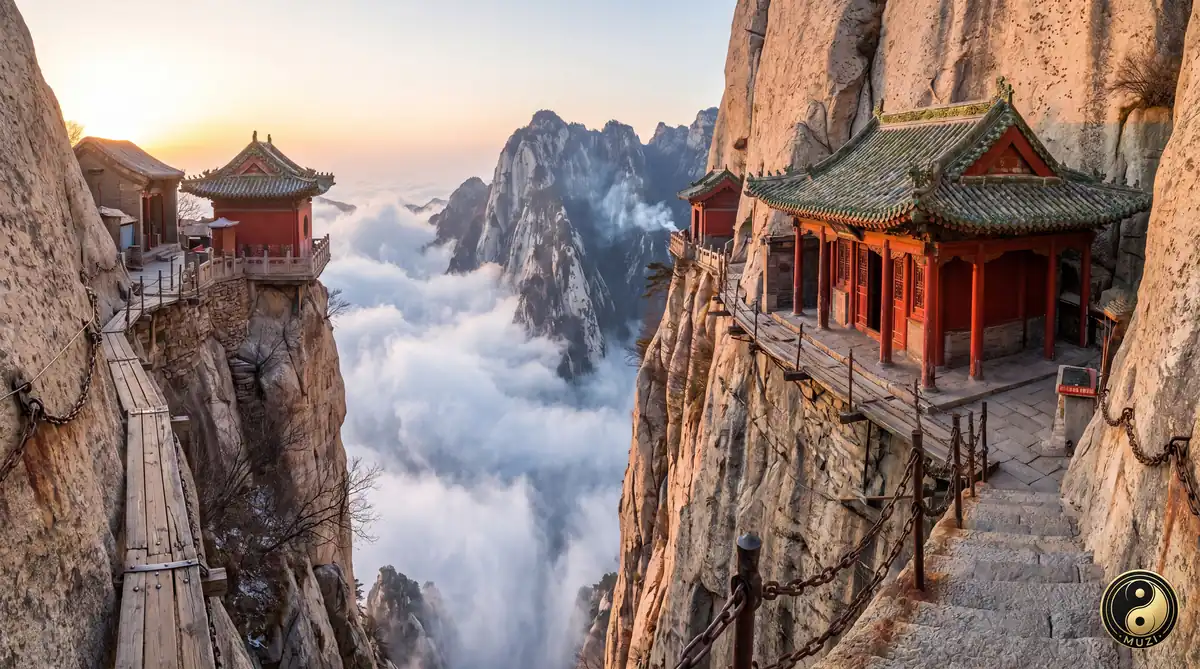 Temples
The Daoist hermitage chain clinging to Mount Hua's near-vertical cliffs — recluses compressing the bandwidth of life to its limit, a network of extreme spiritual practice pursuing absolute soul sovereignty against the most hostile gravity on Earth.
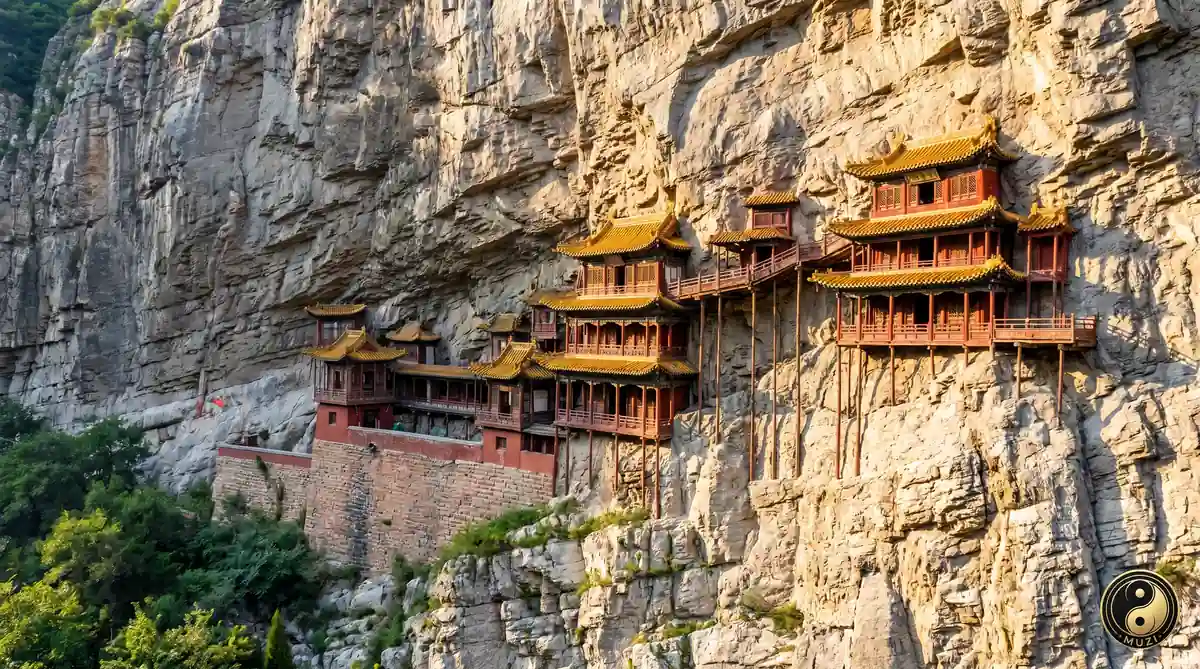 Temples
The Hanging Temple on Mount Heng — a three-teachings-in-one pavilion suspended on a vertical cliff by slender wooden pillars, a structural-mechanics miracle that has hung in midair for over a thousand years without falling.
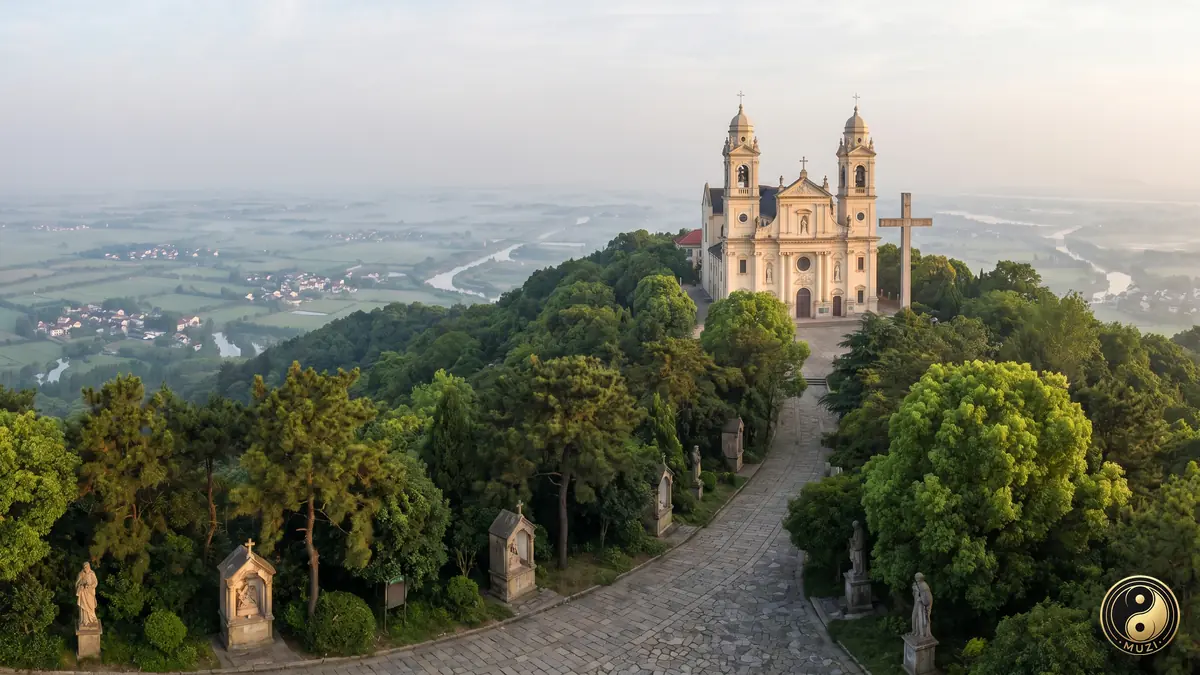 Churches
Sheshan Basilica, begun by Jesuits in 1871, remains a major Catholic pilgrimage site overlooking Shanghai.
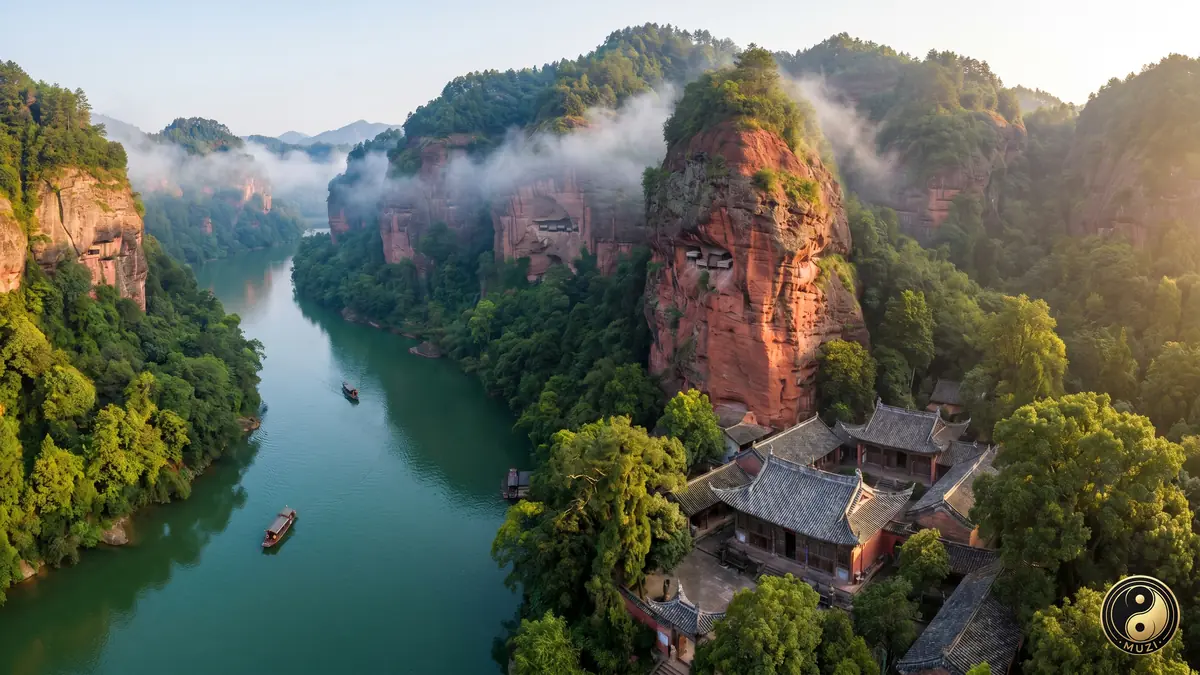 Mountains
Mount Longhu, the ancestral seat of Zhengyi Daoism — Danxia pictographic peaks, thousand-year hanging coffins, and talismanic ritual codes converge in the South's esoteric faith center.
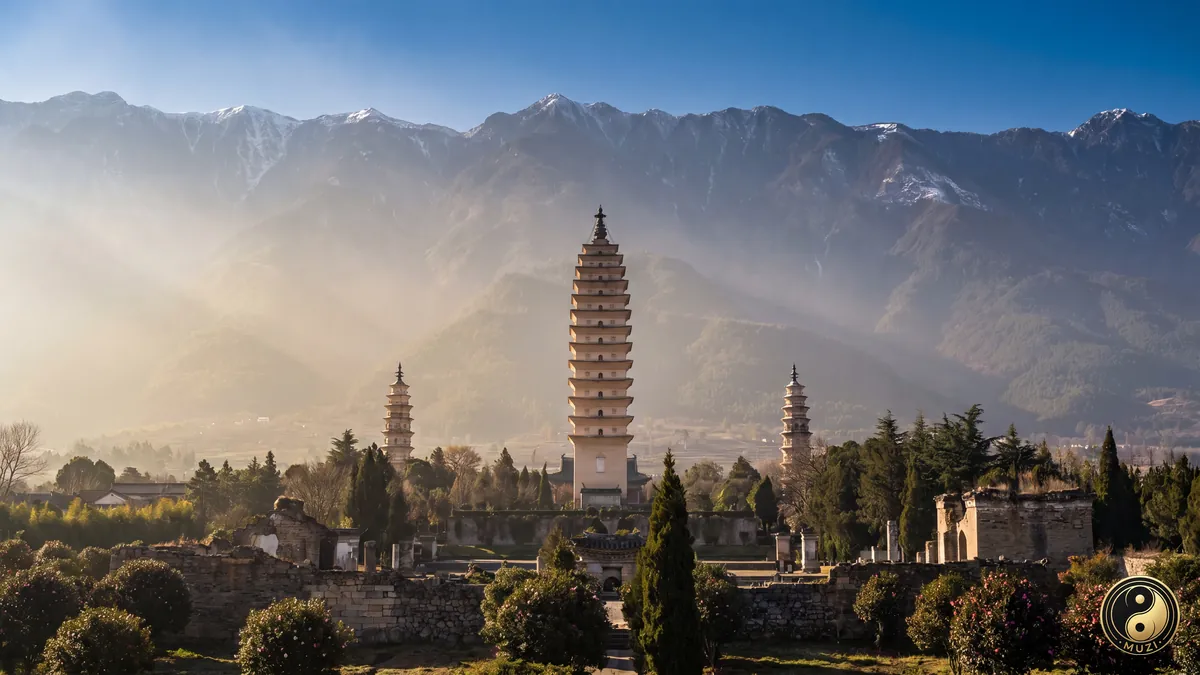 Temples
The Three Pagodas of Chongsheng Temple in Dali — standing tall through dozens of violent earthquakes over a millennium, the spiritual landmark by which the Nanzhao and Dali kingdoms formatted the wild southwest frontier with grand brick geometry.
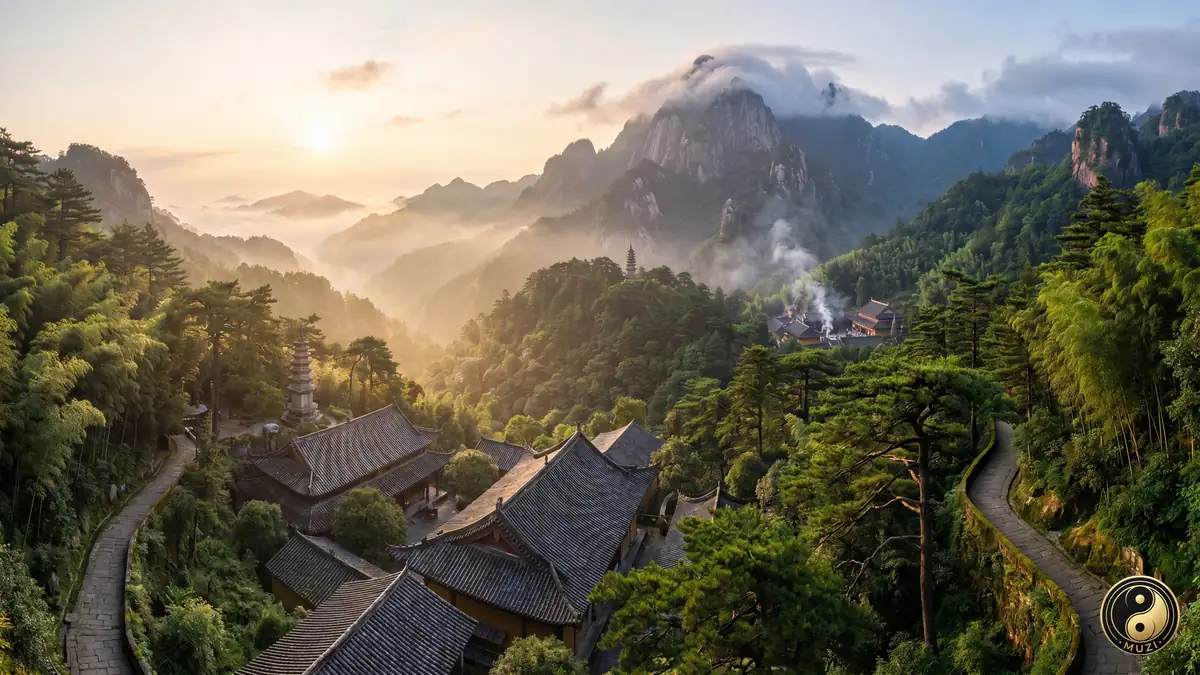 Mountains
Mount Jiuhua, the bodhimanda of Kshitigarbha, is known for its temples and traditions of preserving monks' bodily relics.
No Matrix entries match this region.