
In snowy mountains, costumed actors perform on a large stage hung with painted backdrops while a crowd fills the square to watch, stalls around the edges and plum blossom just opening.


 National Opera
 Kunqu Opera
 Peking Opera
 Cantonese Opera
 Yue Opera (Shaoxing Opera)
 Huangmei Opera
 Yu Opera (Henan Opera)
 Ping Opera (Pingju)
 Qinqiang Opera
 Sichuan Opera
 Han Opera
 Xiang Opera
 Liyuan Opera
 Puxian Opera
 Tibetan Opera
 Gan Opera
 Teochew Opera (Chaozhou Opera)
 Jin Opera (Shanxi Opera)
 Gezai Opera (Taiwanese Opera)
 Shanghai Opera (Huju)
 Lü Opera (Lüju)
 Yuan Zaju
Liyuan Opera
Song-Yuan southern drama, still on stage
Introduction
Quanzhou's eight-century living fossil of southern drama
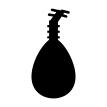
Liyuan opera arose in Quanzhou in the Song and Yuan periods and is sung in the Quanzhou dialect; it is often called a living fossil of ancient nanxi southern drama. Its three schools, Xiao Liyuan (the seven-role troupe) and the Shanglu and Xianan branches of Da Liyuan, preserve nanxi plays such as Zhu Wen, Liu Wenlong, Cai Bojie and Wang Kui, and a movement system built on eighteen basic steps. Its qupai-based music is accompanied by the horizontally held nanpa pipa, dongxiao flute, erxian fiddle and nangu drum. It is performed in Quanzhou, Zhangzhou, Xiamen, the Chaoshan area, Taiwan, Hong Kong, Macao and Minnan-speaking communities in Southeast Asia.
Representative works


Timeline
- 1200OriginIn the Song-Yuan period Quanzhou troupes staged Southern Song plays and Liyuan opera took shape; with Zhejiang nanxi it was called the sound of Min and Zhe.
- 1566EvolutionIn 1566 the Tale of the Lychee Mirror was printed in mixed Quanzhou and Chaozhou dialect; its story of Chen San and Wuniang remains a core Liyuan opera play.
 Literature › The Lychee and the Mirror
Heritage Listings
- 2006National List of Representative Items of Intangible Cultural Heritage1st batch · IV-2 · nominated by Quanzhou · Fujian