
Beneath a snow-laden pine, a white-bearded elder sits as companions play zither, flute and pipa together; red plum dots the snow, and in the distance a man leads an ox cart.


Qu
Sanqu songs and zaju scripts joined, moving past refined poetic diction to set everyday urban speech to music and bring stage storytelling to maturity.
 Yuan Zaju
Yuan qu includes the sanqu (independent songs) and the zaju (plays); its lyrics follow named tunes, the qupai, linked into sets to be sung. In his History of Song and Yuan Drama, Wang Guowei writes: “In Yuan plays one set of tunes in one mode makes one act. An ordinary zaju generally has four acts, sometimes with a wedge,” and adds: “in each act only one person sings, either the male lead or the female lead.” Plain speech set to music lets the scene be laid out in bare nouns, as in Ma Zhiyuan's Tianjingsha: Autumn Thoughts: “Withered vines, old trees, crows at dusk. A small bridge, flowing water, a house,” and only the last line lands on “the sun sinking in the west, and a heartbroken traveller at the world's edge.”
The zaju had a lineage. In the postscript to the Qinglou ji (Record of the Green Bowers), written in the jiwei year of the Zhizheng reign, that is 1359, Xia Tingzhi sorts it out: “Under the Jin, 'yuanben' and 'zaju' were joined as one; under our dynasty they were divided into two”; he holds that the zaju, which deals with ruler and minister, mother and son, husband and wife, brothers and friends, is “not to be spoken of in the same breath as the 'chuanqi' of Tang, the 'xiwen' of Song, or the 'yuanben' of Jin.” Zhou Deqing's Zhongyuan yinyun (Rhymes of the Central Plain) was completed in the jiazi year of the Taiding reign (1324), and its preface says: “as for its flourishing, those who sing it run from the gentry to the commoners; as for its completeness, it stems from the new works of Guan, Zheng, Bai and Ma”; the preface by Luo Zongxin says: “the world calls the Tang shi, the Song ci, and the great Yuan yuefu.” In 1330 Zhong Sicheng wrote the preface to the Lu guibu (Register of Ghosts) and said that the book was meant “to make the dead and the not-yet-dead into ghosts who do not die, so that they are handed far down.”
The surviving plays were preserved by Ming editors. According to the Asia Society website's note on the rare book, Zang Maoxun's Selection of Yuan Plays (Yuanqu xuan) contains one hundred zaju, ninety-four from the Yuan and six from the early Ming; the first batch of fifty volumes was issued in 1615 and the second in 1616, and the page says that it records two-thirds of the dramatic works of the period that survive. Among the Yuan plays Wang Guowei lists are Guan Hanqing's The Injustice to Dou E (full title: The Injustice to Dou E That Moved Heaven and Earth), Bai Pu's Rain on the Paulownia Tree (full title: Emperor Ming of Tang and the Autumn Night Rain on the Paulownia Tree), Ma Zhiyuan's Autumn in the Han Palace (full title: Autumn in the Han Palace, a Lone Goose That Broke the Dream) and Wang Shifu's Romance of the Western Chamber (full title: Cui Yingying Awaits the Moon in the Western Chamber; Wang Guowei also says its fifth play was written by Guan Hanqing, so its authorship is not settled on one name). Zang Maoxun had said that the spoken parts were made up by the actors on stage; Wang Guowei argues against him, on the ground that the plays Prince Zhou Xian printed himself have both song and speech, and says: “from this we know all the more that Zang's claim cannot be trusted.”
The effect of Yuan qu on history and culture lies first in language. Wang Guowei says that the strength of Yuan qu is that it “writes feeling so that it enters the heart, writes scenery so that it is before the eyes, and tells events as if from the speaker's own mouth”; Zhou Deqing says that the new works of Guan, Zheng, Bai and Ma (usually read as Guan Hanqing, Zheng Guangzu, Bai Pu and Ma Zhiyuan) achieved “words that can pass through the whole land, with graceful words and lively speech.” In The Injustice to Dou E, Dou E sings on the execution ground: “Earth, you do not tell good from bad, so what are you to be called earth? Heaven, you misjudge the wise and the foolish, so what are you to be called heaven?”, and then makes three vows: blood to fly onto the white silk, snow in the sixth month, and three years of drought in Chuzhou; the Romance of the Western Chamber ends with “May all the lovers in the world become husband and wife.” Wang Guowei judges: “the best of the Yuan plays lies not in their thought or structure but in their writing,” and also: “where does the excellence of Yuan qu lie? In one word: naturalness, nothing more.” At the same time he points out that the Yuan qu, “being close in time and humble in form, was never recorded in the histories of the two dynasties or in the four-part library catalogue.”
Another far-reaching matter was rhyme. Zhou Deqing “divided the level tone into yin and yang, collected the three tones with the same sound, and let the entering tone be assigned to the three tones,” “divided into nineteen, and named it the Zhongyuan yinyun”; the editors of the Complete Library of the Four Treasuries say that the book was “made wholly for northern qu” and that “those who write northern qu have followed it to this day.” Of how the northern qu met the southern drama, Xu Wei writes in Nanci xulu (written in the jiwei year of the Jiajing reign, that is 1559): “its songs were Song ci with rustic ballads added, and did not keep to the modes,” and also: “early in the Yuan, northern zaju flowed into the south and the whole country leaned toward it like grass in the wind; the Song ci then died out.”
With Song Lyric Rhythm: Luo Zongxin sets the Tang shi, the Song ci and the great Yuan yuefu side by side, Xu Wei records how the Song ci gave way to the northern qu, and Wang Guowei lists “the ci of the Song” and “the qu of the Yuan” together as the literature of an age. With Song and Yuan Zaju: Xia Tingzhi says that the Jin yuanben and zaju were one and only under the Yuan were divided into two; what Wang Guowei records is the form of the zaju after the division: four acts, a wedge, and one singer per act. With Theaters: the Qinglou ji records of Wei Daodao that she “danced the Zhegu in four pieces alone inside the goulan and dispersed the crowd, and since the early years of the dynasty none has equalled her,” which shows that the goulan was a place where music and dance were staged in the Yuan. With Vernacular Fiction: in A Brief History of Chinese Fiction Lu Xun says that “Jin and Yuan zaju often used events of the Three Kingdoms” and also that “Yuan zaju repeatedly took Water Margin stories as material,” so the stories of the Three Kingdoms and the Water Margin were staged again and again in the zaju.
Yuan qu became the literature of an age not only because it left works such as The Injustice to Dou E and the Romance of the Western Chamber: it linked qupai into suites and let plain speech into song; Zhou Deqing fixed its rhymes for the northern qu, and Luo Zongxin ranked it with the Tang shi and the Song ci; Zhong Sicheng wrote lives of its authors, and Zang Maoxun's selection kept a hundred zaju; Wang Guowei praised it as “natural” and also noted that it was left out of the histories in its own day. From singing in the goulan to the words of the rhyme book and the anthology, Yuan qu thus passed from the performances of its day into texts that later readers could read and learn from.
Yuan Qu Verse is the class in the chapter on Letters on the sanqu songs and zaju plays of the Yuan. It arranges the sung words in linked sets of qupai tunes and sets the everyday speech of the market to music; Guan Hanqing and others wrote zaju in the early Yuan, and Yuan song-drama reached maturity.
Related
 Canon
 Literature
 Autumn Thoughts
 The Injustice to Dou E
 Romance of the Western Chamber
 Rain on the Paulownia Tree
 People
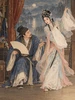 Zheng Guangzu
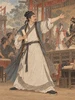 Guan Hanqing
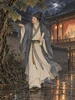 Bai Pu
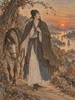 Ma Zhiyuan
 Wang Shifu
 Zang Maoxun
 Xu Wei
 History
 Flourishing of Yuan Drama (Zaju)
 Atlas
 Beijing
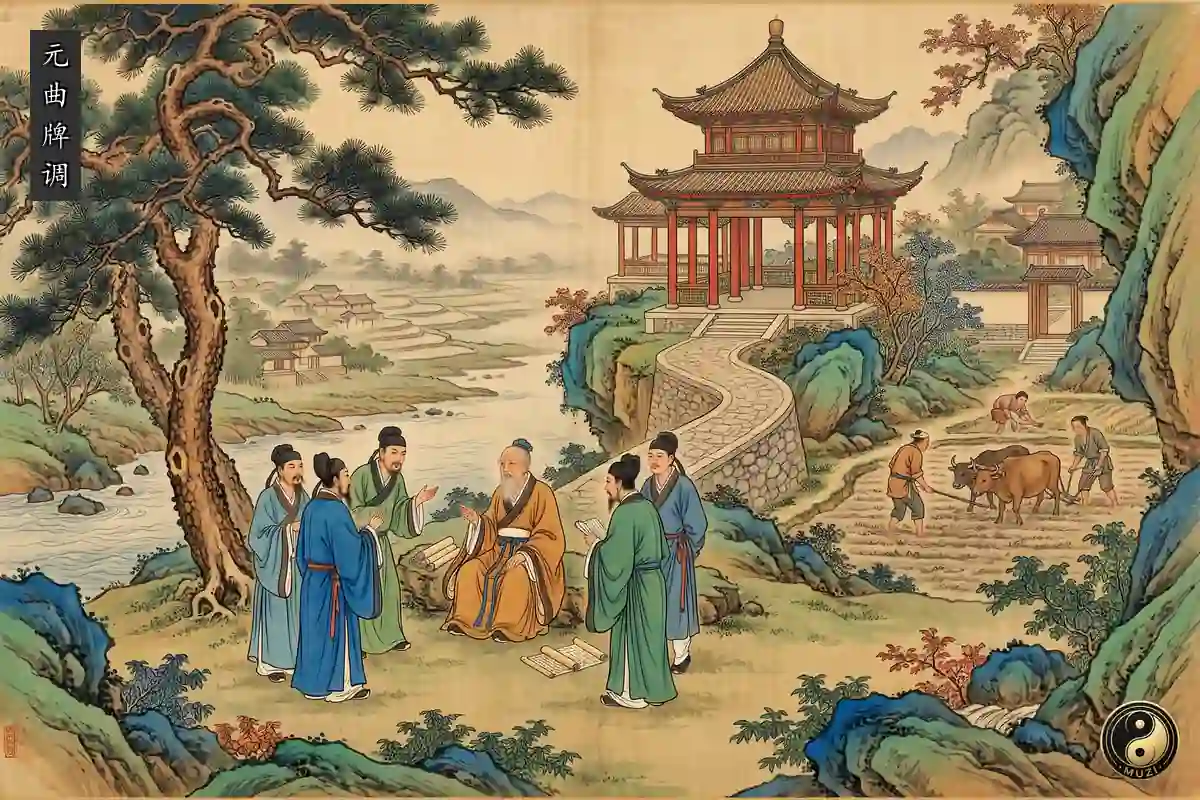
On a Yuan-dynasty theatre stage, costumed performers sing dramatic arias to the accompaniment of flute and clappers while a rapt audience watches from below. Bypassing elite textual doctrines to voice raw marketplace narratives on stage.
Imagine a writer of zaju filling in lyrics under a lamp at night. He wants the people in the street to follow it too, so he uses the words people speak in the market. When he has finished an act he reads it to his neighbour.
The neighbour listens, laughs and says: we say those words every day, and I never thought they could be sung. He laughs too, and takes up his brush to write the next act.
Yuan song-drama sets the everyday speech of the market to music and organises the sung narrative in linked sets of qupai tunes. A Yuan zaju play usually has four acts, each using one set of northern songs in a single mode; Zhou Deqing's Zhongyuan Yinyun set the standard for rhyme in northern song, and Zang Maoxun compiled and printed the Selection of Yuan Plays, through which Yuan zaju came down in large numbers. (This is an illustrative story, not a historical account.)