In a sunlit courtyard one performer holds a plate on a pole, another dives through a hoop on a stand, a third tosses three balls, and a fourth walks a high rope with arms out; at the left a wooden cart carries blue-and-white plates, a ball basket, wooden pins, coiled rope and hoops, with onlookers behind a rope line.
Arts performed with bodily skill and props: jiaodi shows, Han baixi, rope walking, pole feats, conjuring and magic, horse circus, and the acrobatic traditions of places such as Wuqiao and Liaocheng. Martial arts and the lion and dragon dances are not part of it.
108 BCE · OriginIn the spring of the third Yuanfeng year (108 BCE), jiaodi shows were staged and people from within 300 li came to watch.105 BCE · EvolutionIn the summer of the sixth Yuanfeng year (105 BCE), the people of the capital watched jiaodi at the Pingle Hall in Shanglin.1987 · ImpactThe China Wuqiao International Acrobatics Art Festival was founded; it is held every two years.1993 · ImpactThe Ministry of Culture approved a China Youth Acrobatics Base in Liaocheng and placed it under the State Council's Dandelion Program.2000 · ImpactThe China Magic Arts Committee became a member of the International Federation of Magic Societies (FISM).2006 · ImpactWuqiao acrobatics (Ⅵ-1) and Liaocheng acrobatics (Ⅵ-2) entered the first batch of the national representative list of intangible cultural heritage.
In the spring of the third Yuanfeng year (108 BCE), the court staged jiaodi shows and people from within 300 li came to watch; in the summer of the sixth Yuanfeng year (105 BCE), the people of the capital watched jiaodi at the Pingle Hall in Shanglin. Han records also speak of a great jiaodi with strange shows and marvels that drew many onlookers, and add that once the skill of the conjurers was included, the jiaodi and its strange shows changed and grew year by year, and the art flourished from then on; a skilled conjurer from Lixuan was also presented to the Han court.
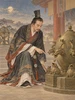
Zhang Heng's Ode to the Western Capital describes the emperor visiting Pingle and watching the fine jiaodi shows in the open court: tripod lifting, pole climbing, ball and sword juggling, rope walking, and swallowing knives and spitting fire. On Han pictorial stones from Nanyang in Henan, deep-eyed, high-nosed foreigners are often shown performing ball juggling, fire spitting, and handstands.
The Dongjing Menghua Lu records the Lantern Festival in the Eastern Capital: along the Imperial Street, "rare arts and uncommon skills, songs, dances, and baixi pressed scale against scale, and the noise of music carried for more than ten li." The acts included ball striking and kicking, rope walking and pole climbing, spitting colored water, burning rolled clay pellets, and swallowing iron swords, and also "monkeys performing baixi and fish leaping through a gate of knives." In the Song dynasty acrobatics moved among the common people, and entertainment forms such as goulan and wazi appeared. Dunhuang preserves fairly rich material on baixi, and its murals carry images of pole feats; a study published in 2010 reads the mural images against the written records and covers the Five Dynasties and Ten Kingdoms period.
Wuqiao County in Cangzhou is known as the hometown of acrobatics. A bronze lamp with a silver-headed figure in an acrobatic pose was placed in the tomb of King Cheng of Zhongshan in the Warring States period, and Jin dynasty tomb chambers carry murals of acrobatics at banquets; Wuqiao acrobatics reached its peak in the Qing dynasty and the Republic of China. Its traditional repertoire has 7 major categories and 486 individual items: body skills, prop skills, disguise and imitation of animals, animal training, horsemanship, traditional magic, and comedy. Performers honor Lü Zu as the trade deity and use a private argot called chundian. In 2006 Wuqiao acrobatics entered the first batch of the national representative list of intangible cultural heritage as item Ⅵ-1, with the Wuqiao County Acrobatics Troupe as its protecting unit. The China Wuqiao International Acrobatics Art Festival was founded in 1987 and is held every two years; its 20th edition opened on September 28, 2025.
Acrobatics in Liaocheng, Shandong, falls into three branches of horse circus, magic, and performance, and is found in Dong'e, Chiping, Yanggu and the areas around them. In the Three Kingdoms period, acrobatics and horse circus were already common around Dong'e; in the early Republic, Dong'e County alone had dozens of acrobatic and circus troupes; in 1955 the county organized 8 circus troupes; the Liaocheng Prefecture Acrobatics Troupe was founded in 1970; and in 1993 the Ministry of Culture approved a China Youth Acrobatics Base in Liaocheng. Liaocheng acrobatics entered the first national list in 2006 as item Ⅵ-2, with the Liaocheng Acrobatics Troupe as its protecting unit. In 2000 the China Magic Arts Committee became a member of the International Federation of Magic Societies (FISM). Acrobatics in both Wuqiao and Liaocheng face a shrinking number of senior performers, and some skills risk being lost.
Acrobatics and Baixi covers arts performed with bodily skill and props: jiaodi shows, Han baixi, rope walking, pole feats, conjuring and magic, horse circus, and the acrobatic traditions of places such as Wuqiao and Liaocheng. Its focus is these performances and their transmission. Martial arts are not part of it; the lion and dragon dances belong to Chinese Dance, the permanent entertainment quarters belong to Theaters, storytelling and singing belong to Quyi, and ritual and puppet plays belong to Ritual and Puppet Theatre.
Acrobatics is like a rope tied at both ends to the ground, with a person crossing the middle. What the audience sees is how a body keeps its balance in a risky place. The Ode to the Western Capital writes of rope walkers meeting on the rope, and the Dongjing Menghua Lu records rope walking and pole climbing at the Lantern Festival; rope and pole appear in a Han rhapsody and in a Song account of the Lantern Festival.
Story: A child learned the craft from his grandfather. The grandfather first drew a line on the ground and had him walk along it every day without looking down at his feet. After a long time he replaced the line with a rope hung low. The child asked, "When can the rope go higher?" The grandfather said, "When walking on the rope is the same as walking on the ground." (This is an illustrative story, not a historical record.)
Interpretation: Rope walking and pole climbing are among the Lantern Festival shows of the Eastern Capital, and the Ode to the Western Capital also writes of rope walkers meeting on the rope. Wang Baohe, a representative inheritor of Wuqiao acrobatics, came from an acrobatic family and began learning from his grandfather at age 6; contortion is very hard because practice has to start in childhood. For acts on the rope and at the pole top, the texts describe the scene, while the inheritor's life describes the years of practice.





 Jiaodi ShowsThe Book of Han records a jiaodi show in Emperor Wu's third Yuanfeng year, watched by people from within 300 li
 Han BaixiBall juggling, fire spitting, handstands and other baixi acts seen on Han pictorial stones
 Wuqiao AcrobaticsThe acrobatic tradition of Wuqiao in Hebei, on the first national list of intangible heritage items in 2006
 Liaocheng AcrobaticsHorse circus, magic and performance of Liaocheng in Shandong, a national representative heritage item
 Rope WalkingPerforming on a rope; tasuo was already among the lantern-festival shows of the Northern Song capital
 Pole FeatsClimbing and balancing on poles; Dunhuang murals show pole feats
 Conjuring and MagicFrom fire-spitting performers on Han stones to magic today
 Horse CircusAcrobatics on horseback, one of the three branches of Liaocheng acrobatics
 Canon
 Literature
 Record of a Dream of Splendour in the Eastern Capital
 People
 Zhang Heng
 Atlas
 Cangzhou
 Liaocheng
 Wu Qiao County
 Dong E County
 Flavor