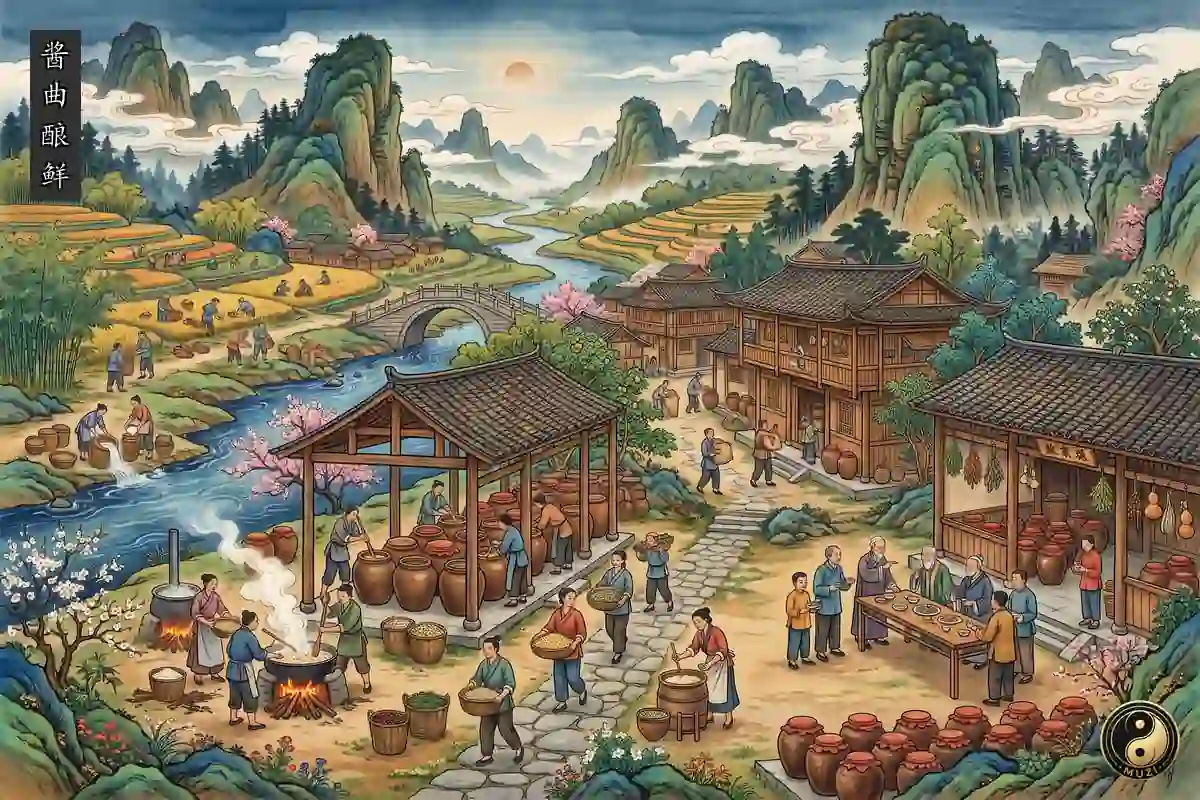
At sunset in a village by a stream, rows of sealed earthenware jars fill sheds and yards; workers stir a cauldron over a fire, carry baskets of beans and portion sauces at a long table.
A brewing craft centred on Aspergillus molds whose fermentation gives savoury taste, preserves food and blends flavours, and the Qimin yaoshu records koji and sauce-making.
1803 · EvolutionAccording to the China Intangible Cultural Heritage website, in the eighth year of Jiaqing (1803) Chen Yixian opened the Shuntian sauce garden on the west street of Pixian county town.1880 · EvolutionAccording to the China Intangible Cultural Heritage website, in the sixth year of Guangxu (1880) Qian Jinnan founded the Wanlong sauce garden in Nanshi, Shanghai; his son moved it to Zhangjiangzha in the twenty-third year of Guangxu (1897) and renamed it the Qian Wanlong sauce garden.
Sauces entered the ledgers of ritual in China very early. The Rites of Zhou (Zhouli), in “Heavenly Offices” (Tianguan), describes the king's meals: “Sauces are served in one hundred and twenty jars.” It also sets up the officers of hai and xi: the hairen “takes charge of the contents of the four dou,” with twenty female hai workers and forty servants under him; the xiren “takes charge of the five qi and seven pickles, and all xi things,” with twenty female xi workers and forty servants; and the salt officer “takes charge of the decrees on salt, to supply salt for the hundred affairs.” The morning-service dou that the hairen supplied held “pickled chives and ant-egg sauce, calamus root and elk paste, pickled turnip and deer paste, pickled water-shield and roe-deer paste,” so that vegetable pickles and meat sauces were set out in pairs; the Book of Songs (Shijing), in “Xin Nanshan,” also writes: “They peel them and pickle them, and offer them to the august ancestors.” When the king dined, the hairen supplied “sixty jars of hai,” and the xiren “sixty jars of pickles and xi things,” while for the rites of guests each was cut to fifty jars. Meat sauces, vinegar, vegetable pickles and salt each had their own officer, as part of the system of ritual that deals with eating, which is described in Rituals. In Confucius's time, a meal was to be eaten with the right sauce: the Analects (Lunyu), in “Xiang Dang,” records that he “would not eat if he did not have its proper sauce.” In the Nine Songs of the Songs of Chu, “The Great One, Lord of the East” has “we set out cassia wine and pepper drink”, and Wang Yi's note says “pepper drink: jiao (prickly ash) put into the drink”, so jiao already went into the drink offered to the god.
Sauces depend on fermentation, and the ancients saw this plainly. The Shiming (Explaining Names) explains the words: “Qu means 'to rot': it is covered over so that it grows a coat and rots away. Nie means 'to split': wheat is soaked and covered so that it sprouts and splits open. Zha means 'pickle': it is fermented with salt and rice like a pickle, and eaten when ripe,” and also: “Chi means 'to relish': it is needed to blend the five flavours, and only then is the dish pleasing.” The Qimin yaoshu of the Northern Wei, in scroll eight, “Method for making sauce, number seventy,” writes out the craft as a procedure: “The twelfth and first months are the best time, the second month the middle time, the third month the lower time”; spring-sown black beans are steamed, dried in the sun, pounded to remove the skins and steamed again, and the proportions are “three dou of bean yellow, one dou of qu powder, one dou of yellow steamed grain powder, five sheng of white salt.” The Qimin yaoshu was written by Jia Sixie of the Northern Wei. Besides bean sauce, the same chapter of scroll eight has entries headed “method for meat sauce”, “method for quick meat sauce” and “method for fish sauce”, so meat and fish sauces too were given written procedures. Scroll seven of the same book has “Making divine qu cakes and wine, number sixty-four”: sauce and wine use the same kind of ferment, which is where Fermentation Condiments and Liquors & Soft Drinks meet. The same scroll also sets out “Everfull salt and flower salt, number sixty-nine” and “Eight-blend minced sauce, number seventy-three,” so that salt, ferment, sauce, fermented beans and minced relishes form a block of their own in the book. The Shiming also explains the hai: “Hai means 'sea' and 'dark': it is sealed with clay so that it turns dark and is ready.”
Seasonings were also traded. The Records of the Grand Historian (Shiji), in “Biographies of the Money-makers,” lists goods that could be sold, including “ferment, salt and fermented beans, a thousand lots,” and says: “Selling drinks was a petty trade, yet the Zhang family made ten million.” A small trade could build a fortune, and so ferment, salt and fermented beans entered the merchants' ledgers described in Merchant Guild Commerce. Salt touched the state more. The Shiji, in “The Balanced Standard” (Pingzhun shu), records that Dongguo Xianyang and Kong Jin served as junior ministers of agriculture, “in charge of salt and iron”; Dongguo Xianyang was “a great salt boiler of Qi” and Kong Jin “a great iron founder of Nanyang,” and the method was “to boil salt in official vessels, the state supplying the pans,” while “those who dared to cast iron vessels or boil salt privately would have their left foot shackled and their goods confiscated.” Pickling, sauce, vinegar and fermented beans all need salt, and so the state monopoly described in Salt & Transit Monopolies is linked to one and the same sauce jar.
By the Qing the sauce gardens and bean-paste workshops left their dates. The China Intangible Cultural Heritage website records that the Qian Wanlong soy sauce brewing craft of Shanghai (second batch of the national list, 2008) began with the Wanlong sauce garden founded by Qian Jinnan in the sixth year of Guangxu (1880), which moved to Zhangjiangzha in the twenty-third year of Guangxu (1897) and took the name Qian Wanlong sauce garden, with more than four hundred sauce jars, and the page sums up its essence as “good materials, fine qu, skilled craft, sun-drying.” Pixian broad-bean paste (listed in the same year) is hailed as “the soul of Sichuan cuisine,” and the page says that in the late Ming and early Qing a man named Chen mixed mouldy broad-bean halves with chilli and found the taste wonderful; in the eighth year of Jiaqing (1803) Chen Yixian opened the Shuntian sauce garden in the county town; in the third year of Xianfeng (1853) his grandson Chen Shouxin opened the Yifenghe sauce garden and summed up a twelve-character rule, “sun on fine days, cover on rainy days, turn by day, dew by night”; after the thirty-first year of Guangxu (1905) Chen Zhu'an improved the proportions and developed varieties such as black bean paste and golden-hook bean paste; and in 1916 Pixian bean paste won a first-class prize from the Sichuan Provincial Industrial Exposition. Bean paste is made from three things, chilli, broad beans and salt, and the page calls it an important seasoning for Sichuan cooking, and the Sichuan cooking described in Regional Cuisines draws on this jar.
A single sauce jar holds several threads. The Rites of Zhou set officers over hai, xi and salt, and sauce became part of the king's meals and of the morning-service dou; the Qimin yaoshu wrote out the proportions of beans, qu and salt and the months for the work, and sauce and wine met in the same kind of ferment; the Shiji recorded the Zhang family who grew rich selling drinks, and also the state boiling salt in official vessels and punishing those who boiled it privately; and by the Qing the workshops of Qian Wanlong and of Pixian bean paste left their dates, and the rule “sun on fine days, cover on rainy days.” Ritual, the market, the treasury and the seasoning of Sichuan cooking all draw from this jar.
Fermentation Condiments is the class on seasonings in the chapter on the Cuisine. It gathers many kinds of condiment: those made by fermentation, which are sauces and pastes, vinegar, fermented curd and douchi, pickles, and chili bean pastes, and the basic seasonings, which are oils, salt, sugar and honey, and spices. It describes the kinds of seasoning and where they come from; the dishes cooked with them belong to the regional cuisines.
Rows of large ceramic jars under the central shed are the main vessels for sauce fermentation.
Steaming Ingredients
The steaming cauldron at lower left shows ingredients being heated before fermentation.
Tasting the Sauce
The diners at right show the culinary use of fermented sauce and umami flavor.
Sauce Shop
The right-side shop with sealed jars and hanging condiments shows storage and sale in a sauce workshop.
A sauce-yard: rows of clay urns sealed with mud bake in the sun by day and breathe by night while a fermentation master stirs soybean mash, and the deep savour of jiang slowly matures. Aspergillus-driven biochemistry synthesizing rich amino acids to code the taste identity.
Fermentation Condiments is like a covered jar: beans and wheat are mixed with koji and put in the jar, sealed and left to ferment slowly, and as the days go by the jar takes on the taste of sauce.
The Rites of Zhou assigned the hairen and xiren to manage meat sauces and vinegar; Confucius would not eat a dish without its proper sauce; and the Qimin yaoshu records in detail how to make koji and sauces, the earliest surviving treatise on the craft of brewing.
On a summer afternoon a grandmother lifted the lid of the big jar in the corner of the yard, and a salty fragrance rose out.
Her granddaughter leaned over and asked: what is that smell? The grandmother scooped up a little with a spoon and held it to her mouth. The girl tasted it, frowned, licked her lips and said: salty, but with something savoury. The grandmother laughed and said: sauce is like that, a little is enough.
The grandmother added a spoonful of sauce to the pot, and the dish smelled different. The neighbour's wife came over with a dish of pickled cabbage she had made at home, and the two women stood in the yard, each telling how it was done in her own household.
Sauces, vinegar, fermented curd, douchi and pickles are all made by fermentation, and soy sauce is mostly made from soybeans and wheat mixed with a koji mold starter. The Rites of Zhou assigned the hairen and xiren to meat sauces and vinegar, Confucius would not eat a dish without its proper sauce, and the Northern Wei Qimin yaoshu records in detail how to make koji and sauces. The sourness of pickles comes from lactic fermentation, so they are not counted as vinegar. (This is an illustrative story, not a historical account.)



 Sauces and PastesSoy sauce, bean and flour pastes, sesame paste and fish sauce.
 VinegarVinegars brewed from grain or fruit, made by solid-state or liquid fermentation.
 Fermented Curd and DouchiFermented bean curd and fermented soybeans.
 PicklesVegetables kept by salting or fermenting: sour cabbage, brined pickles and salted greens.
 Chili Bean PastesHot pastes fermented from broad beans and chili.
 Oils, Salt, Sugar and HoneySalt, powdered seasonings, cooking oils and fats, sugar, honey and syrups.
 SpicesSichuan pepper, star anise, cassia, pepper, ginger and the other spices and aromatics.
 Canon
 Literature
 Records of the Grand Historian
 Rites of Zhou
 Essential Techniques for the Common People
 People
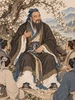 Confucius (Kongzi)
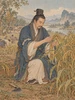 Jia Sixie
 Wang Yi
 Atlas
 Sichuan
 Flavor