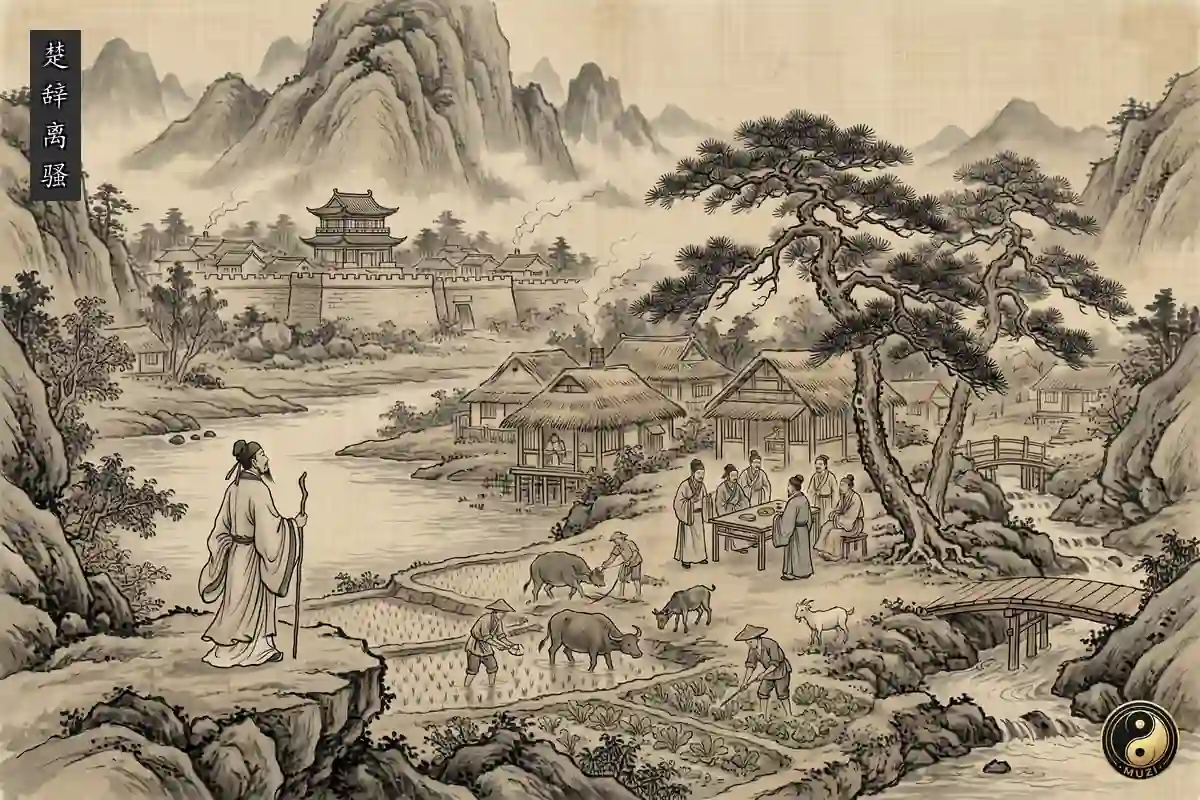
The Li Sao was written by Qu Yuan, a man of Chu in the Warring States period, and began the sao form of verse.
In the poem, fragrant plants and fair ladies serve as figures, and landscape and myth, personal loyalty and love of home and country are woven together. This way of writing set up the figurative tradition of "fragrant plants and fair ladies" in classical literature.
Qu Yuan's works were later gathered into a book. Liu Xiang of the Western Han, collating texts, compiled the works of Qu Yuan, Song Yu and others as the Songs of Chu; Wang Yi of the Eastern Han wrote the Chapter-and-Verse Commentary on the Songs of Chu, the earliest surviving complete commentary.
Chu Poetry & Li Sao is the class in the chapter on Letters on the poetry of Chu, with Qu Yuan as its main figure. Qu Yuan wrote the Li Sao and began the sao form of verse; using fragrant plants and fair ladies as figures, he wrote landscape and myth, personal loyalty and love of home and country into his poems.